I'm setting up a sawmill and have poured a small slab for it, measuring 1.5x17 meters.
The plan for the future is to put up a building over the saw if it functions well.
The building is expected to be about 6x20 meters, but there will be few walls, maybe just one gable and possibly a few meters along one long side (so you can move timber in and out).
The imagined building will look like a carport but with gable trusses.
I guess it will stand on 8-10 posts.
Now to the question, how should these be anchored in the ground for a reasonable amount of money?
It's just sand in the ground if that makes any difference.
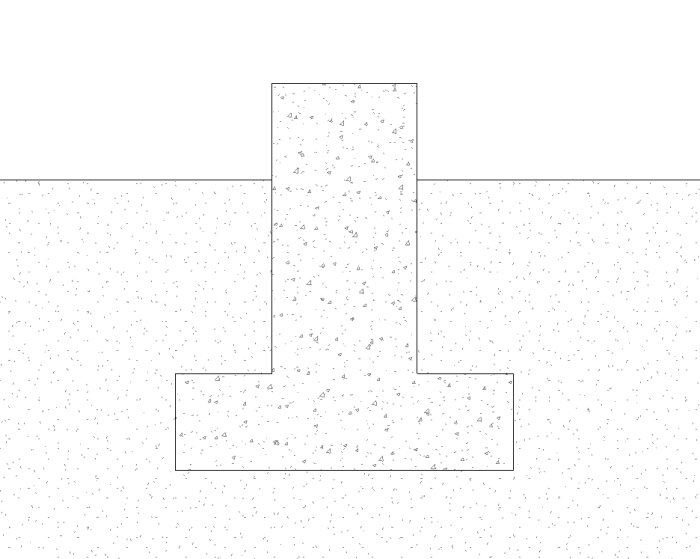
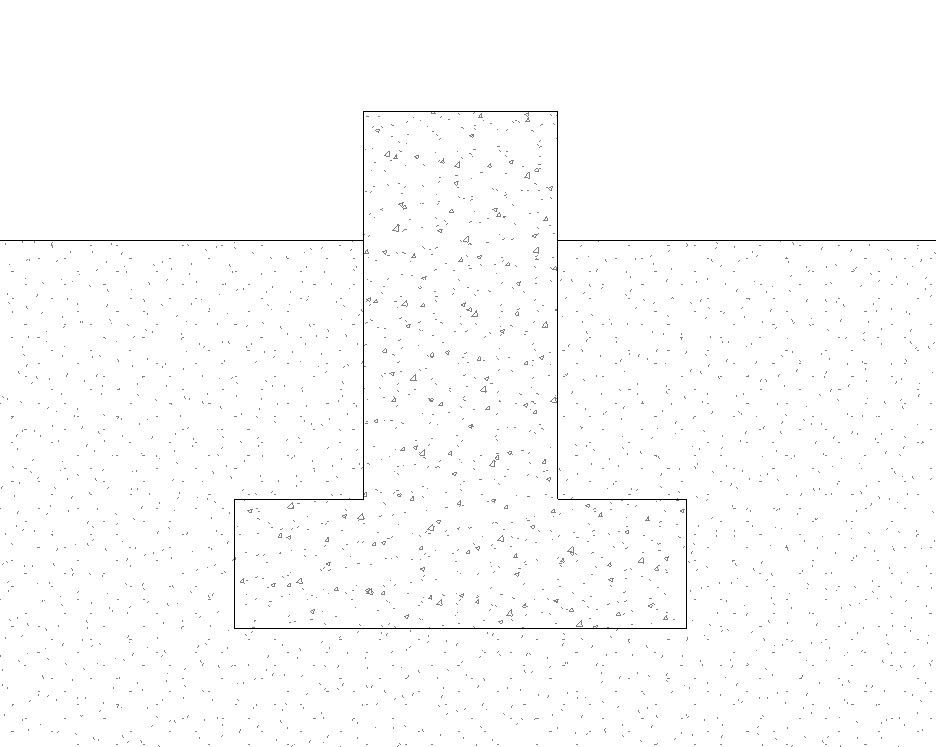
Spontaneously, I think you should cast some kind of footings. If you use casting tubes and lift them a bit when filling them with concrete, you get a "foot" that anchors the footing from being lifted when you refill with soil/sand.
Of course, this can be calculated, and there are rules for how to do it if it is to be done by-the-book so to speak. Eurocode and EKS should be looked at then. Wind load is a bit tricky to calculate. It depends partly on a reference wind speed at the location, terrain factors, shape factors for the roof, etc.
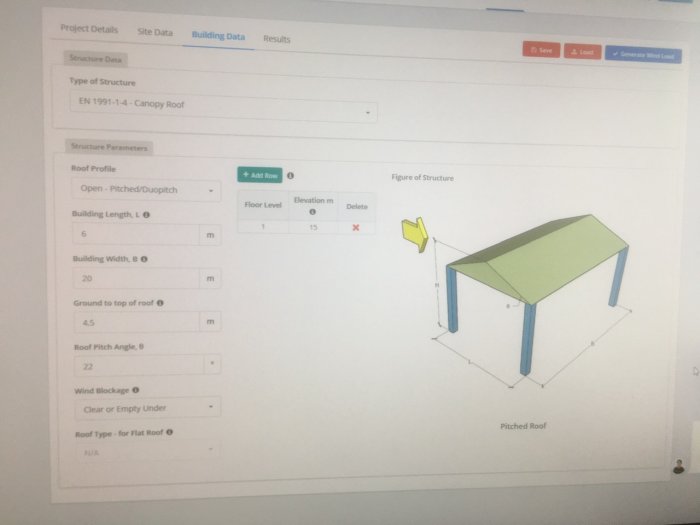
Here is a tool for calculating wind load according to Eurocode. It might give you an indication of how many footings you need.
If we say you get a negative wind pressure of 1 kPa against the roof. The roof is about 120 m2. This then gives a lift force of 120 kN. The building itself weighs quite a bit which counteracts this, but if we disregard that and calculate only the concrete in the foundations. Concrete weighs 2400 kg/m3 which gives a weight of 24 kN/m3. 120/24=5 m3 concrete that you need in the foundations. This calculation is, however, very simplified but can give you a small idea of what might be required. I honestly don't really know how to calculate this, so consult someone who does.