
6,083 views ·
20 replies
6k views
20 replies
Level and Stiffen Wobbly Floor Joists
Living in a house from '35 where previous owners have entertained themselves by removing the ceiling/boarding from the mid-floor structure. We have essentially gone from a classic "box construction" to a stretch with T-beams. The floor structure in the house wasn't the world's most stable initially, and this intervention hasn't improved things over the years, especially not in the affected rooms.
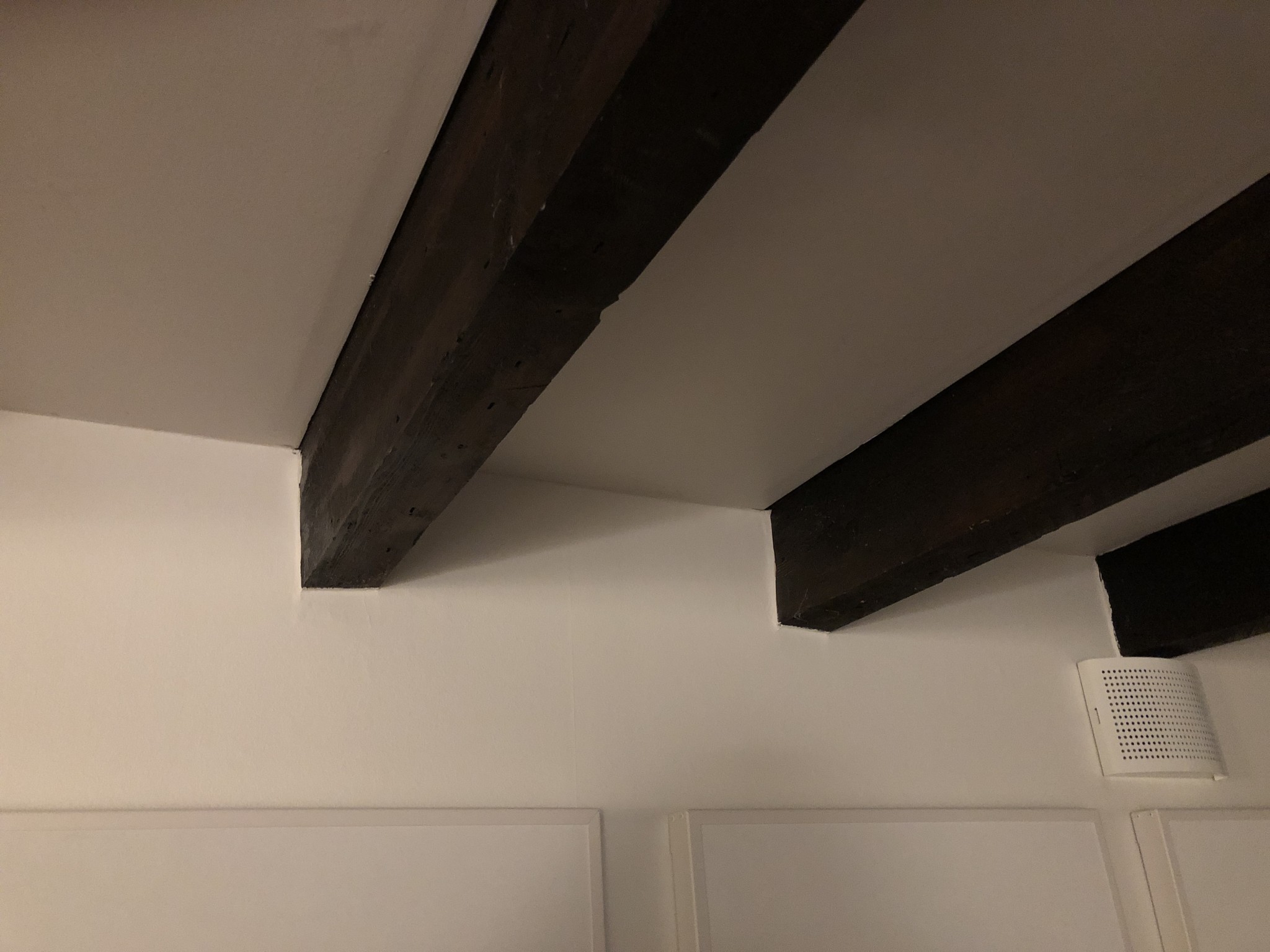
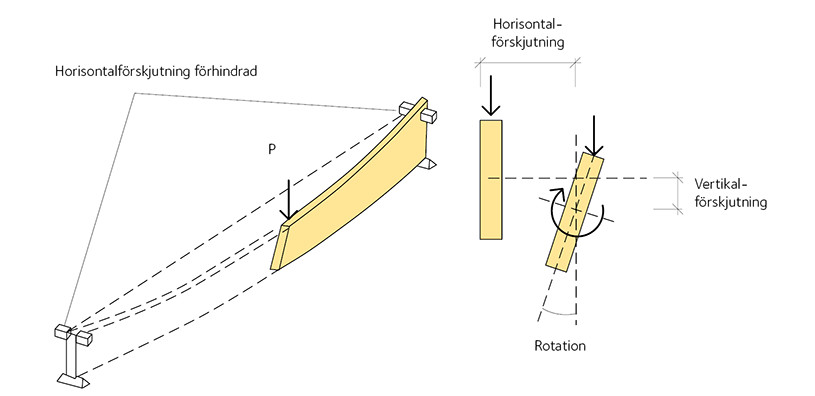
Now that we've started to investigate the basement, it looks like the beams have twisted and tend to "tip," meaning they have bent out a few centimeters in the middle, primarily laterally but also slightly vertically. In adjacent rooms, the ceiling is intact, and there it is considerably more even between the beams.
To remedy this, I currently have the following ideas.
Option 1) Try using clamps/presses to pull together/apart the beams that have tipped and twisted and then cross-brace them from below. In this part of the house, the beams are completely exposed up to the subfloor of the mid-floor. Since the floor structure is still nailed to the subfloor, the distance should still be "correct" as long as the nails remain. The risk as I see it is that the beams are so darn dry and twisted with age that they risk cracking and breaking. The advantage is that we wouldn't need to tear up the whole mid-floor to access the floor structure and shoot in new glued laminated timber.
Option 2) Similarly use threaded rods and new battens to reverse the tipping, employing threaded rods, nuts, washers, and reinforcing battens instead of cross-bracing. I see the same drawbacks as option 1, but also that the holes through the beams will weaken the structure. As an advantage, I think it might be an easier way to drive the floor back to the correct position. However, if it fails, it would be significantly more expensive to fix, as the floor structure would likely still need replacement.
Option 3) Lift the floor from above (mid-floor) and try to straighten the floor structure from above and, if needed, insert new glued laminated timber from above against the sill. This feels like a significantly messier and more expensive alternative. On the other hand, it would be nice to replace it with uniform parquet on the mid-floor.
Does anyone have experience with similar problems or interventions? I've read a plethora of threads in the forum, but none that addressed the actual straightening of the floor structure. Only the bracing of swaying floors.
It's incredibly difficult to capture this in an image, but those who try can see that the beam to the left leans slightly to the left, and the beam to the right leans slightly to the right. In the middle, the spacing is slightly smaller, and at the other end, it's the same, suggesting a certain double-curved form due to the tipping.
It should be added that this was done in the '70s, and a lot of water has flowed under the bridges since then. There is, therefore, no immediate danger. However, it is sometimes uncomfortably soft in the affected areas upstairs.
Now that we've started to investigate the basement, it looks like the beams have twisted and tend to "tip," meaning they have bent out a few centimeters in the middle, primarily laterally but also slightly vertically. In adjacent rooms, the ceiling is intact, and there it is considerably more even between the beams.
To remedy this, I currently have the following ideas.
Option 1) Try using clamps/presses to pull together/apart the beams that have tipped and twisted and then cross-brace them from below. In this part of the house, the beams are completely exposed up to the subfloor of the mid-floor. Since the floor structure is still nailed to the subfloor, the distance should still be "correct" as long as the nails remain. The risk as I see it is that the beams are so darn dry and twisted with age that they risk cracking and breaking. The advantage is that we wouldn't need to tear up the whole mid-floor to access the floor structure and shoot in new glued laminated timber.
Option 2) Similarly use threaded rods and new battens to reverse the tipping, employing threaded rods, nuts, washers, and reinforcing battens instead of cross-bracing. I see the same drawbacks as option 1, but also that the holes through the beams will weaken the structure. As an advantage, I think it might be an easier way to drive the floor back to the correct position. However, if it fails, it would be significantly more expensive to fix, as the floor structure would likely still need replacement.
Option 3) Lift the floor from above (mid-floor) and try to straighten the floor structure from above and, if needed, insert new glued laminated timber from above against the sill. This feels like a significantly messier and more expensive alternative. On the other hand, it would be nice to replace it with uniform parquet on the mid-floor.
Does anyone have experience with similar problems or interventions? I've read a plethora of threads in the forum, but none that addressed the actual straightening of the floor structure. Only the bracing of swaying floors.
It's incredibly difficult to capture this in an image, but those who try can see that the beam to the left leans slightly to the left, and the beam to the right leans slightly to the right. In the middle, the spacing is slightly smaller, and at the other end, it's the same, suggesting a certain double-curved form due to the tipping.
It should be added that this was done in the '70s, and a lot of water has flowed under the bridges since then. There is, therefore, no immediate danger. However, it is sometimes uncomfortably soft in the affected areas upstairs.
Construction veteran
· Stockholm
· 342 posts
They probably won't get any stiffer by you aligning them, right? I think it's a risky and unnecessary operation.
What are you aiming for, to get rid of bounce? Avoid fear of tipping over?
Also, are you going to install a ceiling or will it remain open?
What are you aiming for, to get rid of bounce? Avoid fear of tipping over?
Also, are you going to install a ceiling or will it remain open?
Option 2 is fantastic for getting silent beams when the lumber is exposed to large temperature and moisture changes, e.g., outdoors. But adding noggings usually suffices.
I would go for option two; it might not solve the problem, but it's reasonably cheap and easy to work with, making it worth a try.
I would go for option two; it might not solve the problem, but it's reasonably cheap and easy to work with, making it worth a try.
Want to get rid of some swaying and the worry about continued tipping. Can't really say much has happened in 45 years, but to restore the "box" with a new ceiling in the basement, it seems reasonable to try cross-bracing/reinforcing sideways first. But as mentioned, it's just a gut feeling.D Daniel Barnaniel said:
The idea is appealing but the risk of it going wrong has not been completely dismissed from my mind. Would love to see an example of someone who has done something similar.H Huzzbutt said:Alternative 2 is fantastic for getting silent joists when the timber is exposed to large temperature and humidity changes, for example outdoors. But usually, noggings are enough.
I would go for alternative two, it might not solve the problem but it's reasonably cheap and easy enough to be worth a try.
Construction veteran
· Stockholm
· 342 posts
Add a new beam in between with a support on the sill, possible from underneath? I would aim for that if possible together with cross bracing. I'm not aware of the height or span, but if it's tight, two new beams can be glued and screwed together. Bracing and sparse/sub-roof will prevent any further potential buckling.
Construction veteran
· Stockholm
· 342 posts
It is quite normal for old beams to look similar with or without a locking surface layer.
sounds reasonable. The problem is that the distances between the beams aren't the same across the entire length, which suggests some tipping/lateral displacement. That's what I want to address, cross-bracing is definitely a good method. But I thought it required perfectly parallel beams?D Daniel Barnaniel said:Add a new brace between with support on the sill, possibly from underneath? That would be my approach if possible, along with cross-bracing. I don't know the height or span, but if necessary, two new beams can be glue-screwed together. Bracing and sparse/under-roof will prevent any further possible tipping.
Construction veteran
· Stockholm
· 342 posts
Well, it's an x but the lines are a bit different in length, with the same function.
True. I was wondering about the effect if the beam is already a bit curved… But maybe that's overthinking it. The feeling is that the beams in the middle have dropped a few mm and therefore lost contact with the floorboards on top. Hence the wobble in the middle of the room. But maybe that's a misconception.D Daniel Barnaniel said:
Construction veteran
· Stockholm
· 342 posts
Yes, that can be the case; that the surface layer is not properly against the floor structure, but then none of what we have come up with helps? Nail/screw a new plank against the old one, pressed against the surface layer upwards? And also a new one in between, also pressed upwards.

Construction veteran
· Stockholm
· 342 posts
Span is the length between supports