40,878 views ·
16 replies
41k views
16 replies
Laying joists, nogging or not?
Page 1 of 2
On the standing wall studs, I have nailed horizontal 45x45 where I plan to run electricity and add additional insulation. Outside the horizontal 45x45, there will be 12 mm plywood and then 13 mm gypsum.
The question now is... how do I handle the corners and vertical joints on the plywood??? Do I need to block between the 45x45 studs, or can the plywood manage without support? The joints on the gypsum will be offset relative to the plywood (except in the corners, of course...).
I suspect the risk of cracking is high without blocking or other support; it just feels a bit troublesome to ruin the nice channel for electricity and insulation with a lot of blocking. It should be added that I plan to mount the plywood vertically since I have vertical steel studs mounted under the horizontal 45x45 (half the wall is leca, half wood).
Any ideas??
The question now is... how do I handle the corners and vertical joints on the plywood??? Do I need to block between the 45x45 studs, or can the plywood manage without support? The joints on the gypsum will be offset relative to the plywood (except in the corners, of course...).
I suspect the risk of cracking is high without blocking or other support; it just feels a bit troublesome to ruin the nice channel for electricity and insulation with a lot of blocking. It should be added that I plan to mount the plywood vertically since I have vertical steel studs mounted under the horizontal 45x45 (half the wall is leca, half wood).
Any ideas??

Diversearbetare
· Göteborg
· 11 276 posts
You can safely ignore the kortlingarna. The gypsum stabilizes.
Why not place the plywood boards down instead? I assume you have c/c 1200 between the 45-reglarna. The gypsum should naturally stand up.
Why not place the plywood boards down instead? I assume you have c/c 1200 between the 45-reglarna. The gypsum should naturally stand up.
Okay, sounds good to avoid kortla.
I also think you're right about horizontal plywood; I was fixated on vertical due to irregular c/c spacing for some studs. However, after measuring again following your response, I see that the cuts in the plywood will be similar for vertical vs. horizontal, and then horizontal wins because I get fewer joints.
I'm not quite sure about the corners yet; maybe I should kortla there anyway.
I also think you're right about horizontal plywood; I was fixated on vertical due to irregular c/c spacing for some studs. However, after measuring again following your response, I see that the cuts in the plywood will be similar for vertical vs. horizontal, and then horizontal wins because I get fewer joints.
I'm not quite sure about the corners yet; maybe I should kortla there anyway.
Diversearbetare
· Göteborg
· 11 276 posts

We always brace in the corners.
A tip if you want to run pipes in the corner
is to place a 45/45 angle sheet metal in the corner
to screw into. A thin sheet metal used for
sheet metal walls etc.
You just place the sheet metal against your 45 framing
from floor to ceiling and attach it either
with short chipboard screws or short nails.
Best regards, Putte
A tip if you want to run pipes in the corner
is to place a 45/45 angle sheet metal in the corner
to screw into. A thin sheet metal used for
sheet metal walls etc.
You just place the sheet metal against your 45 framing
from floor to ceiling and attach it either
with short chipboard screws or short nails.
Best regards, Putte
Diversearbetare
· Göteborg
· 11 276 posts
That's good. I usually do that when a partition wall meets the outer wall.ByggPutte said:We always brace in the corners. A tip if you want to run a pipe in the corner is to place a 45/45 angle sheet metal in the corner to screw into. A thin sheet metal used for sheet metal walls, among other things. You just place the sheet against your 45 framework from floor to ceiling and attach it either with short chipboard screws or short nails.
Best regards, Putte
One of the reasons I'm on Byggahus is that I want to learn exactly that. Having grown up in an apartment, with my first house to fiddle with, I have no clue what you're talking about now! If someone could explain with the help of a picture or a simple illustration, I would be infinitely grateful.
Best regards,
Ronnie
Best regards,
Ronnie

Well, 4,000 pictures during construction is never wrong... 
I also added nogging in the corners, and you can still get by with the pipes if the noggings are not made full-length:
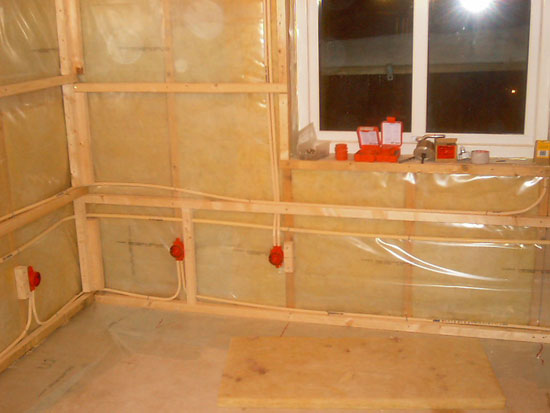
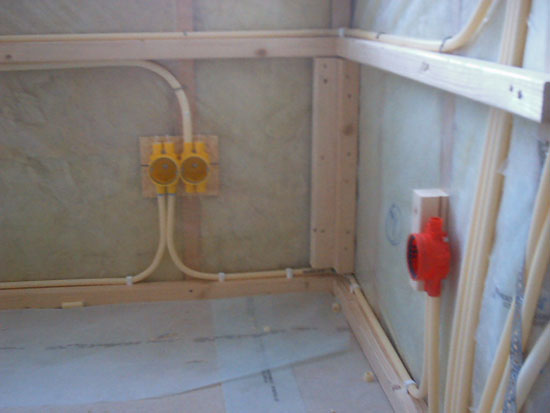
ByggPutte's sheet metal tip was considerably better though! That's how it will be in the next house....
I also added nogging in the corners, and you can still get by with the pipes if the noggings are not made full-length:
ByggPutte's sheet metal tip was considerably better though! That's how it will be in the next house....