
3,930 views ·
17 replies
4k views
17 replies
Laying decking on top of garage roof (concrete structure)
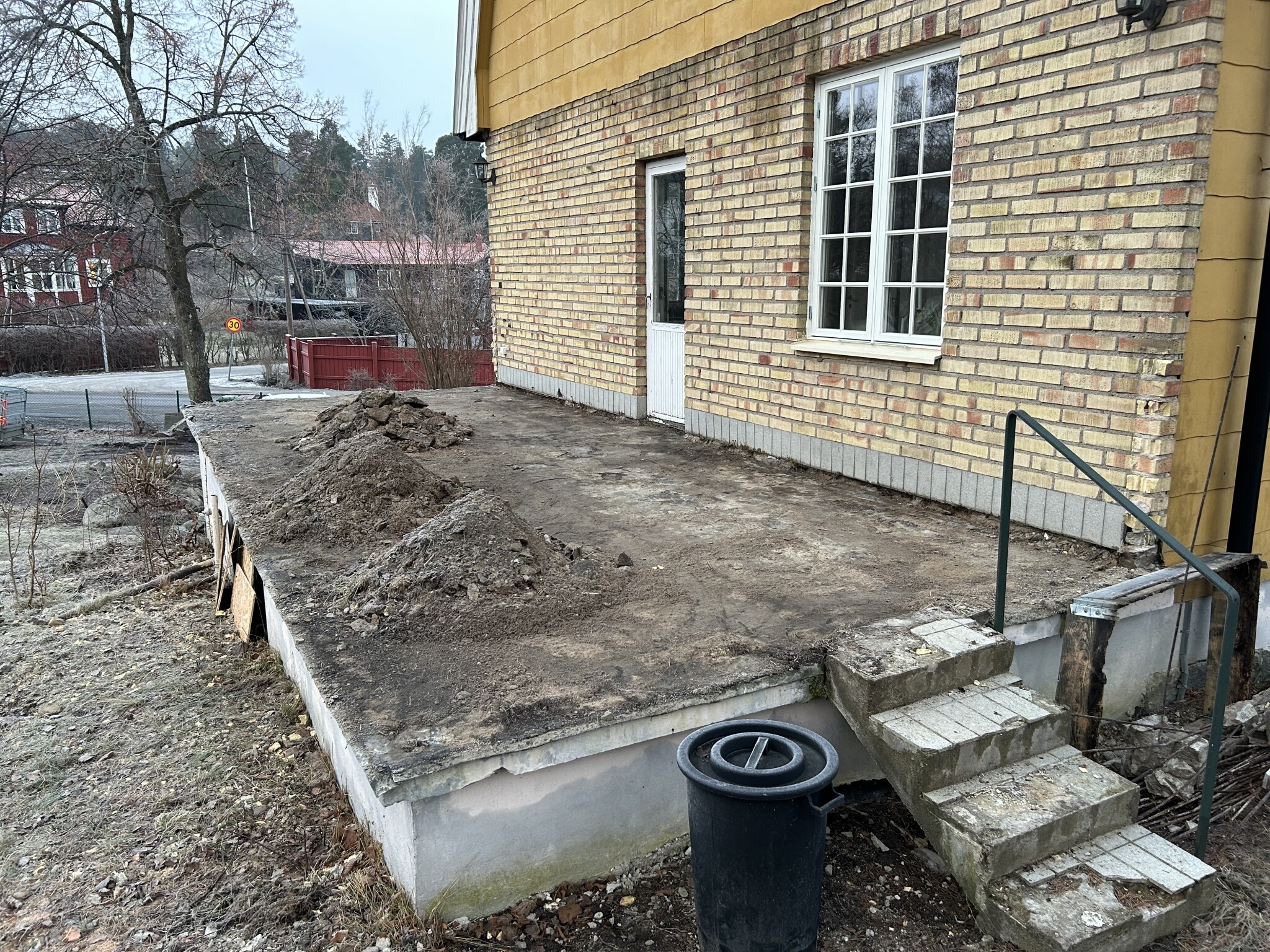
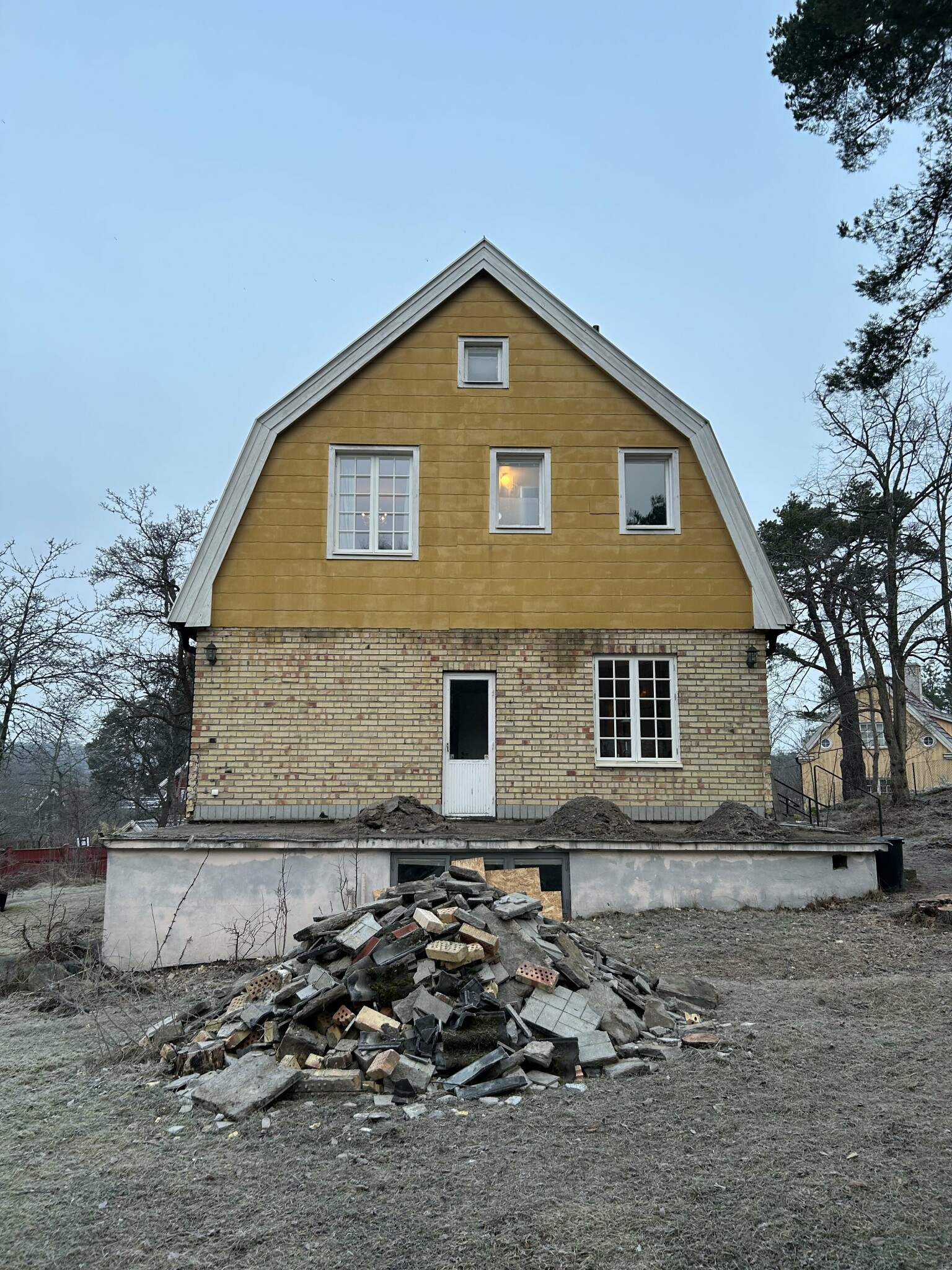
We have just demolished a terrace railing and the flooring that was above our garage. The terrace was built in the 1950s, and the railing was made of bricks while the flooring was tiles on top of sand (!), and beneath the sand, there seems to be some form of roofing felt.
Now, we need to rebuild the waterproofing layer and then lay decking on the concrete base, followed by, of course, a wooden railing. We have been pondering for a long time on how to fix the waterproofing but are a bit uncertain about how to achieve it. The height between the concrete base and the bottom of the patio door frame is 7cm. We have considered whether it's possible to lay roofing felt and then place battens on it but are unsure how to do this without risking moisture damage. It intuitively feels difficult to achieve the right slope for drainage.
Are there any good methods to do this?
Then I wonder if it's a good solution to attach a drip edge and gutters around the garage under the roof sheet so that the water drains away?
Now, we need to rebuild the waterproofing layer and then lay decking on the concrete base, followed by, of course, a wooden railing. We have been pondering for a long time on how to fix the waterproofing but are a bit uncertain about how to achieve it. The height between the concrete base and the bottom of the patio door frame is 7cm. We have considered whether it's possible to lay roofing felt and then place battens on it but are unsure how to do this without risking moisture damage. It intuitively feels difficult to achieve the right slope for drainage.
Are there any good methods to do this?
Then I wonder if it's a good solution to attach a drip edge and gutters around the garage under the roof sheet so that the water drains away?

You should have a footplate. Gutters are mostly for protecting the facade, so it's overkill.
Instead, put a waterproofing layer like Platon sheet on the concrete floor/roof and then decking on top of that. I did that on the concrete balcony that has similar problems. That way, you protect the concrete while any moisture can be ventilated out.
Just make sure there's a tight moisture barrier against the wall.
Instead, put a waterproofing layer like Platon sheet on the concrete floor/roof and then decking on top of that. I did that on the concrete balcony that has similar problems. That way, you protect the concrete while any moisture can be ventilated out.
Just make sure there's a tight moisture barrier against the wall.

The nonexistent height between the door and the ceiling makes it quite tricky to do something sensible, but it's not a problem with some puddles if it's welded roofing felt. The connection to the facade and the door is the most important and also the trickiest.
https://mataki.se/teknik/yttertak/tratrall
Here is some reading about wooden decking on felt roofs.
Sand and stone on top of felt roofing is nothing unusual and it's still constructed this way today, though perhaps not so often on houses.
https://mataki.se/teknik/yttertak/tratrall
Here is some reading about wooden decking on felt roofs.
Sand and stone on top of felt roofing is nothing unusual and it's still constructed this way today, though perhaps not so often on houses.
There are also waterproofing methods that are easier to DIY than welded roofing felt, we did a job with Mapei Mapelastic a number of years ago which was then clad with decking.._Nybyggaren_ said:
We have just torn down a terrace railing and also flooring that was on top of our garage. The terrace was built in the 1950s, and the railing was made of brick and the flooring was tiles on top of sand (!) and under the sand, it looks like some form of roofing felt.
Now we are going to build up the waterproofing again and then lay decking on the concrete structure and then, of course, a wooden railing.
We have long wondered how to fix the waterproofing but are a bit unsure how to go about it. The height between the concrete structure and the bottom of the patio door frame is 7cm. We've thought about if it's possible to lay roofing felt and then joists on top of it but are unsure how to do this without risking moisture damage. It seems spontaneously difficult to get the slope so that the water drains away.
Are there any good methods to do this?
Then I wonder if it's a good solution to attach flashing and gutters around the garage under the roof plate so that the water drains away?
With 70mm you can manage to make a decking floor even though it's tight..
https://www.mapei.com/se/sv/produkter-och-systemlosningar/produktlista/produktbeskrivning/mapelastic
Yep, when I laid decking on the balcony, I used 28mm battens to fasten to and it held up fineZ z_bumbi said:
I have used decking across under the decking with cc 60 on the concrete balcony. It only has the task of holding the decking in place and allowing for some air space underneath. Even if the decking were to flex when I have a mosh pit with my ten tame hippos on it, it can't flex so much that it breaks or is damaged, since it won't go very far.H hapazard said:
If you have a rotary hammer drill, good concrete drill bits, and unlimited amounts of anchor adhesive, you can probably screw the decking directly into the concrete with some moisture barrier in between, if you're in that kind of mood. The floor will indeed be completely solid to walk on, but that's about it.

Thanks for the tip! I will read more about this. How was the decking attached to battens? And how were the battens attached? To battens that were screwed down or battens held by a frame or just by the decking? I preferably don't want to damage the waterproofing.Rejäl said:
Thanks for the tips here too. Have you attached the decking crosswise to the concrete or does it just lie there held down by the weight?ricebridge said:
I have used decking crosswise under the decking with 60 cm centers on the concrete balcony. Its only purpose is to hold the decking in place and allow space for a little air underneath. Even if the decking were to flex when I have a mosh pit with my ten tame hippos on it, it can't flex so much that it breaks or gets damaged, since it doesn't have far to go.
If you have a hammer drill, good concrete drill bits, and unlimited amounts of anchor compound, you can surely screw the decking directly into the concrete with some kind of sealing layer in between, if you're in the mood for it. The floor will indeed be completely rigid to walk on, but that's it.
You have a slope on the casting that the waterproofing is mounted on, right? In that case, the framework is cut like wedges placed on the waterproofing, and then the decking is screwed into them. This will remain in place by its own weight. Nothing should be fastened through the waterproofing because it will start leaking sooner or later 😊
Like this then? Feels promising, the difficult part I think is with the slope. When I've scraped the concrete clean, I'll see if there's any slope that helps there.Rejäl said:
I thought a puddle would eventually ruin the roofing felt.Rickard. said:
The nonexistent height between the door and the ceiling makes it really tricky to do anything sensible, but it’s not a problem with some puddles if it’s welded felt. The connection to the facade and the door is the most important and also the trickiest.
[link]
Here is some reading about wooden decking on felt roofs.
Sand and stone on top of roofing felt is not unusual, and it is still built this way today, though maybe not so often on villas.
I didn't know it was still common; my thought was that the sand retains moisture and that it's not so good for the concrete in the long run, but maybe it's okay.
Yes, when you buy it, the store will be able to help you with product information..
I thought it was a very simple system to use as it does not require complicated implementation solutions..
There should be some slope, right? It needs to be a fairly smooth surface so that it doesn't go up and down everywhere..
That's what I mean, should be enough. Yes, I'm not sure about the slope as we haven't scraped the surface yet, but there should be a bit of a slope. The garage was cast in the 50s and I'm unsure if it was done according to the rules. But I'll check tomorrow.Rejäl said:Do you have a slope on the casting where the waterproofing is mounted?
If so, the framework is cut into wedges that are placed on the waterproofing, which the decking is then screwed into... this will stay in place by its own weight..
Nothing should be attached through the waterproofing because it will leak sooner or later 😊