
19,835 views ·
16 replies
20k views
16 replies
Repair hole in water tank with PL400?
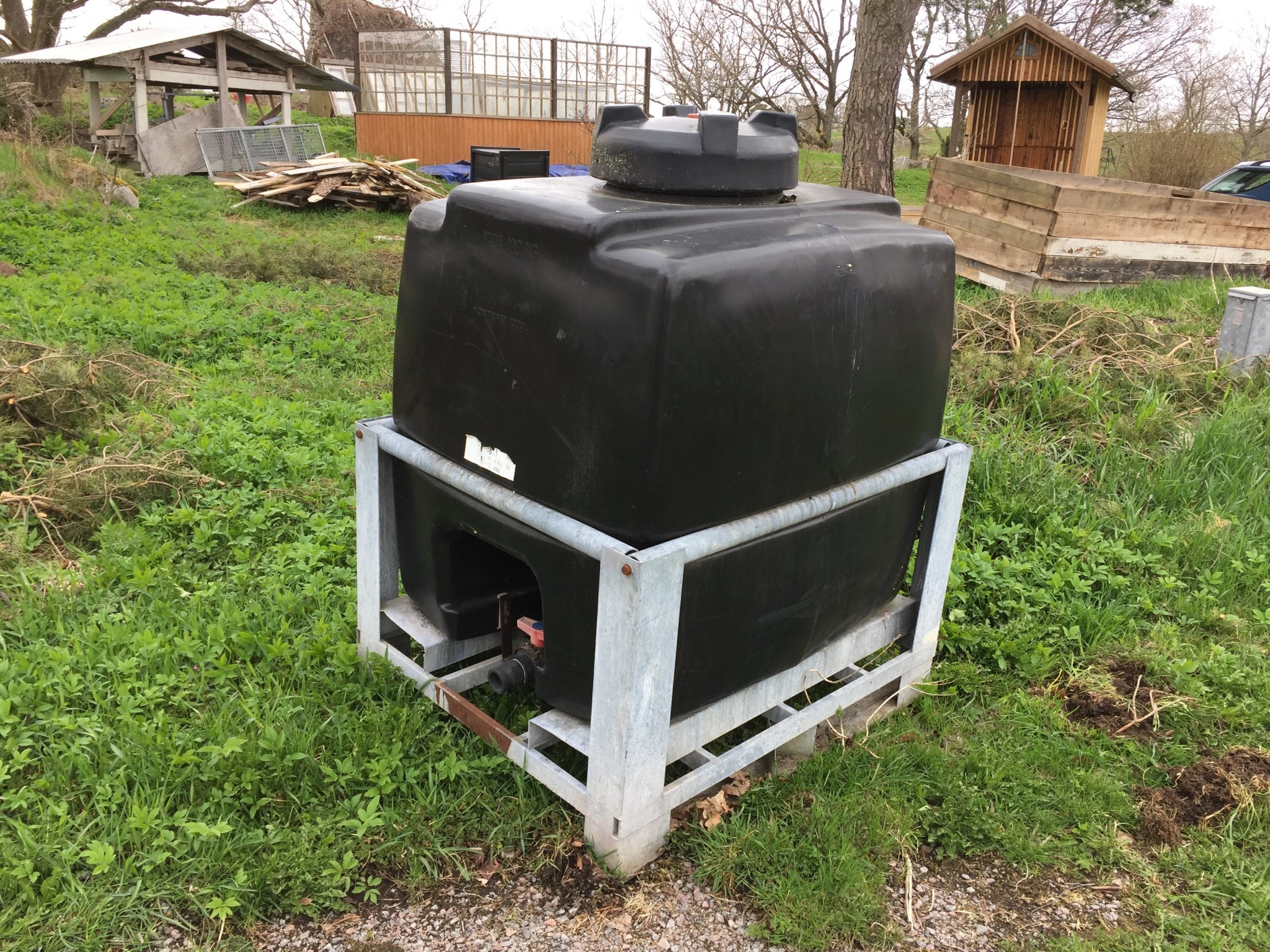
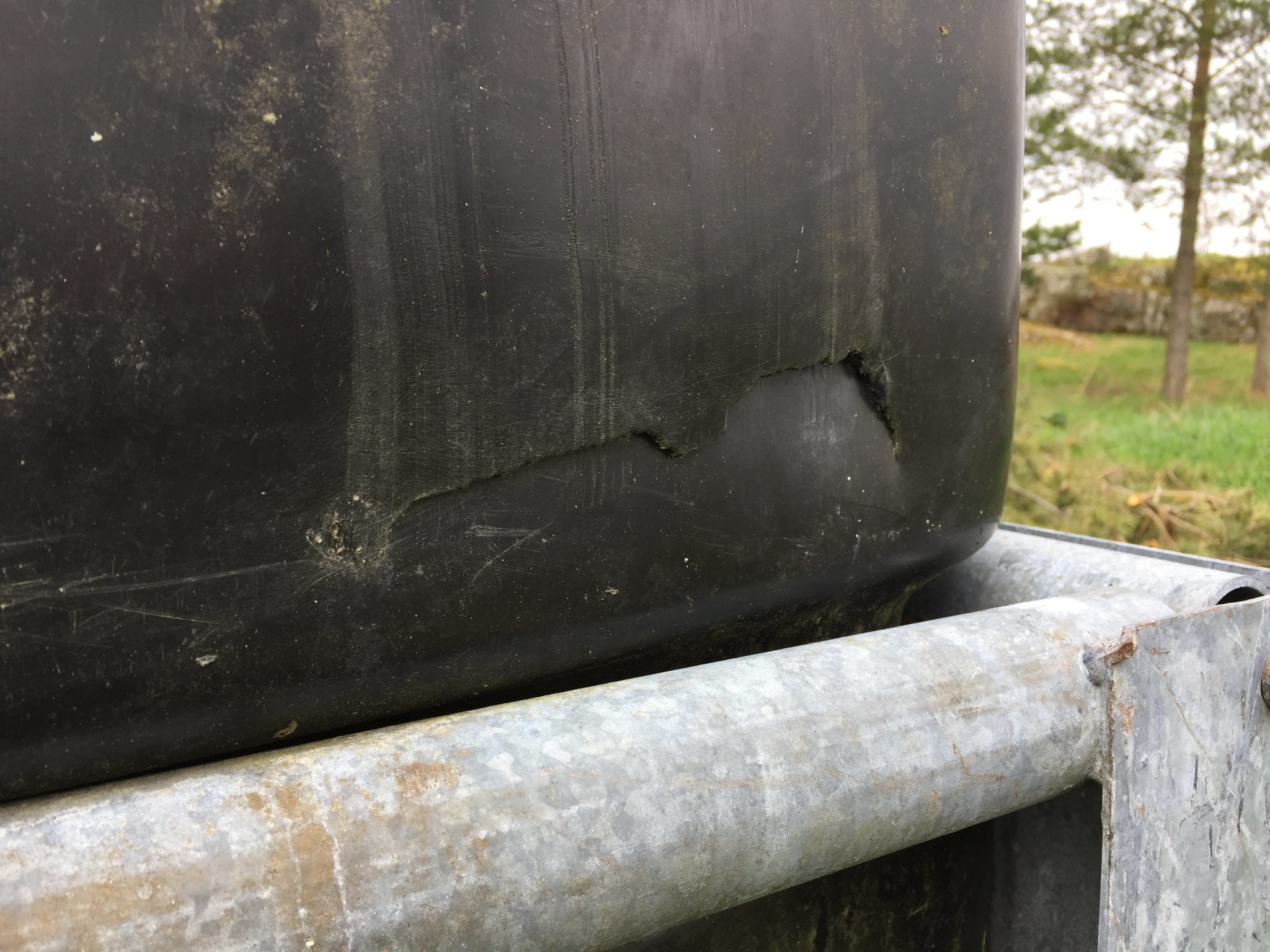
I have acquired a plastic tank of 1000 liters. However, there's a 15 cm tear that I want to seal (see photo).
I'm considering placing a stainless steel plate on the inside and outside with PL400 on both sides and two through bolts with a nut on the outside and tighten them hard.
Is this the right adhesive for this purpose? Is this a good method? I can't find any markings on the tank indicating what type of plastic it is. I plan to use it for irrigation.
I'm considering placing a stainless steel plate on the inside and outside with PL400 on both sides and two through bolts with a nut on the outside and tighten them hard.
Is this the right adhesive for this purpose? Is this a good method? I can't find any markings on the tank indicating what type of plastic it is. I plan to use it for irrigation.
would take fiberglass and epoxypa.albinsson said:
I have acquired a 1000-liter plastic tank. However, there's a 15 cm tear that I want to seal (see photo).
I'm thinking of placing a stainless steel plate on the inside and outside with PL400 on both and two through bolts with nuts on the outside, tightening them together firmly.
Is it the right adhesive for this purpose? Good method? I can't find any markings on the tank indicating what type of plastic it is. I'm going to use it for irrigation.
depends on what you are going to have in the tank
Found another thread that mentioned heat gun and appropriate plastic rods. Has anyone tried and can compare the methods?R felixmartensson said:
M
Marcussjogren
Member
· Västra Götaland
· 3 081 posts
Marcussjogren
Member
- Västra Götaland
- 3,081 posts
I repaired the float on the lawnmower using just a soldering iron, and I was very pleased with the result. Maybe not visually, but definitely in terms of function.
As someone mentioned earlier, you might need to add more plastic. In this case, the plastic in your tank is thick, which isn't the case with a float. But I had to take some plastic that wasn't functional on the float and melt it into the crack.
As someone mentioned earlier, you might need to add more plastic. In this case, the plastic in your tank is thick, which isn't the case with a float. But I had to take some plastic that wasn't functional on the float and melt it into the crack.
The tank is most likely made of polyethylene or polypropylene. Both are types of plastic that are nearly impossible to glue. But they are meltable. Flooring contractors usually have good tools for welding seams.
Thanks for the tips! I'll try to blend it together.
Now I've tried with a heat gun, but it wasn't a success. It didn't melt together; instead, the plastic expanded, pushing the edges out. The plastic is really thick, about 7 mm, so it might be difficult to melt properly. Or maybe it's not a suitable plastic for melting. I also tried heating a knife at the same time as a kind of soldering iron, but it didn't go well. The plastic edges don't want to fuse together.
I'm going to get a cheap soldering iron and try.

The tank is manufactured from blow-molded HDPE. The manufacturing method entraps a biaxial stretching in the material, and it wants to regain its shape when heated. That is why it shrinks when you apply heat with a gun. It should be possible to weld it with the right equipment. Without the right equipment, I would take two stainless steel plates, stainless screws and nuts (nylock), and a rubber sheet, preferably in EPDM, and apply a patch over the hole from the inside: plate-rubber sheet-tank-plate. Think of a head gasket inside the tank. You cannot glue HDPE with PS (fridolin).
I would believe that your tank is made of polyethylene. As others have pointed out, it's difficult to glue. The best option is to try to get a hold of PE thread and weld it together. There are thread weld additives available for purchase for hot air guns. For PE, it should be about 220 degrees hot to achieve a good weld. Otherwise, I would have done as @mattiasp wrote at the same time as I wrote this post.
Just to follow up: Thanks for all the tips! After my heat gun and soldering iron attempts, the plastic became so distorted, brittle, and strange that the hole only got worse, so I gave up. I cut the entire tank in half instead and collect water in it like a basin.