It's easy to place the crosswise wooden joists at c/c 300 mm, even if it requires twice as many.
Does it mean that
Jjustusandersson said:
It's easy to place the crosswise wooden joists at c/c 300 mm, even if it requires twice as many.
Okay, but crosswise is the 6-meter span. You probably mean "along" - but a wider spacing crosswise than 300cc I can't have due to the UPM decking's construction with rail, etc.
The floor slab tilts in the 6-meter direction, right? After watching the UPM instruction video, I can't see why it wouldn't be possible to lay it according to my suggestion.
The floor structure slopes in the 6-meter direction, right? After watching UPM's instructional video, I can't see why it wouldn't be possible to lay it according to my suggestion.
If UPM is laid in the same direction as the trusses, I will have the floor structure that UPM rests on perpendicular to the fall direction. In the video you watched, it should be clear that the support/floor structure/joists or whatever we should call it must cross the UPM boards every 300 cc.
Or I don't understand what you mean. Can you sketch it so I understand - I can see from all your posts that you are used to talking building technology - I'm just a private builder who lacks a "General" and has to "fill in" what the contractor can't handle.
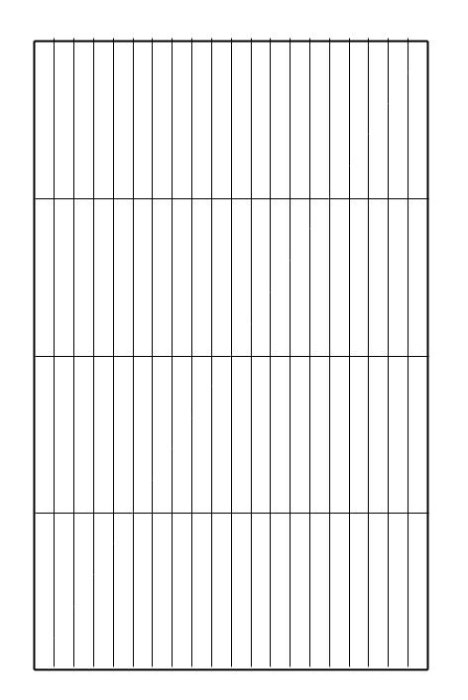
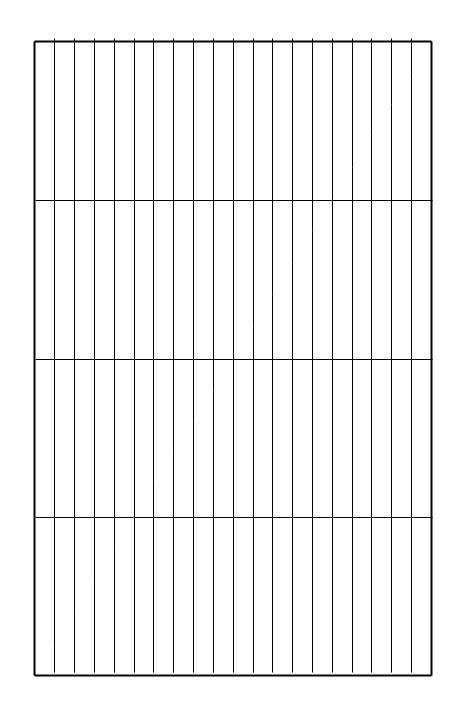
In the image below, the three horizontal lines are steel beams, and the many vertical lines are wooden beams. UPM planks are laid parallel to the steel beams and screwed into the wooden beams.
In the image below, the three horizontal lines are steel beams, and the many vertical lines are wooden joists. UPM planks are laid parallel to the steel beams and screwed into the wooden joists.
[image]
The roof consists of tongue and groove planks - but they do not find support in the few steel beams and cannot lie on the wooden joists because then I will have screws through the roof and that cannot happen. The wooden joists you drew run across the slope and block the water. Also, having so few HEB beams seems amazing but that issue falls away due to the aforementioned.
Unfortunately, there's something I don't understand. You don't have a section drawing?
Thank you! It's great that you're challenging because nothing is set in stone. I sat down at the kitchen table with a scale and graph paper and made a sort of drawing which is attached. Overnight I thought that maybe you have a much thinner roof (than mine which is about 350 mm thick from UPM to the ceiling) and have recessed the beams into the HEB so that they provide support for both UPM and the ceiling? It's an interesting solution but probably places too much demand on the three HEB attachments where the load would be 10 times greater (I have 30 HEBs) than what is currently calculated (670 kg). Unfortunately, I haven't been able to brainstorm different counterproposals, but we have a construction meeting tomorrow...
Yes, now I understand better how you think. However, I believe that the construction contains some question marks. For example, how you will be able to attach the wooden studs without going through the waterproofing layer. The wooden studs are probably unnecessarily high, as they do not have any load-bearing function. Wouldn't it be better to build a loosely placed grid of wood with smaller dimensions? Also, I think that all the HEB beams together will make for a rather expensive construction. 31 HEB 120 together weigh just under 5000 kg, and at 20 SEK per kg, it amounts to approximately 100,000 SEK. If you instead use a strong glulam beam in combination with regular construction lumber, the corresponding cost should be under 20,000 SEK. If you can tolerate a middle pillar under the main beam, it will be even cheaper. But maybe there are other aspects that I am not aware of?
Yes, now I understand better how you think. However, I believe the construction contains some question marks. For example, how you will be able to secure the wooden beams without going through the waterproofing. The wooden beams are arguably unnecessarily tall, as they do not have a load-bearing function. Wouldn't it be better to build a loose grid of wood with smaller dimensions? Then, I think all the HEB beams together become quite an expensive construction. 31 HEB 120 together weigh just under 5000 kg and at 20 SEK per kg it amounts to roughly 100,000 SEK. If you instead use a strong glulam beam in combination with regular construction timber, the corresponding cost should be under 20,000 SEK. If you can tolerate a central pillar under the beam, it becomes even cheaper. But maybe there are other aspects that I am not aware of?
Hello again the project has now shifted back to Kerto beams... as you said with the price... I was also uninformed there.
Click here to reply
Vi vill skicka notiser för ämnen du bevakar och händelser som berör dig.