
Hello!
I will soon start installing drywall in the laundry room.
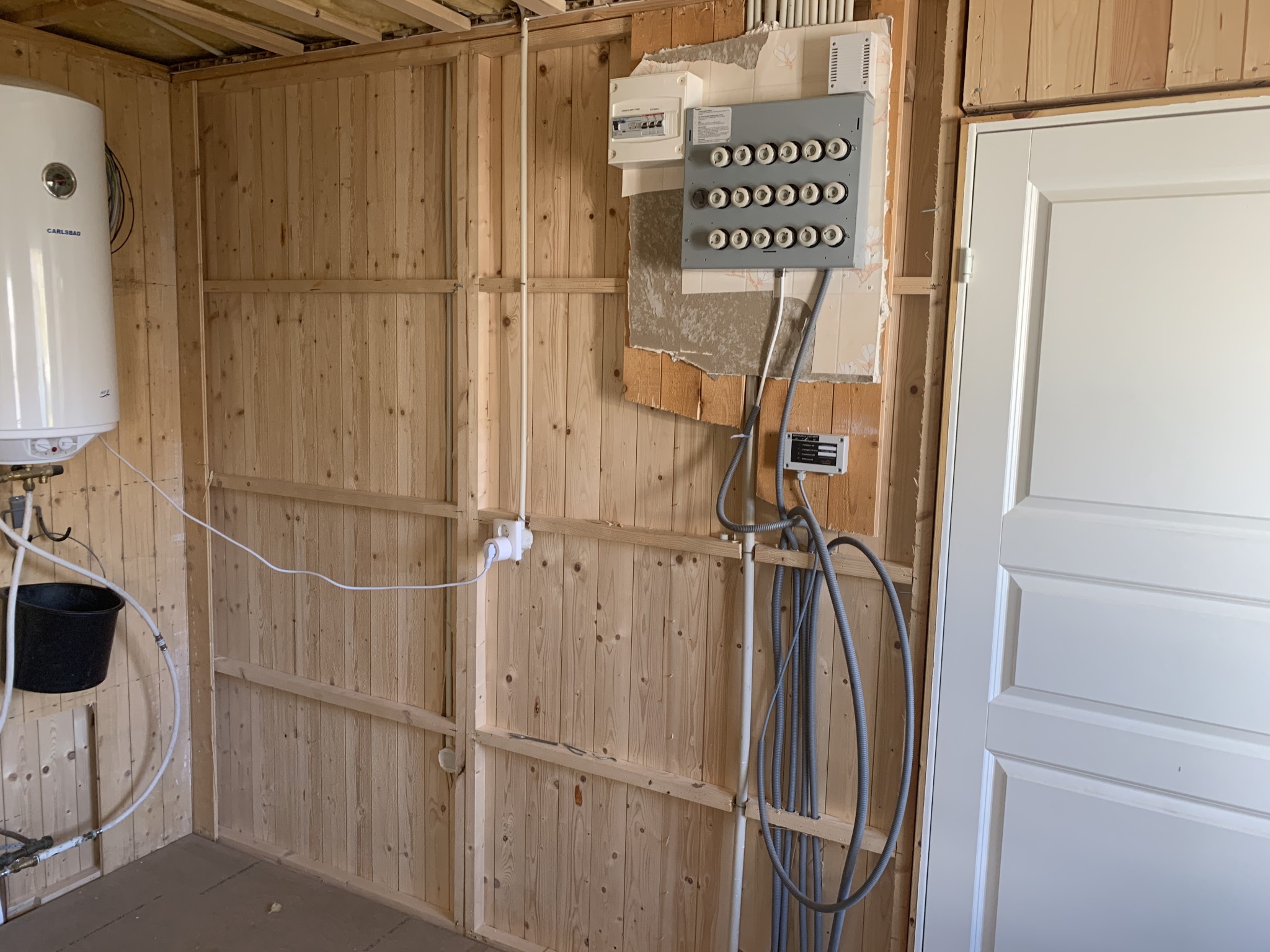
It consists of two interior walls and two exterior walls.
The exterior walls have horizontal studs at 60 cm centers and 15mm standing plank sheathing.
The interior walls are modular.
See image.
On these two interior walls, I will install 15mm plywood.
The vertical studs are at 120 cm centers and the horizontal ones at 60 cm centers.
The drywall will be mounted vertically, of course.
I am thinking about using 900mm drywall for easier joint shifting against the plywood.
And easier to handle alone.
I will use 41mm screws.
What I'm concerned about...
It's stated that joints should be over a stud…
That's not possible when the studs are like this…
Is it strong enough to screw into the horizontal ones and then fasten it to the plywood/drywall at the joints?
I'm not keen on tearing up the plank sheathing to insert blocking...
The old drywall was just 9mm, which was nailed to the plank sheathing and studs.
I will soon start installing drywall in the laundry room.
It consists of two interior walls and two exterior walls.
The exterior walls have horizontal studs at 60 cm centers and 15mm standing plank sheathing.
The interior walls are modular.
See image.
On these two interior walls, I will install 15mm plywood.
The vertical studs are at 120 cm centers and the horizontal ones at 60 cm centers.
The drywall will be mounted vertically, of course.
I am thinking about using 900mm drywall for easier joint shifting against the plywood.
And easier to handle alone.
I will use 41mm screws.
What I'm concerned about...
It's stated that joints should be over a stud…
That's not possible when the studs are like this…
Is it strong enough to screw into the horizontal ones and then fasten it to the plywood/drywall at the joints?
I'm not keen on tearing up the plank sheathing to insert blocking...
The old drywall was just 9mm, which was nailed to the plank sheathing and studs.



Click here to reply