
5,278 views ·
15 replies
5k views
15 replies
Joint MDF at joints instead of construction
Renovating in the basement and have chosen MDF to build boxes around ventilation and plumbing. The reason is the smaller built-in dimension that is possible, i.e., no need for studs between vertical and horizontal boards. Given the length, I have had to join the boards end-to-end. 16 mm MDF.
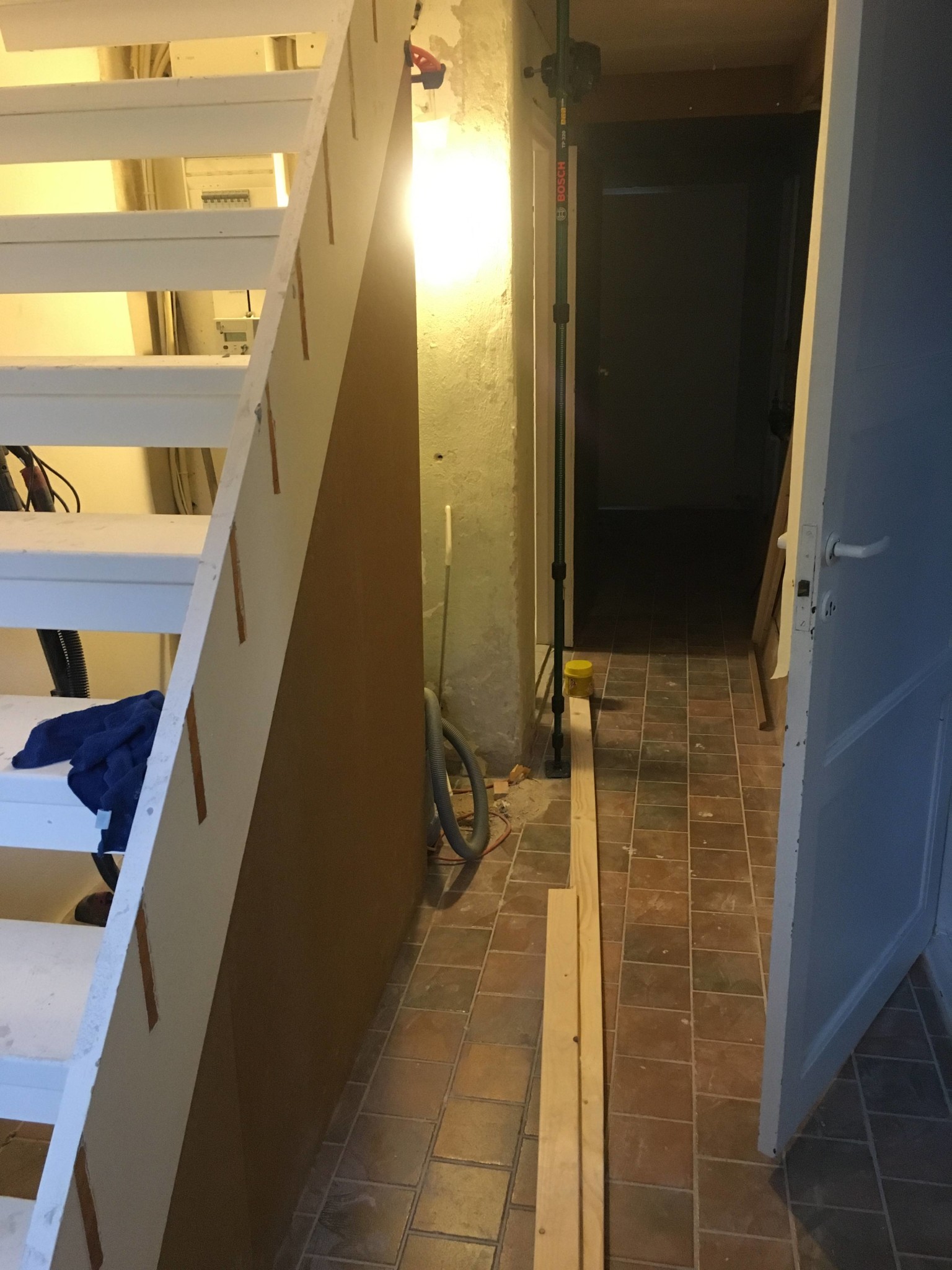
2. Enclosing the previously open staircase. Choosing 25 mm MDF because I want to paint it with high-gloss enamel (like the staircase). There will be joints between the staircase wood and MDF side-to-side (using standard MDF board sizes). Placing the board directly on the tile floor.
The question is how I avoid cracking in the joints. I have glued with PL 200, which may be a bit too flexible (as you want a rigid joint). Studs behind the boards pre-drilled and used drywall screws in MDF (like drywall). I have also beveled the boards at the seams (as with drywall) and filled with 2-component filler (Plastic Padding wood filler). The edge joints are straight (not mitered) and filled with PP. Despite this, I already see small cracks forming after 2 weeks. Painted with ceiling paint (Alcro RF 14). I know MDF is tricky with some movement due to humidity (the basement is well-drained with underfloor heating and good ventilation).
So: what glue to use? PL600 more rigid? Normal wood glue? PU glue? How to fill: bevel or not bevel? Choice of filler? Other tips?
My take is to get the joint as rigid as possible to minimize movement in the joint.
Best regards,
Fredrik
2. Enclosing the previously open staircase. Choosing 25 mm MDF because I want to paint it with high-gloss enamel (like the staircase). There will be joints between the staircase wood and MDF side-to-side (using standard MDF board sizes). Placing the board directly on the tile floor.
The question is how I avoid cracking in the joints. I have glued with PL 200, which may be a bit too flexible (as you want a rigid joint). Studs behind the boards pre-drilled and used drywall screws in MDF (like drywall). I have also beveled the boards at the seams (as with drywall) and filled with 2-component filler (Plastic Padding wood filler). The edge joints are straight (not mitered) and filled with PP. Despite this, I already see small cracks forming after 2 weeks. Painted with ceiling paint (Alcro RF 14). I know MDF is tricky with some movement due to humidity (the basement is well-drained with underfloor heating and good ventilation).
So: what glue to use? PL600 more rigid? Normal wood glue? PU glue? How to fill: bevel or not bevel? Choice of filler? Other tips?
My take is to get the joint as rigid as possible to minimize movement in the joint.
Best regards,
Fredrik
Last edited:

I had used wood glue. In the corners, I had complemented with screws (pre-drill though!)
I definitely would not have put MDF directly on the tiles, that's asking for trouble. MDF is antimatter to moisture and behaves accordingly. You would need something like sill paper in between.
The question is whether MDF is great at all in a basement. Varnish carefully and reinforce edges and corners that might otherwise get chipped.
I definitely would not have put MDF directly on the tiles, that's asking for trouble. MDF is antimatter to moisture and behaves accordingly. You would need something like sill paper in between.
The question is whether MDF is great at all in a basement. Varnish carefully and reinforce edges and corners that might otherwise get chipped.
We have in several places in the house joined MDF to gypsum and have then glued seam tape on it with bathroom adhesive, then smoothed it with putty. Now we have also put microlit over it, but have no cracks a year later. If it doesn't work, the alternative is to make the seam clear so that it becomes part of the design.
Thank you for the answer! Yes, I've considered the possibility of using a joint tape. I'm thinking of trying with PU glue, plenty of screws, and then PP two-component universal filler which is a bit more flexible than plastic wood. It will probably end up with cracks, but then I still have the options of tape and molding.
Mja, I am still skeptical. It is alarmingly similar to the prohibited risky construction "wooden joists on a concrete floor." Organic materials absorb moisture through concrete, and when you have tiles, the moisture comes up through the seams. I believe there is a risk that you'll get moisture stains on the MDF unless you have a full barrier between MDF and the floor, such as construction plastic. It's difficult to make a coating completely moisture-proof.fln213 said:
I have now done a test. Recessed half the wooden beam with a 45-degree hand router steel on the edges (the step part in pine and the MDF board). Primed the MDF board with solution-based primer at the bottom. Used PL200. Puttyed twice with PP Superspackel for better elasticity than with Plastic Wood. Finished the puttying with carpentry filler for a good finish.
After about 1 week, it cracked at the edge without the recess. So today, I milled a recess with the hand router and puttied again. We'll see how long it holds. If there are cracks, I'll put up a small thin strip.
After about 1 week, it cracked at the edge without the recess. So today, I milled a recess with the hand router and puttied again. We'll see how long it holds. If there are cracks, I'll put up a small thin strip.

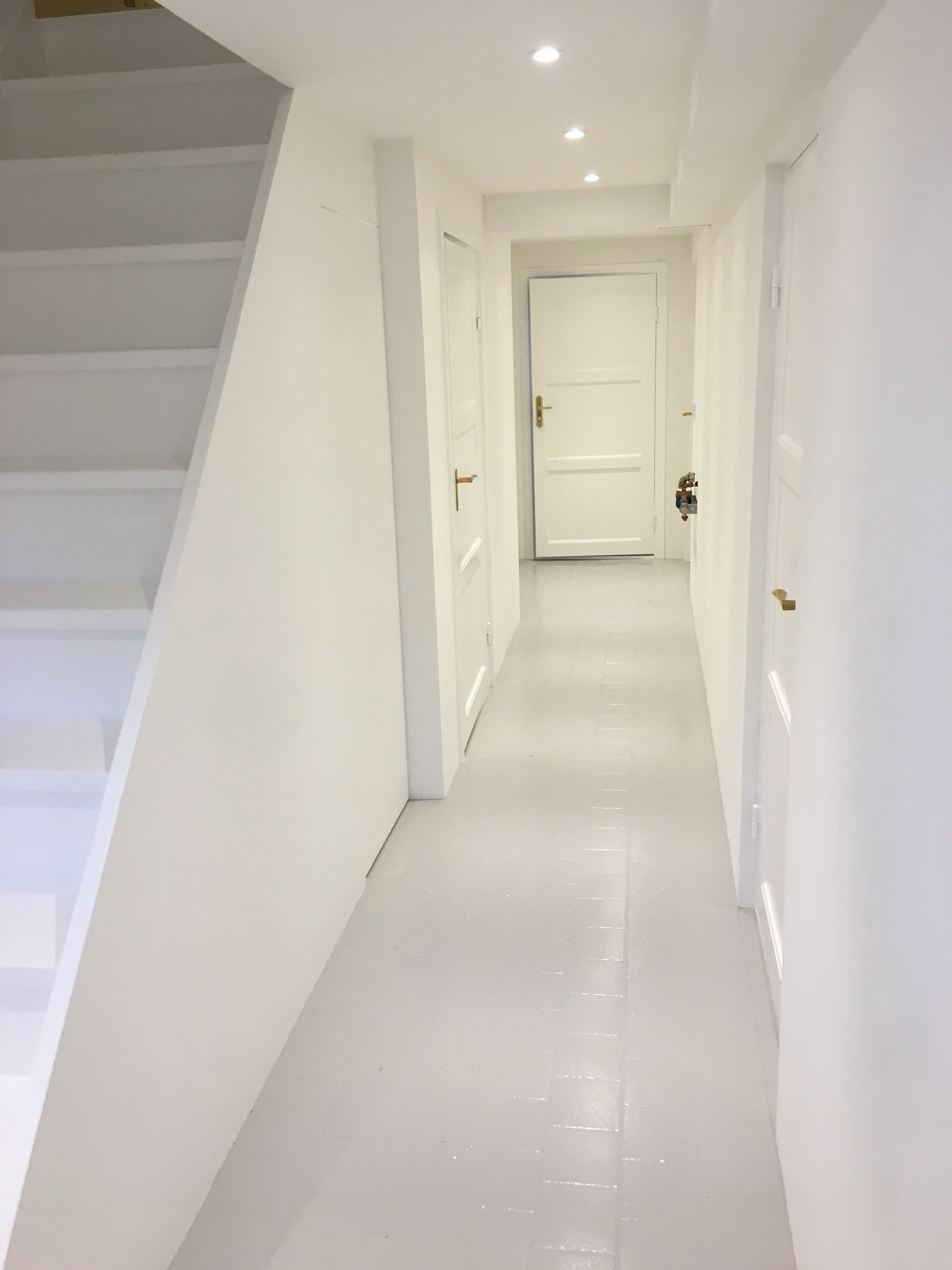

Thanks for the question! Unfortunately, there are a few minimal cracks. But I have also installed a dehumidifier after the construction that keeps the RH at 55% constantly. So I actually thought about milling and refilling those parts. If that doesn't work, I'll use a thin brass profile.
Sorry, I saw that I wrote twice. What I used was PP Superspackel https://www.swedol.se/pp-superspackel-elasticpg-1007223.html Big difference in elasticity compared to plastic wood.
Sorry, I saw that I wrote twice. What I used was PP Superspackel https://www.swedol.se/pp-superspackel-elasticpg-1007223.html Big difference in elasticity compared to plastic wood.