
269 views ·
4 replies
269 views
4 replies
Joint between Floor/Wall in Boiler Room
Hello,
I'm refreshing my boiler room. I've replaced the floor drain and will be laying tiles on the floor with a row of tiles up the wall. How do I easily seal between the floor/wall? By the way, I'm not planning on applying a waterproof layer on the floor. It seems like you have to buy a lot of products where most will end up unused. It's about 2.5m.
The floor is an uninsulated concrete slab.
/Martin
I'm refreshing my boiler room. I've replaced the floor drain and will be laying tiles on the floor with a row of tiles up the wall. How do I easily seal between the floor/wall? By the way, I'm not planning on applying a waterproof layer on the floor. It seems like you have to buy a lot of products where most will end up unused. It's about 2.5m.
The floor is an uninsulated concrete slab.
/Martin
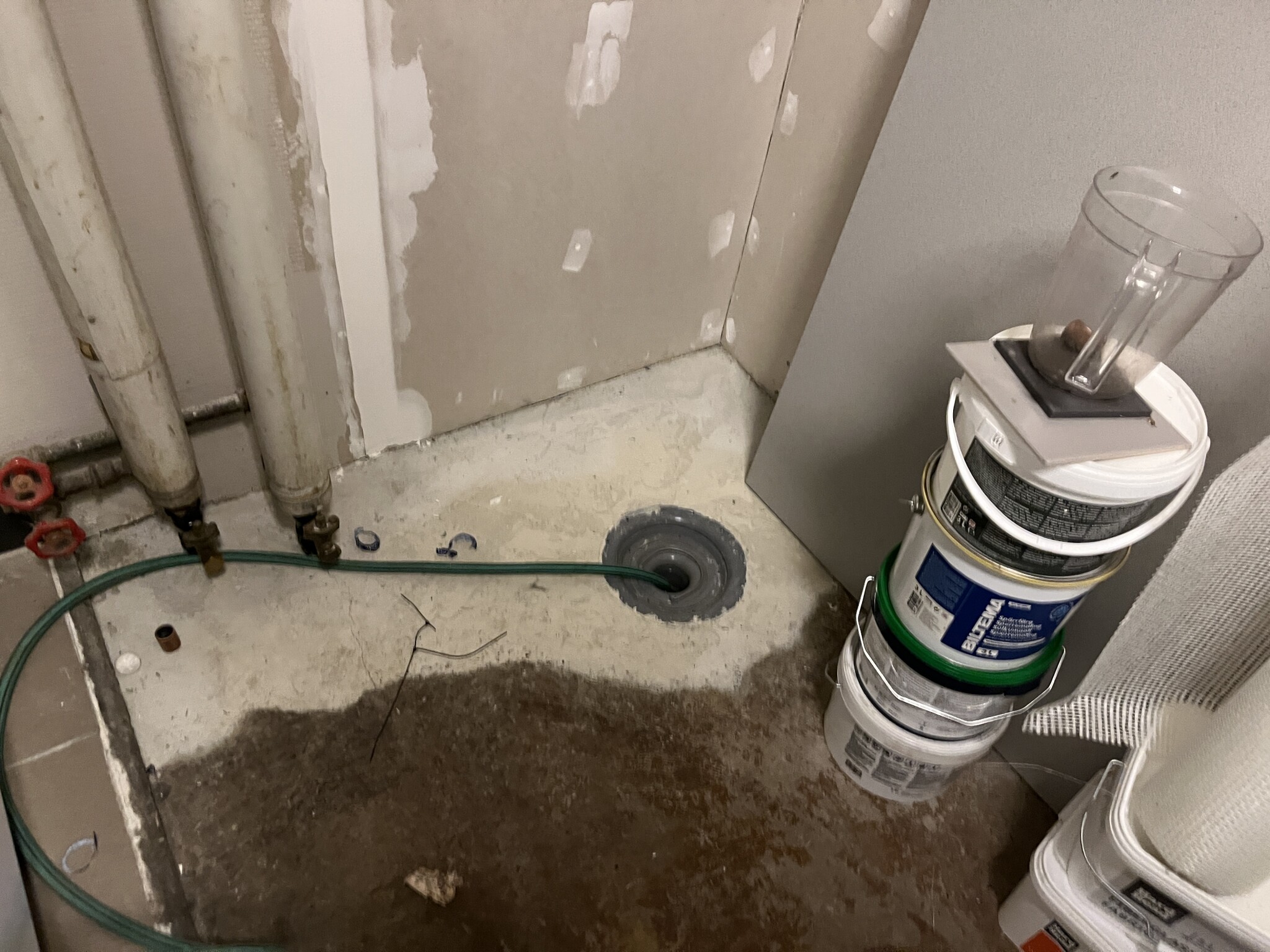


Do you mean sealing the gap when you write täta?
It doesn't have to be tight. But hard grout, which is used between the tiles, or elastic soft sealant are two options depending on how much you think the floor and walls will move against each other.
It doesn't have to be tight. But hard grout, which is used between the tiles, or elastic soft sealant are two options depending on how much you think the floor and walls will move against each other.

If water gets on the floor, it will seep through the joints between the tiles on the floor and spread laterally inside the adhesive and on/in the concrete. If there is only waterproofing in the corner between the floor and the wall, the water on/in the concrete will move under the waterproofing and reach the wall. If you want to protect the drywall 100%, you need to have waterproofing over the entire floor.
If there is an uninsulated concrete slab exposed to ground moisture, it's usually not advisable for drywall to extend all the way down to the slab. If the drywall reaches the slab, there is a risk it will absorb moisture from the slab.
I think it is common to have waterproofing around the floor drain, for example, half a meter out all around. Check the industry regulations from BKR.
If there is an uninsulated concrete slab exposed to ground moisture, it's usually not advisable for drywall to extend all the way down to the slab. If the drywall reaches the slab, there is a risk it will absorb moisture from the slab.
I think it is common to have waterproofing around the floor drain, for example, half a meter out all around. Check the industry regulations from BKR.
Click here to reply