The cutting depth and ensuring it is straight are fundamental, so do I need specific machines and a workbench for this?
For example, with a miter box, is it possible to set the cutting depth there so that you don't cut through your wooden piece?
And how would you cut on the height, i.e., imagine the board standing on its short side.
Yes, but how should I fasten them together? The idea is that you only need 4 pieces for whatever you need to cast instead of constantly cutting foam board.
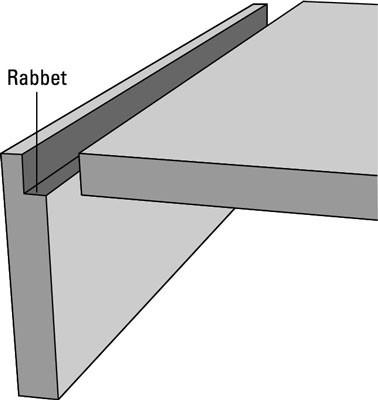
I didn't check so carefully so I didn't understand the size function. Anyway, it is based on 4 L-shapes that are joined together. The fact that the joint in the L is made with a rabbet isn't very important. Just screw that joint together instead!
As a rule, I cut it out with the table saw. It also works with a regular circular saw and some form of guide rail, or, as mentioned, with a router table or a handheld router.
Ok!
I thought that a rabbet would provide more stability and precision (it's nice when things are precise), but maybe it doesn't make much difference then?
How would you go about cutting a rabbet? Route it with a handheld router or use a table saw?
Thanks!
Yes, a rabbet provides stability and precision (assuming it's made accurately at right angles). In this case (a small mold) I believe it's not needed. Even better in terms of "stability and precision" would be a "box joint" (finger joint), but that's even more overkill for such a small mold.
A good way to assemble them with simple means is to glue and screw them tightly together. Once the glue has dried, remove the screws and drill holes where the screws were (e.g., 8mm). In these holes, plug with an 8mm plug that you then saw off and chisel flush with the surface. Finish with sandpaper. This will be more stable than a simple glued rabbet. Significantly easier to make without a table saw and/or router.
I would make such a rabbet on a table saw. A router table is also an option, and a handheld router another, though it's the most complicated of the three methods.
A thousand thanks for all the answers. Very useful information. So dowels rather than screws? Is it considered more aesthetically pleasing?
It is considered more aesthetically pleasing in carpentry circles, yes! Glued dowels are also stronger than screws, although it doesn't matter in this case!
Click here to reply
Vi vill skicka notiser för ämnen du bevakar och händelser som berör dig.