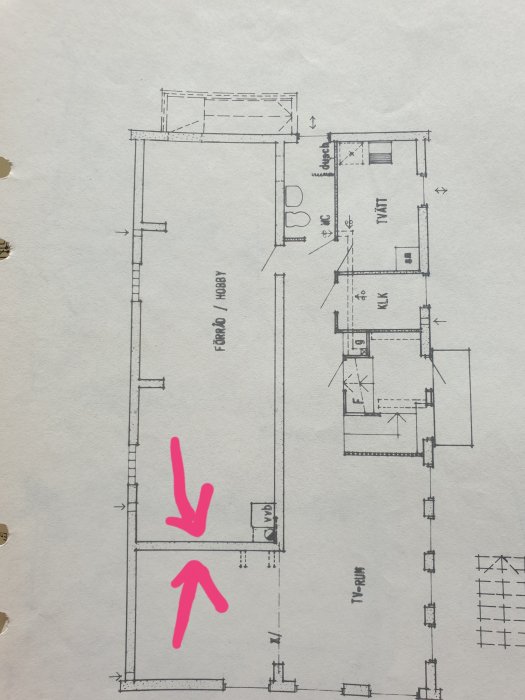
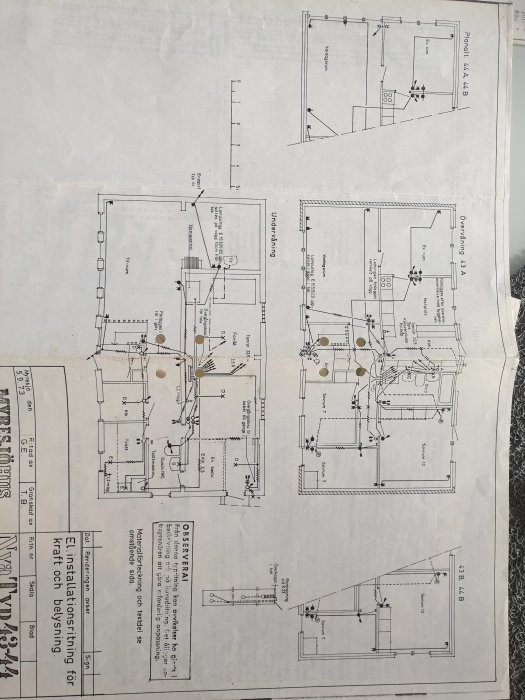
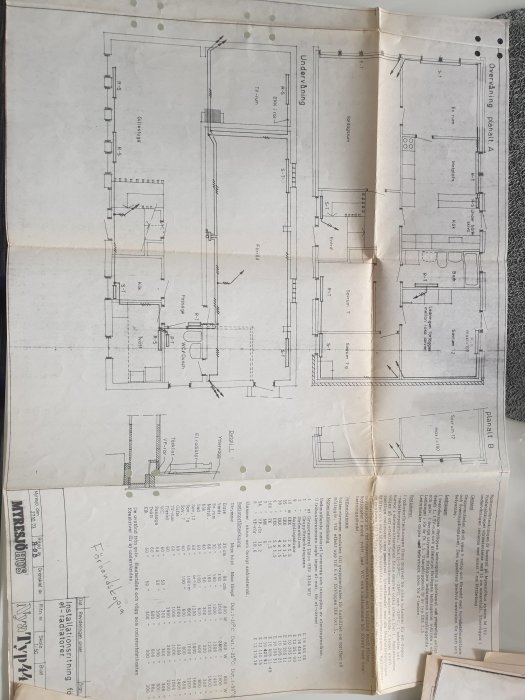
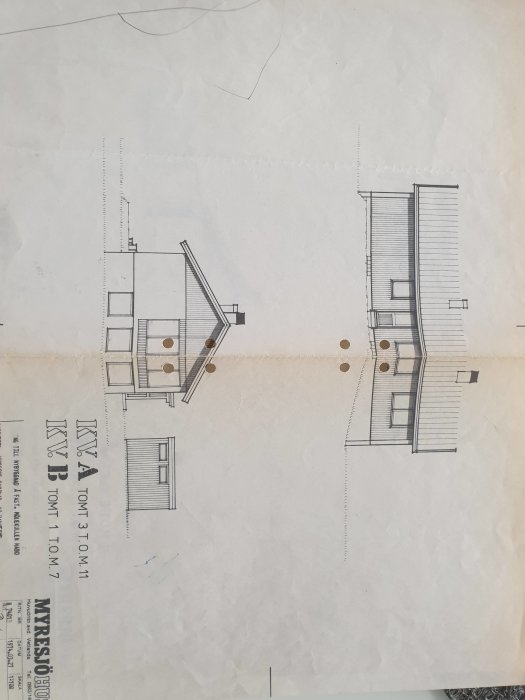
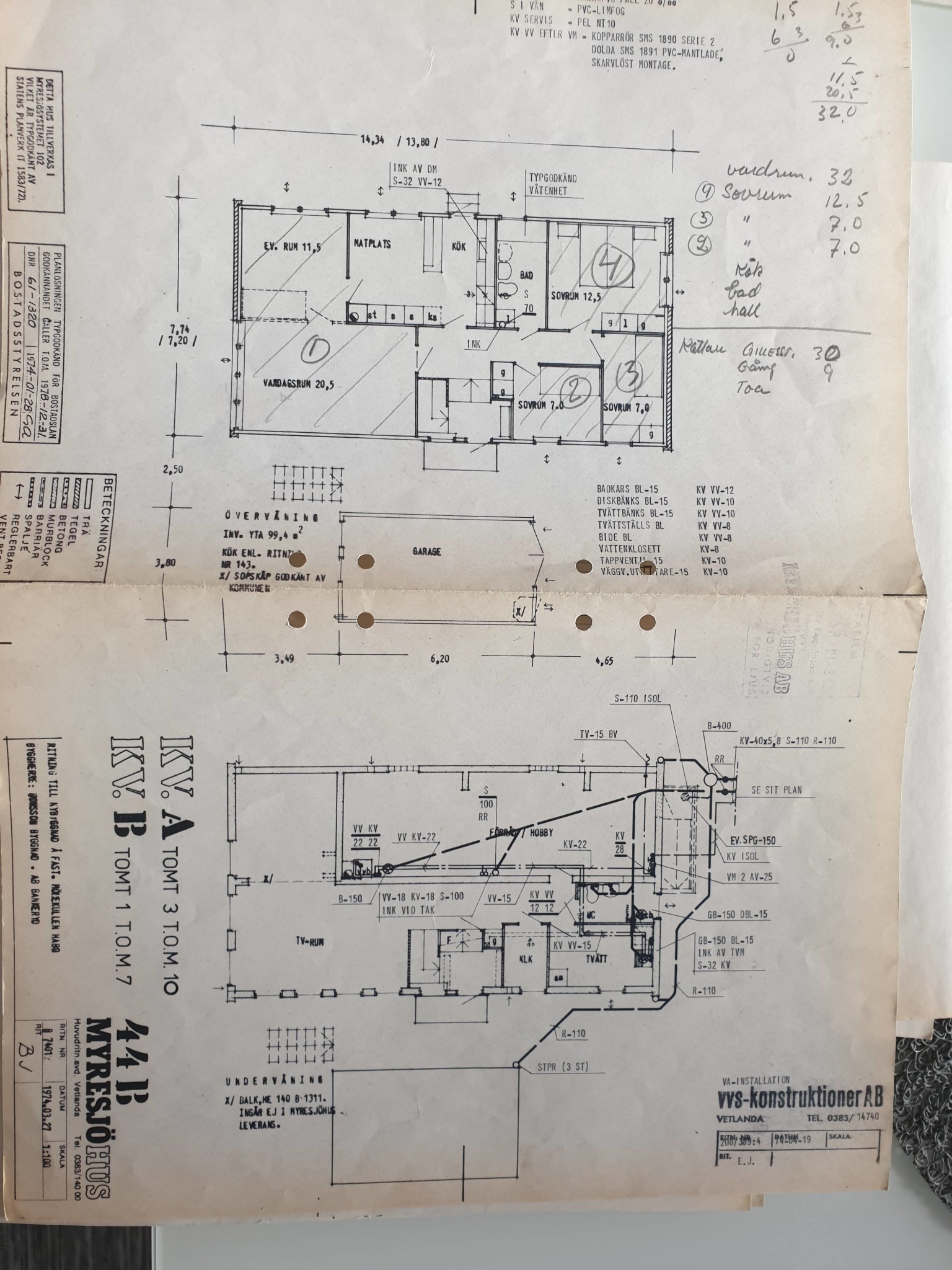
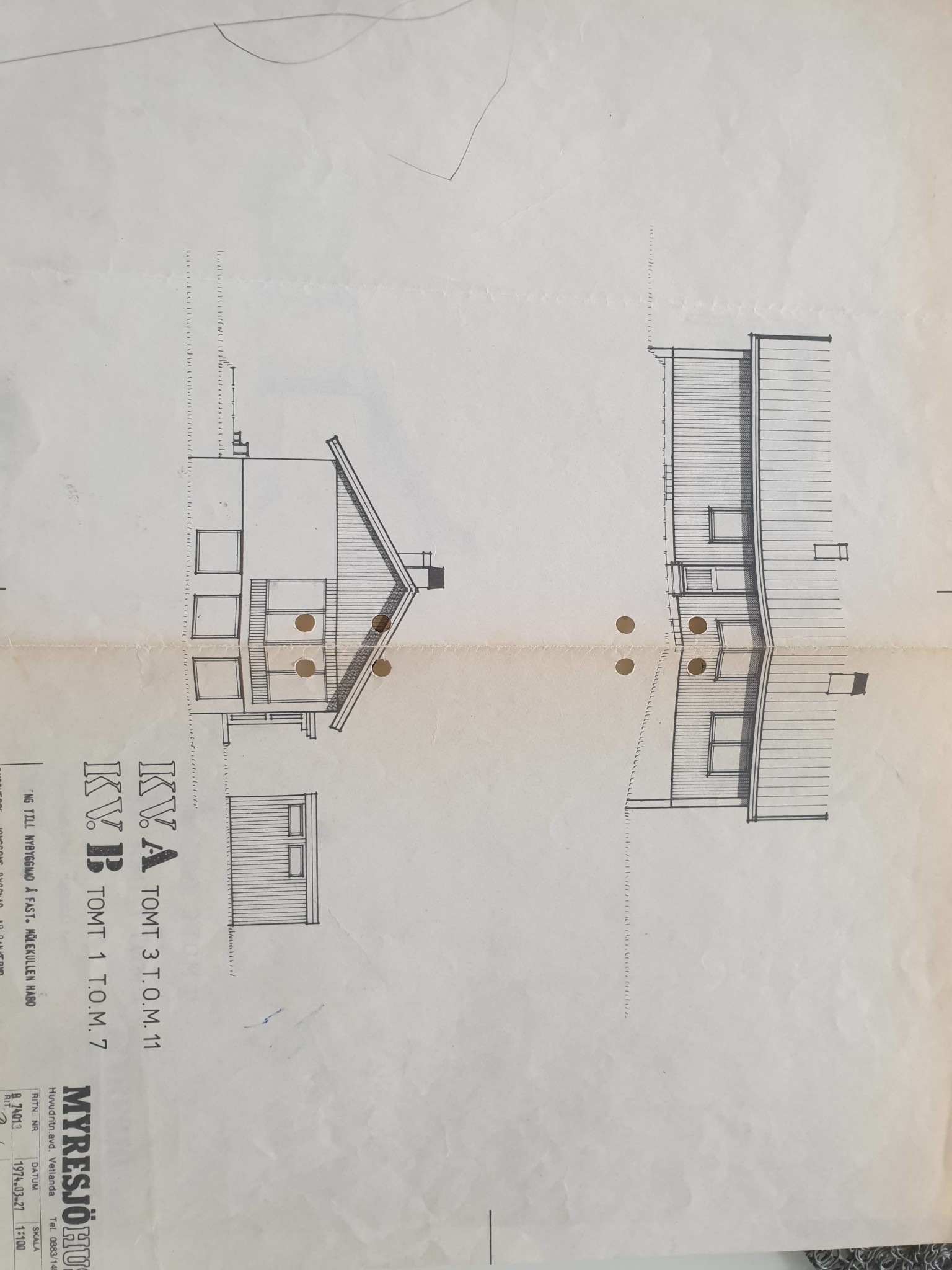
Hi, I want to open a door opening in a basement wall and I'm wondering if the intended wall is load-bearing. The house is a Myresjöhus from '74.
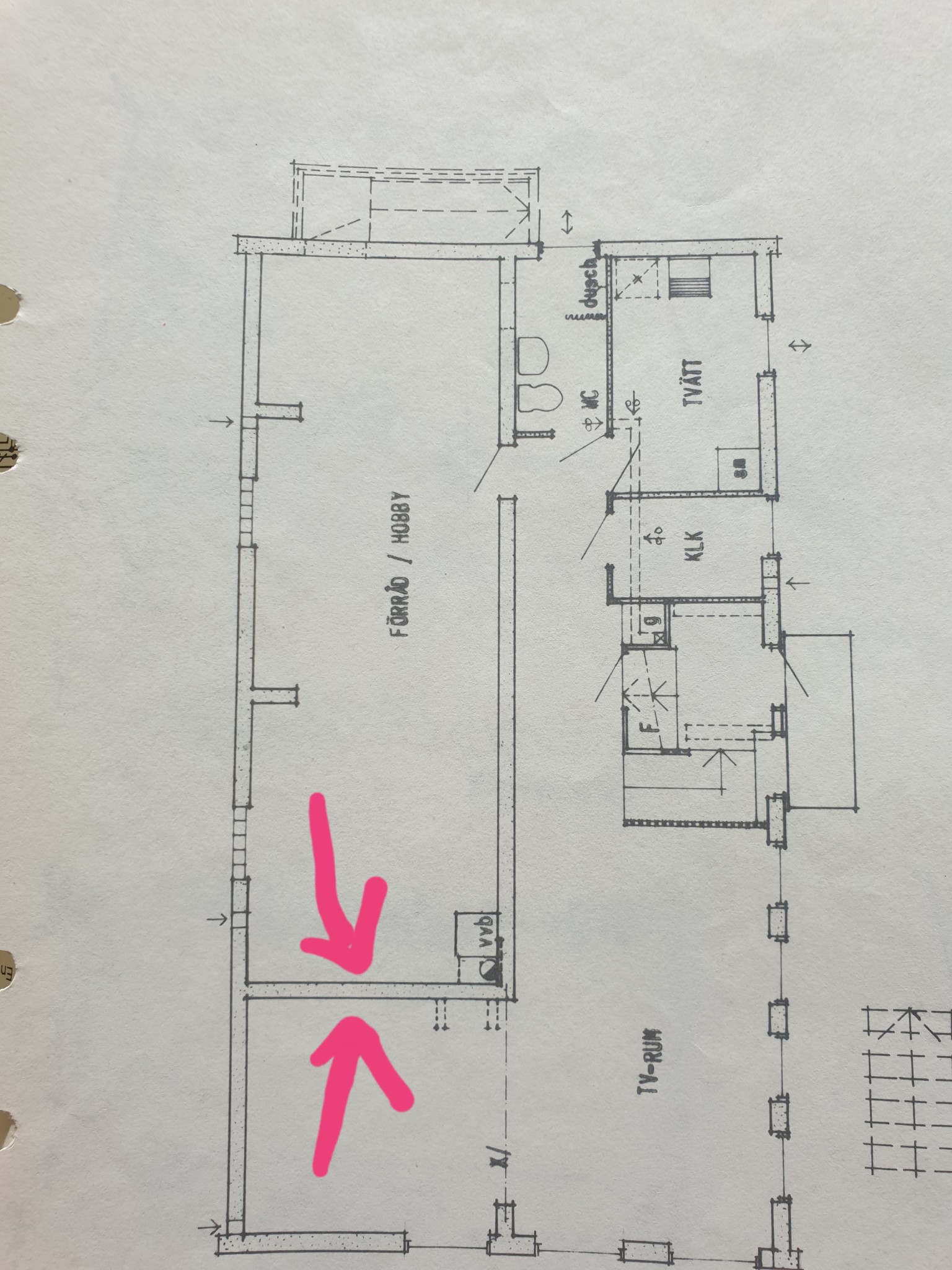
The wall is a lecavägg.
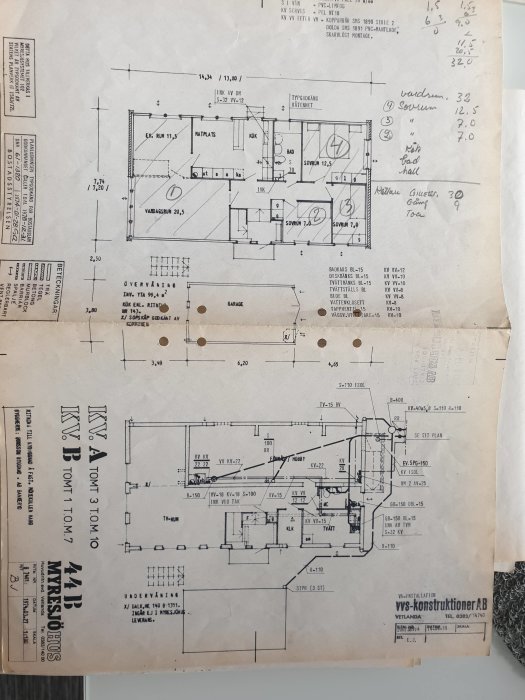
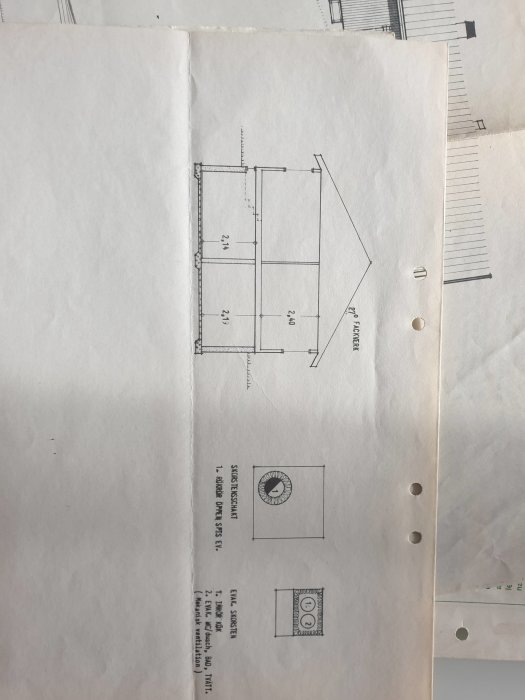
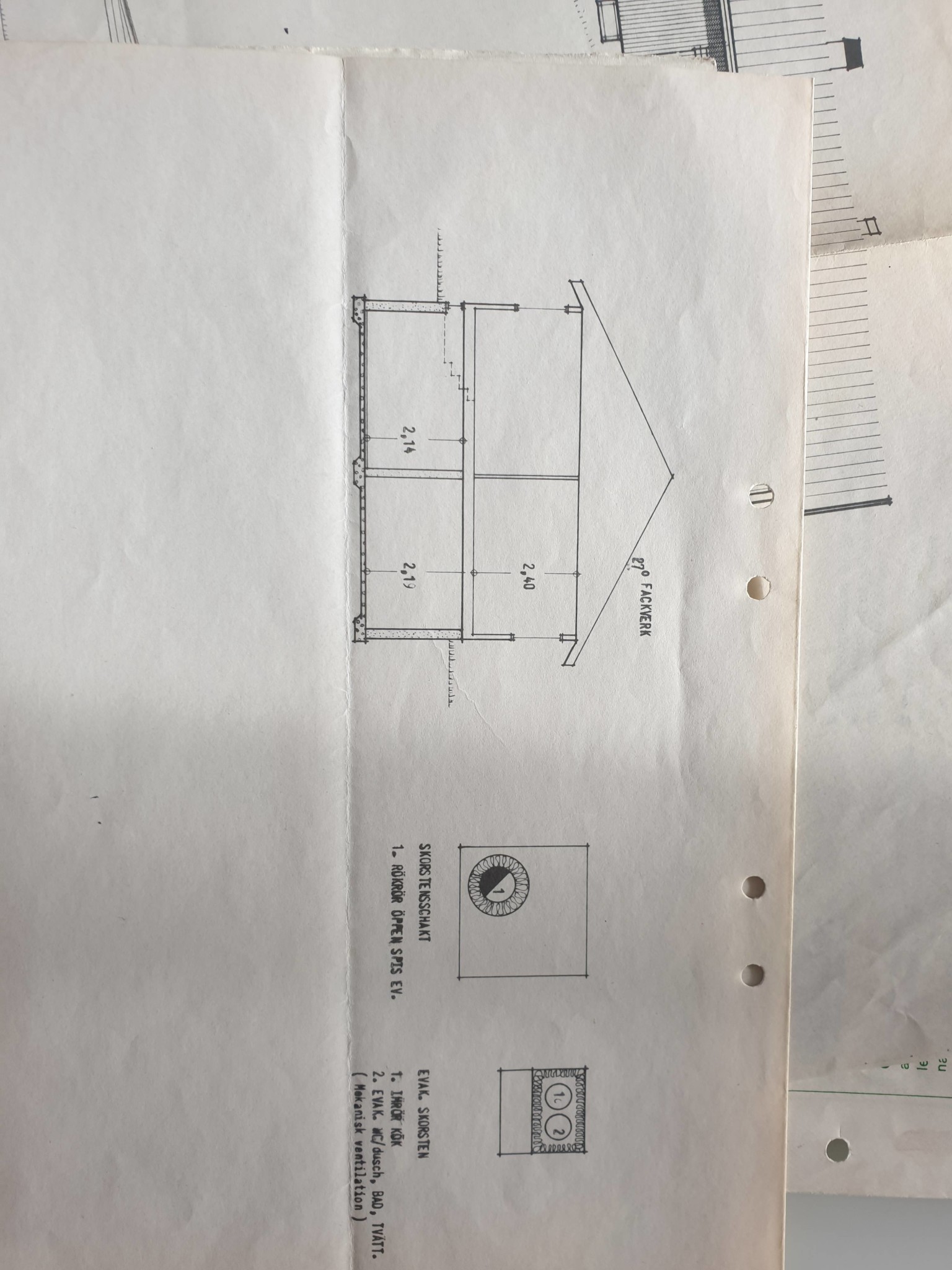
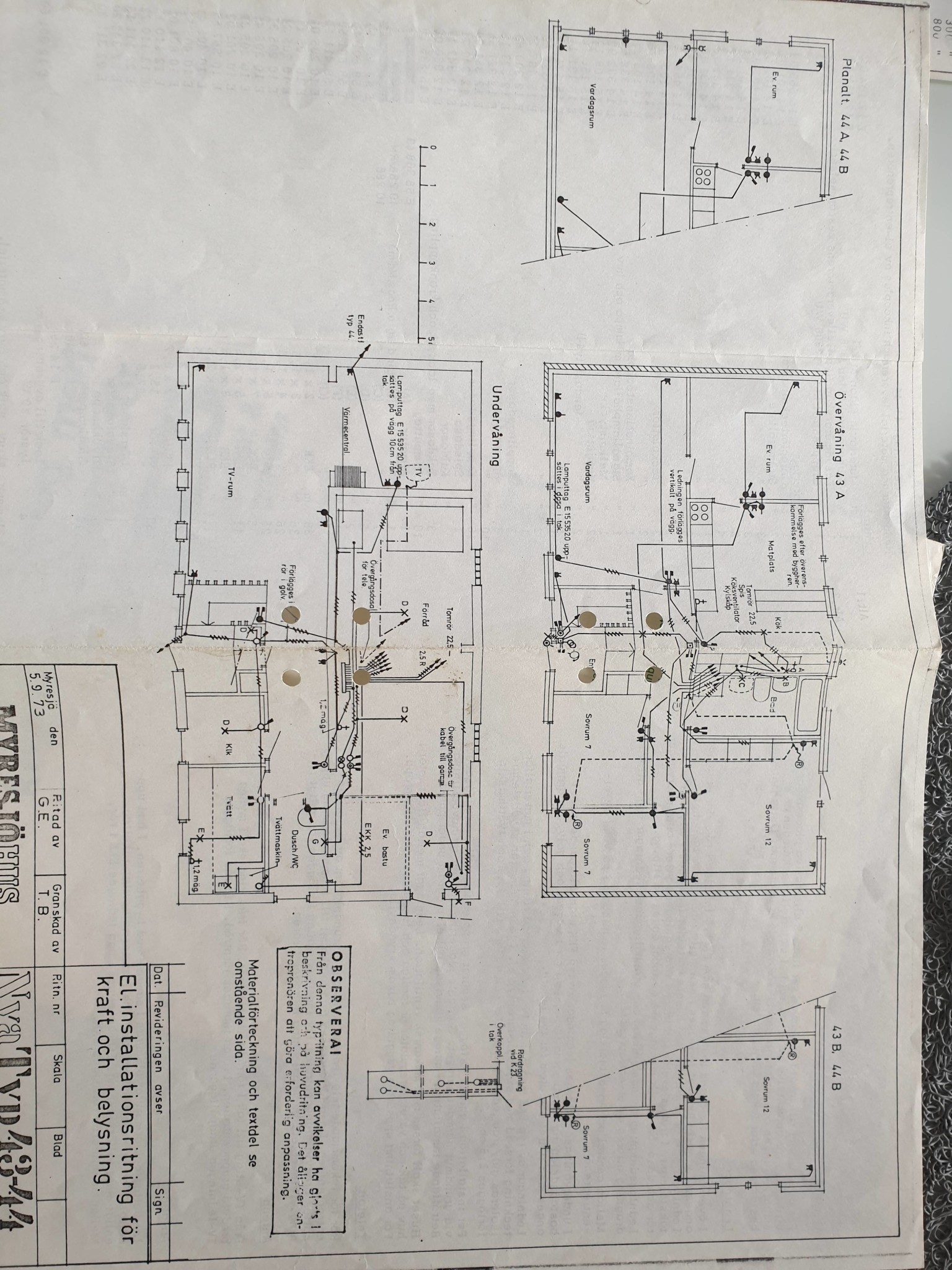
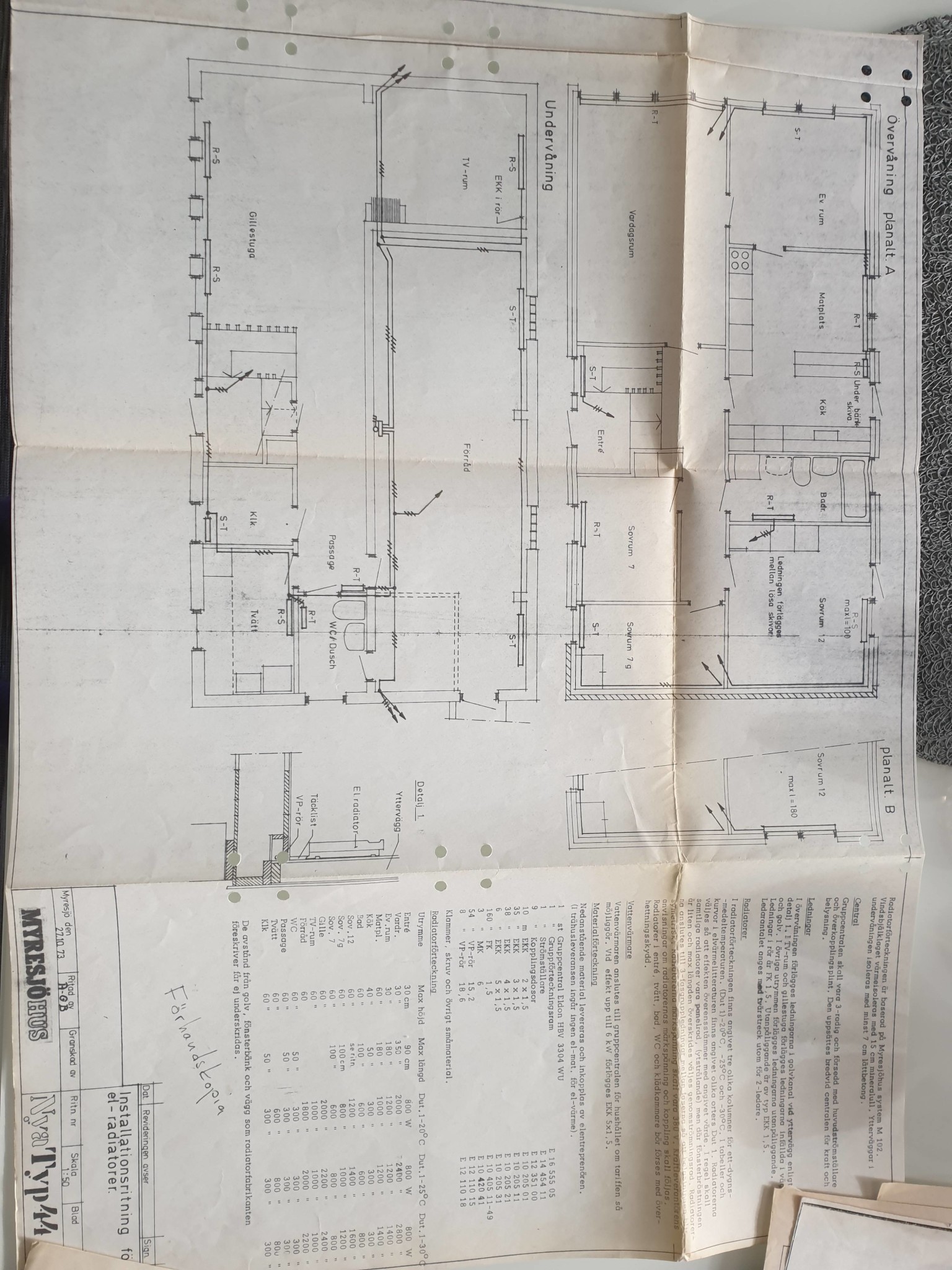
I guess that the intermediate floor lies across the house and is spliced over the load-bearing wall. In that case, it should not be load-bearing. Is there a beam supporting the floor in the opening to the TV room? Do you have the drawing of the floor structure?
It could be a wall needed to hold the outer wall in place. That wall is subject to considerable pressure from the soil.
Probably yes. Backfilled masonry walls over a certain length need support. Compare with hobby rooms/storage that have two such shorter wall pieces perpendicular to the outer wall. Is the wall backfilled? If so, maybe you can leave a piece of the wall if everything else works and you can remove it if it doesn't support the joist?
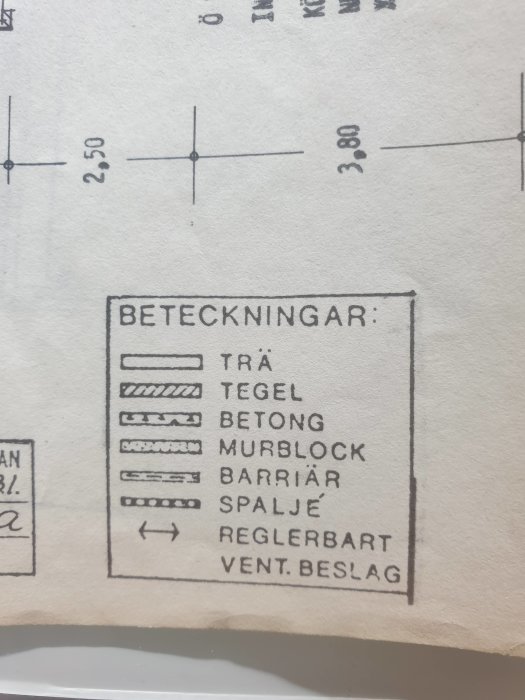
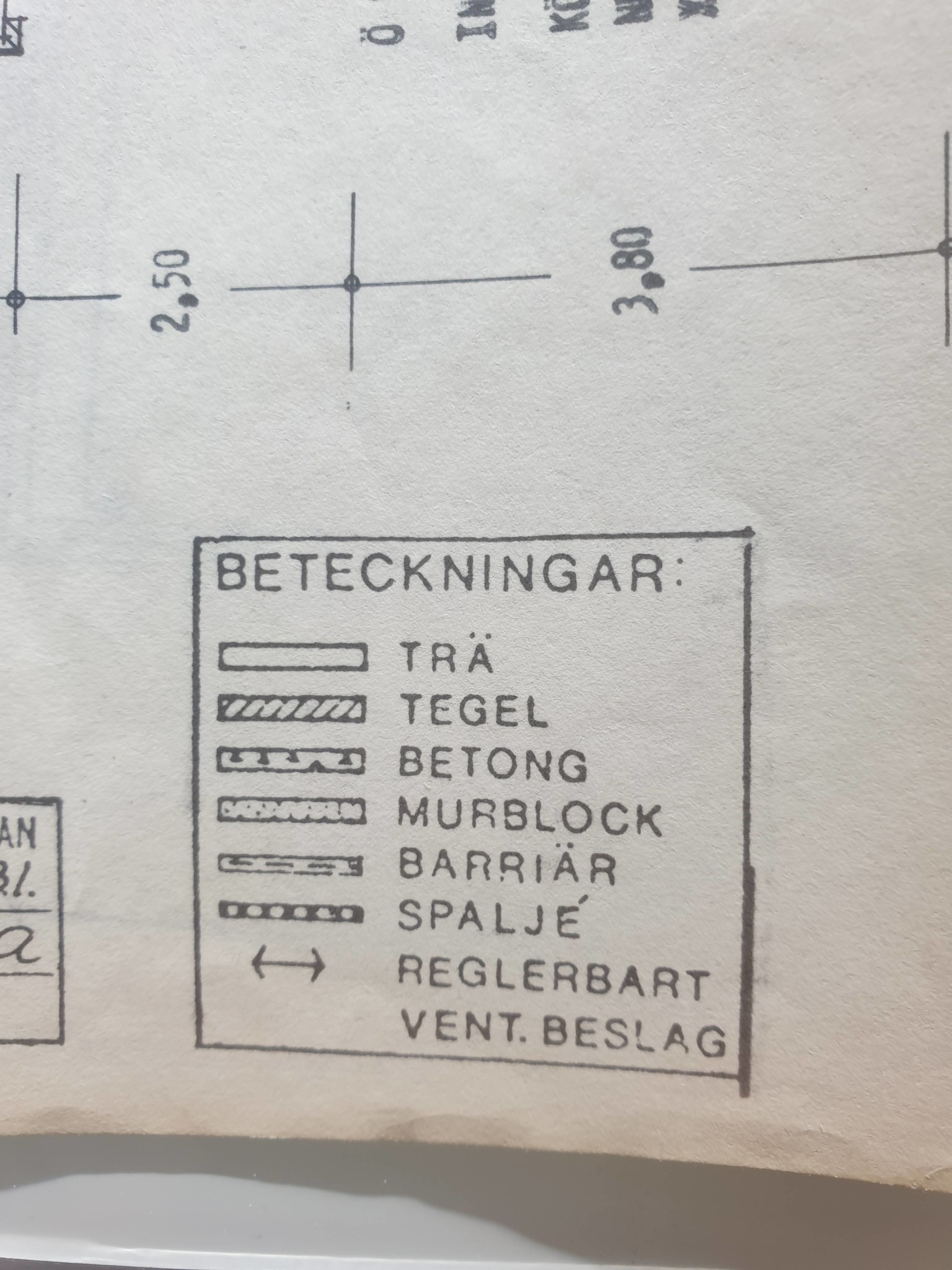
Considering the vertical loads, the wall is not load-bearing. However, it can have a supporting function in relation to the outer wall made of leca blocks. If this need exists, it can be reconstructed afterward. Leaving a small supporting wall is usually sufficient. You can download design guidelines for leca walls from Weber's website.
Hello!
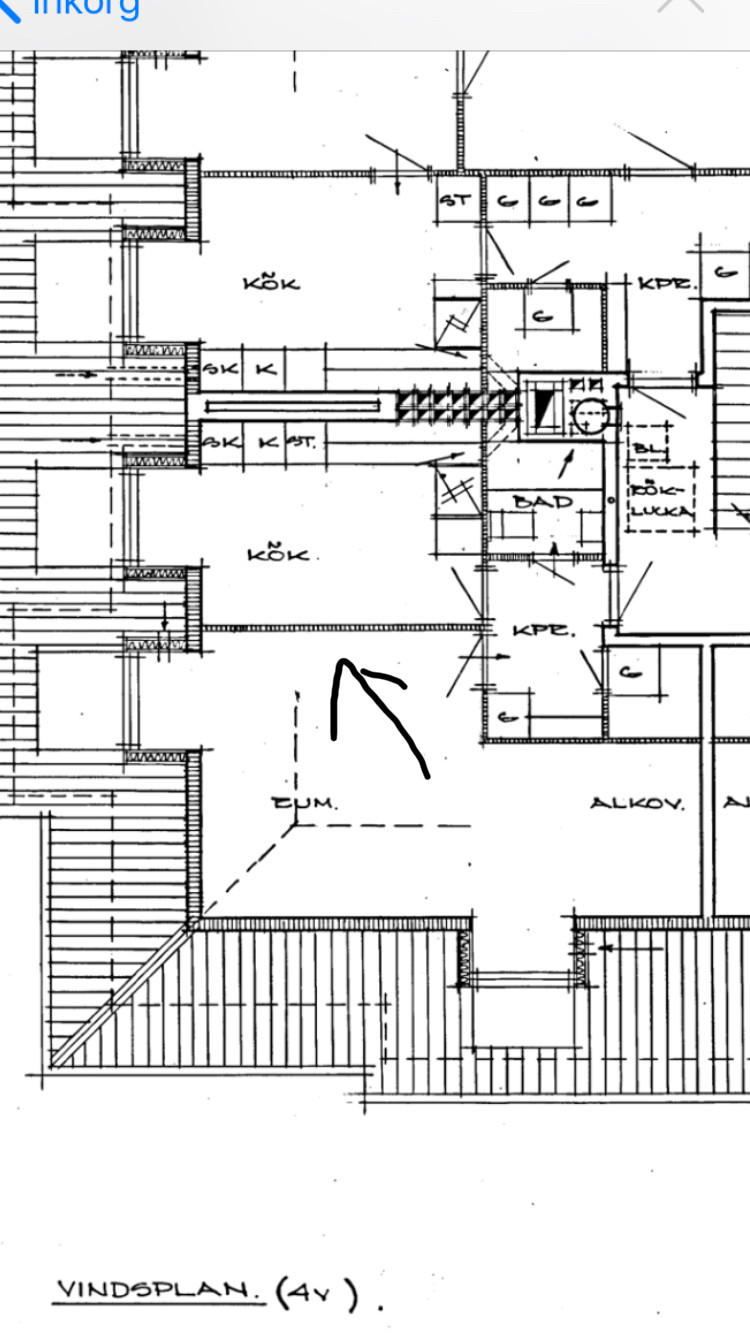
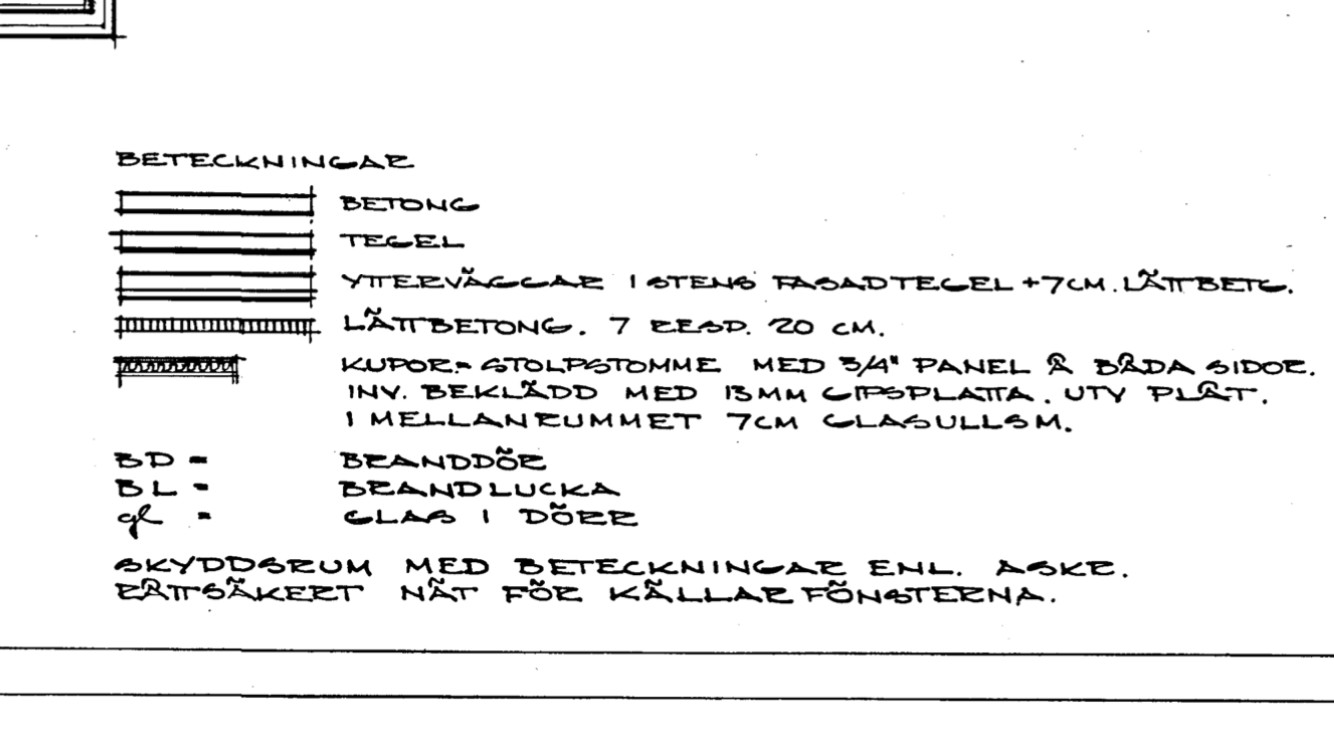
I need your expertise. I want to demolish a wall in the apartment and wonder if you think it is load-bearing? The wall is lightweight concrete and 7 cm thick.
Of course, I won't demolish the wall until I know for sure that it is not load-bearing. It would be terrible if the whole building collapsed and everyone got flattened..
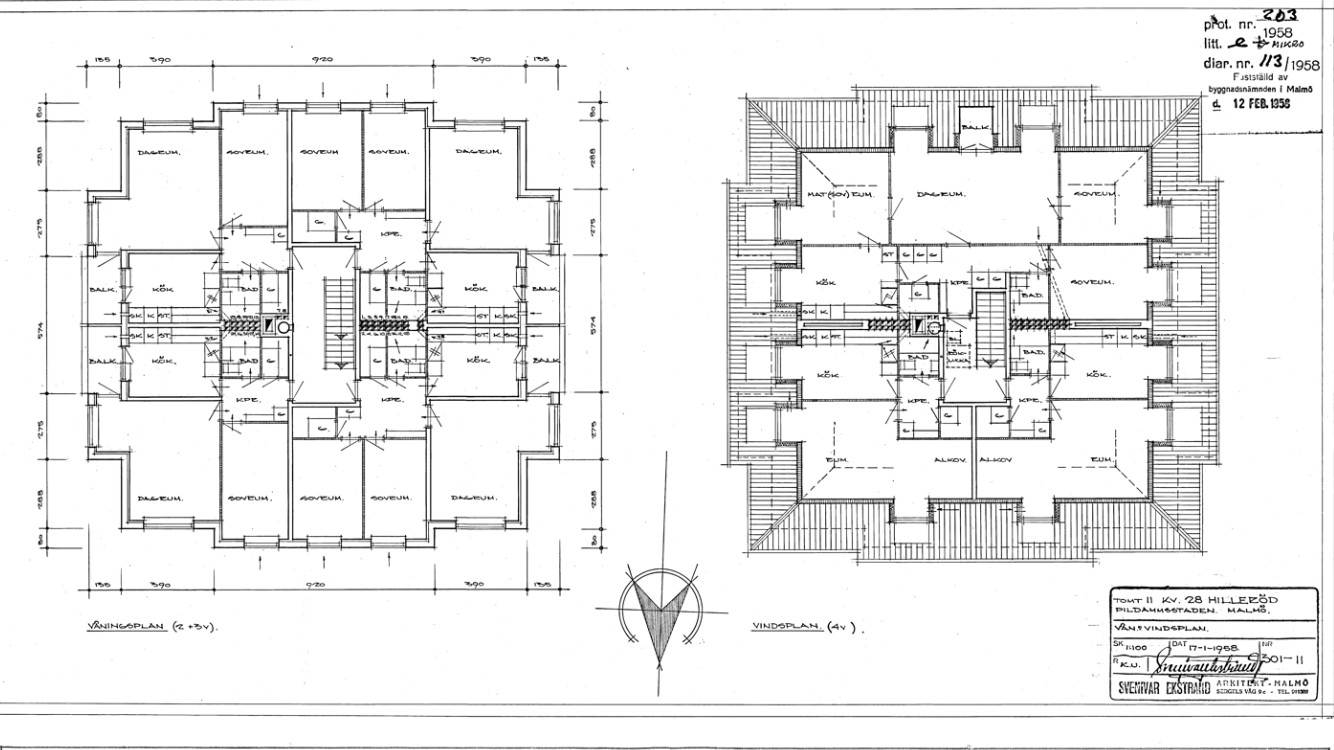
Even if the structural system is not entirely clear from the drawing, one can say that a 7 cm light concrete wall is not load-bearing.
Thank you for the answer. Everyone says you should call in a professional. But as you said yourself, it's hard to believe it would be load-bearing. Light concrete walls that are 60 years old tend to be quite porous in my experience, so the question is whether one would even want to live there if it were load-bearing.
In the 1950s, load-bearing lightweight concrete walls were quite common in multi-family houses, but never narrower than 20 cm. 7 cm is definitely not load-bearing. You can see on the drawing that there is an in-situ cast frame around the stairwell that plays an important role in the construction. Since it is an attic apartment, it's only some form of roof structure that needs to be supported. The problem with finding someone knowledgeable is that a professional lifespan is too short. Those currently working do not have enough experience...
In the 1950s, load-bearing light concrete walls were quite common in apartment buildings, but never narrower than 20 cm. 7 cm is guaranteed not to be load-bearing. You can see on the drawing that there is a cast-in-place frame around the staircase, which plays an important role in the construction. Since it is an attic apartment, it's only some form of roof structure that needs to be supported. The problem with finding someone knowledgeable is that a career is too short. Those currently active don't have enough experience...
Okay I didn't know they had load-bearing walls in light concrete. You learn something new every day. In my previous apartment, all the interior walls were brick, but the bricks on the load-bearing ones were laid in the other direction, making the wall much thicker. Thanks for the info anyway. Found one more picture.
The association has now said that I need to bring someone to check the wall and certify that it is not load-bearing. Does anyone here know where to find someone with that expertise in the Malmö area?
Best regards, Adam
Click here to reply
Vi vill skicka notiser för ämnen du bevakar och händelser som berör dig.



BirgitS said:

 only a piece of the support wall had to be left. Just as you have written.