
14,563 views ·
44 replies
15k views
44 replies
Is this pressure treated 70s?
Thank you, it's really valuable to hear! Like you, I also experience different smells. The basement has an earthy and musty smell. I'm in the process of tearing out all the framed and organic materials there. In the house and crawl space, it smells like a summer cabin, which I associate with pressure-treated wood. Then there is the asfaboard, which smells a bit more industrial, or however I should explain it. I've taken a sample piece and put it in a bag to smell after work when I've been away for a few hours. The focus is on the summer cabin smell and tearing everything out of the basement. Going forward, I want to remove the asfaboard in conjunction with replacing the facade and then also replace the insulation. But the facade is in good condition, so it's not something I'm rushing with.S Stugmannen said:I can share my experiences from the renovation of our guest cabin, which I saw as a test before the house renovation.
In the guest cabin, I tore everything down except the frame. The vinyl flooring smelled. The asfaboard stank several meters across the yard where I had thrown it after tearing it down. The floor joists and sills were bright brown from some treatment. However, I kept them. I used ozone after that, and nothing smelled afterward, even the floor joists felt much fresher. Now it's been fully renovated for a year, and no smells have emerged since. I feel pretty confident that it's resolved now.
In the house, there are different smells when I tear down, and I don't believe it's odor contamination from the same source. For example, I think the windbreaker is part of the cause of the smell in the house. What I'm hoping for the most is to find water damage in the floor when I tear it down, which I can fix in conjunction with this. I hope to the last to avoid having to replace all the sills. I expect to replace a few pieces here and there. One thing you can try, especially if you have wood shavings in the floor, is to run ozone in the crawl space for about a week and simultaneously turn on the exhaust fans in the house. In this way, the ozone is drawn through the floor, and much of the odor contamination in the subfloor is reduced, but of course, it varies how well it can work, and you can't be in the house when the ozone is running.
Yes, start there and see. Have you put plastic on the ground in the crawl space?MekPappa said:
Thank you, it's very valuable to hear! Like you, I also experience different smells. The cellar has an earthy and sour smell. There I am tearing out all the framing and all the organic material. In the house and crawl space, it smells like summer cabin, and I associate that smell with pressure-treated wood. Then there's the asfaboard, which smells a bit more industrial, or however I should explain it. I have taken a sample piece and put it in a bag to smell after work when I've been away for a few hours. The focus is on the summer cabin smell and tearing out everything in the cellar. In the future, I want to remove the asfaboard in connection with replacing the facade and also change the insulation. But the facade is in good condition, so I'm not rushing with that.
If you're going to do the facade later, I also recommend changing the inside of the walls so that contamination doesn't remain there. But it's good to address the foundation first and see what happens.
The ground is covered with plastic. I probably won't touch the inside of the walls since I've already been puttying and fixing them. On the other hand, I didn't notice any smell on the walls, but I did on the old wallpaper that I tore down. Hopefully, I won't have to redo it anyway.S Stugmannen said:
How has it gone for you?
I have completely gotten rid of my smell. It was in the floor that it was sitting. Especially in the chipboard and subfloor. I've replaced everything and then it disappeared.
It’s progressing. I have replaced all the insulation and also the subfloor in the crawl space. When I tore it down, I saw six floor beams that were painted with the same brown, so I sent an analysis on the sill plate and on a brown floor beam. The sill plate was free from pentachlorophenol, but the beams contained the substance. These are six beams from an addition made afterward (at the same time as the sunroom). So I have also replaced that material. The smell is almost completely gone now, and it no longer clings to clothes. I will also renovate the sunroom in the future and will continue to use ozone in phases to eliminate the odor.S Stugmannen said:
Phew! Yes, it's no fun work, but definitely worth it when it's over. I didn't have to replace the sills, but pretty much the entire floor framework was removed. It's good to hear that it's no longer sticking to the clothes. That's the most important thing since the source of the smell, the root problem, is gone. The odor-contaminated will fade over time with some minor interventions (ozone, painting, etc.). Great job!It’s progressing. I have replaced all the insulation and also the subfloor in the crawl space. When I tore it down, I saw 6 floor beams that were painted with the same brown, so I sent an analysis on the sill and on a brown floor beam. The sill was free from pentachlorphenol but the beams contained the substance. These are 6 beams from an extension built later (at the same time as the conservatory). So I have also replaced that material. The smell is almost completely gone, and it no longer sticks to the clothes. I will also renovate the conservatory in the future and will continue using ozone in sessions to remove it from the odor-contaminated areas.
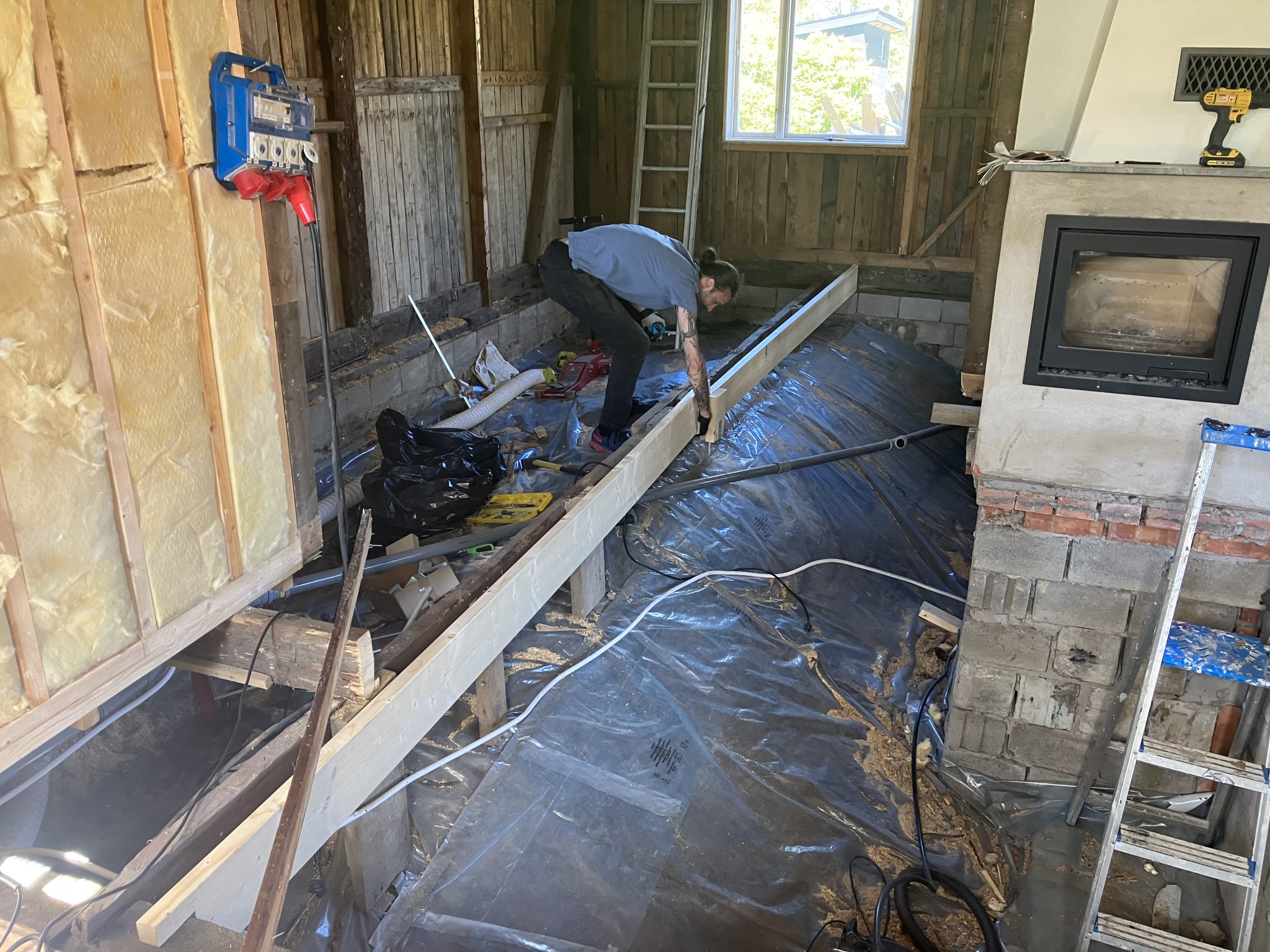
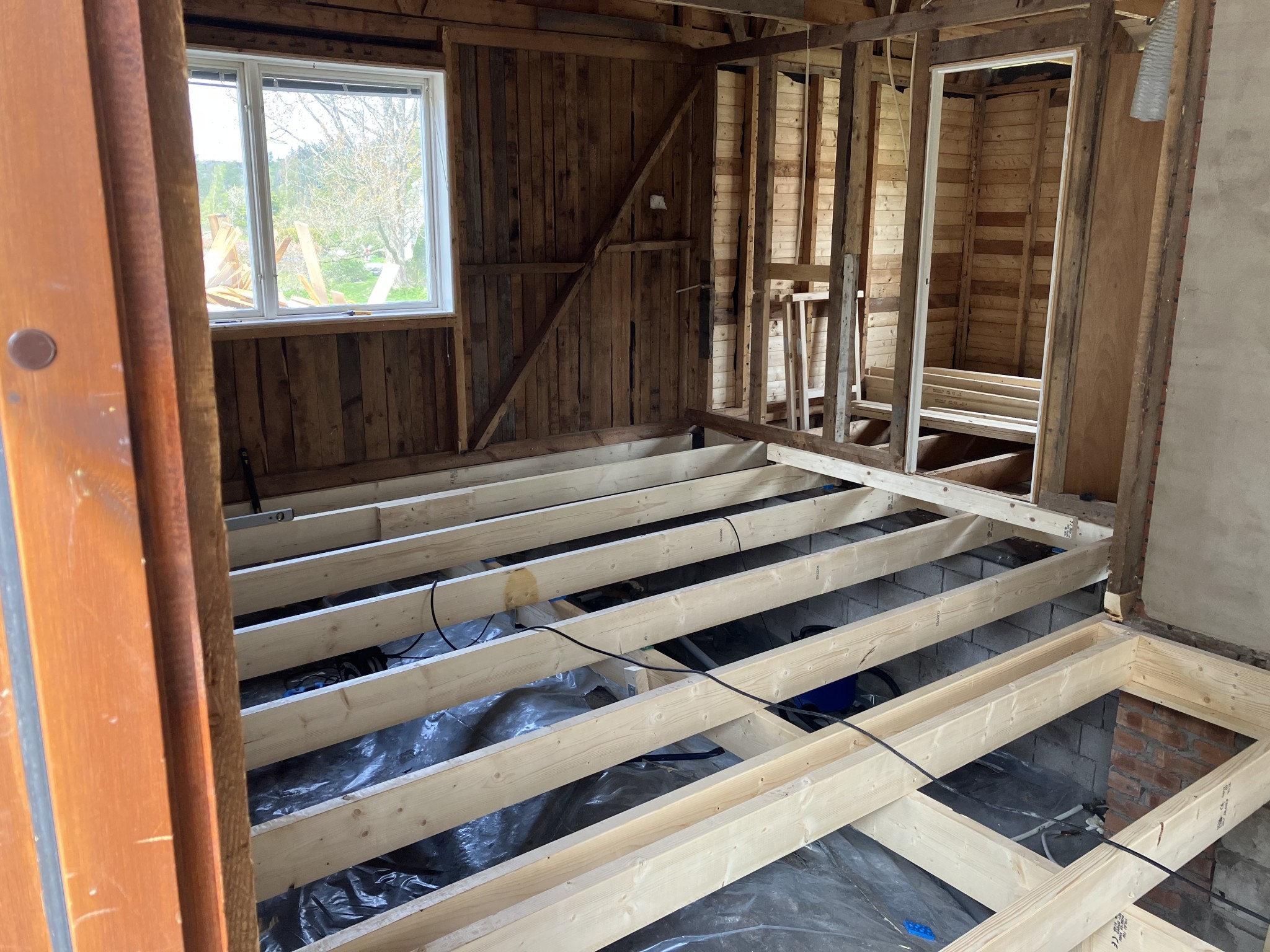
Here are some nice pictures from my work when it was at its worst



Last edited:
Thanks! Yes, it feels very good. Everything takes its little while with small children though, but I will probably soon put up a thread on the ongoing renovation so that I can get some tips and tricks along the way. Your job looked much bigger than mine, well done! I can imagine it turned out really well in the end. The pictures are from the work with the beams after the subfloor and insulation were torn out. Everything was done from underneath since we lived in the house during the time and with newly laid parquet above.S Stugmannen said:Phew! Yes, it's not fun work but definitely worth it when it's over. I didn't have to change the sill but basically the entire floor frame was removed. Good to hear that it doesn't stick to the clothes now. That's the most important thing since the source of the smell, the root problem, is gone. The smell-contaminated things will disappear over time with small efforts (ozone, paint, etc.). Great job!
here are some nice pictures from my work when it was at its worst
[image] [image] [image] [image]
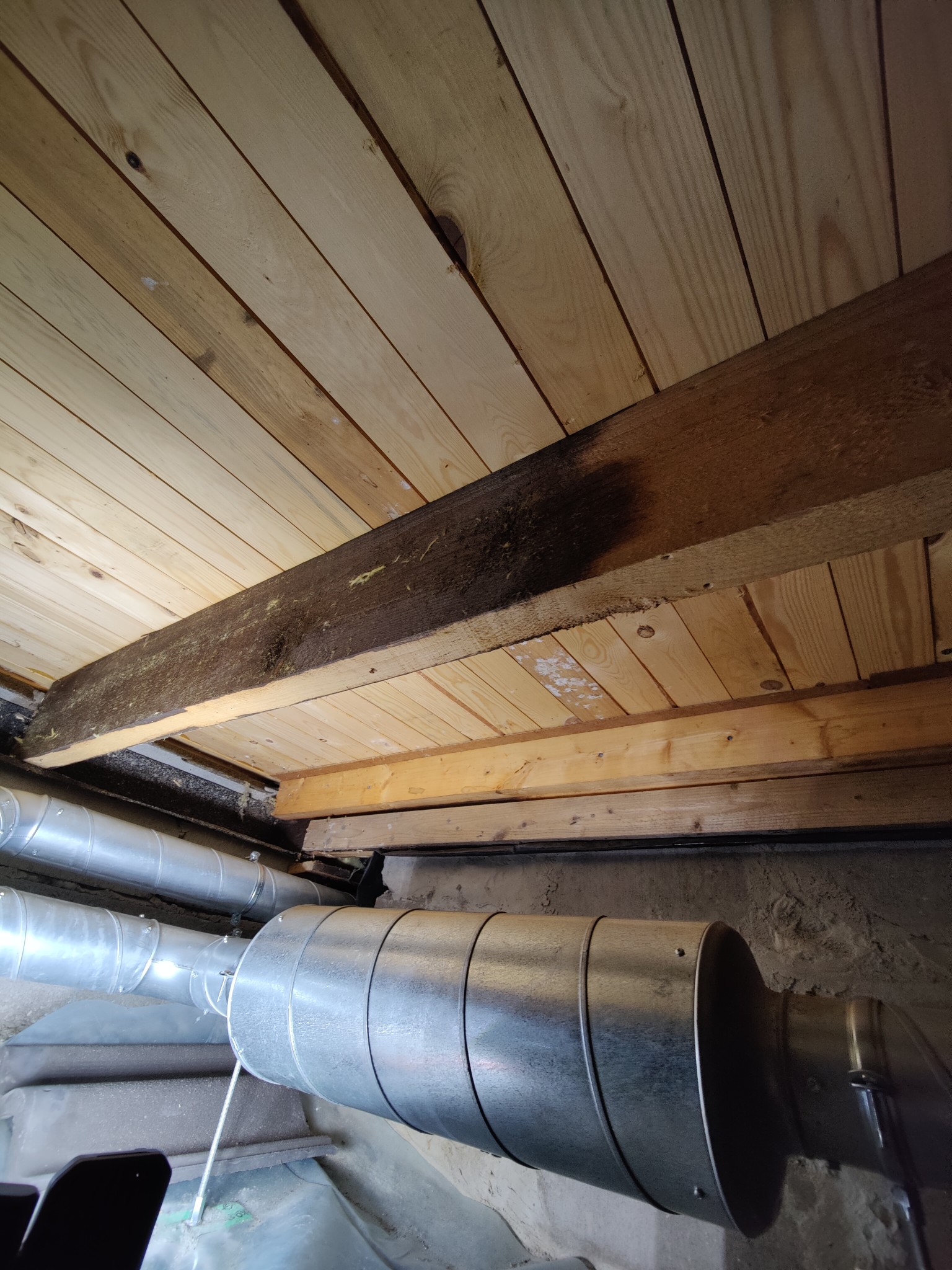
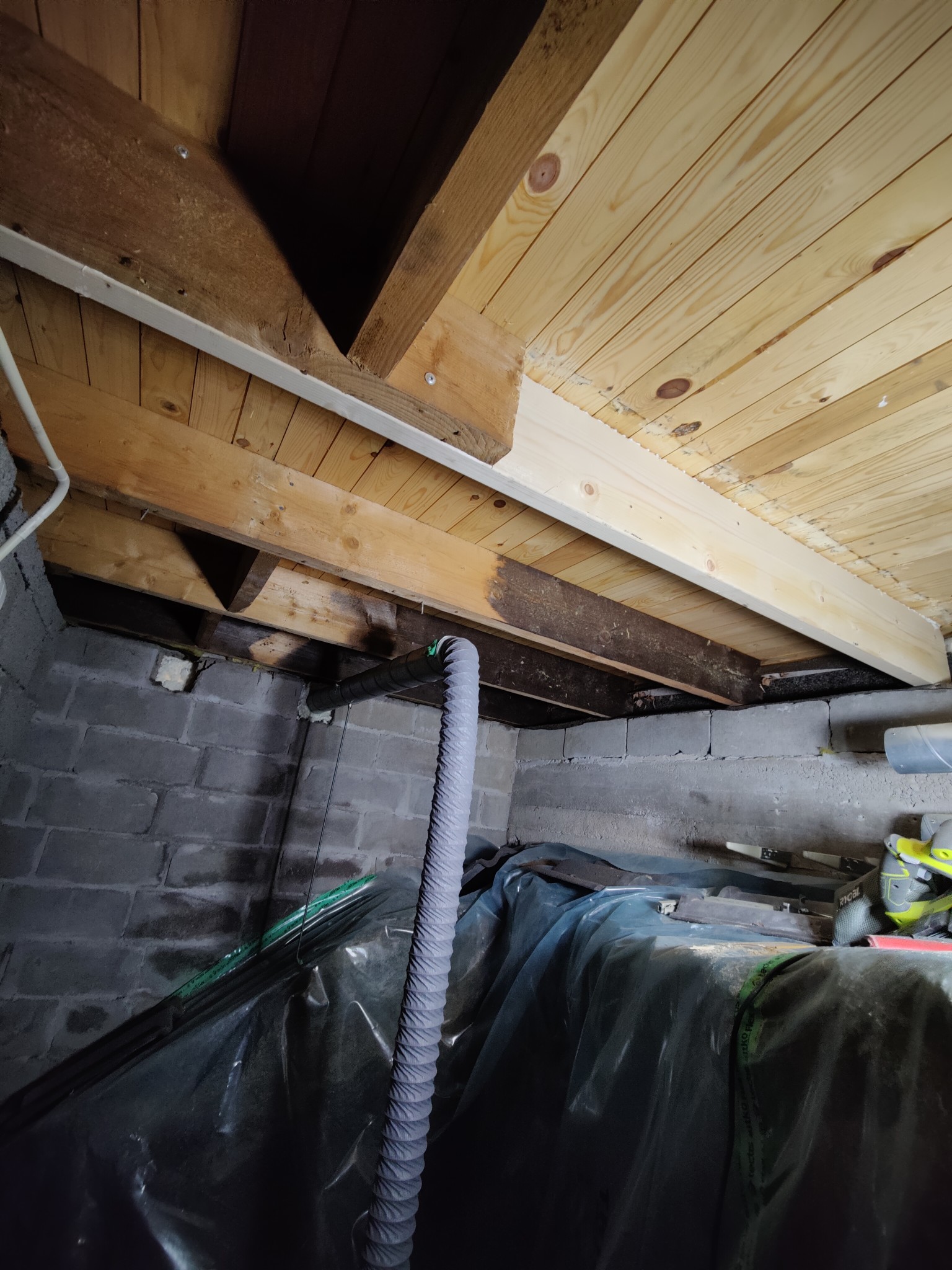

That's freaking awesome! So damn worth the work!Thank you! Yes, it feels really nice. Everything takes its time with small children though, but I will probably soon start a thread on the ongoing renovation to get some tips and tricks along the way. Your work looked much bigger than mine, well done! I can imagine it turned out really well in the end. The pictures are from the work with the beams after the subfloor and insulation were removed. Everything was done from underneath since we were living in the house during the time and the newly laid parquet above.
Really worth it! I've torn out all the insulation in the entire basement at the same time (with tongue-and-groove boards as the ceiling = tough)... So I took the opportunity to reroute all the pipes for the heating system to hide them in the joists. I'm going to put up new insulation there and gypsum ceiling with spotlights. At the same time, I'm planning to chisel up the slab in some places and then insulate and cast underfloor heating is the idea. But everything, as mentioned, takes its time with a 1-year-old and a 4-year-old.S Stugmannen said:
Thanks for all the great advice in this thread. I have the same problem with odors in an extension from the 1950s. I've had Anticimex here who advised installing a dehumidifier in the crawl space after removing all the organic material (soil) that’s lying on the rock under the house. And to seal gaps between the sill and stone foundation, and put a tight cover over the "door" I've made in the foundation.Really worth it! I've torn down all the insulation in the entire basement at the same time (with raw timber as the ceiling = tough)... So I took the opportunity to reroute all the pipes for the heating system so I can conceal it in the joists. I’m going to install new insulation there, drywall ceiling and spotlights. At the same time, I'm planning to break up the slab in certain places, then insulate and embed underfloor heating. But as mentioned, everything takes its time with a 1-year-old and a 4-year-old.
My little consideration now is what to seal with so I don’t cause rot damage to the sill. I gratefully welcome tips for this.
I've also considered tearing out the entire floor and laying new floor joists, etc. But that's a lot of work.

Have you determined that all the odor is really coming from the foundation into the house? Is there water damage in the floor structure?P Per Kronlid said:Thank you for all the good advice in this thread. I have the same problem with odor in an extension from the 1950s. I had Anticimex here, who advised me to install a dehumidifier in the crawl space after removing all organic material (soil) that lies on the rock under the house. And to seal gaps between the sill and stone foundation, and to install a tight hatch for the "gate" I made in the foundation.
My little concern now is what to seal with so I don't cause rot damage to the sill. I would gratefully accept tips for this.
I have also considered tearing out the entire floor and laying new floor joists, etc. But that is a lot of work.
Get more professional opinions. Anticimex may be right. But they "always" suggest dehumidifiers, which they sell themselves. There are members here who have been advised to install dehumidifiers under the foundation, which was a concrete slab on the ground...P Per Kronlid said:Thanks for all the great advice in this thread. I have the same problem with odor in an extension from the 1950s. I had Anticimex here and they advised me to install a dehumidifier in the crawl space after removing all the organic material (soil) that lies on the bedrock under the house. And to seal gaps between the sill and the stone foundation, and put a tight hatch on the "door" I made in the foundation.
My little pondering now is what to seal with so I don't cause rot damage to the sill. I gratefully accept tips for this.
I've also contemplated tearing out the entire floor and laying new floor joists etc. But that's a lot of work.
We had neighbors who, before selling, were tricked into installing a dehumidifier in their crawl space with a concrete floor...
Thanks for the response! I will take a sample for analysis. The soil in the crawl space was damp. I've dug away under half. Water has found its way in via the rock from two directions. But I have addressed that. Probably, there isn't much water damage in the floor joists, but enough moisture to cause an odor from pentachlorophenol. Two other experts have also been here and felt that it smells typically like that.Jonatan79 said:
We also had a mold detection dog here that did not indicate mold in the extension, but at a previous entrance in the house where there was an old hidden concrete staircase directly against the sill. That has been addressed with the replacement of the sill and the crushed staircase.