
14,738 views ·
44 replies
15k views
44 replies
Is this pressure treated 70s?
Hello,
We have moved into a house and have experienced a smell that clings to clothes, etc., and have concluded that it is likely caused by pentachlorophenol or chloranisoles. It's a 1970s house with half basement and half crawl space (sutteräng). In the crawl space, there is pressure-treated batten preventing the Masonite boards from sagging. I don't know which of the boards are treated, but I feel that the dark brown boards smell stronger than those with a "wood color."
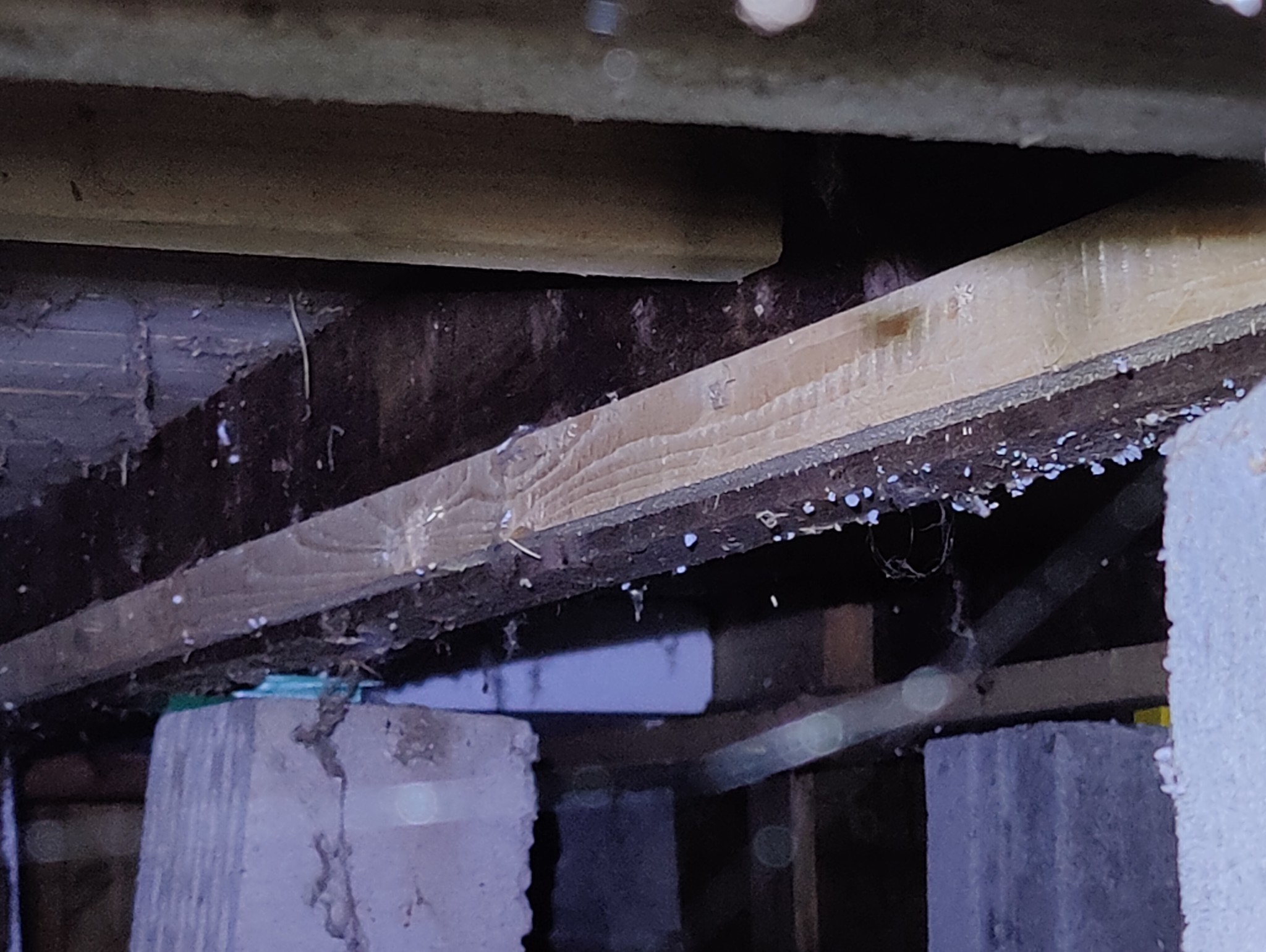
Now that we have installed a dehumidifier, I have sealed the vents in the space. Then I could see under the sunroom and noticed that the heavy beams are brown while the rest are wood-colored. Could these beams be treated and causing the smell? Can it be seen with the naked eye?
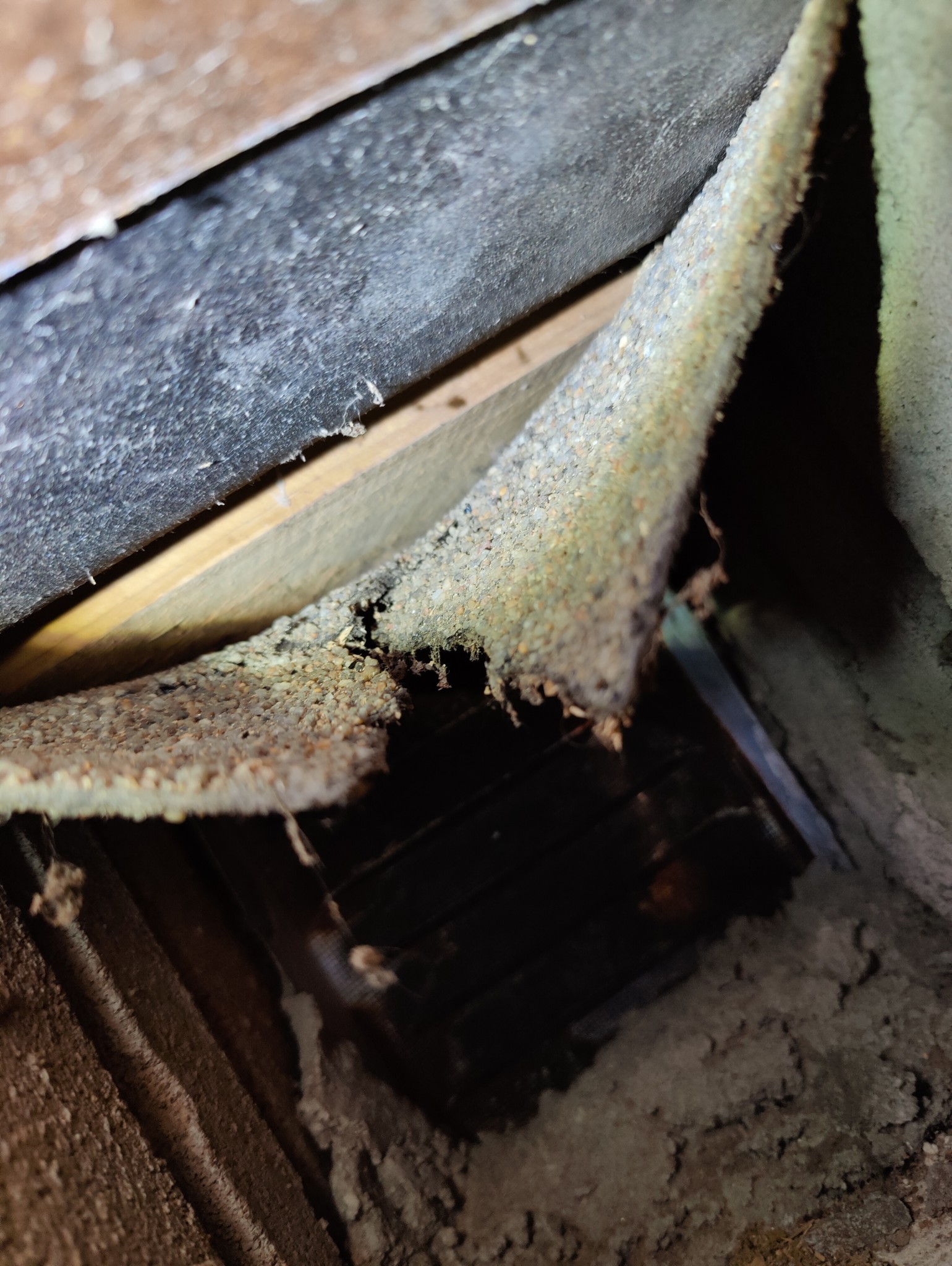
Then I took a look at the sill, which appears wood-colored. I'm terrified that it might be pressure-treated and causing the smell, as replacing it would be expensive and troublesome.
Is there anyone who can tell from the pictures if it seems to be a treated sill and if the beam (the brown one) under the sunroom looks treated?
Replacing battens, Masonite, and insulation in the crawl space, as well as the framework in the sunroom, seems much easier to perform than a full sill replacement.
We have moved into a house and have experienced a smell that clings to clothes, etc., and have concluded that it is likely caused by pentachlorophenol or chloranisoles. It's a 1970s house with half basement and half crawl space (sutteräng). In the crawl space, there is pressure-treated batten preventing the Masonite boards from sagging. I don't know which of the boards are treated, but I feel that the dark brown boards smell stronger than those with a "wood color."
Now that we have installed a dehumidifier, I have sealed the vents in the space. Then I could see under the sunroom and noticed that the heavy beams are brown while the rest are wood-colored. Could these beams be treated and causing the smell? Can it be seen with the naked eye?
Then I took a look at the sill, which appears wood-colored. I'm terrified that it might be pressure-treated and causing the smell, as replacing it would be expensive and troublesome.
Is there anyone who can tell from the pictures if it seems to be a treated sill and if the beam (the brown one) under the sunroom looks treated?
Replacing battens, Masonite, and insulation in the crawl space, as well as the framework in the sunroom, seems much easier to perform than a full sill replacement.

Self-builder
· Stockholm
· 8 750 posts
Can't really help specifically, but it's interesting to follow.
In general, wood that is "in the air" shouldn't smell the most, but it's those exposed to moisture (lying against the ground or embedded in or directly on the foundation = sill) that can smell, I believe?
The others should have lost their smell over the years, and since they shouldn't be exposed to moisture, they shouldn't release much smell either, right?
In general, wood that is "in the air" shouldn't smell the most, but it's those exposed to moisture (lying against the ground or embedded in or directly on the foundation = sill) that can smell, I believe?
The others should have lost their smell over the years, and since they shouldn't be exposed to moisture, they shouldn't release much smell either, right?

Probably can't help specifically, but it's interesting to follow. Generally, wood that is "in the air" shouldn't smell the most, but it's those exposed to moisture (lying against the ground or embedded in or right on top of the foundation = sill) that can smell, I've been led to believe?
The others should have lost the smell over the years, and since they shouldn't be exposed to moisture, they shouldn't release much smell either, right?
Yes, sealing and drying out is a good first step, but if the studs in the conservatory contain treated wood with chlorinated anisoles, I would rather replace it. Same with the crawl space. However, I don't want to replace the entire crawl space if the sill turns out to have the same problem (wasted effort since it contaminates everything with odor). It's built in 1973 with natural ventilation and a Pax fan in both bathrooms and in the laundry room. The laundry room and one bathroom are in the basement.J Josth said:

The battens in the crawl space are not visible in the picture. I was probably unclear there. The battens in the crawl space have the same brown color as the joists in the picture under the conservatory. It's hard to get a better picture through the small hole. But I could take a picture of the crawl space.A ati said:
Damp asfaboard can emit such a smell. Had this problem in our guest cottage from the 70s. Removed the asfaboard and the smell disappeared. It usually happens when there is no air gap between the board and the facade on these older houses. Then your smell might be due to something else, but I would still try to get a sample piece if possible.Rasmus10 said:
Yes, I'm with you on that front. I think I notice a smell from the asfaboard when the sun warms it after it has been cold and damp (a month ago when winter disappeared from here). However, it's a different smell and not the typical cottage smell that gets into my clothes. I'm pretty convinced it's pentachlorophenol after all the research I've done since I discovered the smell. I also detect that smell very clearly on certain "planks" in the crawl space.S Stugmannen said:Moist asfaboard can emit such a smell. Had this problem in our guest cottage from the 70s. Removed the asfaboard and the smell disappeared. This usually happens when there is no air gap between the board and the facade on these older houses. Your smell might have another cause, but I would still try to get a sample piece if possible.
Our board actually smelled exactly like that, but it can vary.Yes, I'm with you on that front. I think I smell something from the asfaboard when the sun warms it after it's been cold and damp (a month ago when the winter disappeared from here). However, it's a different smell and not the typical cottage smell that sticks to my clothes. I'm pretty convinced it's about pentachlorophenol after all the research I've done since I discovered the smell. I also smell it very distinctly on certain "planks" in the crawl space.
I have the same problem as you in the house and am now going to remove all the flooring including the trossbotten. We'll see how it goes with the sill. I don't think it smells though. However, I'll replace parts of it if it's damaged somewhere (rot). Isn't cuprinol/chlorophenol green and not brown? That's what I've heard but I'm not sure.
Instead of boards for the trossbotten, I'll be using fiber cement boards and sealing all edges/seams properly to make it as tight as possible up to the house from the crawl space.
I'm counting on a week's work for this and a material cost of 60kkr, but then we'll get a really nice 1-strip oak parquet included.
Okay, it’s nice to have someone to bounce ideas off who’s going through the same thing, even though it's unfortunate that more people have to live with this problem. Are you going to replace the joists? Pentachlorophenol was in several different products and even in paint for exterior painting at the time, so it can be any color. The one called Cupri Green was green from the start, but after a few years, the color disappeared, but the chlorophenols had then penetrated into the wood. So it seems the only way to be 100% sure is through lab analysis. I hoped with this thread that maybe someone might have encountered this a lot and could say that the brown was definitely a common product at the time. Then I could have assumed that only one brand was used when building and therefore just replaced all the brown. However, it seems like I will have to send samples of the sill. Expensive, but even more expensive to redo work if all new materials get smell-contaminated over time.S Stugmannen said:Our board actually smelled exactly like that, but it can vary. I have the same problem as you in the house and now I am going to tear out all flooring including the subfloor. We'll see how it turns out with the sill. I don't think it smells though. However, I will replace parts of it if they have been damaged (rot). Isn't cuprinol/chlorophenol green and not brown? That’s what I've heard but not sure. Instead of boards for the subfloor, I will be using fiber cement boards and sealing all edges/joints properly to make it as tight as possible from the crawl space up to the house. I'm estimating a week's work for this, plus 60k SEK in material costs, but then we get a really nice 1-strip oak parquet included in that.
Yeah, it's a damn mess. I don't have any plans to replace the floor structure but won't know until I open it up. I've torn down all the walls and ceiling inside and am replacing all the insulation throughout the house. From what I understand, cuprinol was brown at a very early stage, and it was mixed with tar. Then it was green around the time our houses were built, but as you said, the best thing is to send it to the lab for testing.Okay, nice to have someone to bounce ideas off who is going through the same thing, even though it's unfortunate that more people have to live with this problem. Are you going to replace the floor structure? Pentachlorophenol was found in several different products and even in paint for facade painting at that time, so it could be any color. The one called cupri green was green from the start, but after a few years, the color disappeared, although the chlorophenols had then penetrated the wood. Therefore, the only way to know with 100% certainty seems to be through lab analysis. With the thread, I hoped that someone might have encountered this a lot and could say that the brown was definitely a common product at that time. Then I could have assumed that only one brand was used during construction and thus just replaced all the brown. However, it seems that I have to send a sample of the sill. Expensive, but even more expensive to do double work if all new material will get odor-contaminated over time.
I can also add that there are a lot of things that smell when I tear it down. The black wind barrier in the outer walls, which seems to be oil-based, doesn't smell particularly nice, for example. The flax used as caulking around the windows has the house's characteristic smell x 10.
Last edited:
It feels like everything is getting heavily odor-contaminated... I would have been so pleased with the house purchase if it weren't for this smell putting me in a panic. I've used ozone cleaning as soon as I noticed the smell, and it works temporarily, but it comes back after a while. I hope to reduce the smell after replacing the impregnated material with the help of ozone, so I don't have to replace everything. I have read that after you have cleaned out the material, you can use an ozone machine and humidifier in one room at a time and then run the ozone machine and dehumidifier in the same room. That way, it can more easily penetrate odor-contaminated materials as I understand it.S Stugmannen said:Yes, it's a damn mess. I have no plans to replace the joists but won't know how they look until I've opened up. I have torn down all the walls and ceiling on the inside as well and am replacing all the insulation throughout the house. As I understand it, when I read up on it, Cuprinol was brown at a very early stage and then it was mixed with tar. Then it was green around the time our houses were built, but the best thing, as you say, is to send it to a lab for testing.
I can also add that a lot smells when I'm tearing down. The black windpaper in the outer walls, which seems oil-based, does not smell particularly good for example. The linen used as a draft stopper around the windows has the characteristic smell of the house x 10.
I can share my experiences from the renovation of our guest cabin, which I saw as a test before the renovation of the house.It feels like a lot of the odor is spreading really thoroughly... I would have been so satisfied with the house purchase if it weren't for this smell causing me panic. I've been using ozone cleaning as soon as I noticed the smell, and it works temporarily, but it comes back after a while. I hope to mitigate the smell by replacing impregnated materials with the help of ozone. So that I don't have to replace everything. I've read that after removing the material, you can run an ozone machine and humidifier in one room at a time, and then run an ozone machine and dehumidifier in the same room. This way, it can more easily penetrate the contaminated material as I understand it.
In the guest cabin, I tore out everything except the frame. The plastic mat on the floor smelled. The asbestos board stank several meters on the plot where I threw it after demolition. The floor joists and baseboards were bright brown from some treatment. I kept them though. Used ozone afterwards and nothing smelled after that, even the floor joists felt much fresher. Now it's been fully renovated for a year and no smell has emerged after that. I feel pretty confident that it's resolved now.
In the house, there are a few different smells when I demolish, and I don't think they are contaminated from the same source. For example, the wind barrier, I believe, is part of the cause of the smell in the house. What I'm hoping for the most is to find water damage in the floor when I demolish that I can fix in conjunction with this. I hope to the last to avoid replacing all the baseboards. I'm counting on a few pieces here and there.
One thing you can try, especially if you have sawdust in the floor, is to run ozone in the crawl space for about a week while also turning on the exhaust fans in the house. This way, the ozone is drawn through the floor, and much of the contamination in the floor joists is reduced, but it naturally varies how well it can work and you also cannot be in the house when the ozone is running.