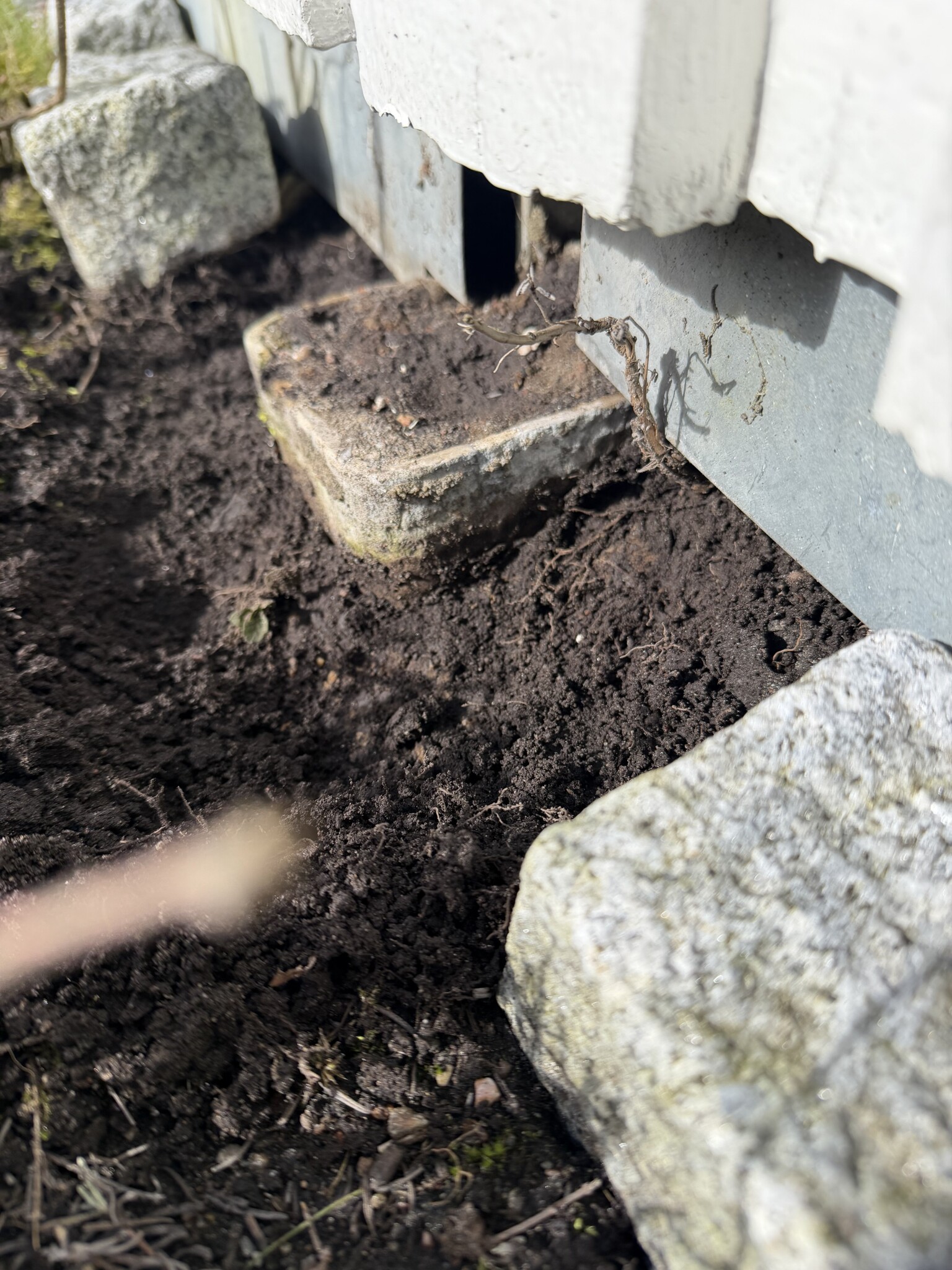
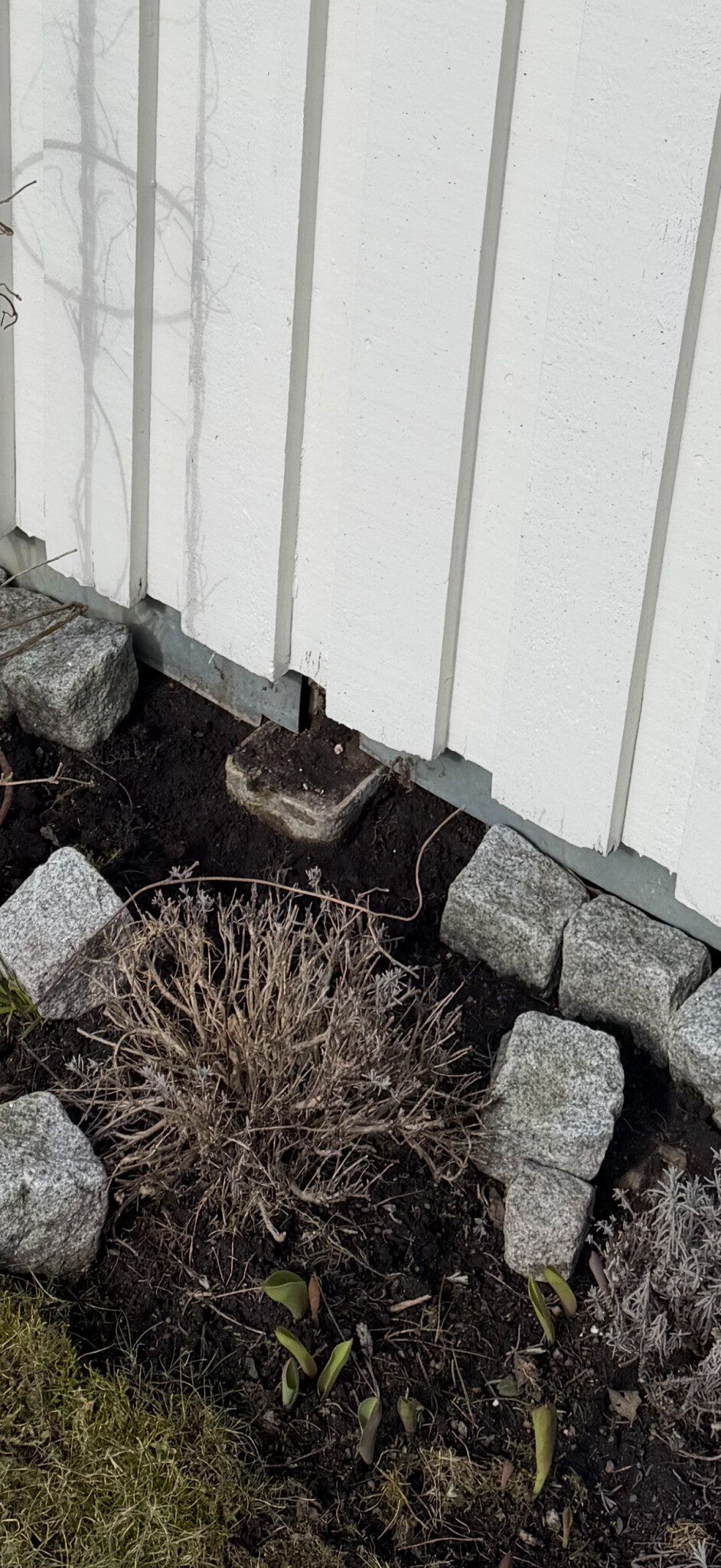
Anyone know what kind of terminal block this could be? Built in 1975
 
  • Concrete footing from a 1975 construction project, partially buried in soil beneath a structure.
  • White wooden wall with concrete foundation, surrounded by gray stone blocks and dry plants, with new green sprouts emerging from the soil.
Looks like concrete poured into an asbestos pipe. Hard to see what it's supporting in your pictures.
 
Matti_75 Matti_75 said:
Looks like concrete cast in an eternit pipe. Hard to see what it's supporting in your pictures
Matti_75 Matti_75 said:
Looks like concrete cast in an eternit pipe. Hard to see what it's supporting in your pictures
It's a post bracket embedded that holds the boards in a tool shed.
Around the pipe, there's concrete again (underground) that forms a lump.
How far down does the eternit go? Anyone know how this was done?
 
What is the actual question, do you want to get rid of the plinth or do you want to load it further?
 
Centano Centano said:
What is the actual question, do you want to get rid of the post or do you want to load it further?
Get rid of it
 
M Mumin1 said:
It is a post shoe embedded that holds the boards in a tool shed.
Around the pipe, there is concrete again (underground) which is like a lump.
How far down does the eternit go? Anyone know how it was done?
Then, just like now, you sometimes use what you have.

My spontaneous guess is that it’s not very far, but it’s impossible to know without digging it up.
 
mexitegel mexitegel said:
Then, just like now, you sometimes take what you have.

My spontaneous guess is that it's not that far, but it's completely impossible to know without digging it up.
Yes, but these are townhouses with developers, architects, etc., so you wonder if this was how it was done.
 
  • Like
Kenta.
  • Laddar…
M Mumin1 said:
Sure, but these are townhouses with a developer, architect, etc., so one wonders if this was how it was done
All the houses (30 in total) have it like this. On fences between the houses as well as a small tool shed.
 
Then you might as well look for a drawing. But the easiest thing any day of the week is just to dig it up. It's the same length regardless.

You want to get rid of it, so either way, you have to dig.
 
mexitegel mexitegel said:
Then you'll have to look for a drawing. But the simplest thing any day of the week is just to dig it up. It's the same length regardless.
It's not included in the drawing what the foundation is made of, but we suspect it's asbestos channel. We were hoping it wasn't that.
We are going to remodel, but then maybe it’s better to leave it as it is.
Could it not be asbestos?
 
It's eternit, but if your underlying question is whether it's dangerous, the answer is no. But if it's not in the way, it's best to just leave it be.
 
mexitegel mexitegel said:
It is eternit, but if your underlying question is whether it is dangerous, the answer is no. But if it is not in the way, it is likely just fine.
Ok thanks!
 
What is the problem?
 
mexitegel mexitegel said:
It is eternit, but if your underlying question is whether it is dangerous, the answer is no. But if it's not in the way, it will likely just stay there.
The problem is that the floor inside the shed is supported by the eternit pipes and these are somewhat higher than the surrounding cement. That's quite a bit of pressure?
 
If it has survived since '75, it will likely survive for a while longer.
 
  • Like
Mumin1
  • Laddar…
Vi vill skicka notiser för ämnen du bevakar och händelser som berör dig.