
I have the same question as many others, is our wall load-bearing? We live in a house built in 1943. Back then it was a two-story house with a basement. In 1977, the upper floor was "lowered" and placed "beside" the existing house, the entrance was moved, and a basement was also built under the new section.
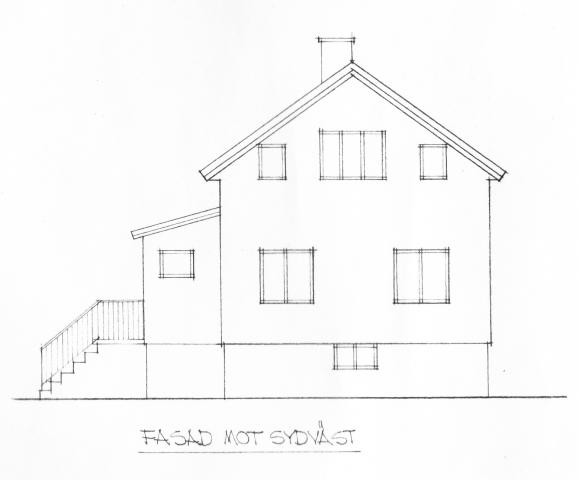
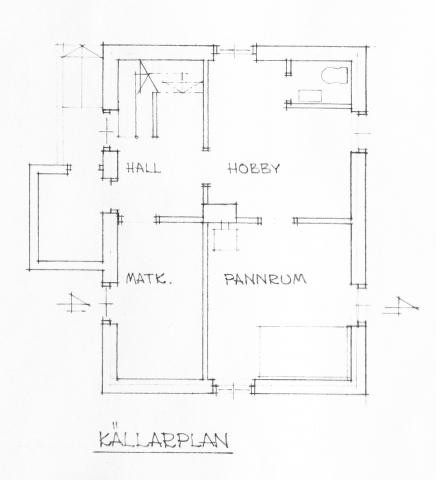
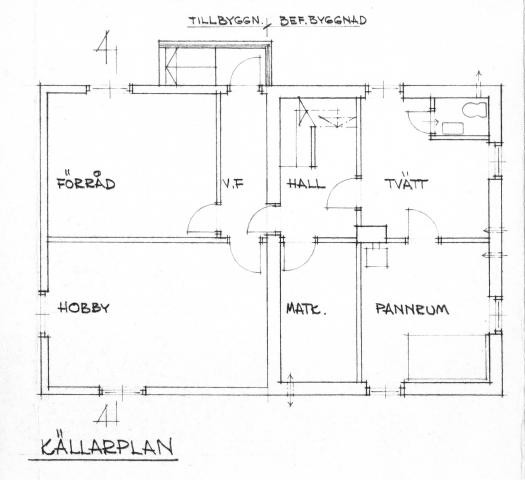
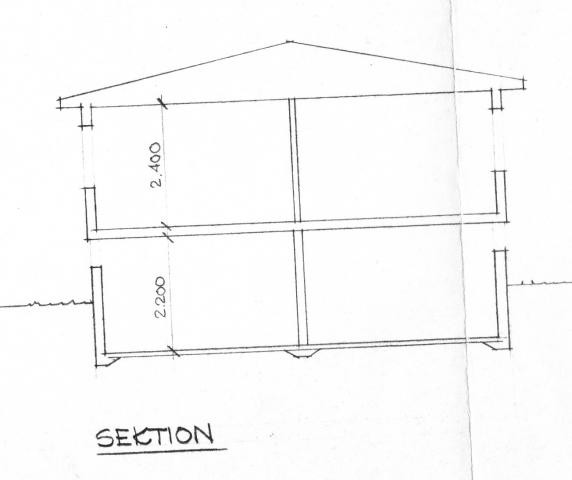
We now want to take down a wall that is in the old part of the house but we don't know if it has been there from the beginning or added later since all drawings, both of the original house and the renovation, are from 1977. The top four pictures are how the house looked initially and the bottom four are how it looks today.
The rafters run parallel to the wall. Both the floor joists and the old floor joists in the attic (i.e., the former upper floor) run perpendicular to the wall.
We are unsure if the wall is load-bearing or not and of course, we realized this a bit late so we're having trouble finding contractors before the vacation ends. Is there anyone who can help us determine whether we can take down the wall or not? Thanks in advance!
We now want to take down a wall that is in the old part of the house but we don't know if it has been there from the beginning or added later since all drawings, both of the original house and the renovation, are from 1977. The top four pictures are how the house looked initially and the bottom four are how it looks today.
The rafters run parallel to the wall. Both the floor joists and the old floor joists in the attic (i.e., the former upper floor) run perpendicular to the wall.
We are unsure if the wall is load-bearing or not and of course, we realized this a bit late so we're having trouble finding contractors before the vacation ends. Is there anyone who can help us determine whether we can take down the wall or not? Thanks in advance!



These joists are probably resting on the wall. 6 meters is a bit too much for them to be self-supporting, so a beam (and possibly a pillar down to the foundation) is needed if you want to take down the wall. If the attic is open, you can advantageously place the beam there instead of in the room.Cineos said:
Thank you for the quick response. However, there are a few things I don't understand that I wonder if you could elaborate on a bit. What do you mean by "pillars down to the foundation"? And how do you suggest placing the beam in the attic instead?

Member
· Västerbottens län
· 18 064 posts
Beam in the attic:
See post #6 in this thread http://www.byggahus.se/forum/byggma...-till-infaestning-av-limtraebalk-pa-vind.html
Protte
See post #6 in this thread http://www.byggahus.se/forum/byggma...-till-infaestning-av-limtraebalk-pa-vind.html
Protte
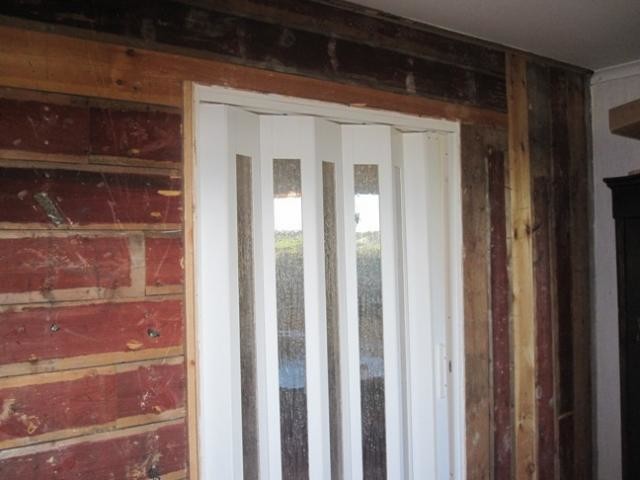

You might need to remove more before you can see if the wall is load-bearing or not. What is behind the planks?
We have started to remove parts of a wall that we know is load-bearing and have (as expected) found a substantial beam over the double doors to the living room. Now we hope to see if the same beam continues over the staircase and that there isn't a post between the staircase and the living room. Unfortunately, we believe that the beam ends at the staircase in a load-bearing post, then the carpenter will need to replace these with a laminated beam that spans both the staircase and living room opening, because we don't want a post in the middle of the room when we remove the non-load-bearing wall between the staircase and the living room.
We have started to remove parts of a wall that we know is load-bearing and have (as expected) found a substantial beam over the double doors to the living room. Now we hope to see if the same beam continues over the staircase and that there isn't a post between the staircase and the living room. Unfortunately, we believe that the beam ends at the staircase in a load-bearing post, then the carpenter will need to replace these with a laminated beam that spans both the staircase and living room opening, because we don't want a post in the middle of the room when we remove the non-load-bearing wall between the staircase and the living room.
There is nothing behind the planks =)
The house is built with 45 mm thick plank walls, even some interior walls. So this wall consists solely of 45 mm planks (horizontal and vertical) along with tritrex on both sides.
We've looked a bit more into the gaps, and it feels like the wall stands on the floor joists and that the roof joists rest on the wall, but it's very difficult for a layperson to determine. We should probably try to get a carpenter here...
The house is built with 45 mm thick plank walls, even some interior walls. So this wall consists solely of 45 mm planks (horizontal and vertical) along with tritrex on both sides.
We've looked a bit more into the gaps, and it feels like the wall stands on the floor joists and that the roof joists rest on the wall, but it's very difficult for a layperson to determine. We should probably try to get a carpenter here...
Click here to reply