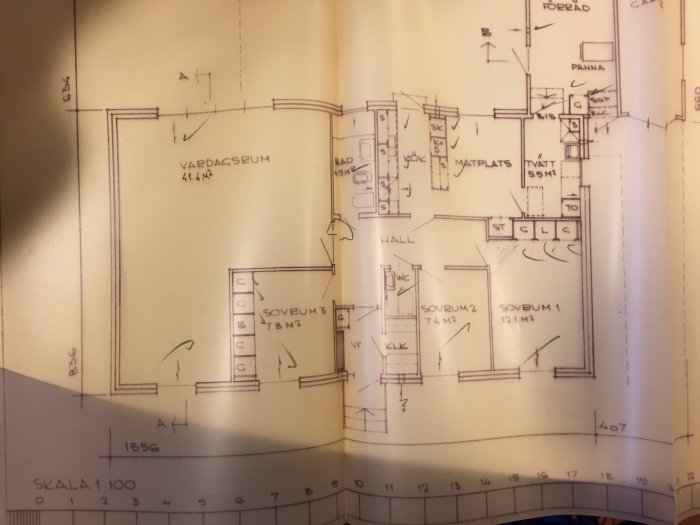
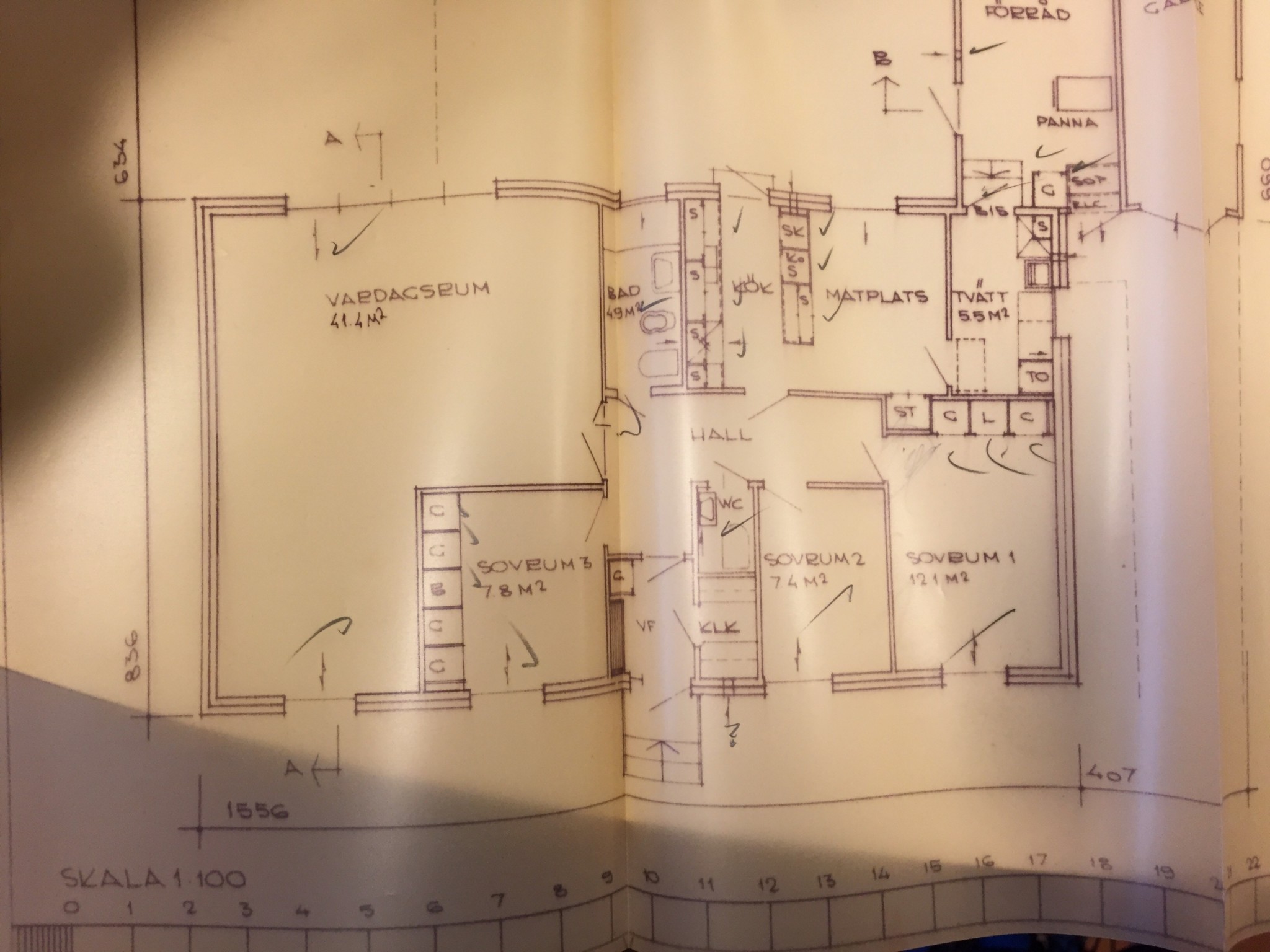
Yes, yet another thread question about whether a wall is load-bearing or not... we're house hunting and have found one, but what do you think about the wall between the living room and the bedroom?
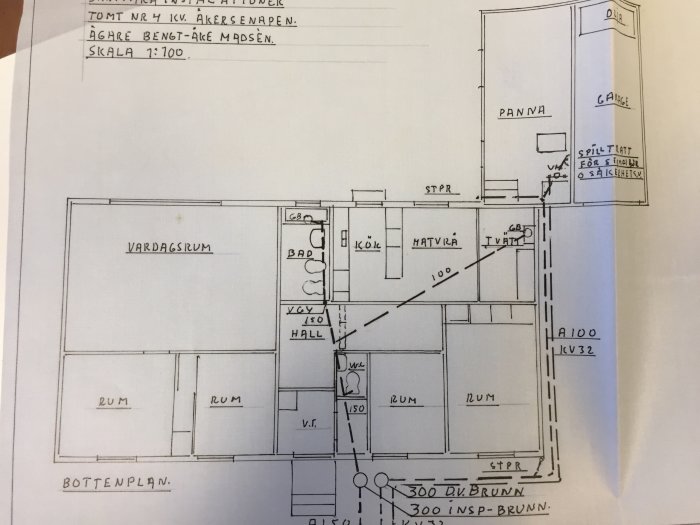
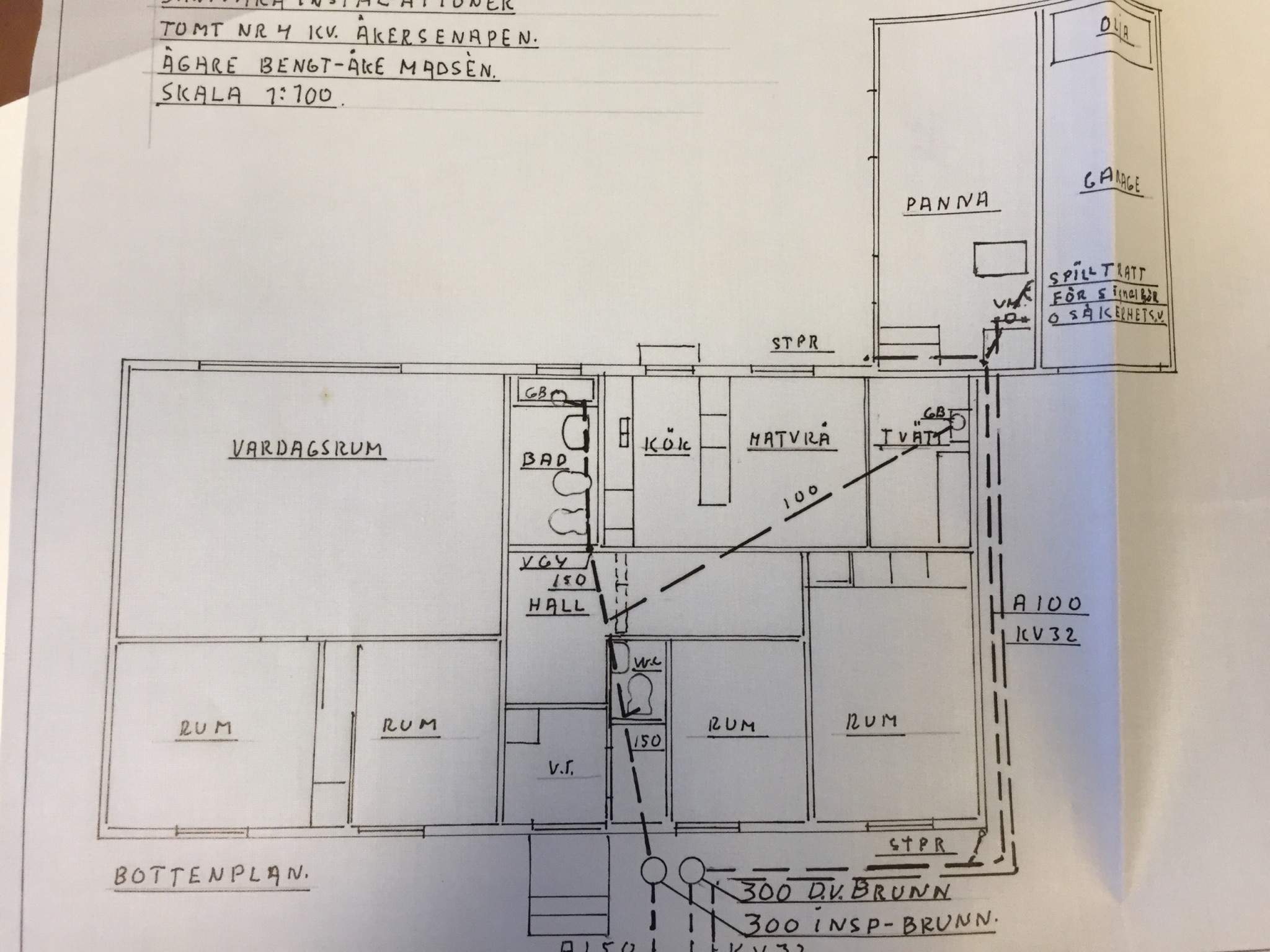
But on the plumbing drawing, it's a solid line wall
And today it looks just like that
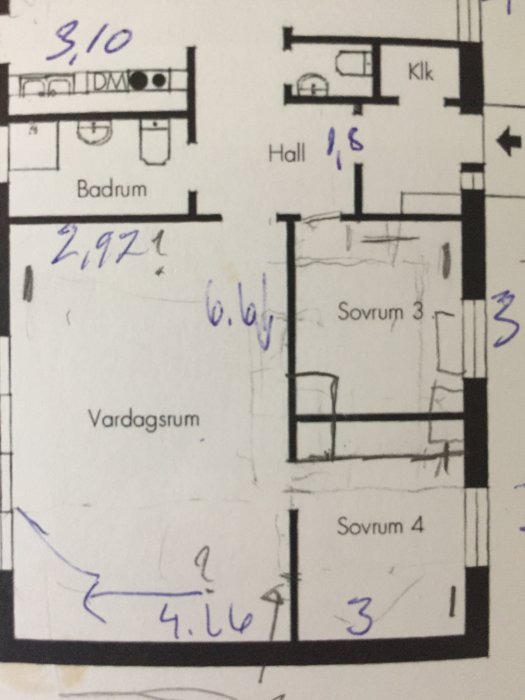
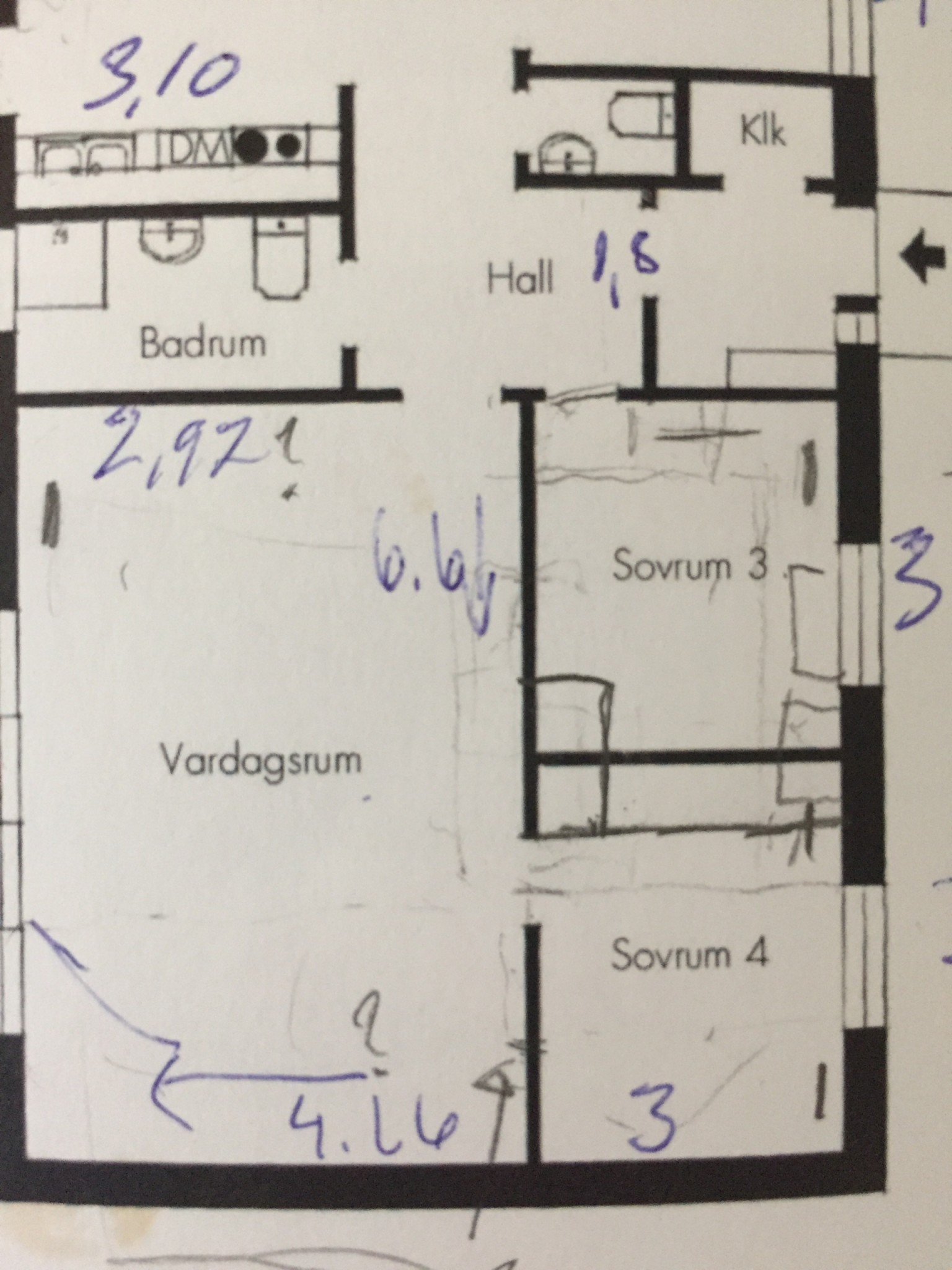
(Realtor drawing)
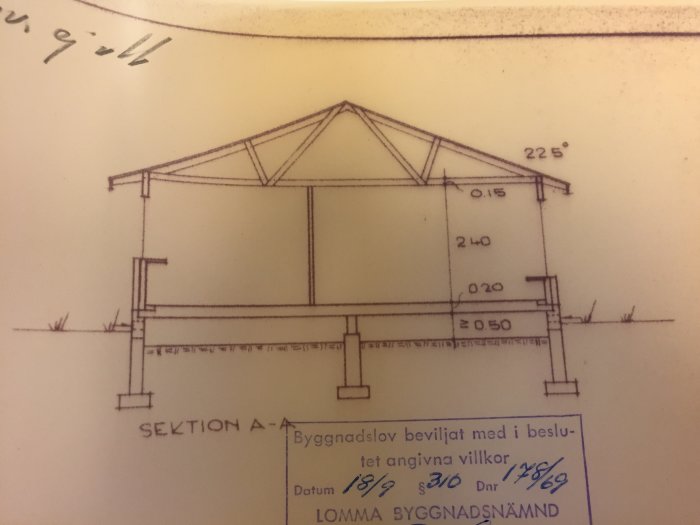
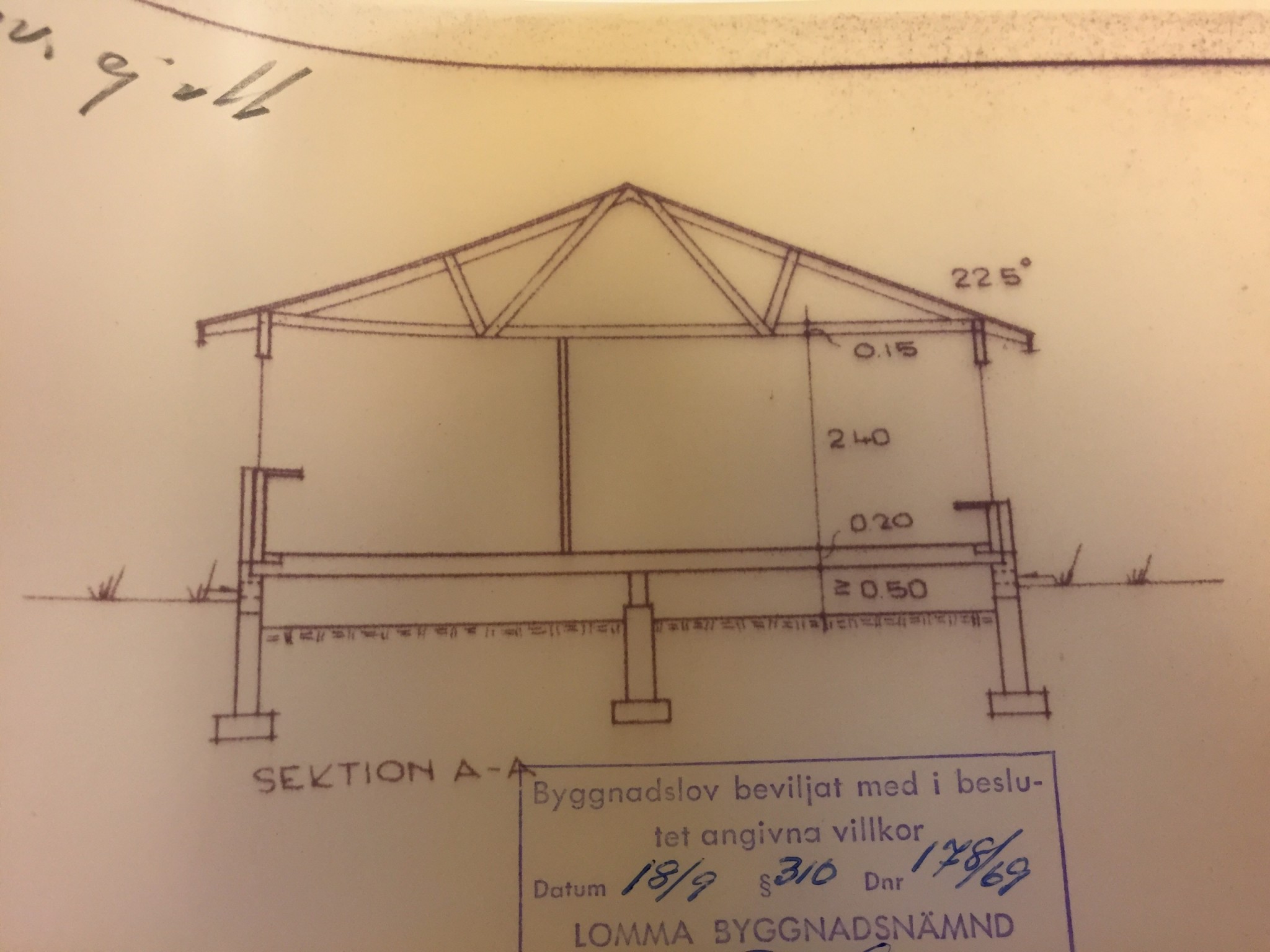
It is load-bearing as it is included in the sectional drawing.
I was thinking along those lines. The follow-up question is then whether it must be in its full length as it is on the HVAC drawing and as it actually is in today's reality. Or if half is okay as it is on the original drawing?
Your thought is right, but is the dimension of the timber correct??
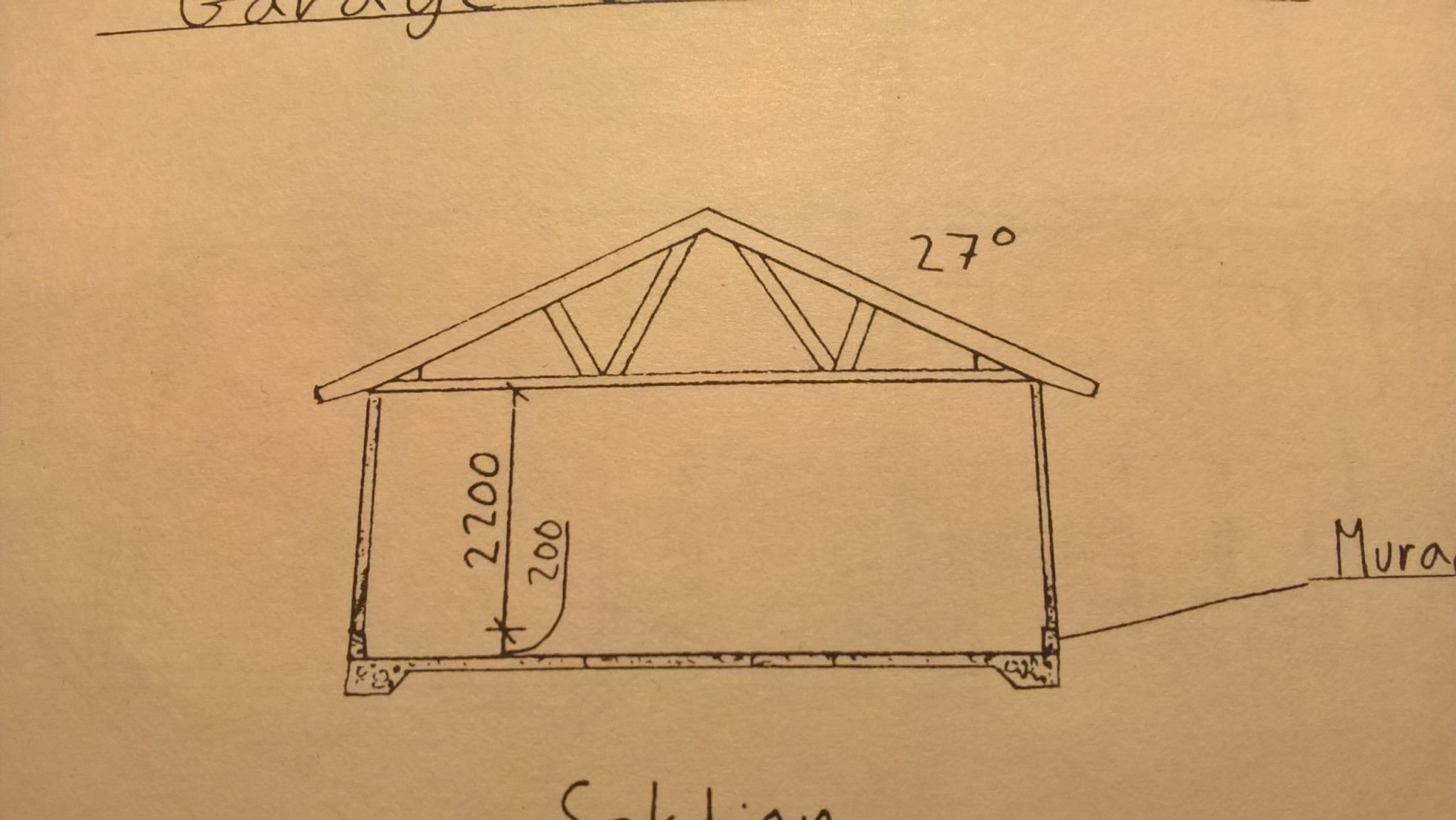
I'm attaching a picture of my garage that I built around -05, the span is 6 meters and the timber is 195x45 cc1200.
The trusses were calculated with some program I found, snow zone Stockholm (2 ??)
The current house is from -69, and the span is just over 8 meters, and I'm a bit doubtful that the trusses have an appropriate thickness in the timber.
Something's wrong, the picture will come shortly/sometime soon.
It's load-bearing since it's included in the section drawing.
That was also my thought, that the wall shouldn't have been on that drawing if it wasn't load-bearing. The fact that the wall doesn't go all the way isn't a problem, it can be, as in our house, load-bearing between the bedroom and living room on one end and between the kitchen and hall on the other end.
Spontaneously, one might think it's a load-bearing wall, but it's a bit tricky that the wall between the living room and bedroom(s) appears differently on different drawings...?
On the first floor plan, there's only one bedroom drawn, on the second there are two, and on the third one (the realtor's drawing) there are also two bedrooms.
Then, in the section, the wall is shown, but in the first floor plan, the section is drawn in a somewhat tricky way. The two markers are not aligned, and neither of them seems to "hit" the partition wall that appears on the first drawing.
Regarding span width and the need for a load-bearing wall, it is not certain that you need one because of an 8 m span. The measurement of 836 cm given shows the outer dimensions, and depending on wall thickness, it is barely 8 m free between the walls.
It is then the timber dimensions that determine the need for a load-bearing partition wall or not.
In our extension, we have about 8 m outer dimensions, but the designer calculated about 7.4 m of free span.
Our builders made the trusses on-site, according to their own judgement and not according to construction drawings, and chose 45x220 for the top and bottom chords with nail plates at the joints (no braces...).
When we were not satisfied with that, our designer did calculations that showed the top chord was slightly oversized, the bottom chord very oversized, and that we needed to both set braces and reinforce the joints.
His calculations showed that 45x195 was recommended for the top chord (45x170 was borderline too weak) and that the bottom chord could be 45x170 (45x145 was borderline too weak), and that the braces should be 45x120. All timber was classified C24.
Then pieces of 12 mm construction plywood were placed on both sides of the joints, with "loads" of through screws (5x90) to withstand snow and wind loads and the heavy roofing (concrete tiles).
A load-bearing wall being under the joint where a W meets the bottom chord I don't think is correct – it depends on the dimension of the bottom chord and how close the wall is to the joint.
If I were you and wanted to remove the partition wall, I would talk to a designer who calculates what is required for your specific conditions with roofing, snow, and wind loads, as well as the actual span, and see if the existing trusses "suffice" as they are or not. If not, the designer can recommend how to reinforce/modify the trusses so that they can be free underneath.
The third drawing with two rooms and intermediate closets is the original drawing, I have a colleague who has an identical house where nothing has been altered since it was new.
It is load-bearing as it is included in the sectional drawing.
Unfortunately not Matti, this is an architectural sectional drawing, only showing room spaces, so it is most likely not load-bearing. If it is included in a construction drawing, it is definitely load-bearing.
Click here to reply
Vi vill skicka notiser för ämnen du bevakar och händelser som berör dig.