
41,364 views ·
60 replies
41k views
60 replies
Insulation that mice cannot penetrate?

I'm a hopeless beginner at this, so please be patient with me nowJ justusandersson said:

So instead of the yellow mineral wool, should I use Armaflex instead? What does it look like and exactly where do I place it? Under the pipes? On the pipes? Do I place it just like the mineral wool? In the same location?
OP, I'm having a bit of difficulty picturing what it looks like on your end based on your description. If you take a picture that shows us what your problem looks like, we'll have an even better chance of helping you.
"A picture is worth a thousand words!"
"A picture is worth a thousand words!"
Aluminum foil or tape doesn't help in the long run. They can get through and just one hole is enough for the game to be over.
Use very fine mesh metal netting, as already suggested, sold on a roll. Then take any insulation that is easy to put on the pipes and wrap the metal netting over everything.
Use very fine mesh metal netting, as already suggested, sold on a roll. Then take any insulation that is easy to put on the pipes and wrap the metal netting over everything.
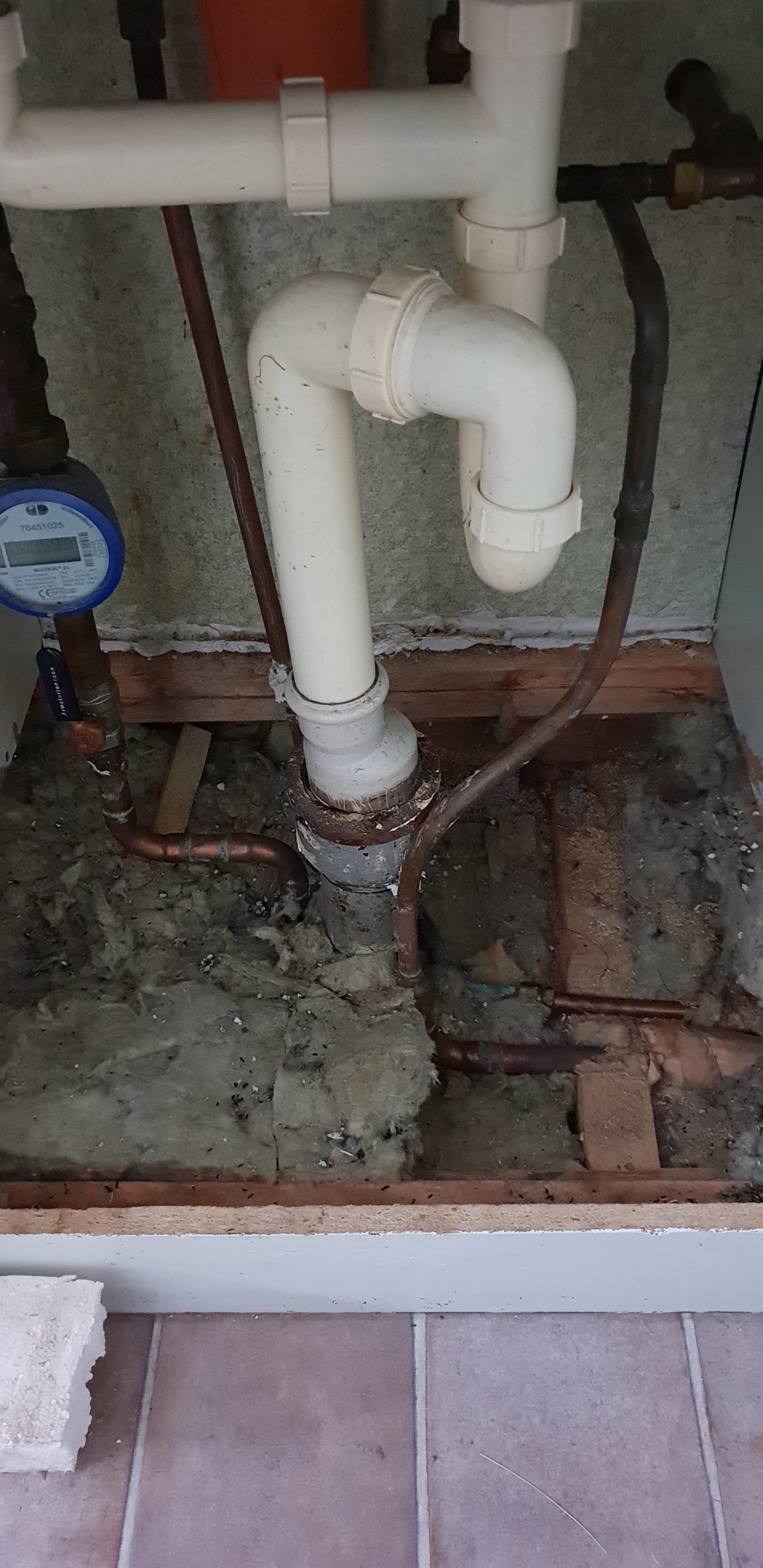
This is the pipes under the kitchen sink.P pilen said:
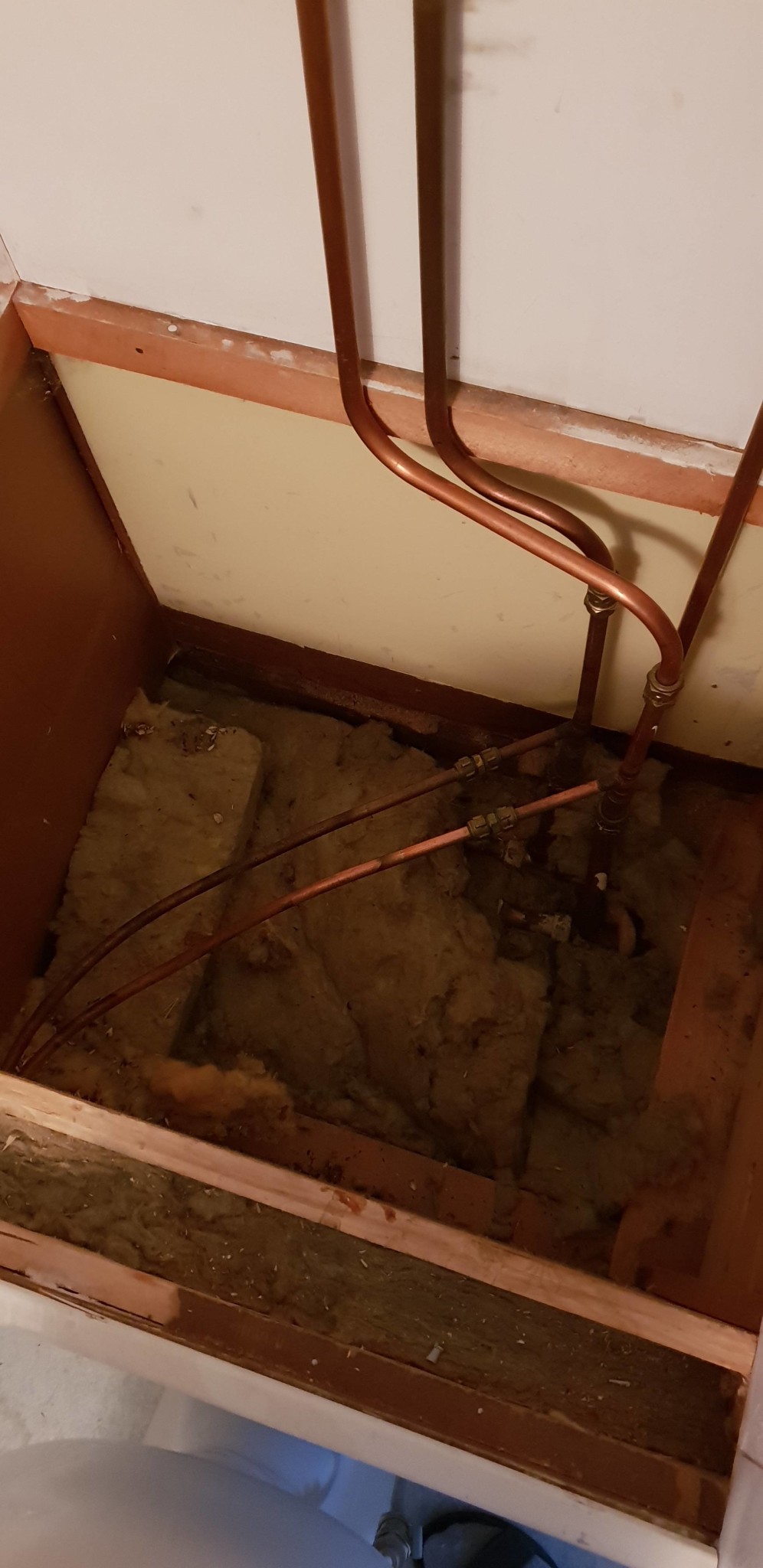
These are the pipes in the room where the toilet is.P pilen said:
I'm getting so many different answers from everyone, I'm getting really confusedT tompaah7503 said:
Take a look at the pictures I've now added and see if you still think the same after that.Thanks.Anyone have an idea about what type of insulation I can use against the foundation instead of mineral wool? And should I insulate the pipes or leave them be?
It is a crawl space, but very difficult to crawl in, as there is no space to crawl anywhere.D Dave13 said:
The water apparently froze in the part of the pipe that lies against the ground/foundation. There is no room to put any insulation there.
Is it good or bad that it's a wooden floor structure, do you mean?


It requires a bit of precision in the description. I assume the water that froze is incoming cold water. Where does it come from and in what form of pipe, PEM tubing or something else? The pipe diameter is also important. Water coming in a 40 mm PEM tubing is not nearly as sensitive to frost as that coming in a 16 mm PEM tubing. Pipes on the ground can be insulated with stone wool sheets as long as they are on the ground.
Please tell us where the house is located, how it is built, and how old it is.
Please tell us where the house is located, how it is built, and how old it is.
All the water froze. It was only the cold water in the kitchen that worked when I brought in the plumber. The pipes are copper pipes I guess? I've attached two pictures, so you can see what it looks like, in both the kitchen and the room where the toilet is.J justusandersson said:It requires some precision in the description. I assume the water that froze is incoming cold water. Where does it come from and in what form of pipe, PEM hose or something else? Pipe diameter also matters. Water that comes in a 40 mm PEM hose is not as sensitive to frost as that which comes in a 16 mm PEM hose. Pipes on the ground can be insulated with rock wool boards as long as they are on the ground.
Please tell us where the house is located, how it is built, and how old it is.
Someone here said that when insulating against the foundation, one should not use mineral wool/rock wool?
It is a wooden house from the 1930s. Norrland.
Keep coming with advice and tips, thanks, planning to go and buy the new insulation today, actually, it would be invaluable to know what material I should buy
Let me know if anything looks strange in the pictures. I want to learn everything about this. That’s why I’m writing here on the forum. I know there are knowledgeable people here. Don't be afraid to point out if anything looks odd.
So bring on the comments now
Let me know if anything looks strange in the pictures. I want to learn everything about this. That’s why I’m writing here on the forum. I know there are knowledgeable people here. Don't be afraid to point out if anything looks odd.
So bring on the comments now
You must understand one thing, and that is there is no insulation that helps if you don't simultaneously provide heat in some way.
If your pipes run in such a way that they don't get heat from anywhere, for example, heat leakage from your heated house, they will eventually freeze if the water stands still anyway, even if they are insulated.
Insulation delays the cold, but it doesn't create heat.
If your pipes run in such a way that they don't get heat from anywhere, for example, heat leakage from your heated house, they will eventually freeze if the water stands still anyway, even if they are insulated.
Insulation delays the cold, but it doesn't create heat.