
19,158 views ·
39 replies
19k views
39 replies
Insulation for pizza oven that withstands heat
I was going to buy a silicate board to place under the bricks that will form the bottom of the oven, but the seller at Mariebergs advised against it. He said it absorbs moisture and will crack. What do you others say? I have finished casting my countertop and can't see any other way to protect it.

Know-It-All
· Västra götaland
· 11 049 posts
What did the person suggest as an alternative then?D Danii KD said:
It's clear that you have to protect the board from water in the form of rain, but my experience with the board (which in my case was called Skamotec) isn't that it absorbed moisture from the air directly...
Know-It-All
· Västra götaland
· 11 049 posts
I had some pieces saved for a long time, but unfortunately threw them away in the last garage cleanup, otherwise we could have tested... I have no idea what the board looks like now, it's embedded in concrete on the sides, and the entire oven stands on the board, but the floor is laid loosely on it, so it should have shown some signs of moving if it was a problem...D Danii KD said:
I was completely amazed at how quickly and how much the silicate board could absorb... Solved it with concrete glaze from Biltema. Worked excellently. This was on the front where I needed to polish it. You can also place aluminum foil underneath it to prevent it from absorbing moisture. Just like Dan, I have no experience of it drawing moisture from the air. I find it unlikely that it would crack... Place foil underneath for peace of mind and go ahead 
I was thinking more that it absorbs from concrete and mortar around when it rains. But I also thought about wrapping it in aluminum first. Alternatively, maybe one could paint it with fire-resistant paint afterwards as well.
How did your construction go?D Danii KD said:I was going to buy a silicat board to place under the tiles that will form the bottom of the oven, but the seller at Mariebergs advised against it. He said it absorbs moisture and will crack. What do you others say? I have finished casting my countertop and can't see that there is anything else I can protect it with.
Slowly but received silica boards etc. today so now everything is at home. Cut out the board today and will start with the masonry for real . Noticed now on the buckets of refractory mortar from Lakkapä that it's for thin joints. Oh well, what can I do, I'll just go with it.
. Noticed now on the buckets of refractory mortar from Lakkapä that it's for thin joints. Oh well, what can I do, I'll just go with it.Now I have to ask because I'm getting confused. I ordered a bunch of buckets of fireproof mortar, see the link below. The website states it's for outdoor use but on my bucket, it says indoor use in the instructions on the back. What do you think? Is it a problem or is the content the same, sodium silicate and aggregate?
https://www.lakkapaa.se/sv/byggmate...g-specialmurbruk/p/6416841630667/#description
https://www.lakkapaa.se/sv/byggmate...g-specialmurbruk/p/6416841630667/#description
Know-It-All
· Västra götaland
· 11 049 posts
I have the pipe standing on an edge like, will see if I can find a picture of it.... I know I've posted one before....
Edit: found nothing better than this;
https://www.byggahus.se/forum/posts/2961297
Edit: found nothing better than this;
https://www.byggahus.se/forum/posts/2961297
Last edited:
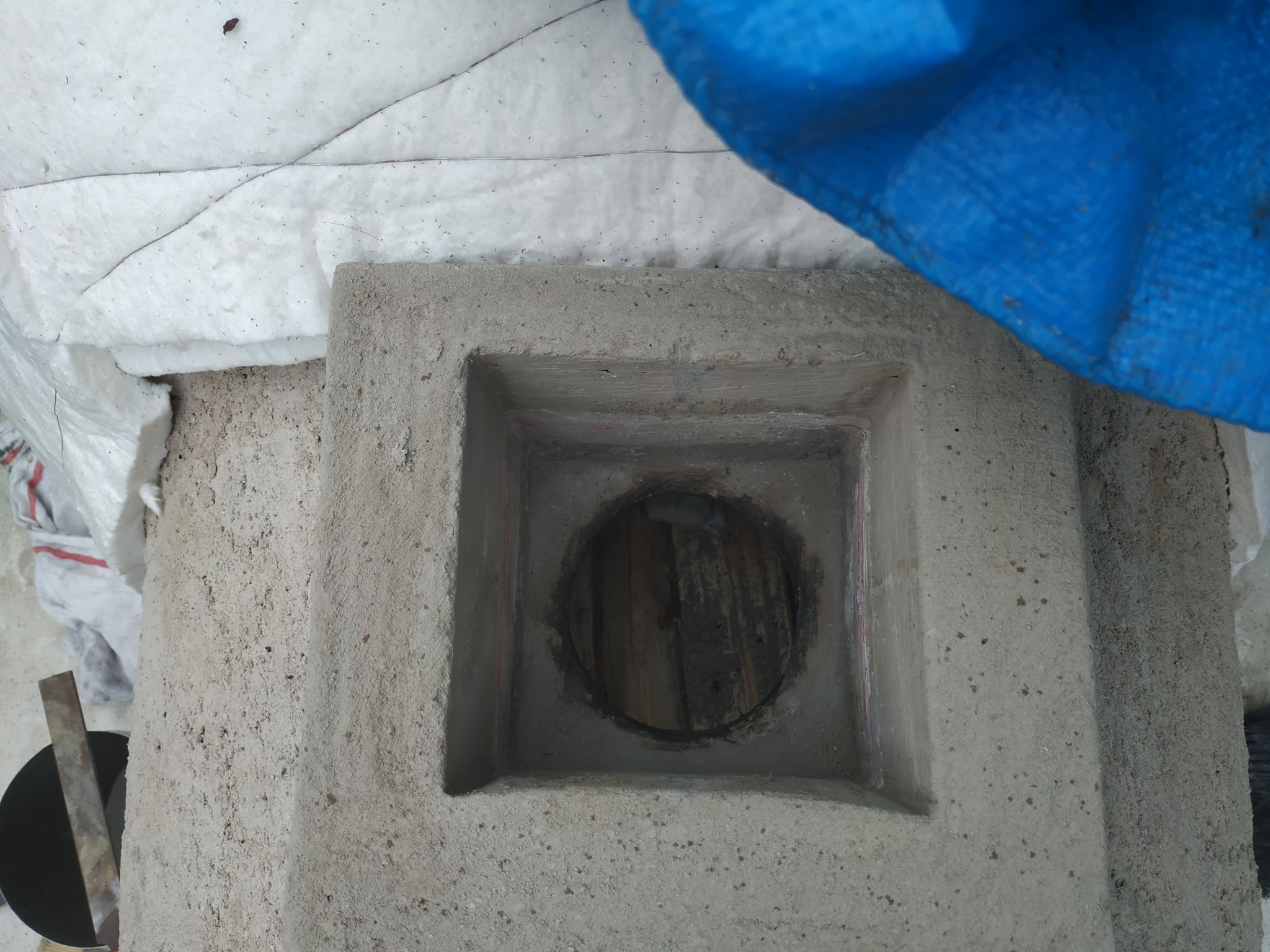
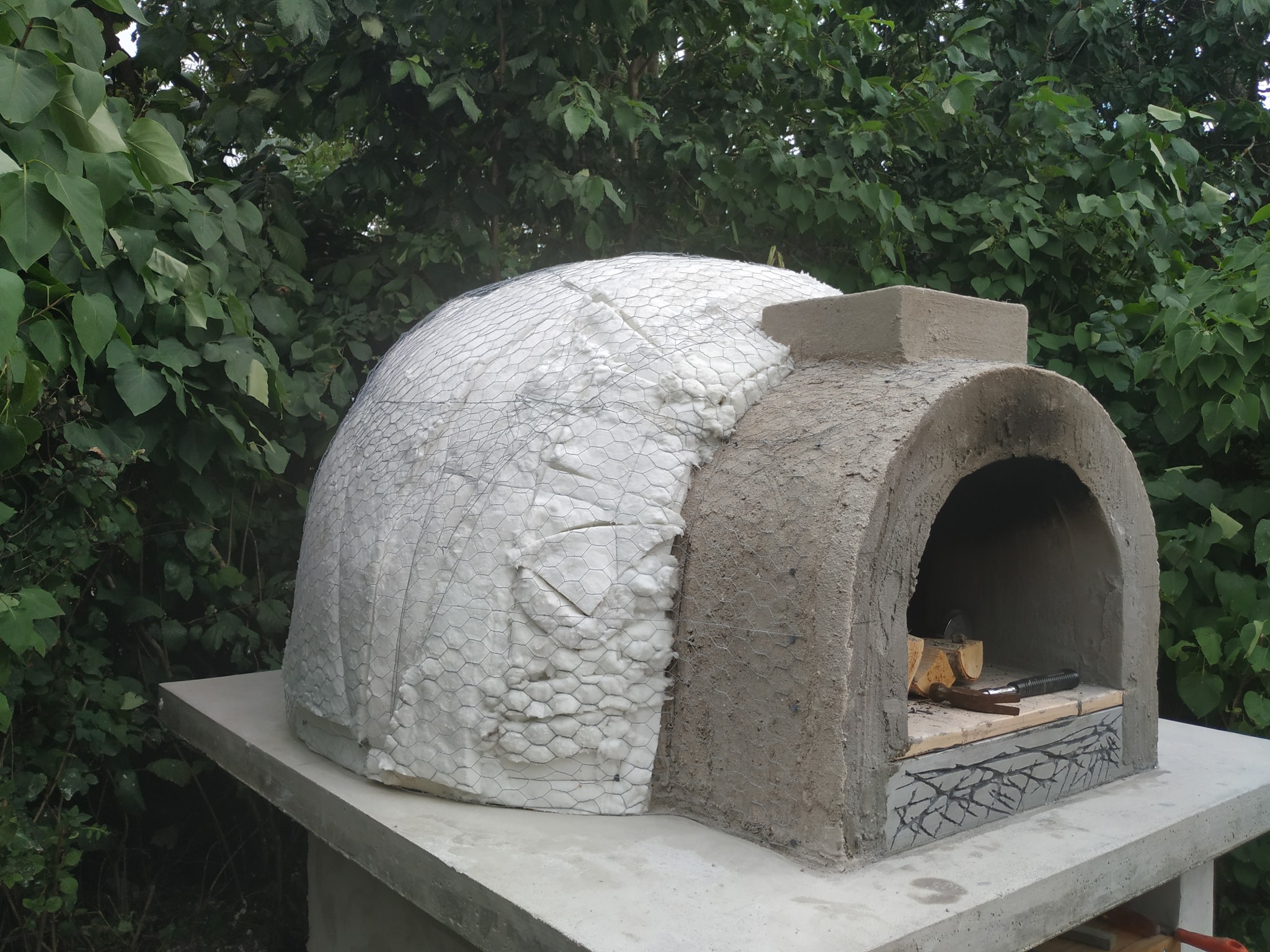
As I am now nearing completion with my oven and had to buy a few more stones and more mortar, I noticed that the stones I buy at Bauhaus are much harder and not as porous as those I bought at Lakkapää even though both are fireproof.
The other thing is that the extra fireproof mortar I bought, "Finja," is much harder and dries faster than what I bought at Lakkapää. The latter can stay good for several days in a closed container even after being mixed.
I wonder how this affects my construction, any thoughts?
The other thing is that the extra fireproof mortar I bought, "Finja," is much harder and dries faster than what I bought at Lakkapää. The latter can stay good for several days in a closed container even after being mixed.
I wonder how this affects my construction, any thoughts?
D Danii KD said:As I am nearing completion with my oven and needed to buy a few more bricks and more mortar, I noticed that the bricks I buy at Bauhaus are much harder and not as porous as the ones I bought at Lakkapää, even though both are refractory.
The other thing is that the extra "Finja" refractory mortar I bought is much harder and dries faster than what I bought at Lakkapää. The latter can keep for several days in a closed container even after being mixed.
Wondering how this will affect my build, any thoughts?
I had about the same concern when my Höganäs mortar ran out. I guess that Höganäs and Lakkapää mortar correspond to each other. I used Finja for some touch-up at the end and don't think it affects anything negatively. There is a big difference in how the two mortars feel, so I was also a bit worried... Regarding the brick, I think it won't make any major difference in function. I had to use fireclay bricks for the tunnel as the refractory bricks I bought at Hornbach were out of stock everywhere. The fireclay is more porous but I don't experience any negative difference there either...D Danii KD said:As I am nearing completion with my oven and needed to buy a few more bricks and more mortar, I noticed that the bricks I buy at Bauhaus are much harder and not as porous as the ones I bought at Lakkapää, even though both are refractory.
The other thing is that the extra "Finja" refractory mortar I bought is much harder and dries faster than what I bought at Lakkapää. The latter can keep for several days in a closed container even after being mixed.
Wondering how this will affect my build, any thoughts?