
11,324 views ·
8 replies
11k views
8 replies
Insulating storage - is an air gap and plastic wrap needed?
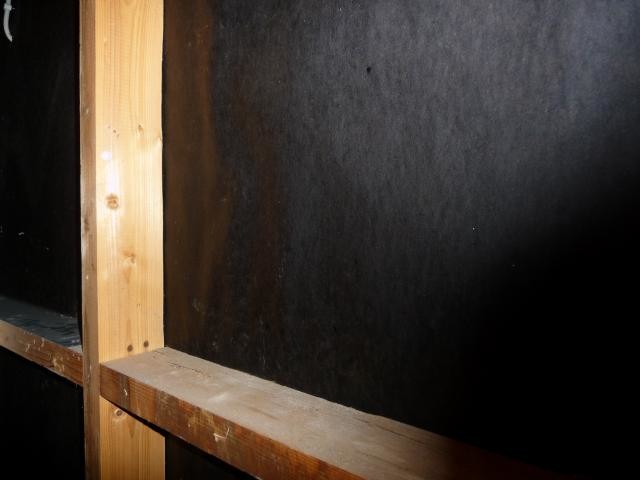
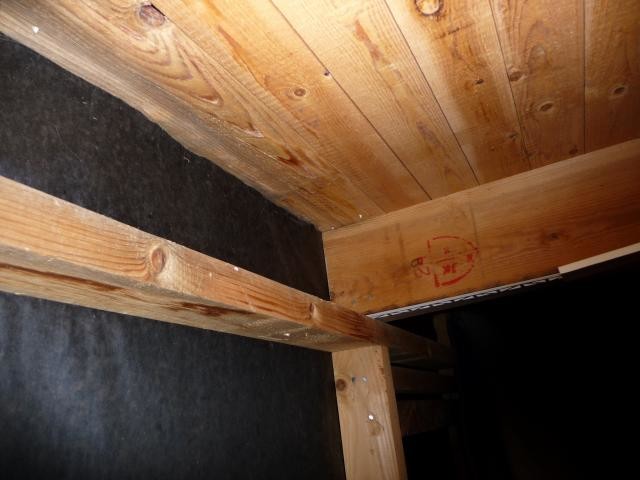
Planning to insulate a storage space of 10 sqm and wanted to check with those of you who know how to proceed. Currently, from the outside in, there is panel, wind barrier directly on the panel, and 100 mm studs in the walls and 150 mm studs in the ceiling. See attached images...
Now to my questions: I wonder if there needs to be an air gap between the wind barrier and the insulation in the walls? Should there be plastic sheeting between the insulation and the drywall?
I think I have a handle on how to do the ceiling. I read in the forum that the ceiling should have an air gap and that this can be arranged by installing battens and then Masonite boards to get a couple of cm of air gap between the roof deck and the Masonite. Then place the insulation on top of the Masonite boards.
Thanks in advance!!
Andreas
Now to my questions: I wonder if there needs to be an air gap between the wind barrier and the insulation in the walls? Should there be plastic sheeting between the insulation and the drywall?
I think I have a handle on how to do the ceiling. I read in the forum that the ceiling should have an air gap and that this can be arranged by installing battens and then Masonite boards to get a couple of cm of air gap between the roof deck and the Masonite. Then place the insulation on top of the Masonite boards.
Thanks in advance!!
Andreas

The absence of an air gap is generally considered a 'risk construction,' meaning it can cause problems.
Plastic foil depends on the lowest temperature you plan to have in the area. If you use plastic, the temperature should not fall below ~16C, otherwise skip it.
Plastic foil depends on the lowest temperature you plan to have in the area. If you use plastic, the temperature should not fall below ~16C, otherwise skip it.
It will be difficult to add an air gap now with that construction!
Sure, you can call it a risk construction if you want, but some garage manufacturers go without an air gap. An important factor for whether it is suitable or not is the type of paint used on the facade. Falu-rödfärg, for example, doesn't seal anything at all and there shouldn't be any problems then.
Sure, you can call it a risk construction if you want, but some garage manufacturers go without an air gap. An important factor for whether it is suitable or not is the type of paint used on the facade. Falu-rödfärg, for example, doesn't seal anything at all and there shouldn't be any problems then.
The chemist suggests a temperature over +16 degrees.
In a small shed, it's not so crucial with or without an air gap. But if you want to feel secure, it's simply a matter of insulating with a type of cellulose insulation and skipping the plastic and air gaps. Both in walls and in the ceiling. Just make sure to also apply wind barrier paper on the inside.
In a small shed, it's not so crucial with or without an air gap. But if you want to feel secure, it's simply a matter of insulating with a type of cellulose insulation and skipping the plastic and air gaps. Both in walls and in the ceiling. Just make sure to also apply wind barrier paper on the inside.
Thank you for your feedback!Kemisten said:
The storage is adjacent to a carport, and the only requirement for the storage is that the temperature does not drop below 0 during winter (I'll install a heater), but there's no requirement for it to be room temperature.
As you can see in the pictures, the wind barrier is directly against the panel; if I've understood correctly, there's no point in creating an air gap between the wind barrier and the insulation? Instead, place the insulation directly in the compartments against the wind barrier and then drywall on top of the insulation?
Andreas
That means I basically have to tear down the entire shed and build it up again. The question is whether it's worth such a major intervention considering that my only requirement is that the shed should be a few degrees above zero in winter so that sensitive products don't freeze.injonil said:
The paneling has already been painted a couple of times externally, so painting with a non-dense paint is not an option as I see it.
Is it completely taboo to build a shed without an air gap? I.e., can one take a chance and assume it will work with insulation in the compartments directly on top of the wind barrier and then gypsum as the outermost layer on top?
How would you do it?
I'm reasoning a bit that if I have to take down the paneling to create an air gap anyway, I might as well try without it, and if it turns out in a couple of years that it didn’t work - then I'll tear off all the paneling and do it properly from the ground up.
Last edited:
The air gap between the panel and the paper/wind barrier is so that the panel can dry (quickly enough) when it has been exposed to rain and such. Is the panel made of tongue-and-groove boards?copello2 said:
The risk is that if it doesn't work, you might have to replace more than just the panel when you check, perhaps also including the insulation (which will be more expensive). Now, I don't think there will be a problem, but the gap is included to be sure...
Click here to reply