
6,282 views ·
1 replies
6k views
1 replies
Insulate storage - is the vapor barrier needed?
Hello,
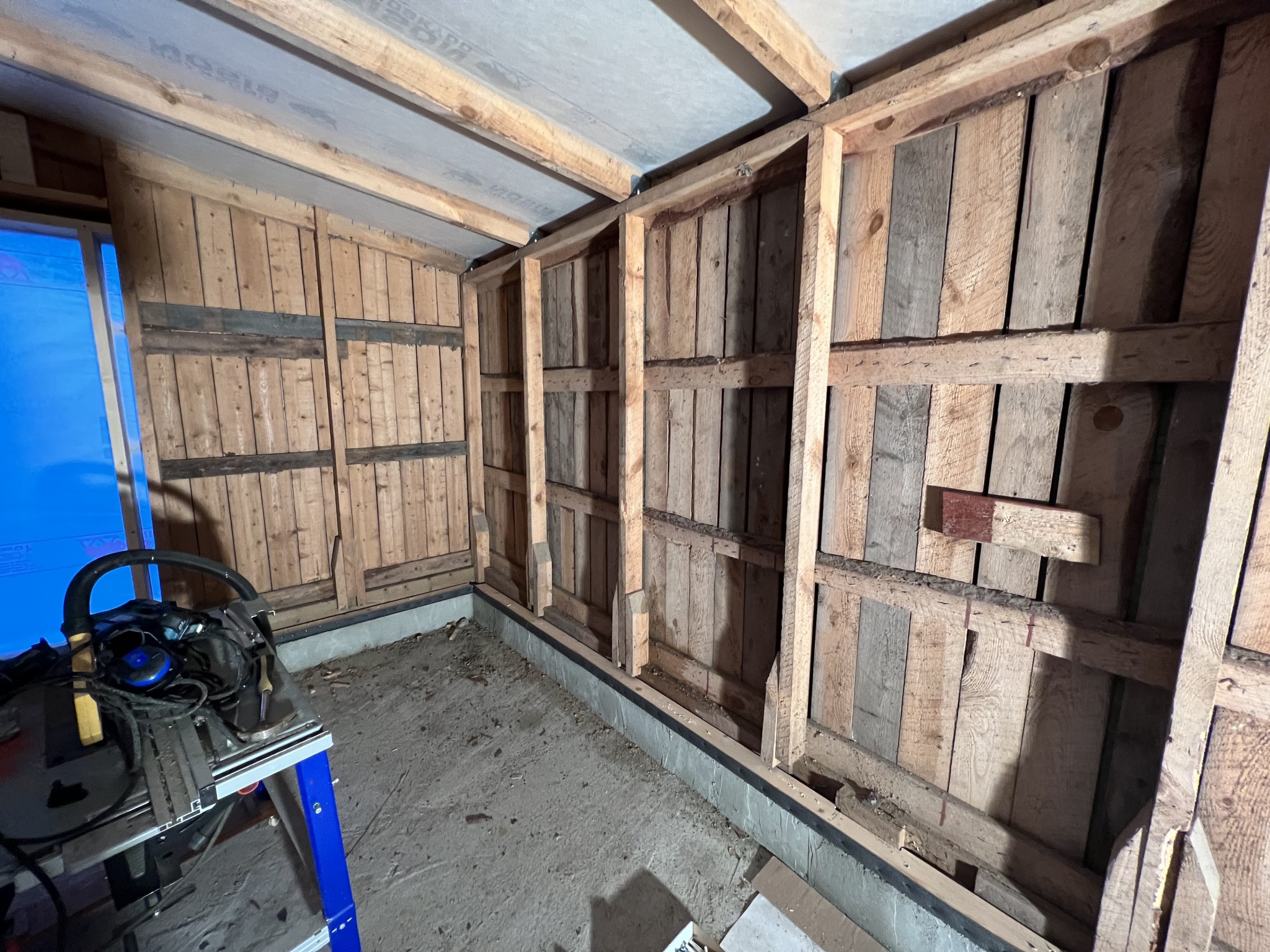
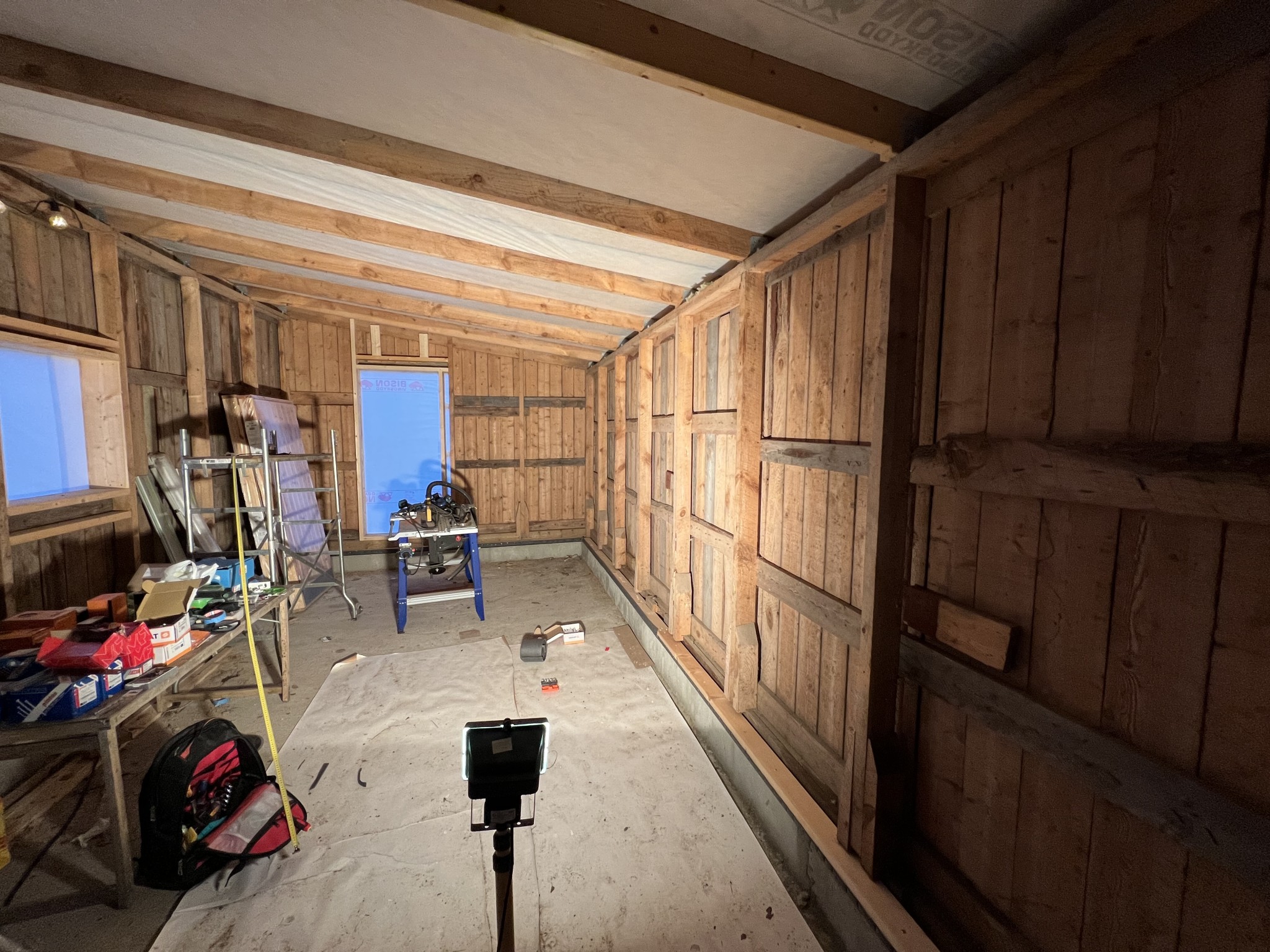
I am renovating an old shed that sits on concrete piers, but the previous owners poured an uninsulated slab between the piers.
I have chosen not to tear down and rebuild but instead to seal and insulate... in hindsight certainly more troublesome and expensive, I now realize.
To seal between the slab and walls, I have cast a base with leca blocks, which I then plastered on the inside. On top of that, I have sill paper and a baseboard.
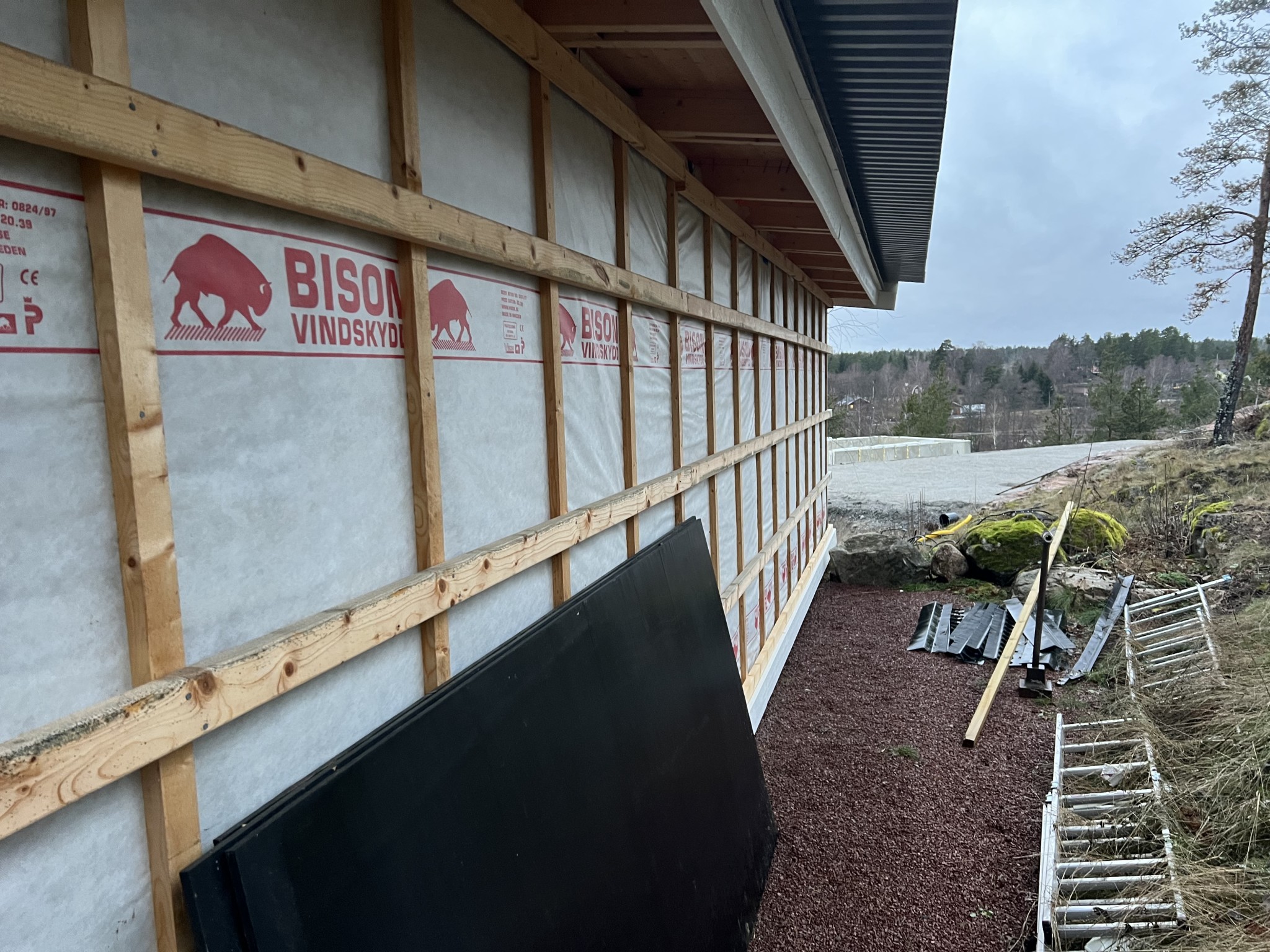
On the outside, I have added insulation, put on a windproof sheet, and framed to create the air gap. Wall paneling will be added in the spring.
But what should I do on the inside?
I've considered insulating directly against the old wooden wall and then placing studs crosswise to facilitate the installation of building boards in the next step. The reason for this is that the wall studs have uneven measurements, not center-to-center 60 cm. But this problem will be solved with the studs to which I will attach the boards, I think. The studs are also needed to make the wall boards even against the base.
But what about the vapor barrier? Do I need to put plastic on the walls and ceiling, or is it pointless considering the slab and bases are uninsulated?
I will have pool equipment at the end of the picture for a pool that is outside.
The shed should be kept above freezing but not necessarily at a comfortable temperature... just so that water and sensitive items don't freeze and break.
What do you think? Is the vapor barrier necessary? Do I need a ventilation solution if I have/do not have the vapor barrier considering the floor/base and the pool equipment that contains heated water indoors?
The roof is constructed as follows:
1) Roof beams with windproof sheet on.
2) Air gap
3) Roof sheathing
4) Roofing membrane
5) Battens
6) Metal roof
I am renovating an old shed that sits on concrete piers, but the previous owners poured an uninsulated slab between the piers.
I have chosen not to tear down and rebuild but instead to seal and insulate... in hindsight certainly more troublesome and expensive, I now realize.
To seal between the slab and walls, I have cast a base with leca blocks, which I then plastered on the inside. On top of that, I have sill paper and a baseboard.
On the outside, I have added insulation, put on a windproof sheet, and framed to create the air gap. Wall paneling will be added in the spring.
But what should I do on the inside?
I've considered insulating directly against the old wooden wall and then placing studs crosswise to facilitate the installation of building boards in the next step. The reason for this is that the wall studs have uneven measurements, not center-to-center 60 cm. But this problem will be solved with the studs to which I will attach the boards, I think. The studs are also needed to make the wall boards even against the base.
But what about the vapor barrier? Do I need to put plastic on the walls and ceiling, or is it pointless considering the slab and bases are uninsulated?
I will have pool equipment at the end of the picture for a pool that is outside.
The shed should be kept above freezing but not necessarily at a comfortable temperature... just so that water and sensitive items don't freeze and break.
What do you think? Is the vapor barrier necessary? Do I need a ventilation solution if I have/do not have the vapor barrier considering the floor/base and the pool equipment that contains heated water indoors?
The roof is constructed as follows:
1) Roof beams with windproof sheet on.
2) Air gap
3) Roof sheathing
4) Roofing membrane
5) Battens
6) Metal roof


Probably not necessary at the moment.A andwim said:
But who knows what will happen in the future?
The storage can become a guest cottage, year-round home office, teenager's residence, or anything else.
So I would use plastic. It's quick, and not difficult or particularly expensive.
Click here to reply