Hello everyone! This is something that is talked about quite a bit. A couple of years ago, I wrote in the forum and bounced some ideas around regarding this. That project is finished and it turned out well (so far). In that case, there was a significant air gap between the outer wall and the new wall indoors (with insulation in it).
Now I'm working on the room next door, and it looks a bit different from the previous project. The house was built in 1860. Crawl space foundation.
From the outside, we have:
* Stucco
* Brick
* Vertical timber (15x15 cm)
The old windproofing paper has been removed to inspect the condition of the wall. New paper will be installed.
Sills have been replaced where needed.
Now I want to insulate the walls facing outward. I am aware of the problem with insulating from the inside.
The question is how much can I safely insulate before there's a risk of moisture getting into the wall/freeze damage.
Ideally, I would like to set up directly against the timber wall (windproofing paper in between) and insulate. Preferably at least 95mm, but preferably more. Maybe 120 or 145mm. Is it feasible, or is it associated with doom and gloom?
If it's possible, should I have a vapor barrier in this case? It's been said to be "taboo" in old houses of our type, etc.
I didn't use it in the previous room because there, I used a significant air gap that can "vent" out.
Or do I need to use an air gap this time as well?
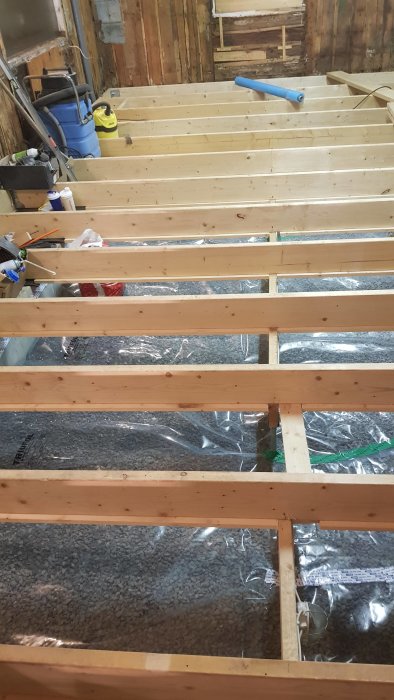
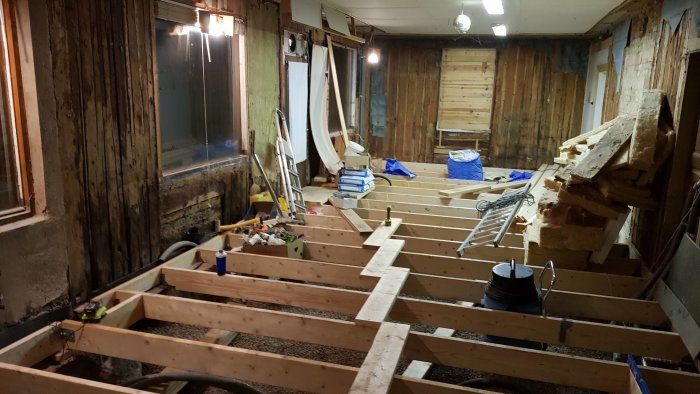
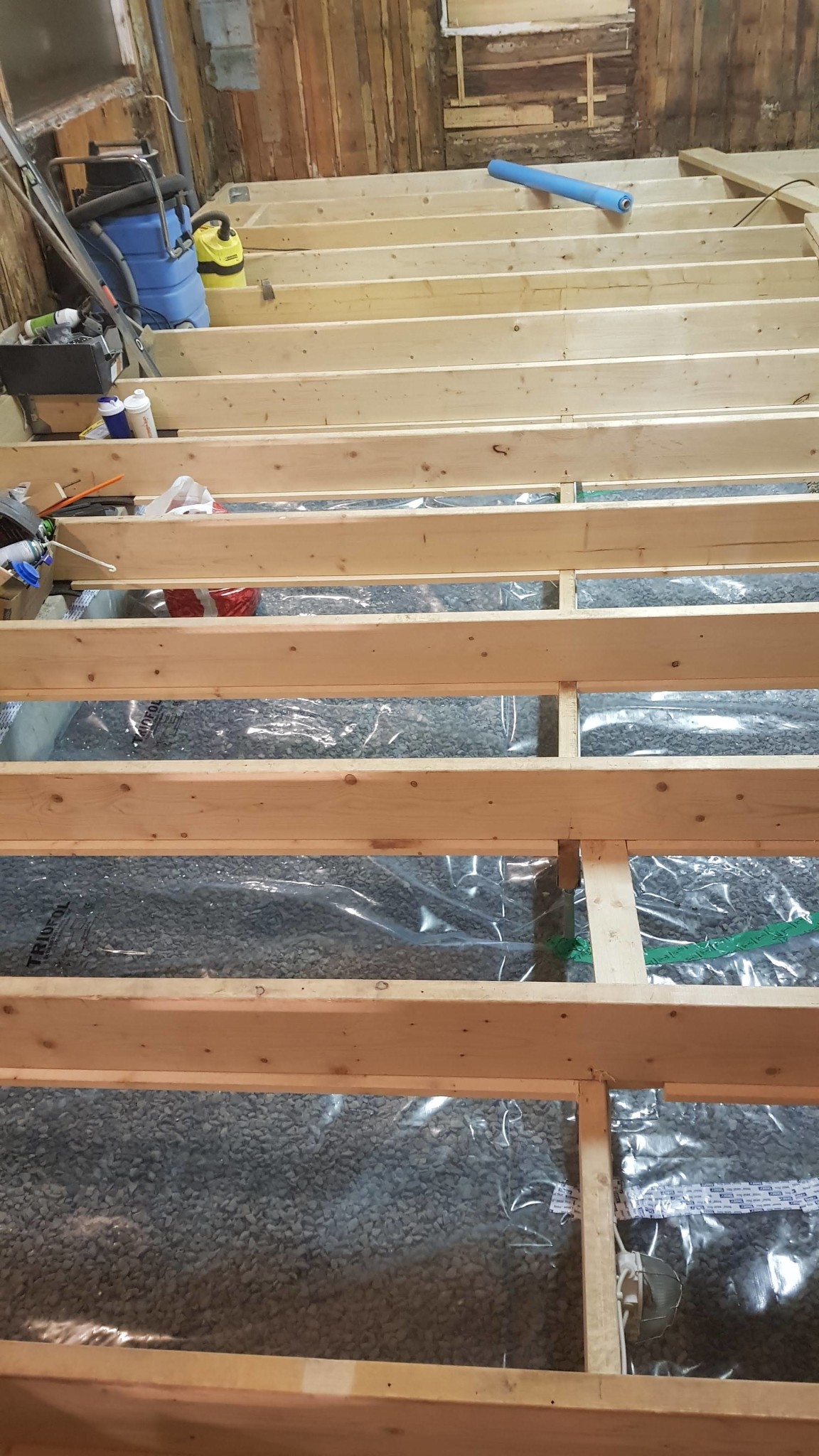
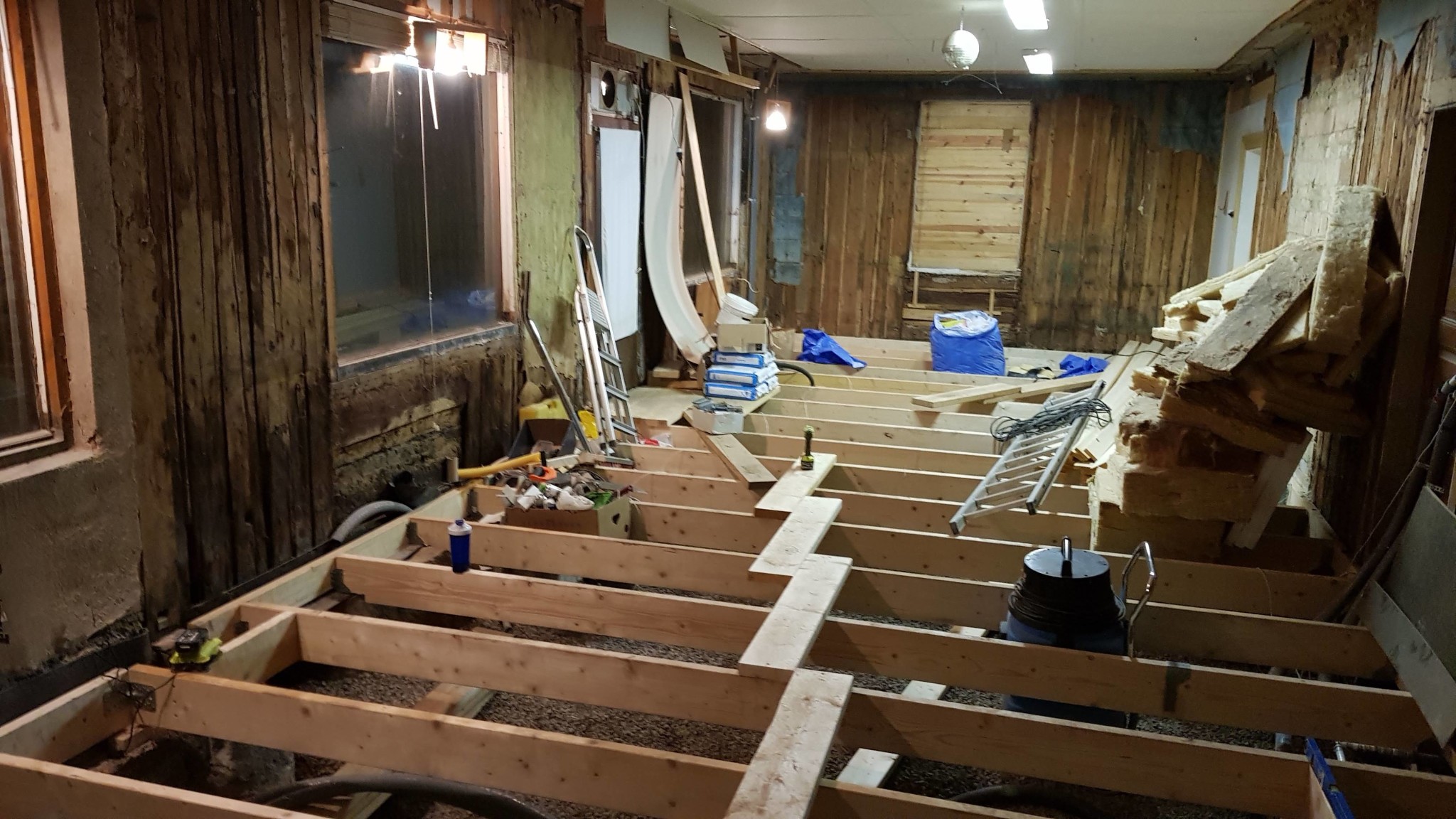
Attaching pictures. One picture doesn't show much wall, but what I've been working hard on before. (55 m2 excavated and filled with gravel/plastic).
Exterior walls are the wall with windows and the wall straight ahead.
Is it leftover timber or plank walls? You should make it windproof on the outside with wind paper/fabric. Then you should get far with 95 on the inside. Insulate carefully around windows, etc.
The situation is difficult to assess. The question is how it looks between timber and brick? How does the timber look on the inside? Are there signs of moisture impact? In this case, the timber's insulation value is roughly equivalent to 50 mm of mineral wool. The brick also provides a small contribution, which can vary quite a bit depending on the type. Not least, its weight plays an important role in evening out temperature differences between day and night. I assume it's a half-brick wall?
Is it leftover timber or plank walls? You should make it windproof on the outside with windproof paper/fabric. Then you should get far with 95 on the inside. Carefully fill in around the windows, etc.
Difficult to say. Seems to be a mixed bag. I've seen in some places it seems to be plank-"type moss"-plank
The situation is difficult to assess. The question is how it looks between timber and brick? How does the timber look on the inside? Are there any signs of moisture impact? The insulation value of the timber in this case corresponds to roughly 50 mm of mineral wool. The brick also provides a small contribution, which can vary quite a bit depending on the type. Not least, its weight plays an important role when it comes to equalizing temperature differences between day and night. I assume it's a half-brick wall?
Yes, the situation feels a bit "complicated." I'd prefer to avoid an air gap. In the worst-case scenario, I'll have to go for it to be on the safe side. But the insulation value would likely be better if we can build directly against the wall. I mean, the air gap will have contact with the crawl space in terms of air circulation. I have seen in a few places that the "wall timber" is standing planks (thick planks) with moss in between. That is, plank-moss-plank. On the wall farthest in the picture, it feels really dry. However, the wall with the windows has been a bit damp, but I think that's because water has condensed on the windows (unheated right now) and then run down the wall. I'm keeping an eye on that wall for a while before building on it. Since the windows are so large, it might not be worth adding a lot of insulation anyway, right? Most of the heat would escape through the windows? One plan there is to replace the old double-glazed windows with more modern triple-glazed ones. I also guess that the wall takes most of the driving rain. So maybe that wall needs to be built with an air gap? (It will be tricky to make it look nice against the windows then, but I'll solve that in some way.)
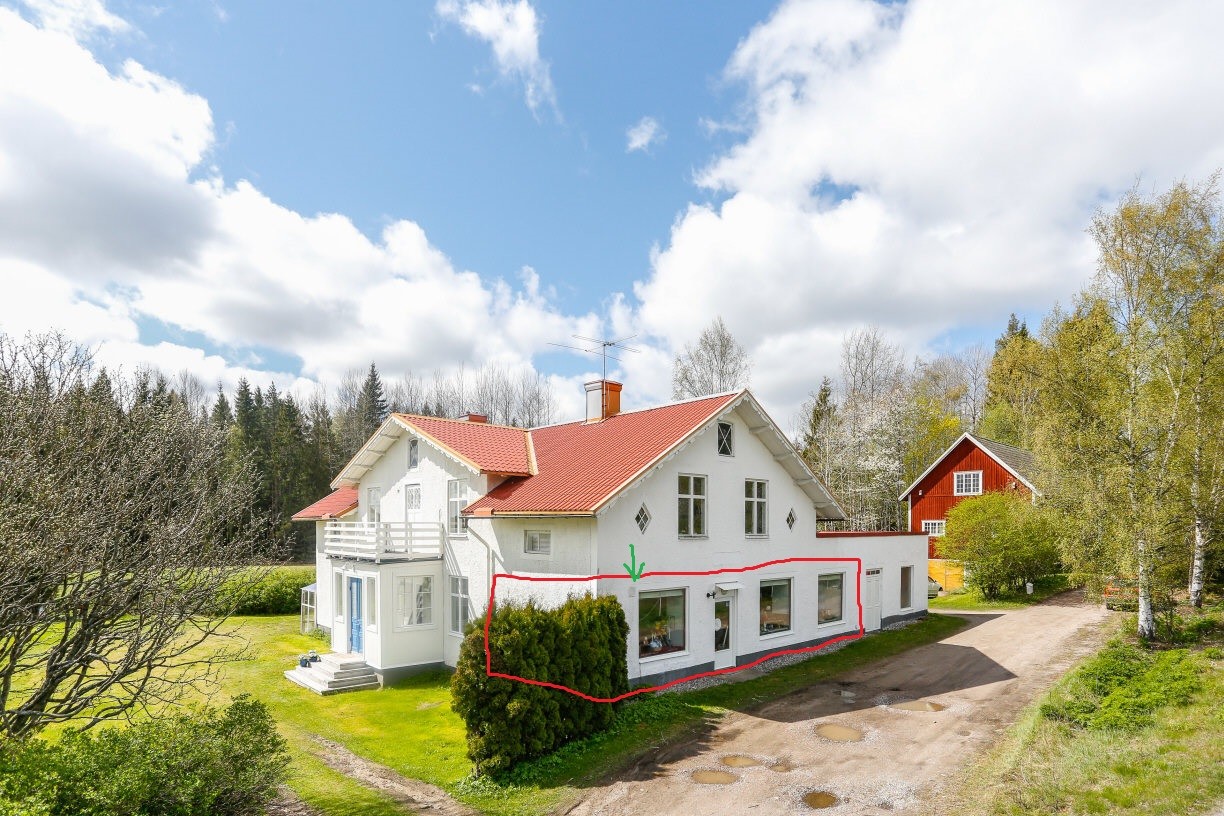
I'm attaching a picture of the outside. The red marking shows the outer walls for the current room. The green arrow shows a vent that can be used for ventilation of a possible air gap. But I had planned to use it for the guest toilet that will be built in the room.
An air gap in the middle of the wall can create convection and affect the effectiveness of the additional insulation.
Why not put a wind barrier against the wall and insulate with hygroscopic insulation (cellulose) and with a vapor barrier on the inside?
Hi! Thanks for the response.
Yes, I've been considering that option to avoid the air gap (and as you mention, then reduce the effectiveness of the insulation).
So maybe I'll plan to attach wood studs directly to the wall and insulate with wood fiber panels instead of mineral wool.
Then I'm unsure about the vapor barrier. Opinions seem divided on that. If I ensure good ventilation, can I avoid plastic in the walls?
Air gap between the facade and wall, then a vapor barrier on the inside. Insulate with cellulose, so it should work?
Yes, that is one solution. Ideally, I would like to avoid the air gap (if possible).
Regardless, it seems like wood fiber boards/cellulose are the way to go in this case?
Yes, that's one solution. Ideally, I want to avoid the air gap (if possible). Either way, it seems like wood fiber boards/cellulose are the way to go in this case?
But you can't skip a vapor barrier just because you're installing hygroscopic insulation. You want it airtight. For example, Isolina has a vapor barrier for their flax insulation that they call air barrier paper. http://www.isolina.com/se/isolering-byggpapper.cfm
But you can't skip a vapor barrier just because you use hygroscopic insulation. You want it airtight.
For example, Isolina has a vapor barrier for their linen insulation that they call air barrier paper.
[link]
Thanks again for the response
Ok.. So your suggestion is: Apply wind barrier on the existing inner wall. Then put studs directly against the wall. Insulate with, for example, wood fiberboards. Then vapor barrier. Afterwards, something like OSB/Gypsum?
I might add that I am considering OSB and a double layer of gypsum. (The reason is soundproofing) It's going to be a music room.
(If that affects the whole thing?)
Wind barrier is much easier to work with. Go for one that is not too tight so it works in harmony with the vapor barrier.
Ok! Thanks for the answer!
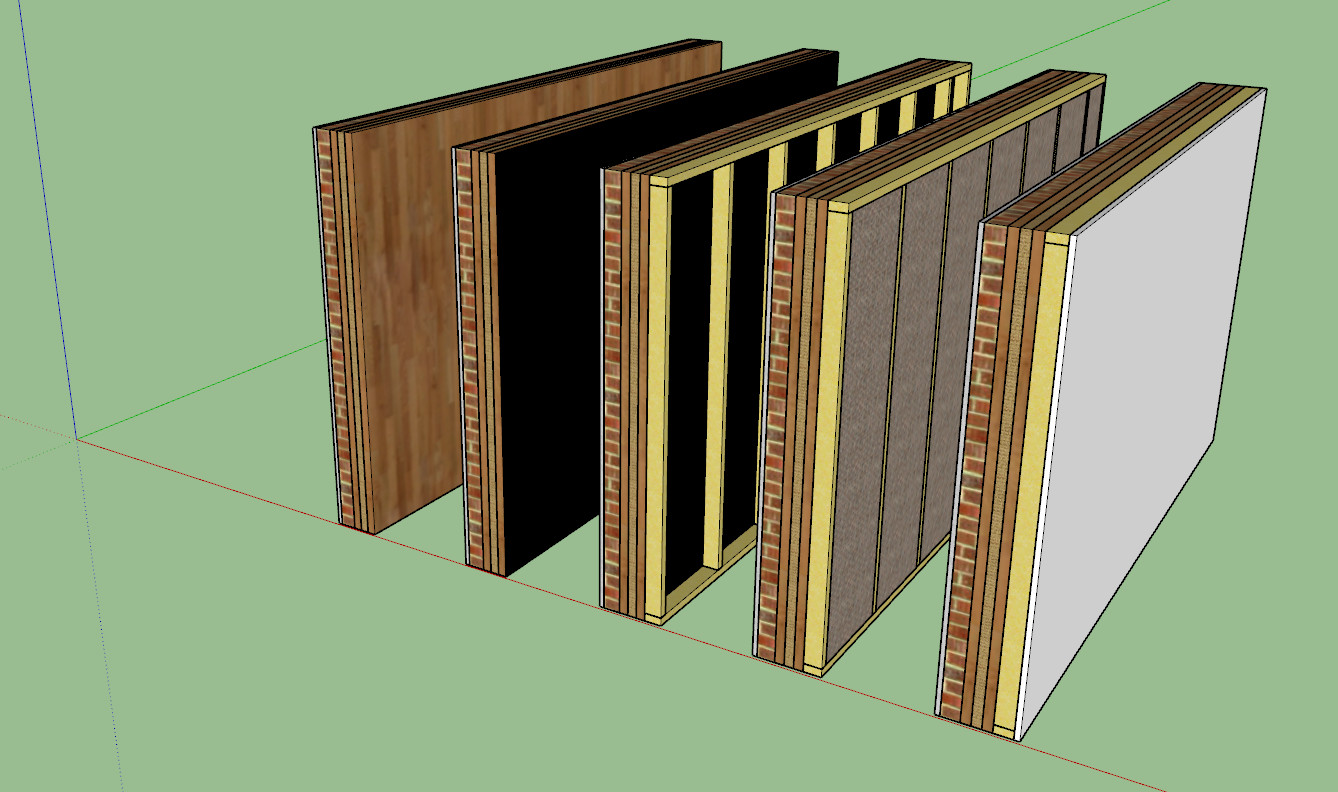
Made a little sketch to make sure I have understood you correctly. (The reason I am asking so many questions is about insulating from the inside and with/without an air gap)
If we look from left to right. (the walls are drawn from the outside (left side) -> inward (right side)
Wall 1 - I assess that it is plaster -> brick -> standing plank -> (moss?) -> standing plank
(alternatively, it is solid standing timber. It seems to be a bit different, unfortunately)
Wall 2 - Apply wind paper against the wall on the inside
Wall 3 - Frame up against the wind paper/wall.. Here is the question about air gap or not!??!
Wall 4 - Insert wood fiber insulation (or equivalent)
Wall 5 - Apply vapor barrier and then OSB/Gypsum, etc...
Does it work?
Vi vill skicka notiser för ämnen du bevakar och händelser som berör dig.



johel572 said: