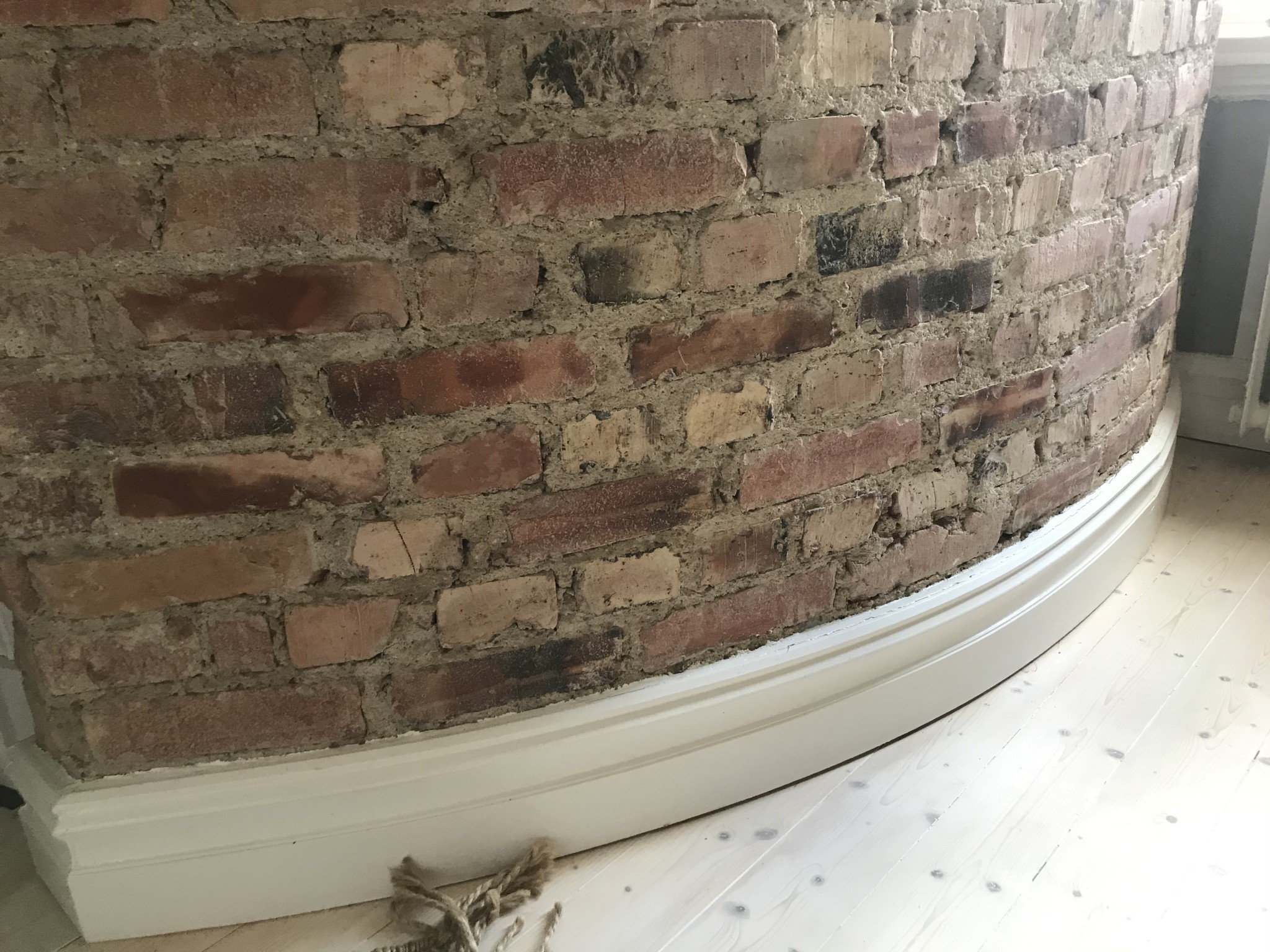
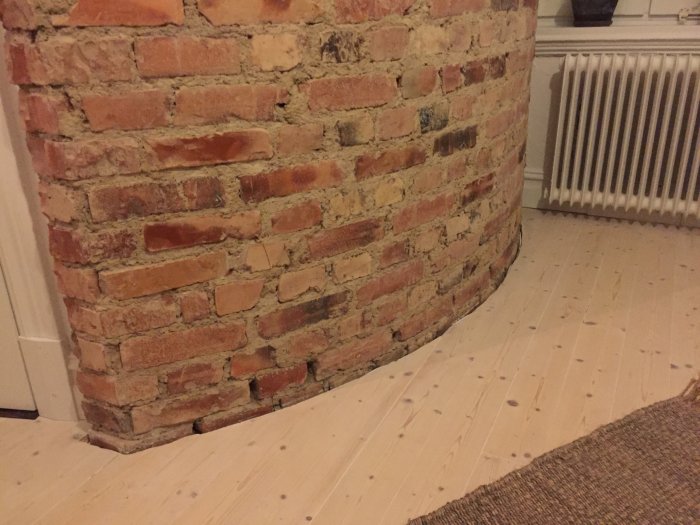
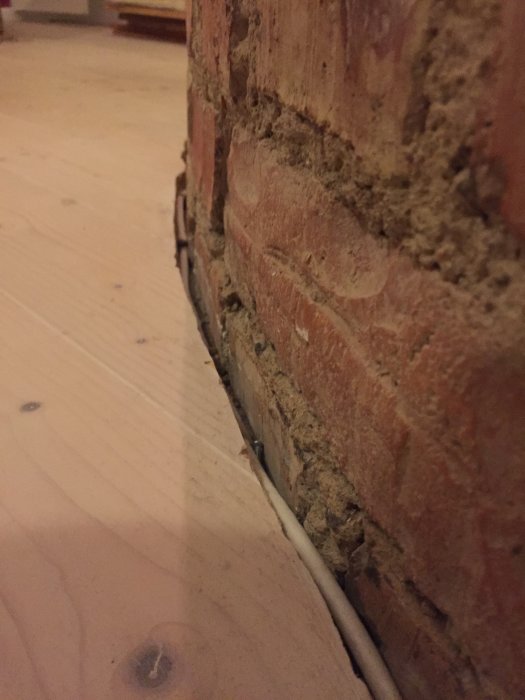
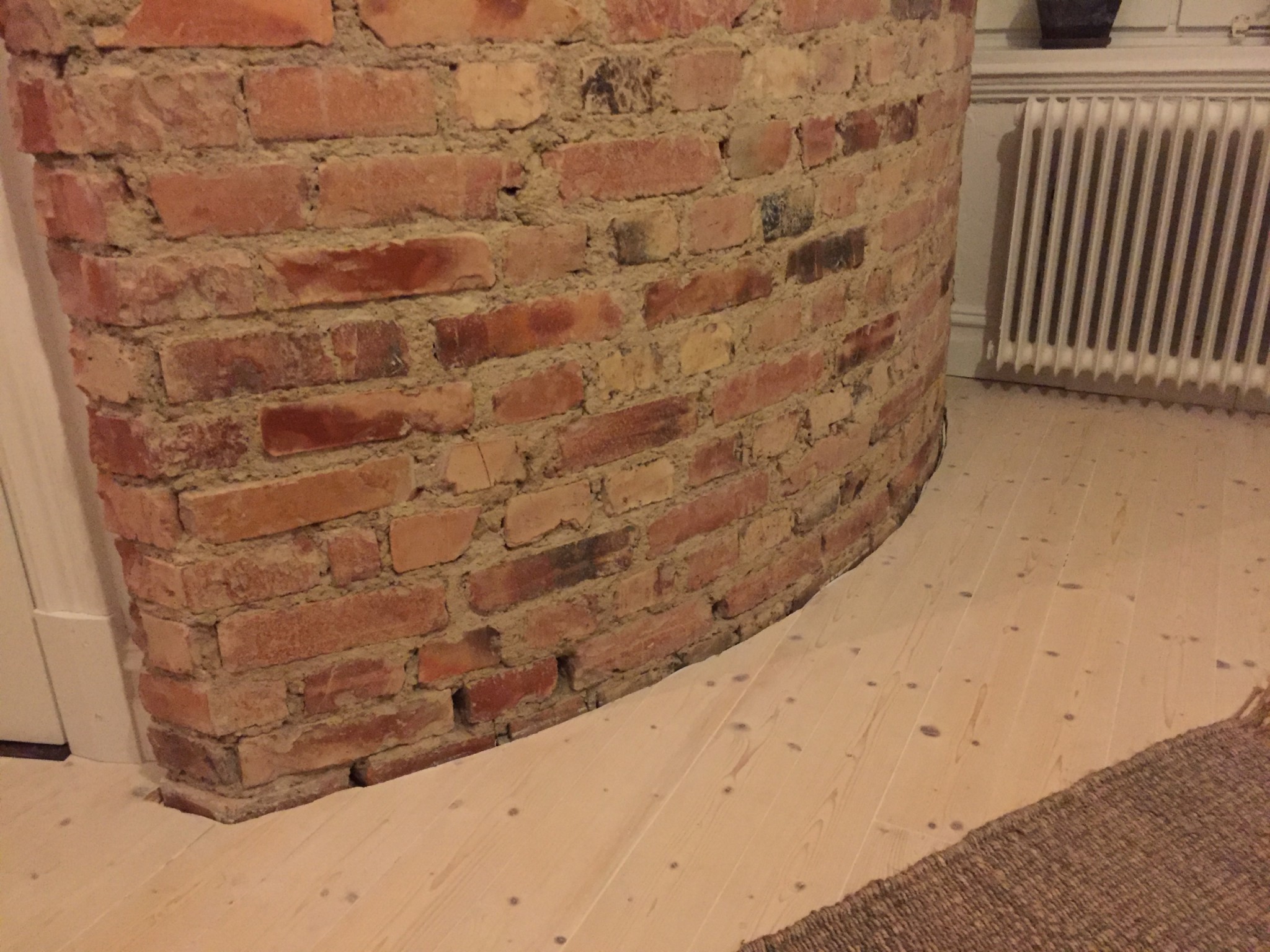
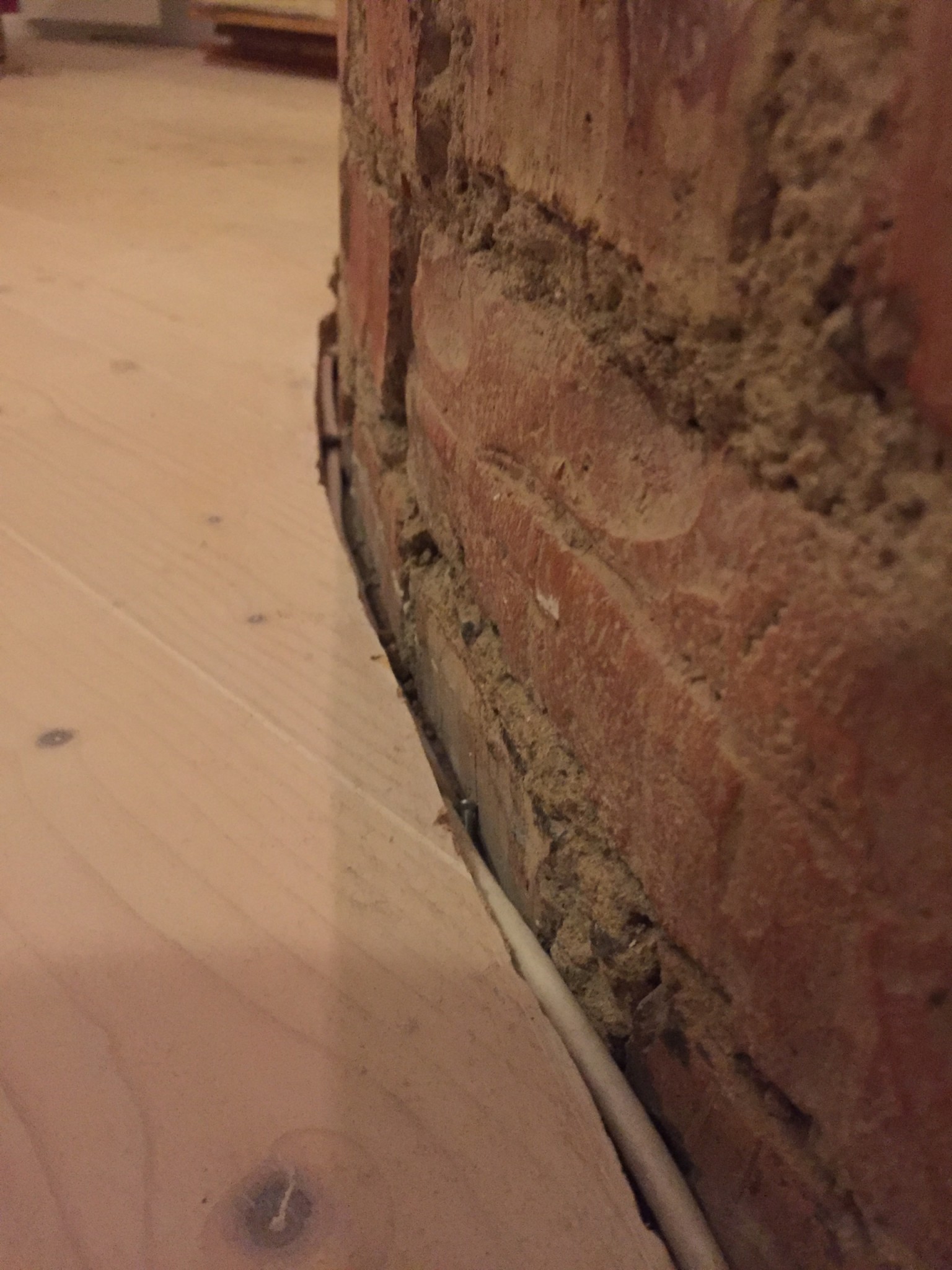
I would need suggestions on what type of baseboard to use against a brick wall (see picture).
Since the wall is curved, I think the baseboard needs to be quite flexible, or is there another method?
The original baseboard (which was 110 years old and rotten) was probably a normal baseboard with many "saw notches" in it, which made it bendable. Is that how it should be done again?
Saw a wooden skirting board into pieces so that when you lay the pieces face down, there are lots of V-grooves in it. Tape the pieces together so they are tight, then you can preferably glue the whole thing with construction adhesive to the tiles. Once you've done this, carefully mask the tiles and then apply a lot of filler and sand it down until it's even. Since you have relatively little curvature, it may work with a few pieces, alternatively, if you saw a lot of notches and then bend it, but it will probably still be necessary to use filler.
It is possible to bend moldings if you let them be in steam for a while beforehand. I know several people who put moldings in spiral pipes sealed at one end and then steam the molding for a while. Then you just have to be quick to get it in place.
You can combine the methods. Sawing cuts is of course good but takes a long time.
Now that I've looked more closely at the other baseboards, I wonder if it's not better with such a flexible little plastic strip since it won't be the same anyway.
The most stylish and flexible is a list of ash. Available for purchase at well-stocked timber stores. You may need to round off the outer upper edge yourself. It can be installed directly without any other measures.
MDF list works well to bend. Otherwise, wet a furu list and wrap it in plastic and pre-bend a day before installation. Pre-drill holes so it can be mounted quickly.
Why complicate it by bending? The simplest thing should be to just find the nearest oak with a slightly larger radius than the wall and use two hole saws of a larger model.
Why complicate things by bending? It should be clearly easiest to just find the nearest oak with a somewhat larger radius than the wall and use two larger hole saws.
First of all, the thread is almost 4 years old, so one would hope it's resolved...
Secondly, I hope that was an attempt at a joke...








Magnus E K said: