Hello! I have, in my opinion, quite a significant problem on my hands. The roof on my garage has "settled," with visibly noticeable dips in the roof tiles in certain areas of the roof, which is a total of 84 sqm2 in size. You can also see that the ridge is not straight.
It is a double garage measuring 6 m wide and 10 m long. It consists of a garage part that is 6x6 m and a storage part that is about 6x3 m. The roof has concrete tiles and a slope of about 15 degrees.
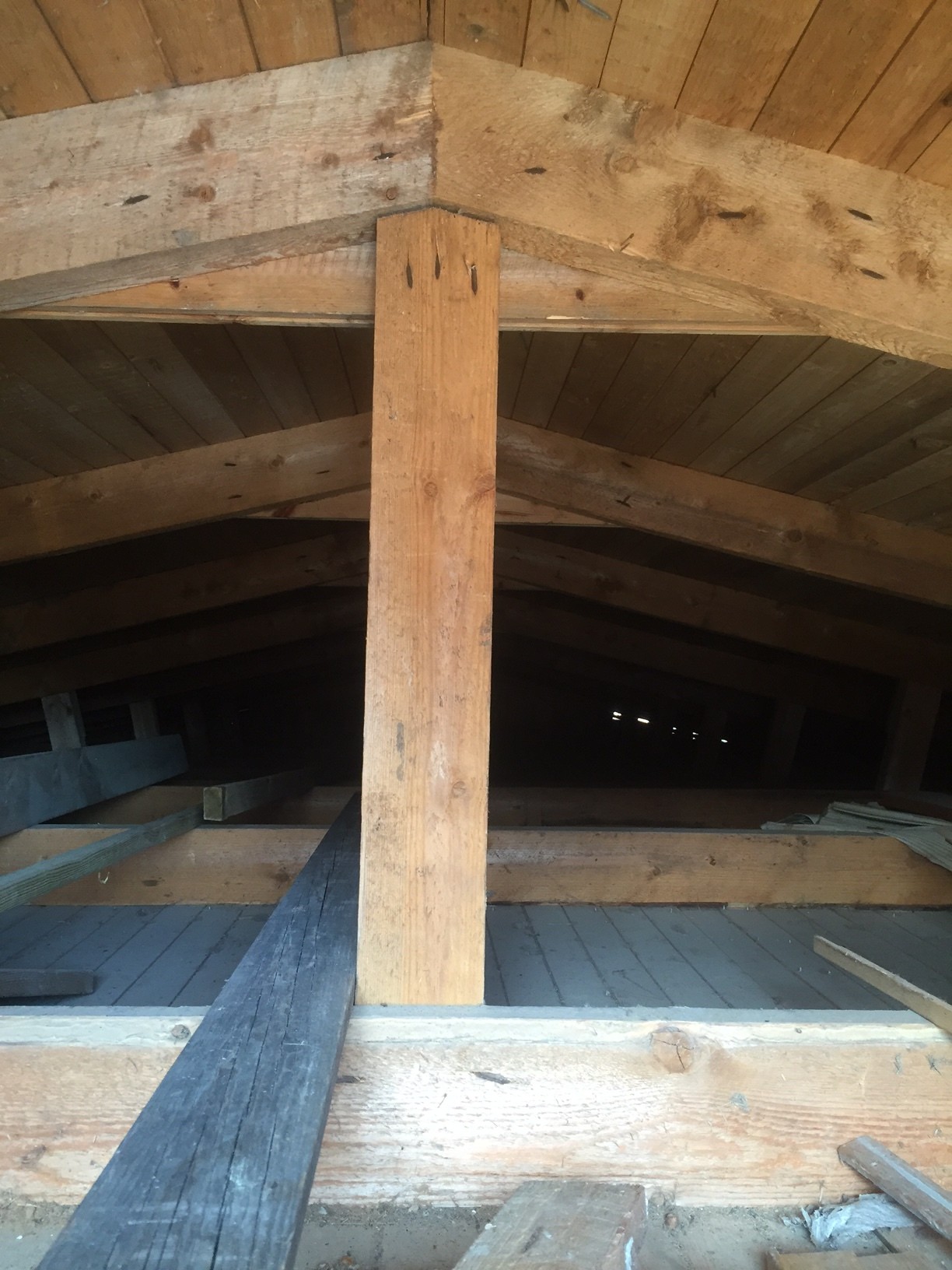
When I look into the attic, none of the trusses are broken as I first thought. However, the trusses are incorrectly constructed and do not support the roof as they should, especially not in winter.
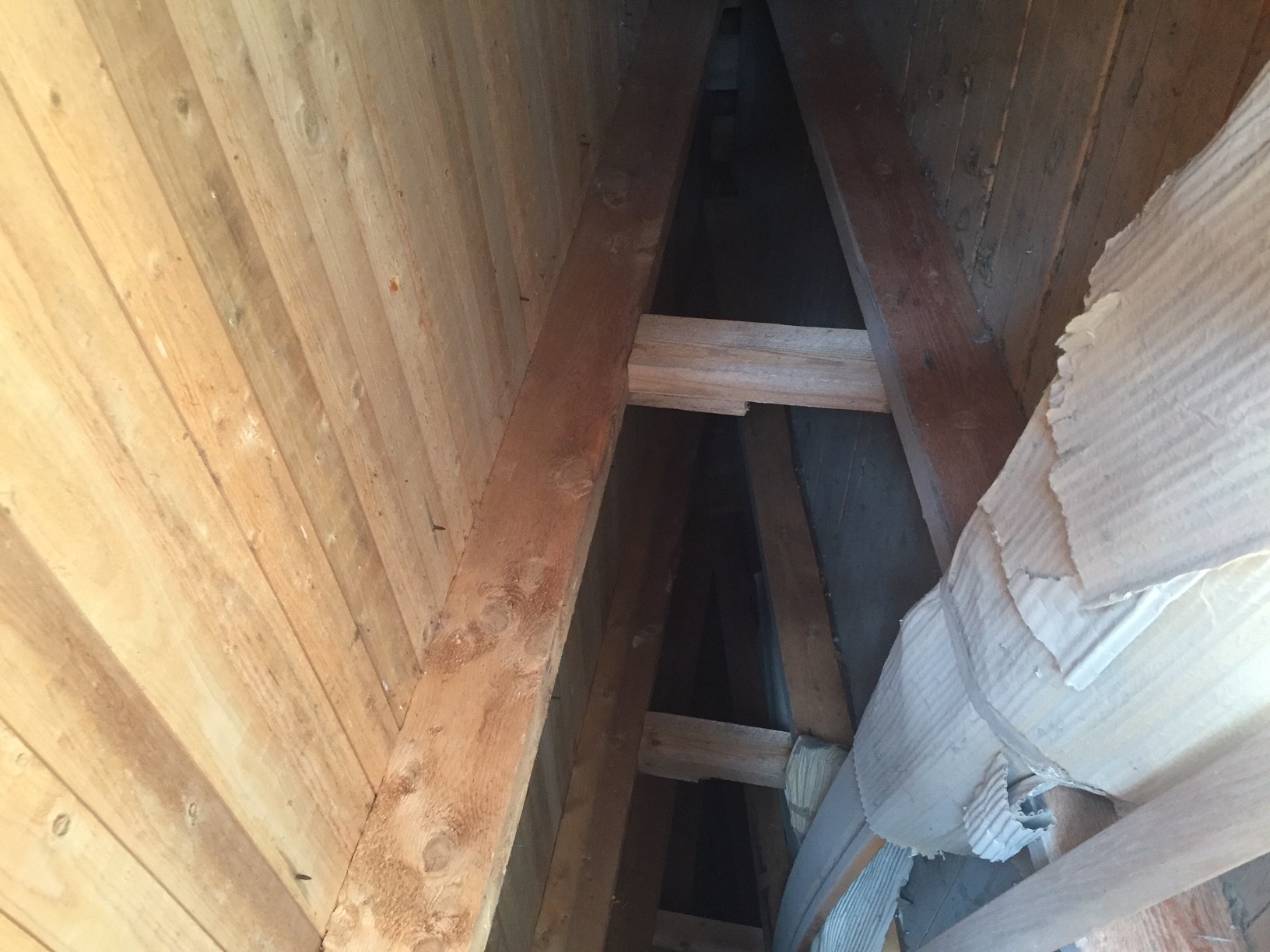
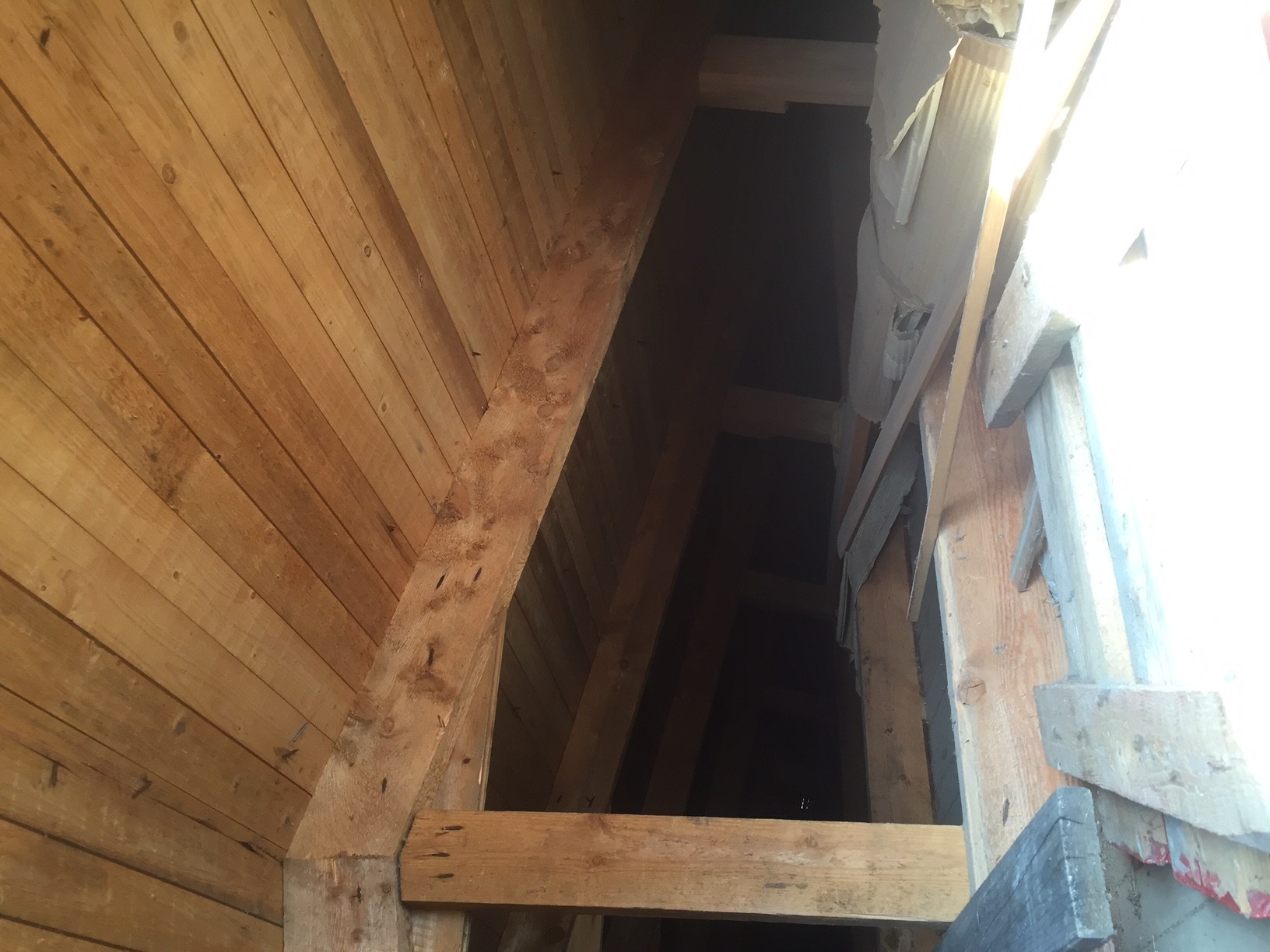
In the attached photos, you can see for yourself how these trusses were constructed once upon a time (probably in 1980). The trusses are not in one piece but nailed to the side of the collar beam. There are only a total of 3 supports between the rafters and the collar beam, and the board nailed in the middle is only nailed to a plank sitting between the rafters. The highest points of the roof are where the trusses are supported by the gables and the wall between the garage and storage, where it likely hasn't sunk significantly.
From what I understand, this is the reason most trusses have sunk because they can't bear the weight combined with the low slope and incorrectly constructed trusses.
What can I do about the problem? I naturally desire a cheap and smooth solution that doesn't involve too much work. I want to avoid tearing down to the trusses and replacing them with new ones, which would, of course, be the best solution.
One idea I have is to prop up the trusses from inside the garage and storage parts with screw jacks and a long beam between the jacks, thereby attempting to "screw up" the trusses to the same level, and then brace the trusses from inside with a glulam beam and also reinforce the existing trusses to support more weight. The glulam beam in question will be 115x240. In the garage section, which has a span of 6m, I will need support in the middle.
I will, of course, remove tiles, battens, and felt before this, as they need to be replaced anyway, except for the tiles, which are intact and fine.
Prop up the ceiling from the inside so that it looks good and is measurably straight in the attic.
Wait and ponder.
Measure again.
Look on Google at how a truss is constructed.
Then lay a narrow, simple floor to crawl on so you don't break the inner ceiling.
Nail a solid truss to each rafter.
Buy/rent a compressor and nail gun for this.
Stamp up the ceiling from the inside so it looks good and is measurably straight in the attic. Wait and think. Measure again. Look on Google how a truss roof is constructed. Then lay a narrow simple floor to crawl on so you don’t break the ceiling. Nail a solid truss to each rafter. Buy/rent a compressor and nail gun for this.
So you don't think I should put in a glulam beam under the rafters for support? And how do I convert existing rafters to a W truss? Since the rafters are nailed to the side of the collar beam, I need tips on how to proceed. Should I place a 45x145 on the collar beam and then also attach 2 rafters, to then manage to create a somewhat proper trussed rafter? In that case, I would basically be forced to build 10 new trusses on site, where it's really cramped...
Then a question about stamping from the inside, do I need to cut up so that I stamp directly against the rafters, or is it possible to place something like a 45x120 on the plate up against the plasterboard without breaking it too much?
My God, how can anyone sleep after constructing something like that? Really unfortunate for you...
If it's the ridge that "sways," the question is whether the one you call the collar beam (which I think is called underram) also sways or if it's the standing centered stud that "slides" downward. If the underram sways, you could prop underneath it and lift the entire truss to level, but if it's the standing stud that slides, you need to focus the prop there somehow.
I would first nail a stud on the inside of the upper frame so that they align with the underram, and then construct a truss. Then I think I would align the roof from above; if you're going to remove the tiles anyway, it seems like a much simpler option. Who knows what happens if you start pressing from below with the props; you'll probably have to fix the inner ceiling and there might be settling in other places...
My God, how can you sleep after constructing something like that? Really unfortunate for you...
If it's the ridge that "sways," the question is whether what you call the collar tie (which I think is called the lower chord) also sways or if it's the standing centered rule that is "sliding" downward. If the lower chord sways, you could prop it from beneath and push the entire truss up to level, but if the standing rule is sliding, you'll need to focus the prop there somehow.
First, I would have nailed a beam to the inside of the upper chord so they align with the lower chord, and then constructed a truss. Then, I would have adjusted the roof from above, if you are going to remove the tiles anyway, it seems like a much simpler option. Who knows what might happen if you start pressing from below with props, you might have to fix the interior ceiling and there might be settlements in other places...
Regards
Yes, I wouldn't have felt particularly proud if I started propping that roof considering what supports it, and it's strange that whoever built it didn't ask if it would last more than 2 winters. But, not much to worry about that now!
I think it's a combination of the ridge swaying and the two poor diagonal braces that are nailed as support between the lower arm and upper arm (let's just call them that), also being forced down by the weight of the tiles and especially all the snow. I don't think the lower arm sags any, but it does feel under-dimensioned as well; all the "trusses" are made of 50x120.
Your solution seems logical, but what size beams would you have used? And when you write that you would have tried to adjust the roof from above, can you explain that a bit more? How do I go about doing that?
Absolutely right, nothing to fret about, it only makes things worse 😀
It's always difficult with sizing, but it's indeed weak as you say. For the barn, the span is 8 m and for the house 7.5, but I let the truss manufacturer do the calculations and sizing there. However, I built my own trusses for an outbuilding where the span is 4.7 m, the bottom chord is 45x195, the top chord is 45x145, and the "diagonal braces" in the framework are 45x90. You have a larger span and also a smaller angle, so a layman's assessment is that you probably should go up another size. However, if you nail an additional beam to the old one, you get a substantial sizing advantage. If it's difficult to nail/screw a beam to the bottom chord, you can always screw a plate on one or both sides of the beam. It increases rigidity tremendously (although it costs a bit).
You simply align the roof with the battens. I've never done it myself, but if you stretch lines over the roof, you'll see where the dips are, and then it's "just" a matter of packing underneath where needed to get everything level.
Exactly right, nothing to fret over, it only makes it worse 😊
It's always tricky with sizing, but it is indeed weak as you say. The span on the barn is 8 m and on the house 7.5, but there I let the truss manufacturer do the calculations and sizing. However, I built my own trusses for an outbuilding with a 4.7 m span, the bottom chord is 45x195 and the top chord 45x145, and the "braces" in the truss are 45x90. You have a larger span and a smaller angle, so a layman's assessment is that you probably should go up an additional dimension. However, if you nail on a beam to the old one, you get a substantial sizing as a bonus. If it's difficult to nail/screw a beam onto the bottom chord, you can always screw a plate on one or both sides. It increases the stiffness tremendously (though it does cost quite a bit).
You align the roof with the battens simply. I've never done it myself, but if you stretch lines over the roof, you'll see where the dips are, and then it's "just" to pack underneath where needed to get everything level.
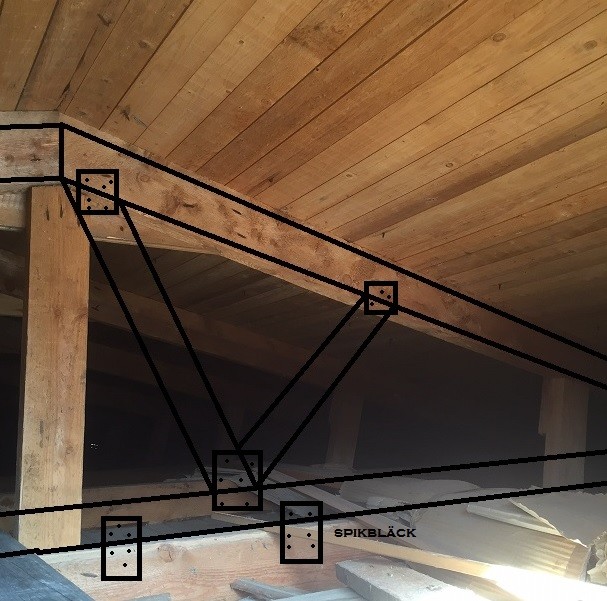
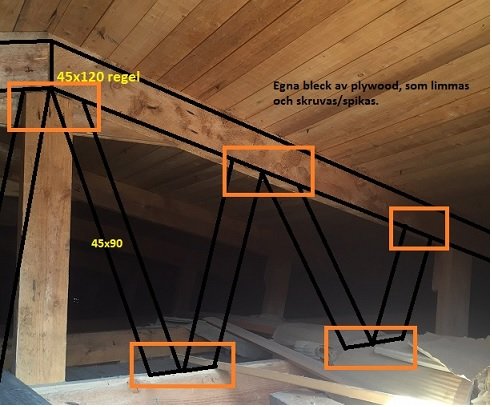
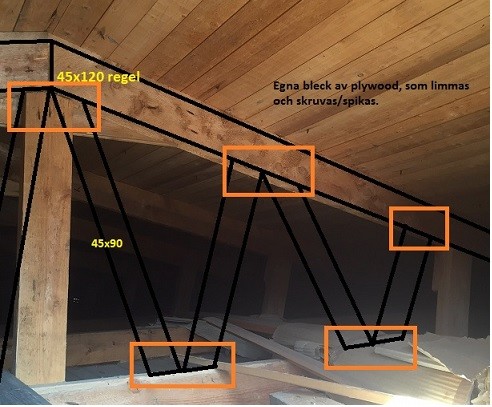
So if I add another beam to the bottom chord, 45x120, and then screw similar beams to the top chord, to then make a truss, as shown in the picture below. Then I don't need a beam to support the trusses, as they should be self-supporting if I get it right? Attaching a picture of how I think it might work. Or should I even make a WW truss to get it right?
Is it enough if I glue, screw, and in joints use sturdy nail plates? Do nail plates work when I'm adding the new beam to the existing bottom chord, or do I need a plate that screws all the way?
Then to align the roof using the battens I've thought about too, as long as you know the trusses are OK, it doesn't matter what it looks like under the tiles. Another idea I'm considering is to skip the tiles and install a new metal roof to further reduce the load on the trusses. Of course, this brings quite a big cost.
It is a common misconception that the bottom chord needs to be heavily dimensioned in a truss. But it essentially only takes tensile stress, so in principle, it could be replaced with a steel cable. The only reason to increase its dimension is so that it can support the ceiling and possibly the attic floor. If you look at factory-made trusses, they have the same or smaller dimensions in the bottom chord compared to the top chord.
There is therefore hardly any reason to reinforce the bottom chord. In a W-truss, it is the top chord and the inward/downward slanting webs that take compression load, the bottom chord, and the outward/downward slanting webs take tensile load.
So if I add another beam on the forearm, 45x120, and then screw on identical beams on the upper arm, to then create a truss, according to the image below. Then I won't need any beam to support the trusses, as they should be self-supporting if I get it right? Attaching an image of how I think it can work. Or should I even make a WW truss to get it right?
[image]
Is it enough if I glue, screw, and use sturdy nail plates for the joints? Do nail plates work even when I need to put the new beam on the existing forearm, or must I have a plate screwed all the way?
Then using the battens to align the roof has been my thought as well; as long as you know the trusses are OK, it doesn't matter how it looks under the tiles. Another thought I'm considering is skipping the tiles and putting on a new metal roof to further reduce the load on the trusses. This, of course, involves a fairly large cost.
Thanks for the help so far! It's appreciated!
I don't know about the distribution of forces, but according to previous posts, you should manage with the existing lower frame, and then it's sufficient to reinforce the upper frame and add the braces. Yes, nail plates work great! Use anchor nails or anchor screws. Absolutely, if you make the trusses correctly, they will support the roof!
I don't think there will be any problem putting back the tiles if you reinforce your existing trusses!
No problem, this is how the forum should work, sharing from the little one knows 😄
Absolutely right, nothing to fret over, it only makes things worse 😀
It's always difficult with dimensioning, but it's indeed weak as you say. On the barn, the span is 8 m and on the house 7.5, but there I let the truss manufacturer make the calculations and dimensioning. However, I built my own trusses for an outbuilding where the span is 4.7 m, the bottom chord is 45x195 and the top chord is 45x145 and the "braces" in the truss are 45x90. You have a larger span and also a lower angle, so a layman's assessment is that you probably should go up another size. However, if you nail a beam onto the old one, you'll get a solid dimensioning in return. If it's difficult to nail/screw a beam onto the bottom chord, you can always screw a plate onto one or both sides of the beam. It increases the rigidity tremendously (though it does cost a bit).
You simply align the roof with the battens. I've never done it myself, but if you stretch lines across the roof, you'll see where the dips are and then it's "just" a matter of adding underneath where needed to get everything level.
This is a simple solution that will suffice for aligning the roof. So you nail the truss construction in the current position,
It will look straight and hold if you do so.
Not a bad idea at all if you're uncertain.
It's so nice with your reflections and tips! Thank you all!
To sum it all up so that the head inside my skull can try to understand the following applies:
1. I do not need to add another rule on the forearm, as it does not provide additional stability.
2. I attach another nicely composed picture of my own, where you can ponder the following: are the dimensions sufficient? Should I make a WW chair, or is it enough with a W on each side of the ridge?
3. Can I use plywood instead of metal plates to join the rules? Metal plates are quite expensive when you need such large ones in some places. Is PL400-600 applicable, or is regular wood glue better?
4. How do I make the ridge level? It has sagged in various places as well. Can I "just" pad the areas that are lower there too?