
1,584 views ·
3 replies
2k views
3 replies
Identification and advice regarding stone slab
Hello!
I've managed to get hold of a large (and very heavy) stone slab, but I could use some advice on how to proceed.
Firstly, what type of stone is this and why has it been treated this way? There's a thick layer of polished lacquer on top of the slab, and the underside almost looks like it's covered with some form of fiberglass.
Secondly, large parts of the slab are undamaged, but it's a bit chipped on the edges. Where it's damaged, you can glimpse the stone, which seems to be of a very porous type. How is it to work with this material? Will it be possible to saw it with a diamond blade or alternatively, water jet cut it?
Should I do a similar lacquer treatment to seal the cuts when I'm done?
Thanks in advance
//Charlie
I've managed to get hold of a large (and very heavy) stone slab, but I could use some advice on how to proceed.
Firstly, what type of stone is this and why has it been treated this way? There's a thick layer of polished lacquer on top of the slab, and the underside almost looks like it's covered with some form of fiberglass.
Secondly, large parts of the slab are undamaged, but it's a bit chipped on the edges. Where it's damaged, you can glimpse the stone, which seems to be of a very porous type. How is it to work with this material? Will it be possible to saw it with a diamond blade or alternatively, water jet cut it?
Should I do a similar lacquer treatment to seal the cuts when I'm done?
Thanks in advance
//Charlie
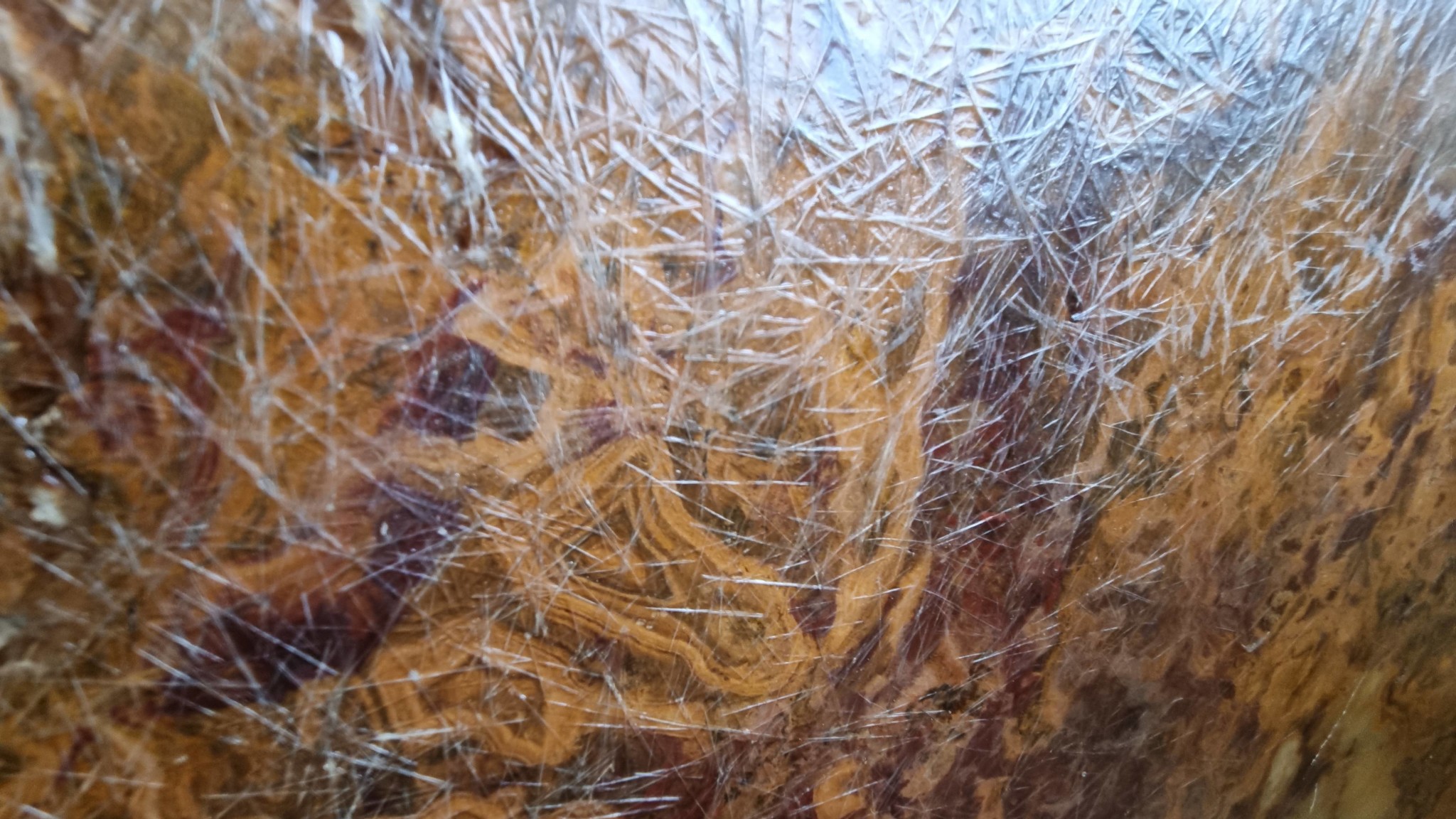
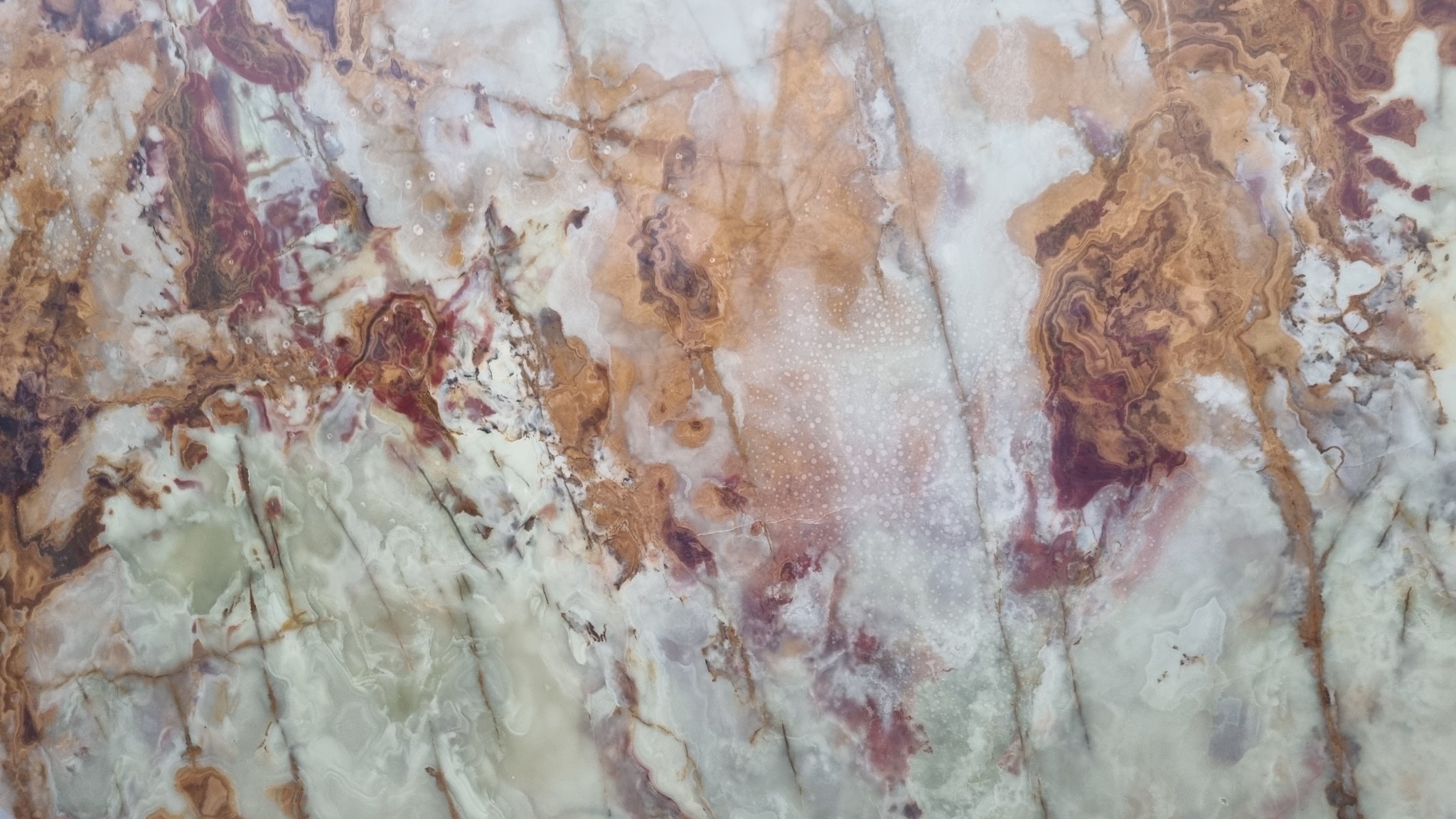
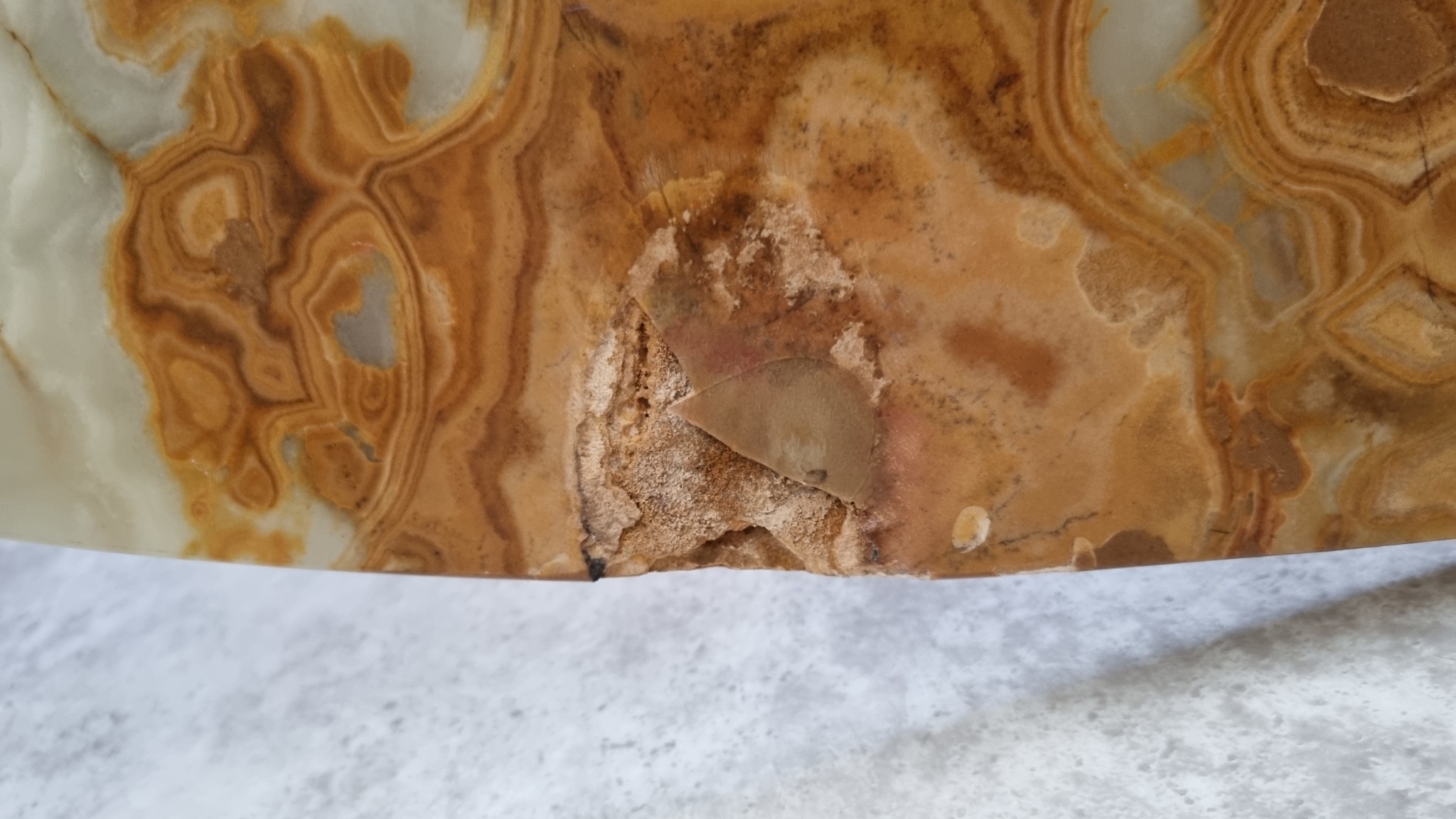
The stone is marble, i.e., limestone, and it can often be porous (especially in patches). It often becomes discolored if something is spilled on it, so that's why they have protected the stone with that lacquer you see.
Because it is porous, they have also reinforced the stone underneath with fiberglass/mesh, i.e., a type of reinforcement. If it has been laid as flooring and it cracks, the reinforcement still holds the stone together so that pieces do not break off.
It should be cut with a water saw.
Because it is porous, they have also reinforced the stone underneath with fiberglass/mesh, i.e., a type of reinforcement. If it has been laid as flooring and it cracks, the reinforcement still holds the stone together so that pieces do not break off.
It should be cut with a water saw.
Thank you very much for the answers Jawen, things are getting a bit clearer now. Regarding the varnish, should I try to sand down the old varnish and then apply new varnish on top? Or is it enough to seal the new cuts with a new layer of varnish? What type of varnish is suitable for this purpose? I've tried googling but can't seem to find any good answers.
Interesting about the reinforcement, this used to be a table at one point, but I assume the same principle applies here. Am I completely wrong if I try to get rid of it by sanding the surface?
Interesting about the reinforcement, this used to be a table at one point, but I assume the same principle applies here. Am I completely wrong if I try to get rid of it by sanding the surface?
What did you plan to use it for?Chwil said:
Thank you very much for the answers, Jawen, now it's getting a bit clearer. Regarding the varnish, should I try to sand down the old varnish and then apply new varnish on top? Or is it enough to seal the new cuts with a new layer of varnish? What type of varnish is suitable for the purpose? I've tried googling but can't seem to find any good answers.
Interesting about the reinforcement, this used to be a table at one time but I guess the same principle applies there. Am I completely messing up if I try to get rid of it by sanding the surface?
Your intended use is somewhat crucial for what kind of treatment you might need to do on the stone.
You can buy the smallest can of Zar Ultra polyurethane varnish, available in all paint stores in glossy or matte.
And brush it where you've cut the slab, so it doesn't absorb anything colored.
The link below is to glossy. (mainly to show the can)
https://www.tapethandeln.se/sv/arti...-polyuretanlack-interior-blank-90-oljebaserad
Click here to reply