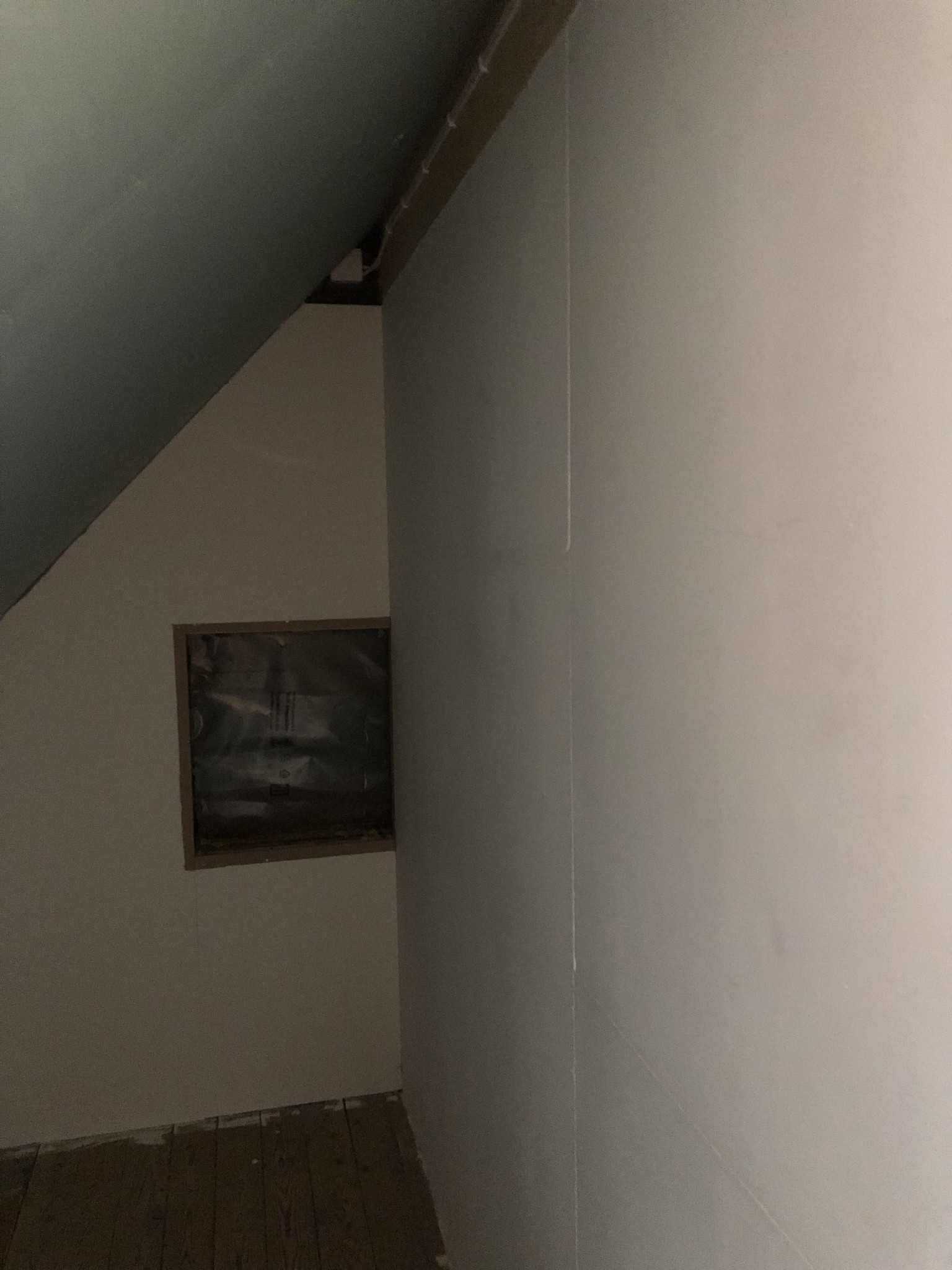
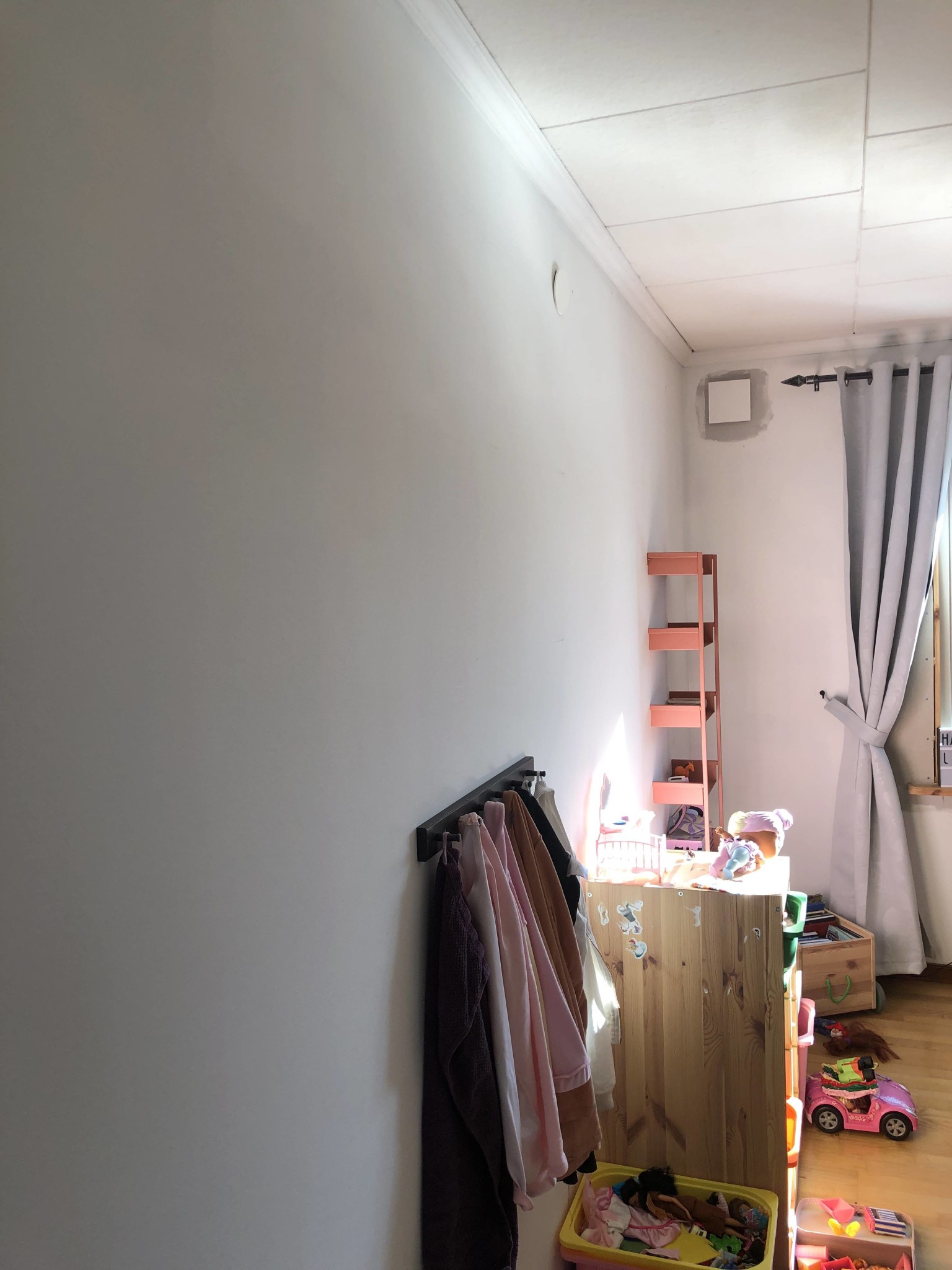
I'm getting a bit anxious myself. I could start a new thread, but maybe it's unnecessary.
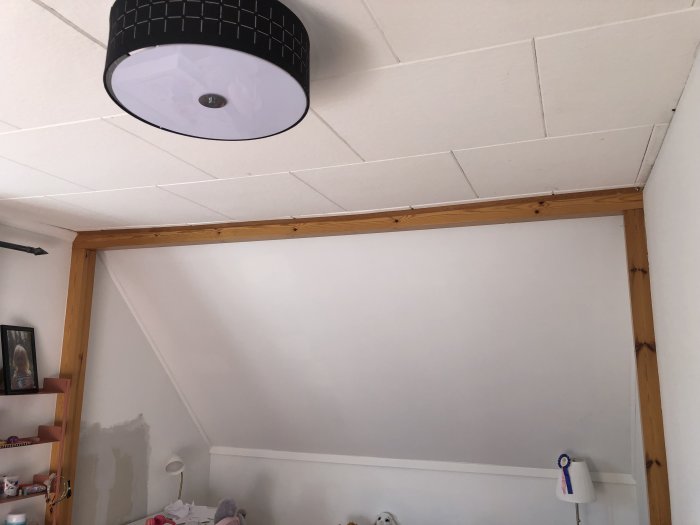
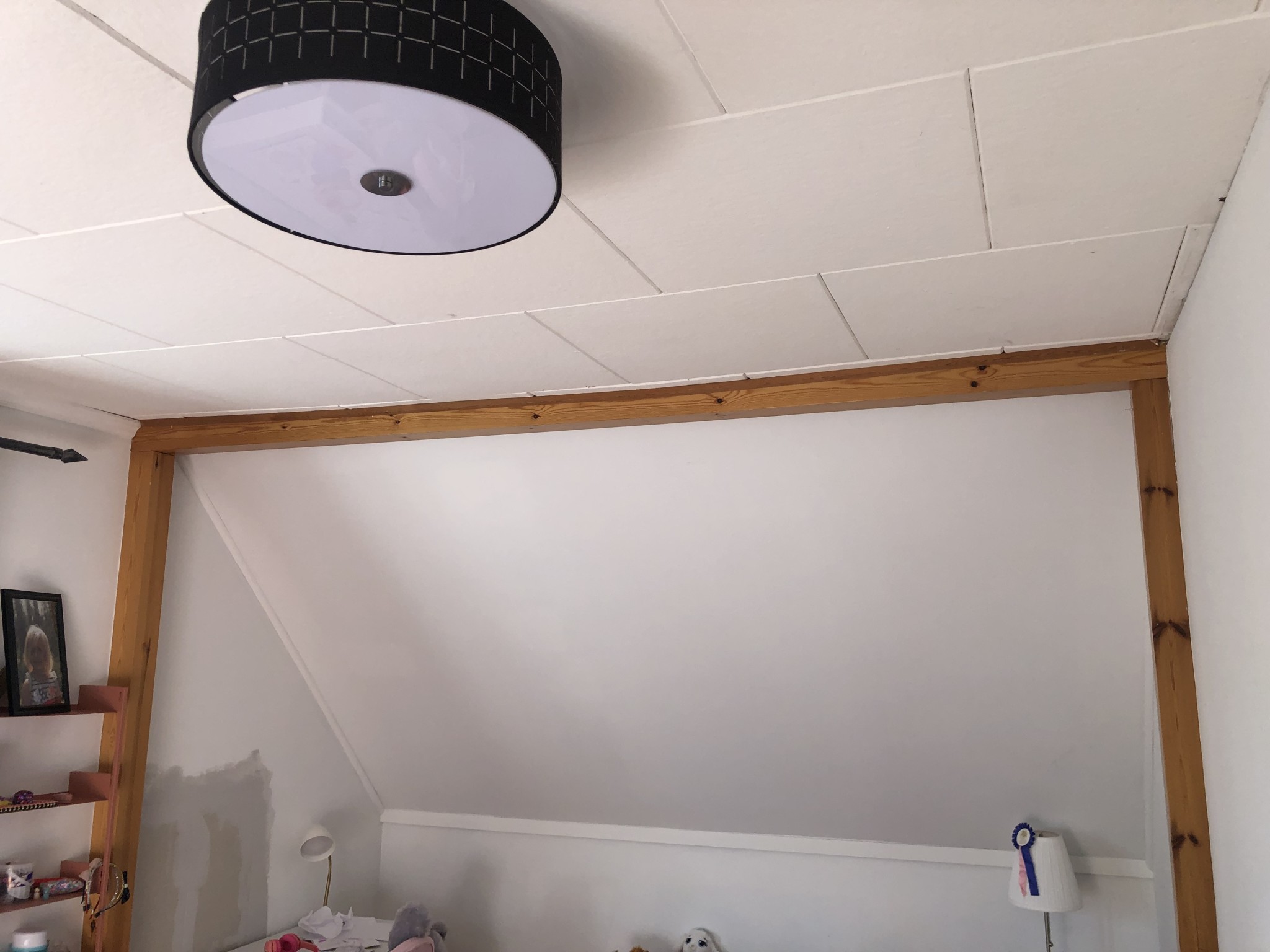
We moved into our house at the end of 2015 and one of the previous owners had removed a knee wall in one of the bedrooms and instead put in some flimsy beam.
I'm wondering if this wasn't also load-bearing, because on the ground floor they had also removed a load-bearing wall without reinforcing.
We have a 1.5-story house with about a 40-degree roof pitch.
What might be a bit strange is that we only have a knee wall on half of the long sides, why is that?
It is often oversized in old houses. I spent half of my childhood in a house built in 1922 with a gambrel roof, two-thirds of which had attic spaces—with the exception of a staircase in one corner and an extension on the same side where a bathroom was fitted. All these remaining attic spaces were removed to make room for three bedrooms for us children. On the other long side, an extension was also made where a truss had to be cut. I was quite small and didn't think about structural integrity. My dad made the drawings and two carpenters from Åland did the job (in Stockholm) in the second half of the '60s, and the house remained standing without problems as long as we lived there—and even now. I remember that the nails holding the beams were sturdy and forged and really required some effort when they needed to be removed.
Regarding foam, the fairly empty exterior walls were filled with plastic foam (Isoschaum—polyurethane foam I thought, but I now see it was called aminoplast foam—might be the same thing) to improve the insulation. Holes were drilled on the outside at regular intervals, and the foam was sprayed in until it started to come out of adjacent holes, after which a plug was driven in and spraying continued in the next hole. The dark brown house was completely speckled when they were finished. Hyper-modern at the time, one might say.
I have an almost identical construction on my house.
I removed the kneewall partitions almost 2 years ago. However, I started by dividing the room lengthwise so that I got a load-bearing wall in the middle across the rafters. Additionally, I only removed the kneewall under 2 rafters (1.2m between them) on one side and under 3 on the other side. On the side where 3 rafters were exposed, I incorporated a supporting post that provides support under that rafter.
[image] [image]
Everything turned out well, and I haven't noticed anything since I built this. If anything, the floor joists feel more solid now.
Isn't this a Mansard roof? That's a different type of roof in that case.
Depending on the width of the house, one can reinforce the floor beam instead
No. Only if you also reinforce the top frame. And ensure that the increased moments can be transferred between the top and bottom frames. Stop guessing. Please.
I'm getting a bit paranoid myself. Could create a new thread but maybe it's a bit unnecessary.
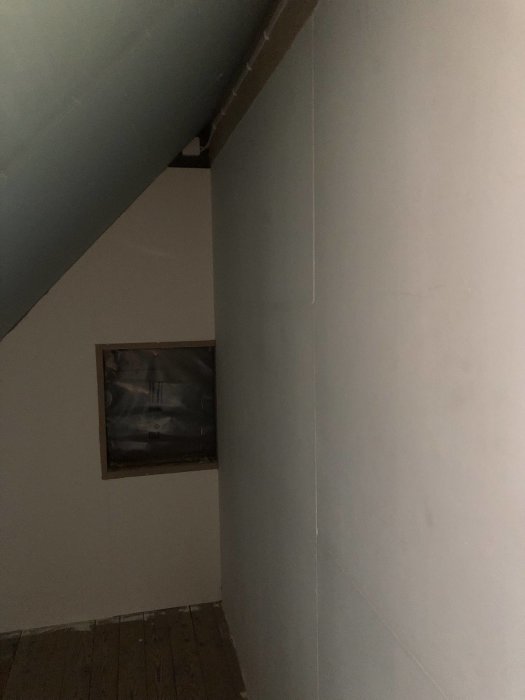
We moved into our house at the end of 2015 and one of the previous owners had removed a knee wall in one of the bedrooms and instead put in some flimsy beam. I'm wondering if this was also load-bearing, because on the ground floor they had also removed a load-bearing wall without reinforcing.
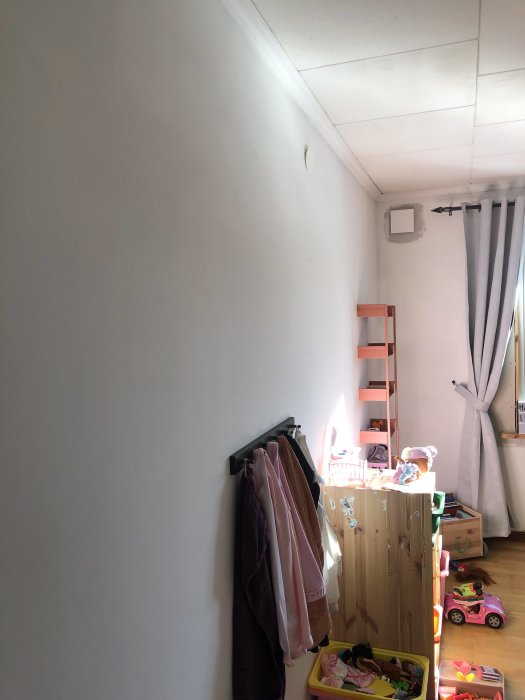
We have a 1.5-story house with about a 40-degree roof pitch. What might be a bit strange is that we only have knee walls on half of the long sides, why is that?
Attaching some pictures of how it looks today.
[image] [image] [image]
Easy to check, contact the municipal building committee and ask about applications for changes and what documentation including calculations and drawings previous owners have submitted. Good luck ...
Easy to check, contact the municipal building committee and ask what applications they have for changes and what documentation including calculations and drawings the previous owners submitted. Good luck ...
Hi, thanks for the reply! Unfortunately, there is nothing. That was the first thing we checked when we discovered the first error. There are no drawings or anything like that either.
We have bought a 1950s wooden house that we have renovated.
One thing we have done is remove the knee walls to get "bigger rooms."
BUT
When you walk upstairs, it "thumps" a lot. (didn't do that before)
The closer you get to the removed knee wall, the more it thumps.
(it thumps when my 4-year-old walks up there and we're sitting downstairs, so very sensitive)
The beams are very sturdy, I tried adding even more joists in between, but it didn't work.
I am starting to think that the knee wall had a function that pressed down on the beam running along the side of the house and thus made it "solid."
In the places where we still have knee walls, the floor is fine.
Has anyone experienced the same thing?
My thought is, in that case, to install a couple of thick joists that "press down" on this beam at the wall sides.
Or does anyone have a tip?
I would be very grateful for that.
Here is a picture when the floor is open, and the green line is where the knee wall was before.
Have you cut the collar ties, or support legs in the rafters, then I'm not surprised if it makes noise.
About 2 years ago, I removed the knee wall. However, I started by dividing the room lengthwise so that I got a load-bearing wall in the middle across the roof trusses. Also, I only removed the knee wall under 2 roof trusses (1.2m between them) on one side and under 3 on the other side. On the side where 3 roof trusses were exposed, I recessed a load-bearing post to support under that roof truss.
[image] [image]
Everything turned out well and I haven't noticed anything since I built this. If anything, the floor joists feel more solid now.
Hi, so here is the house plan, so it feels like there's something to it.
Ddegi said:
Hi, so here is the house plan, so it feels like there's something to it.
As someone wrote, address it immediately! No snow on that roof now.
You can still open up a little, but you absolutely need a bearing beam directly under the roof, then supported by something like 45x120 posts. Currently, the topper hangs completely free on half of the house's width in the roof truss. Not good...
Isn't this a Mansard roof? That's a different type of roof if so
No, as I wrote our construction is almost identical to TS. Our roof is a gable roof with about a 28-degree slope. However, we have relatively high wall height, a bit unsure if it's the same as TS but it looked so.
Vi vill skicka notiser för ämnen du bevakar och händelser som berör dig.