Currently building a new 1.5-story house. We are very worried about mold and growth on the wood. Therefore, we pushed ahead with the construction during late summer at a fast pace with the help of carpenters. This went quickly and it didn’t rain on the structure before the roof was on and the house was wrapped. When I measured the moisture content of the structure, it was around 11-13%. This made me very happy, and I thought we had done well.
Fall came and the window delivery got delayed, causing a hold-up with the siding and windows. The exterior of the house was completed about 3 weeks ago, so we didn’t have time to insulate and heat the house before winter.
Now to the major concerns, we live on the west coast and the past month has been almost constant rain with temperatures around 5-10 degrees and extremely high humidity. This seems to have caused the structure to absorb moisture from the air? I don’t understand what else could have happened, because now the moisture content of the structure is around 16-18%, and growth has started to develop everywhere inside the house. This situation is making both my wife and me stressed and depressed.
What can be done now? Should I just accept the situation and wait until spring so the house can dry out? Should I start sanding/planing off the growth? It’s a bit difficult to heat the house since it’s not insulated and the entire floor is open down to the crawl space. Will a dehumidifier be of any use in this situation when it’s so open?
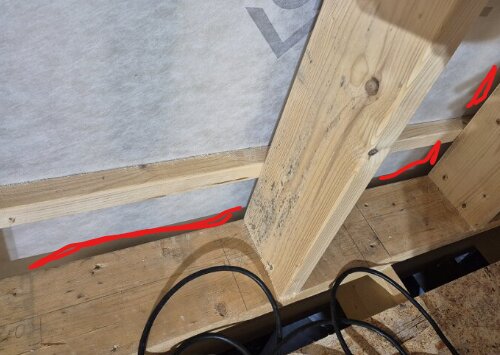
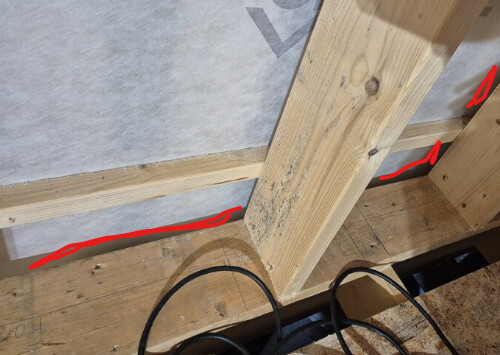
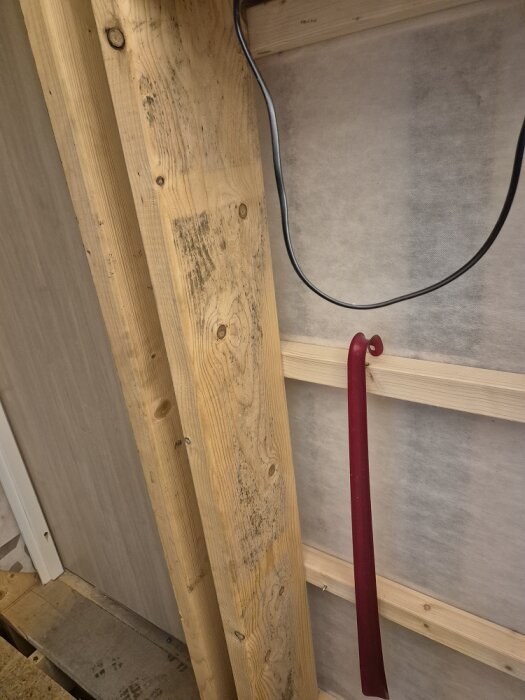
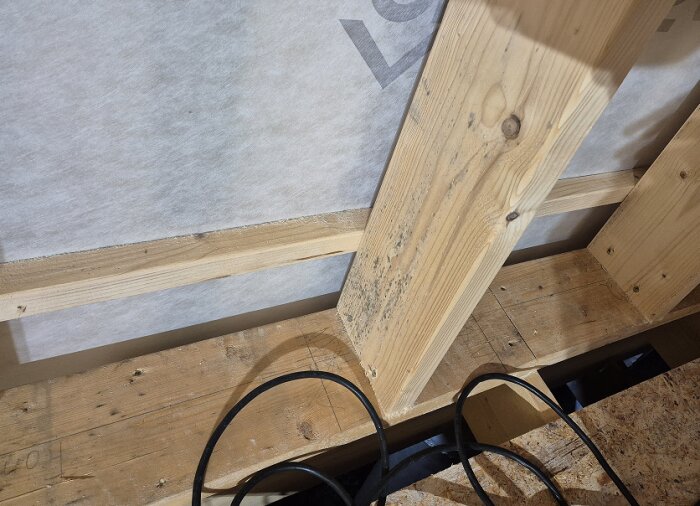
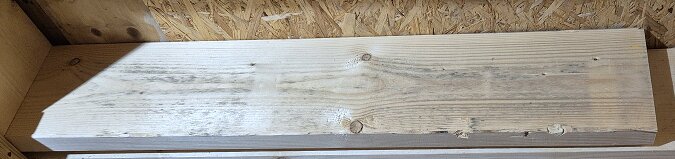
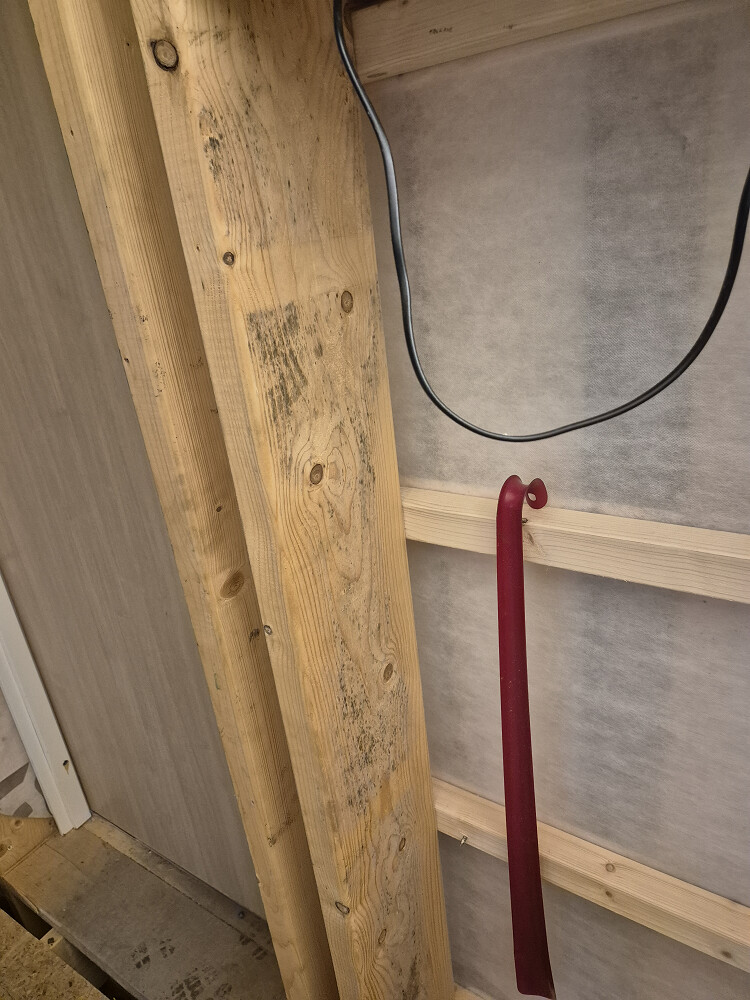
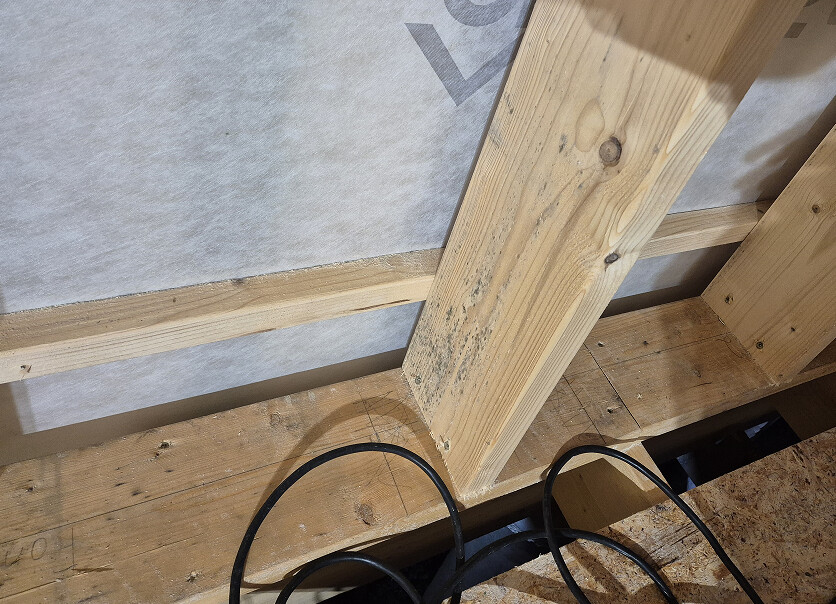
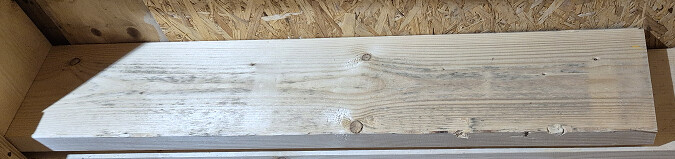
These are some examples of how it looks now, there are similar growths in about 20 more places and it seems to be increasing every day.
Building a new 1.5-story house. We are very afraid of mold and growth on the wood. Therefore, we proceeded with the framing during late summer at a rapid pace with the help of carpenters. This went quickly, and it barely rained on the frame before the roof was on and covered around the house. When I measured the moisture content of the frame, it was around 11-13%. This made me very happy, and I thought we had done well.
Autumn came, and the window delivery had issues and was delayed, which prolonged the process with the panels and windows. The outside of the house was completed about 3 weeks ago, so we didn't get to insulate and heat the house before winter.
Now to the major concerns, we live on the west coast, and the past month it has been almost constantly raining and around 5-10 degrees with extremely high humidity. This seems to have caused the frame to absorb moisture from the air? I don't understand what else happened because now the moisture content on the frame is around 16-18%, and growth has started to appear all over inside the house. This makes both me and my wife stressed and depressed.
What can we do now? Should I just accept the situation and wait until spring so the house can dry? Should I start sanding/planing down the growth? It's a bit difficult to heat the house since it's not insulated and the entire floor is open down to the crawl space. Will dehumidifiers help in this situation when it's so open?
Here are some examples of how it looks now, there are similar growths in ~20 other places, and it feels like it increases every day.
[image]
[image]
[image]
Make sure the wood dries out before you insulate..
Including some info about blue stain..
There is black mold and it will continue to grow during the winter if you don't achieve a controlled environment.
Why have you delayed all work due to missing windows?
Now it's important to seal the house and add some basic heat to keep the humidity below 75%. Then you can reduce the moisture in the structure and start treating the mold.
It is black mold and it will continue to grow during the winter if you don’t achieve a controlled environment.
Why have you delayed all the work because of missing windows?
Now it’s about sealing the house and adding some basic heating to keep the humidity under 75%. Then you can reduce the moisture in the frame and start treating the mold
Can you heat up without it being insulated? The next step is to insulate the floor on the first level and lay down floor chipboard. Is it possible to heat up a bit after that even if the walls and ceiling are uninsulated and will it make any difference?
Yes, heating during construction costs, but compare it to the cost of later having to remediate mold if one fails to keep it sufficiently dry during the construction period...
If you have high humidity in the wood or in the air, it will be able to grow. If it's properly cold, however, it won't grow as fast even with high relative humidity.
In spring/summer, when everything becomes warm and dry, it stops growing provided it doesn't get too humid again.
If you want to stop the growth completely right now, you'll need to heat a lot to keep the relative humidity down, and that sounds expensive without insulation.
Given the current situation, it might be time to spend money on energy to lower the relative humidity and increase the heat. Laying down chipboard flooring as you mentioned before any form of heating or drying doesn't feel ideal.
A proper but temporary weatherproofing, if you don't already have one, to separate the indoor air mass from the outdoor air and then proper heat guns. It might sting in the wallet.
If you have damp wood, you should be careful with too much heat as it promotes growth. It's probably a good idea to start with a dehumidifier and gradually increase the heat. However, it assumes that it's relatively airtight. Then you need to try to sand/plane the wood clean from growth once it's dry.
How is the wind barrier actually positioned, is there an air gap inside the wind barrier and outside?
A proper but temporary weather sealing if you don't already have one to separate the air mass inside from the outdoor air and then proper heat guns. May sting a bit in the wallet.
What type of temporary weather sealing are you thinking of?




Matti_75 said:
It is black mold and it will continue to grow during the winter if you don’t achieve a controlled environment.