I am looking for tips on construction solutions to offset a floor joist.
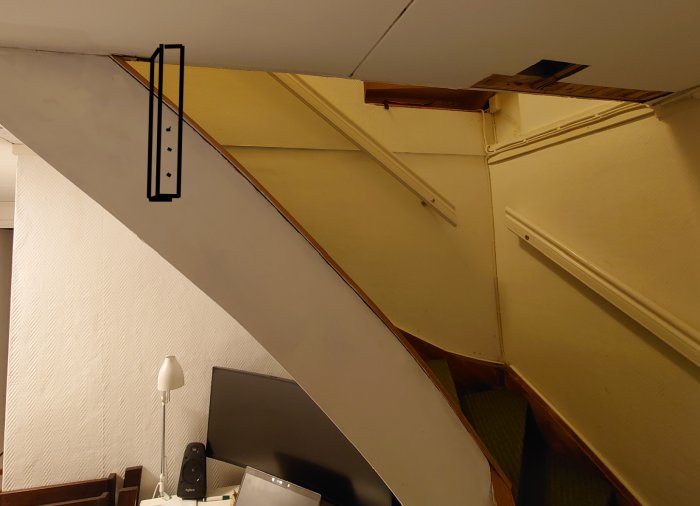
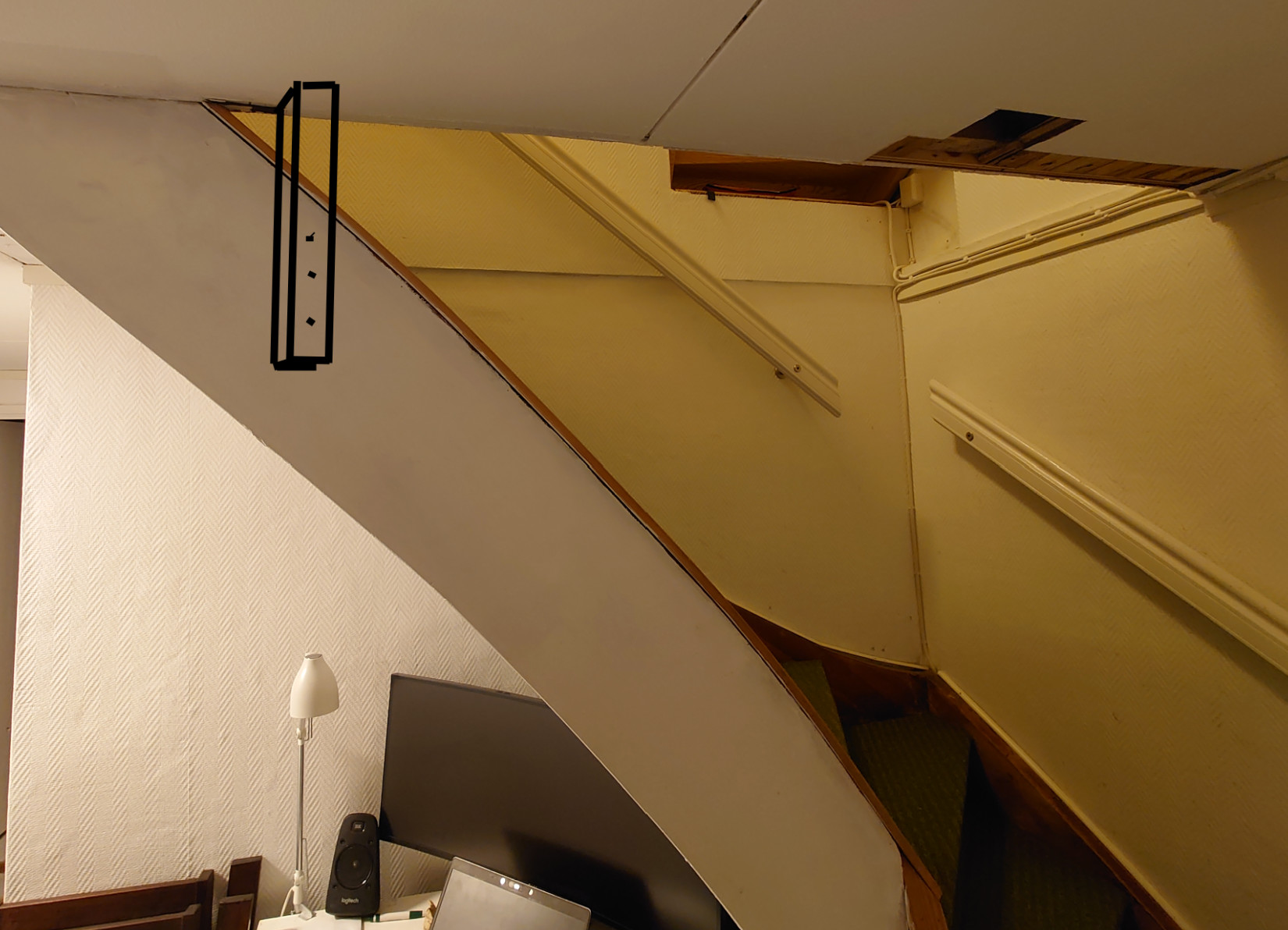
Our basement stairs turn 90 degrees at the bottom, so that people of average height hit their heads on the basement ceiling at the bottom steps. To avoid hitting the ceiling, I would like to remove or bevel part of the basement ceiling by the stairs. However, the problem is that there is a floor joist right there. If I cut it, I need to offset the floor joist in some way. The simplest solution is, of course, to support it with a post between the floor joist and the basement floor. However, I don't want any floor post there because it prevents me from carrying larger items up and down the stairs.
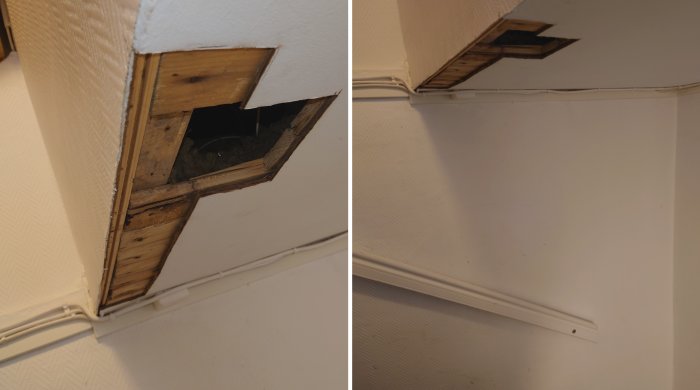
Below is the ceiling at the stairs, where I have cut an inspection hole:
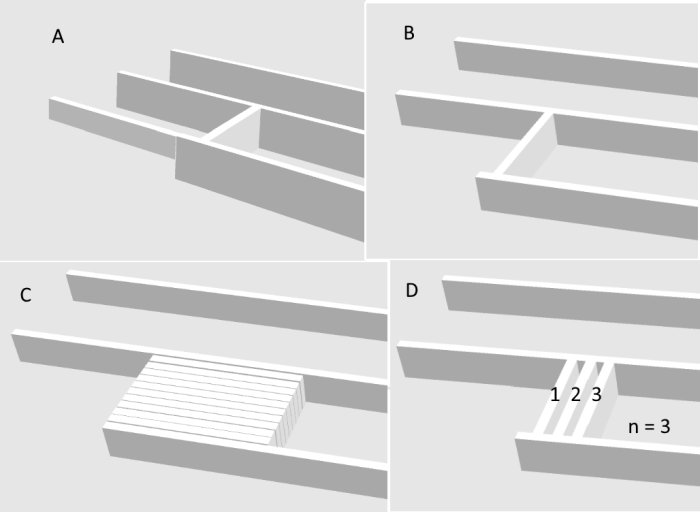
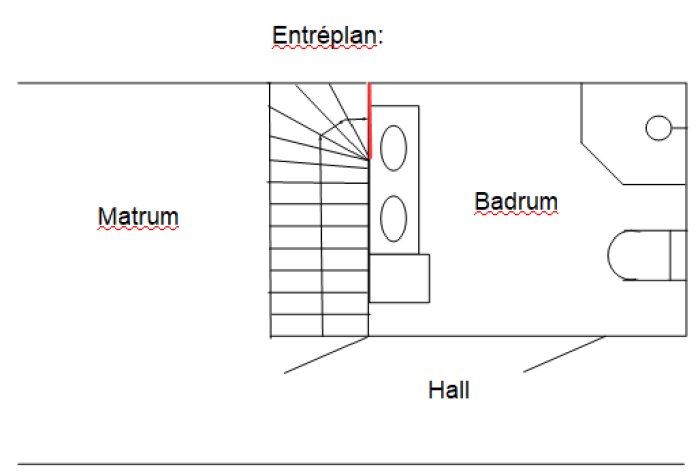
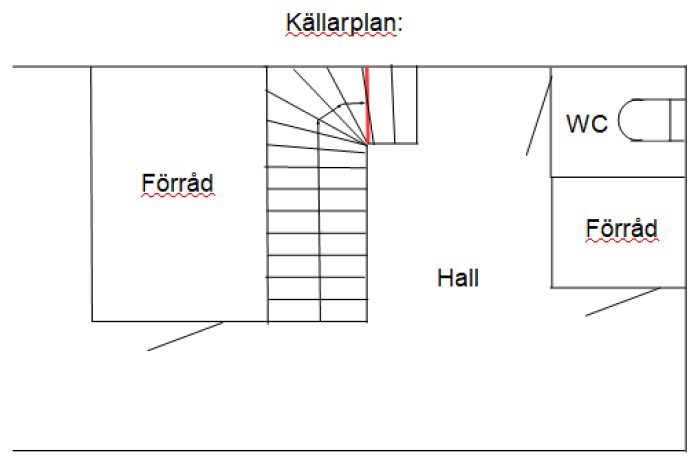
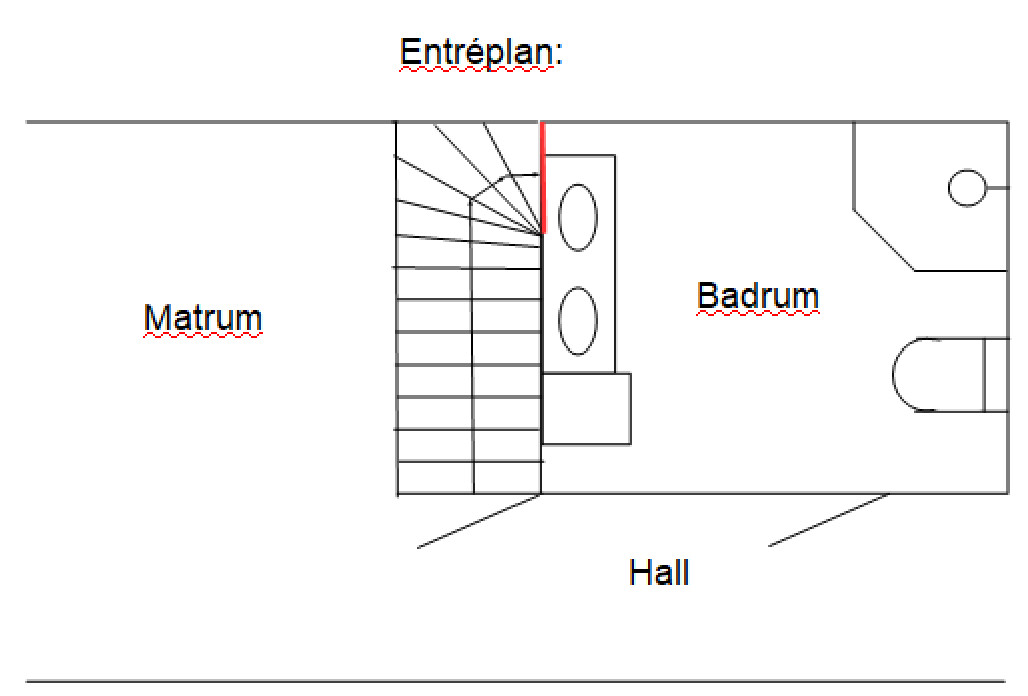
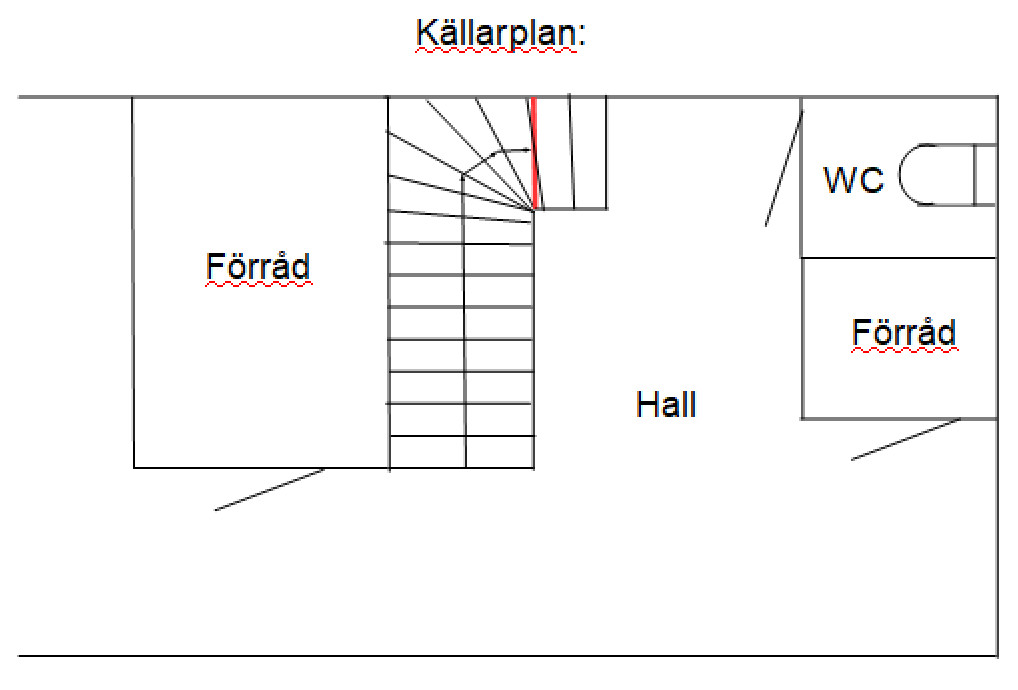
I have a few construction solutions/ideas described in the images/text below:
Background info:
The floor joists measure 4.9cm x 21.5 cm. The house was built in 1963 - a house where it feels like they didn't skimp on materials, for example, walls with tongue and groove boards everywhere, etc. Maybe the floor joists are oversized?
Alternatives in text:
A: Narrow the floor joist (to half?) and offset with one (or several) short joists against the adjacent floor joist. B: Completely cut the floor joist and offset with a short joist against the adjacent floor joist. C: Completely cut the floor joist and offset with about 10 short joists laid lengthwise up to the adjacent floor joist. D: Completely cut the floor joist and offset with several (3?) short joists against the adjacent floor joist.
The advantage of B, C, and D is that I can achieve maximum ceiling height at the stairs. Therefore, I prefer one of these.
Alt. B I think will be too weak a construction. Am I right?
For alt. D, I have drawn in 3, but how many short joists are recommended?
Alt. B, C, and D are based on the neighboring floor joist's ability to bear both weights. Does it?
Perhaps one should offset once more, that is, from the adjacent to the next floor joist further away?
Does anyone have more alternatives/ideas for solutions?
The best foundation for assessing what to do is a floor plan where you can see the whole picture. Without one, your sketches can be interpreted as different variations of the Indian rope trick, unfortunately.
There are several possible solutions, but none of the ones you have outlined.
1) Make a new staircase with fewer steps starting exactly where the floor joist is. This should be possible if the staircase is drawn to scale.
2) Replace the floor joist with a glulam beam. You can easily reduce it to a beam height of 15 cm.
3) Place a post under the existing joist but position it so that you have enough opening space.
There are further possibilities, but the fact that you have a bathroom on the upper floor practically limits options.
Thanks for the response. Regarding your suggestions. 1) I don't see it as an option. 2) is of course an option, but I have drawn a line on the wall marking the height where my head will reach - about 17 cm above the current ceiling height. Since the entire floor joist is 21.5 cm high, there isn't much more than 4.5 cm left for a glulam beam.
I have thought of a new solution - a short stud/post that I'll attach to the stringer. I think that the stringer will basically function as a floor post. See sketch in the image below:
Right now this option feels like: short stud/post screwed into the stringer along with option B) in the previous post is the best total solution. I am therefore considering doing both together.
I think that the stringer will partly absorb some of the force and the short joists to the adjacent floor joist will also absorb some - that they will share the load.
Right now this option: short rule/post screwed into stringer together with option B) in the previous post seems like the best overall solution.
Unfortunately, it's not OK. What do you have against making a new staircase? If you're willing to redo the bathroom, you can achieve a wider stairwell by slightly reducing the length of the bathroom.
New staircase = expensive. I have received quotes for a new staircase to the upper floor - about 50,000 :- and that excludes installation.
Unfortunately, I am also not prepared to redo the bathroom - with new waterproofing, tiling, etc.
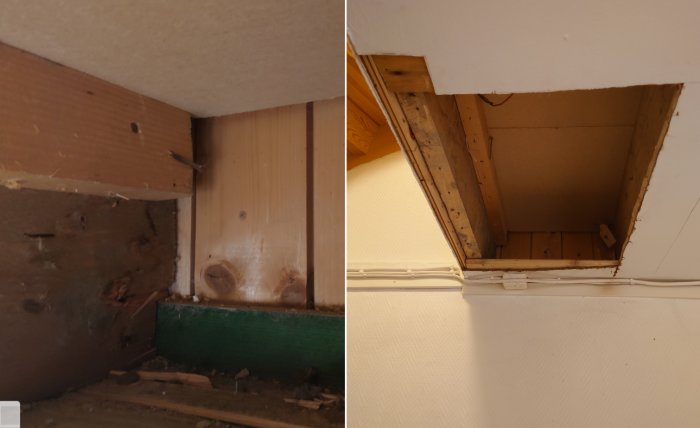
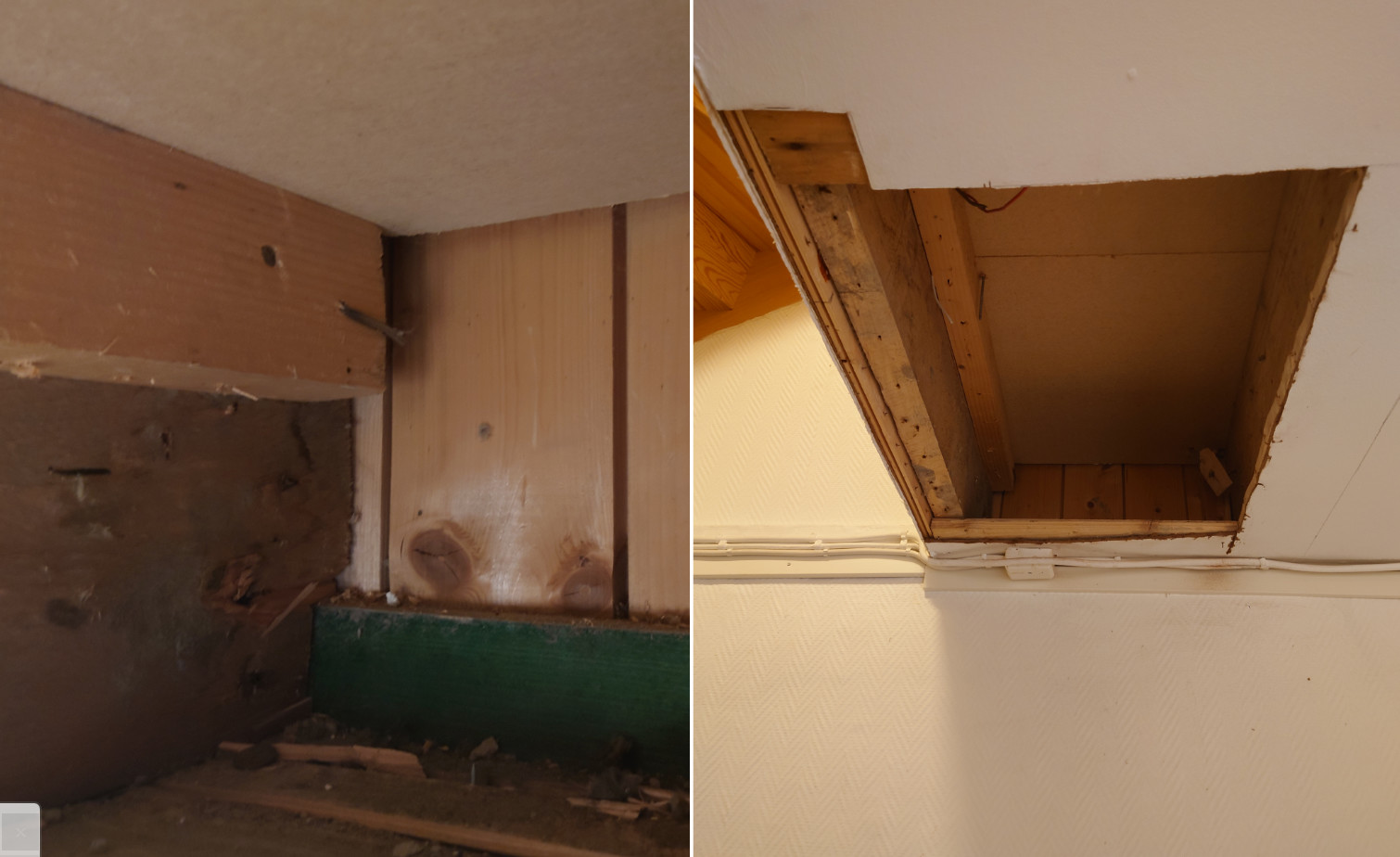
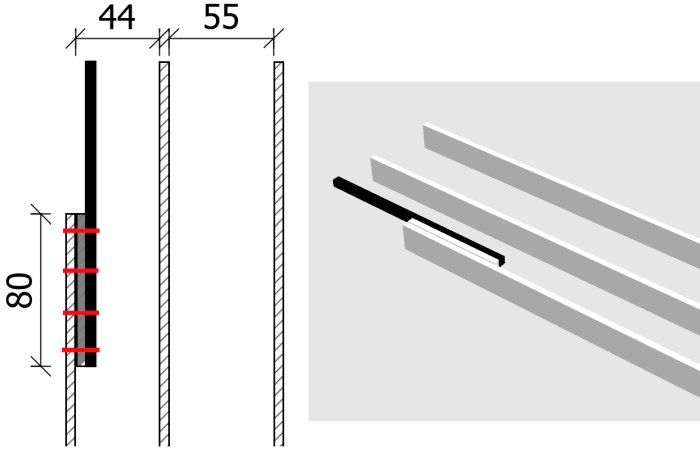
So, the only solution is something with the floor joists from the underside. Today, I have exposed a hole to the adjacent floor joist. It's about 44 cm from the one I intend to cut:
As seen in the pictures, tongue-and-groove boards are nailed to the bottom of the floor joists, which to some extent binds the floor joists together. On top of the floor joists, there are also, as shown, chipboard flooring which also binds the floor joists together.
You can't let the part of the bathroom floor that currently rests on the beam be without support. Then the waterproofing and tiles will go to hell. Your solutions don't work. One possibility is to use steel instead of glulam if you replace the entire beam from underneath. Then it might suffice with 80x80x5 VKR tubes. Otherwise, changing the staircase is the simplest. A basement staircase you can easily build yourself. You just need a blueprint.
Ok, thanks for the info. Then VKR pipes seem like the best solution. Since I want to minimize how much it builds in height, I'm thinking I can screw together two lengths of 40x40x5mm VKR:
..and then in turn screw these two assembled VKR pipes to the side of the floor joist. Then everything only builds 40mm in height. Two pipes should provide sufficient stiffness, right?
Unfortunately, that's not how structural statics work. The moment of inertia, which is a measure of a beam's stiffness, increases with the cube of the height. Two 40x40 have a combined moment of inertia of 12+12 = 24 cm4. An 80x80x5 has 137 cm4.
Interesting! How do you calculate the moment of inertia from the dimensions and thickness? Do you know the formula?
Since I'm almost obsessed with reducing the height, would a 60x60x6.3mm VKR steel tube work about as well as an 80x80x5mm? It does have 1.3 mm thicker steel, so that should compensate for the size, I think?
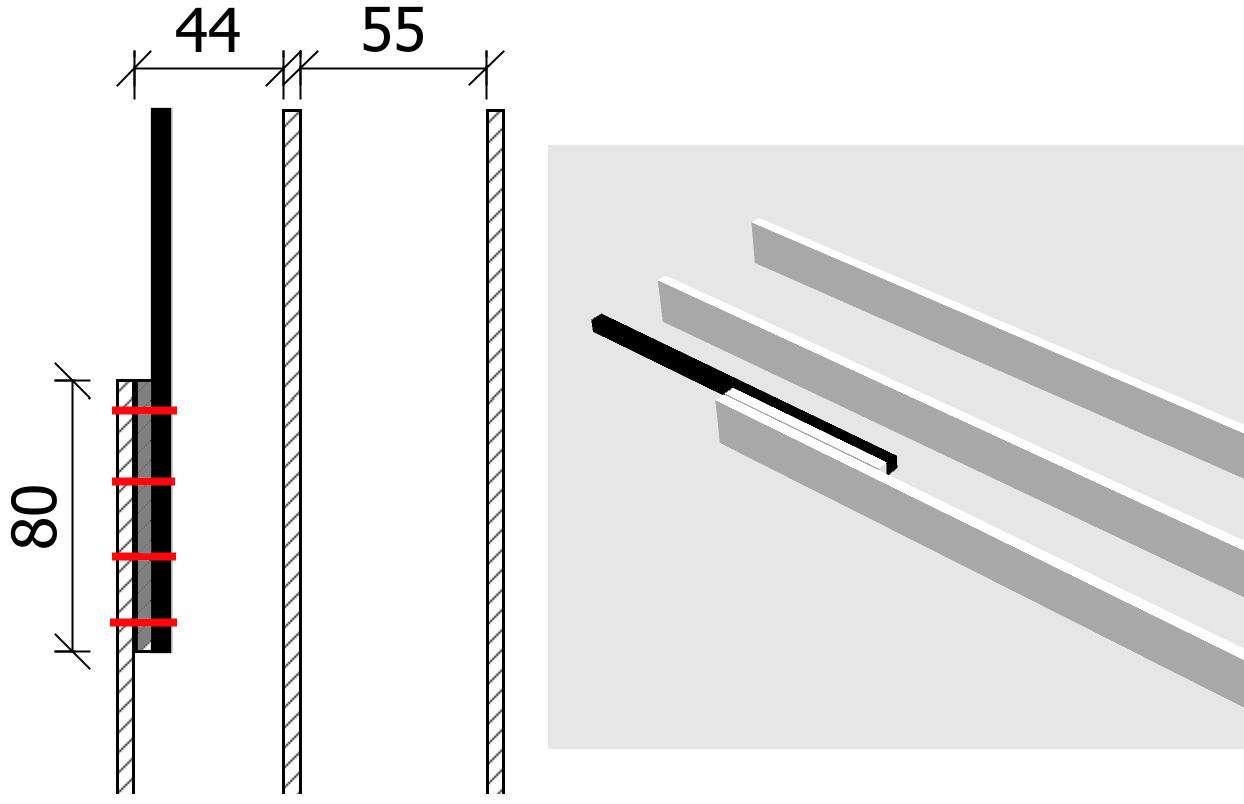
Below, I have drawn a construction using this square VKR steel tube:
As seen above, I have a VKR tube that is 160 cm long. This tube is attached to an existing floor beam by drilling several holes along half of its length, 80 cm, and then using 4 (or more) threaded rods (red in the image) through the drilled holes and fastening everything with nuts at the ends.
To shift the steel tube as much as possible towards the next floor beam (to maximize ceiling height), I have inserted a wooden batten, e.g., a 120x45 batten, (see gray in the image) between the steel tube and the floor beam. I might even use two such battens in between, to further displace the steel tube.
Opinions regarding this construction?
Thanks in advance.
If you are going to use a steel beam, it should have the same length as the original wooden joist, i.e., it should not be jointed along the way. The formula to calculate the moment of inertia for a rectangular cross-section is b*h^3/12. Corresponding data for steel can be retrieved from tables. (Easy to download from Tibnor's website) If you use cm measurements, the result will have the unit cm^4, which is the easiest to handle. When comparing different materials, such as glulam and steel, you use what is called the flexural rigidity, which is the product of the moment of inertia and the modulus of elasticity for the material, usually abbreviated as I*E. You could use a VKR tube that is 140x70x4 and lay it on its side. Then it will be 70 mm high. That is probably the lowest you can achieve.
Update: I have been thinking back and forth. But now I have decided to have a support/post on the floor after all. The reason is that our almost 2-year-old might start coming down to the basement soon (today we have a child gate) and then we probably need railings to prevent her from falling down the stairs through the opening between the ceiling and the stringer. We haven't thought along those lines before. So my whole idea actually falls apart.
I'm wondering what type of wooden post I can/should use? The floor beam that will rest on this post is about 215x50mm. Therefore, I'm thinking that a 70x70 mm would be a suitable dimension. But then we come to load-bearing capacity - there is everything from C14 to the expensive laminated beam. What would be sufficient in my case?
Feel free to link to a product.
Best regards, Martin
Click here to reply
Vi vill skicka notiser för ämnen du bevakar och händelser som berör dig.