I got a nice gift from Santa just before Christmas, the fat bastard tried to get down through my brick chimney from '65, but of course, it went to hell, so the chimney cracked from the attic all the way down to the basement.
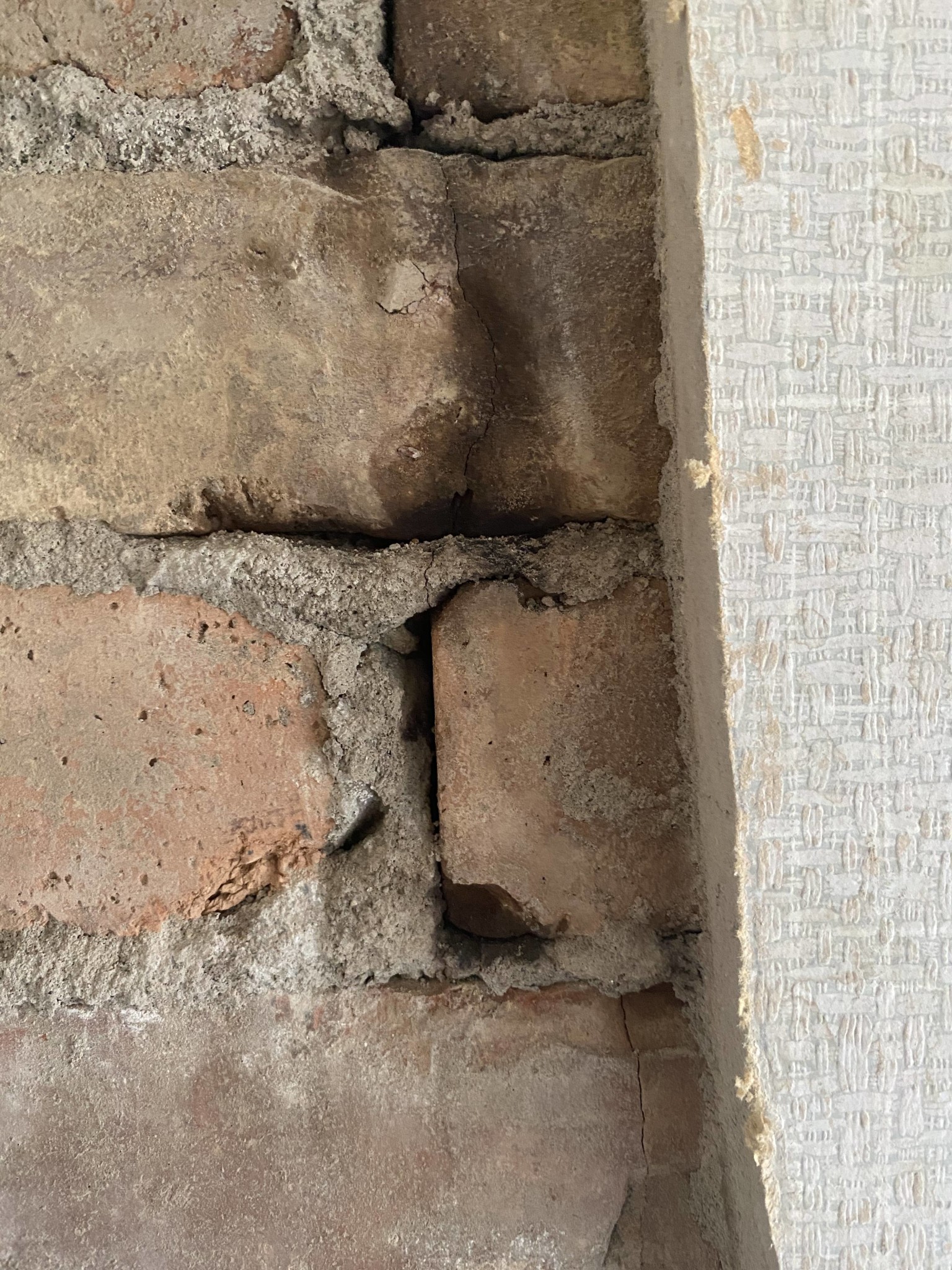
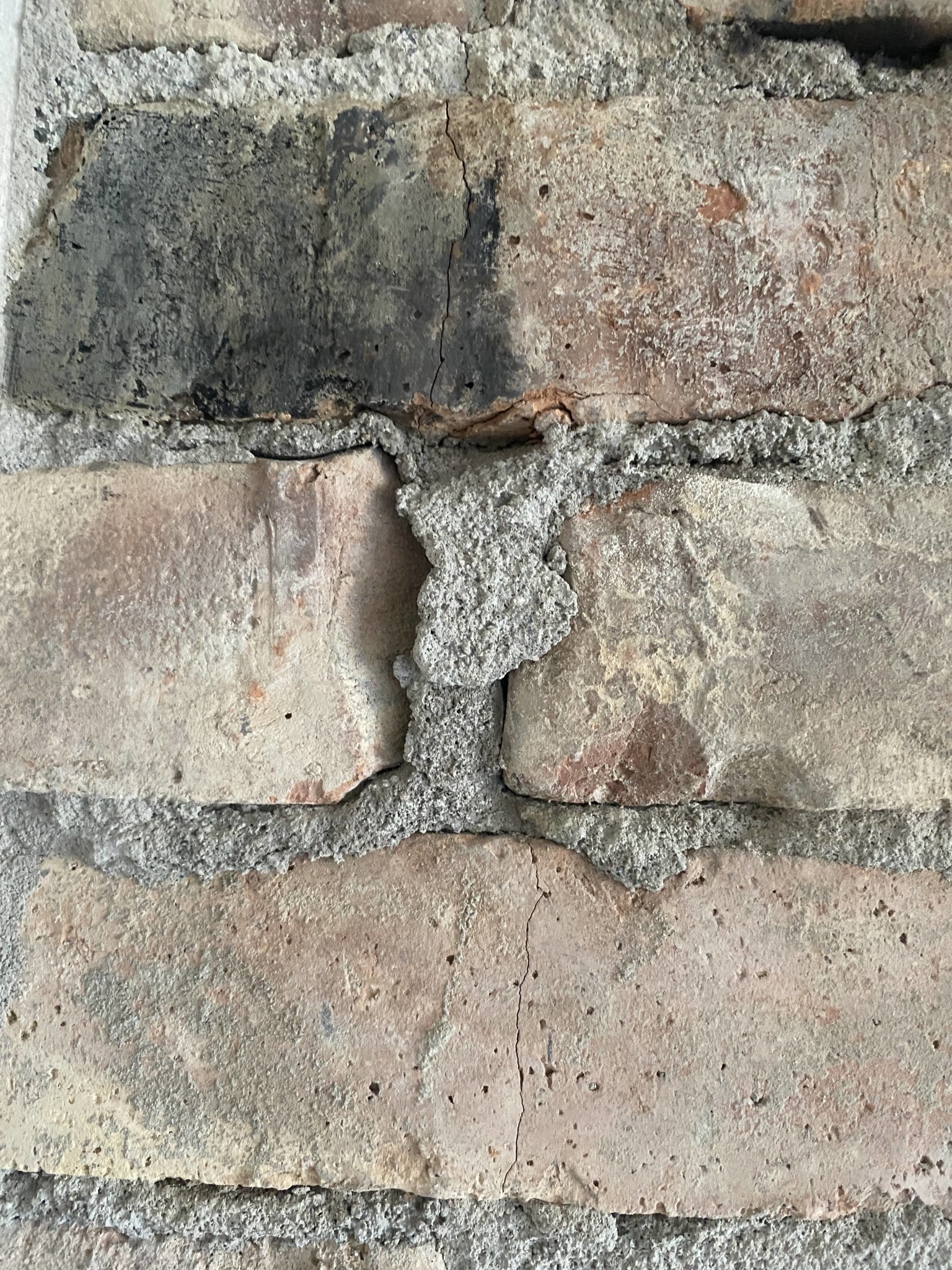
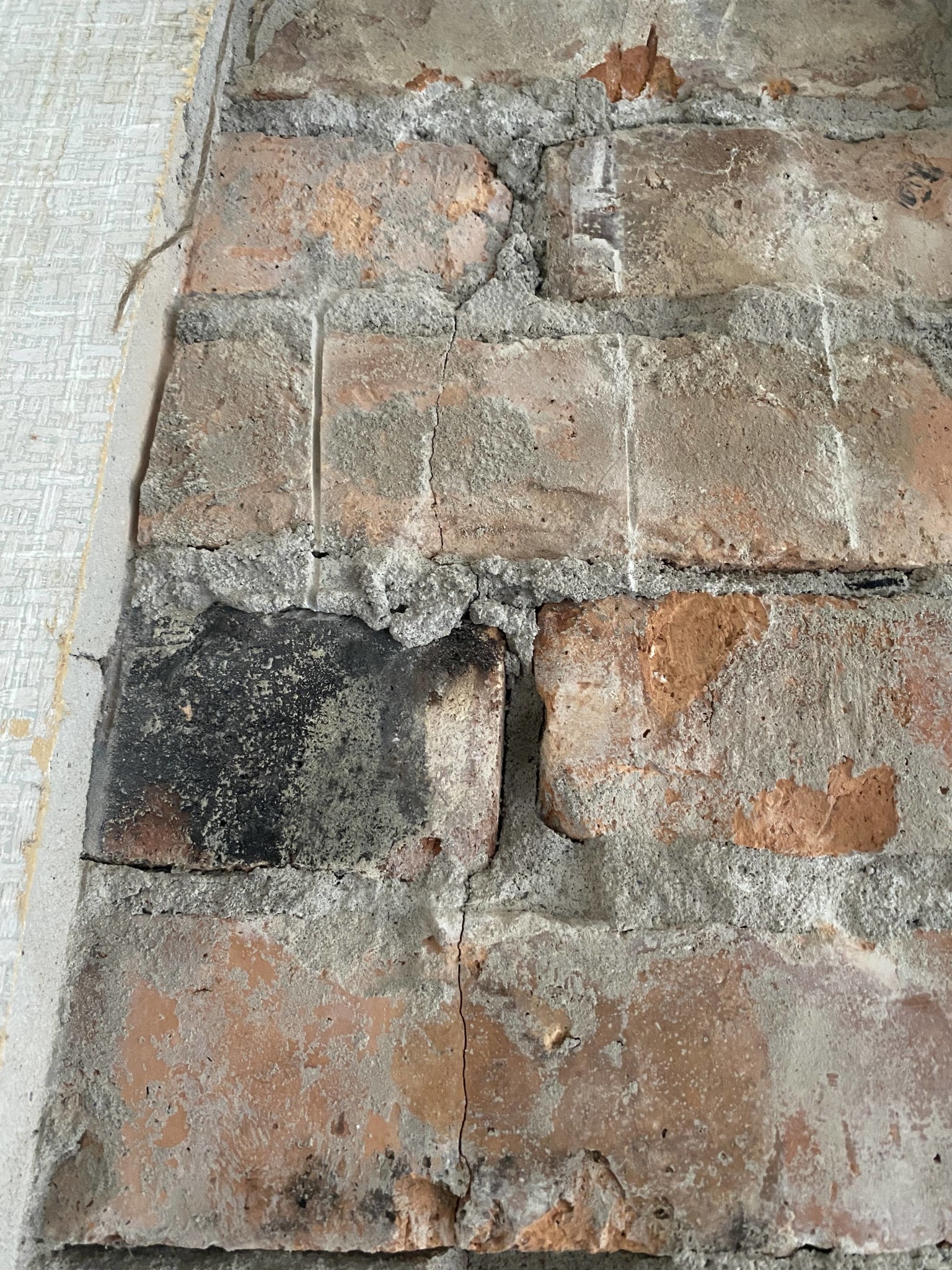
Or it was a Christmas long ago, but something has happened anyway because there is a crack that has gone straight through both bricks, mortar, and plaster.
The whole thing was noticed after we replaced the boiler from a CTC combination boiler from 1965 to an Effecta Lambda from 2022, also known as the scare of the crows. The old boiler was much loved by the birds in the neighborhood who thrived here during winter. The new boiler is significantly more efficient, so the exhaust gases become much cooler. Unfortunately, they became too cool, leading to condensation forming at the top of the chimney, which in turn led to hell for me.
The crack has been there since before we bought the house in '21, but it was never noticed with the old boiler. It had such high exhaust gas temperatures that condensation couldn't form. Plus, a really good draft due to the heat.
We noticed the problem because it started to smell sharp in the bedroom on the second floor. We went there and sniffed and concluded that the smell came from the paneling that covered the chimney breast.
Just had to tear it down, to see a large, ugly, wet, and brown stain on the chimney breast behind the paneling. It smelled like a mix of scum and wet ashtray.
The condensate that forms runs down in the smoke channel and then finds its way through either bad joints or cracks in the stones. Then it's absorbed by the indoor plaster and becomes a nice stain.
Totally unsustainable and the issue must be addressed, as the plaster is one of the parts that make up the chimney's tightness. The proper procedure is, of course, first to slip-cast the smoke channel from the inside and then fix the plaster. But slip-casting is out of the question this time of year. Besides the risk of sudden death, there's too big a risk of the mortar cracking if you fire too soon after the slip-casting.
Therefore, I'm starting at the wrong end and dealing with the indoor plaster. But the work is NOT fun, I can tell you, and it makes an incredible amount of mess and dust. The dust from the plaster finds its way everywhere and it also smells wonderfully like scum and tar.
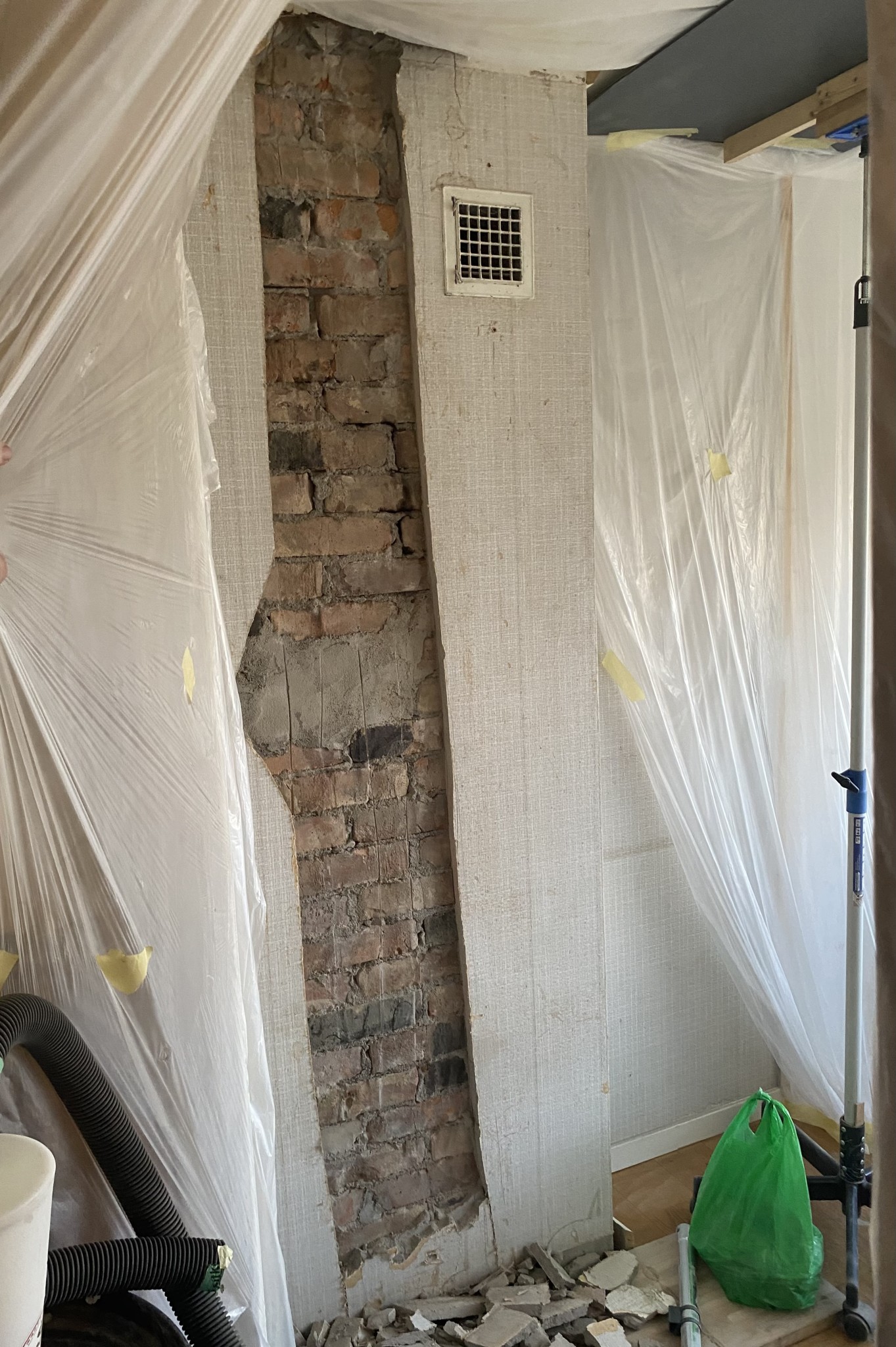
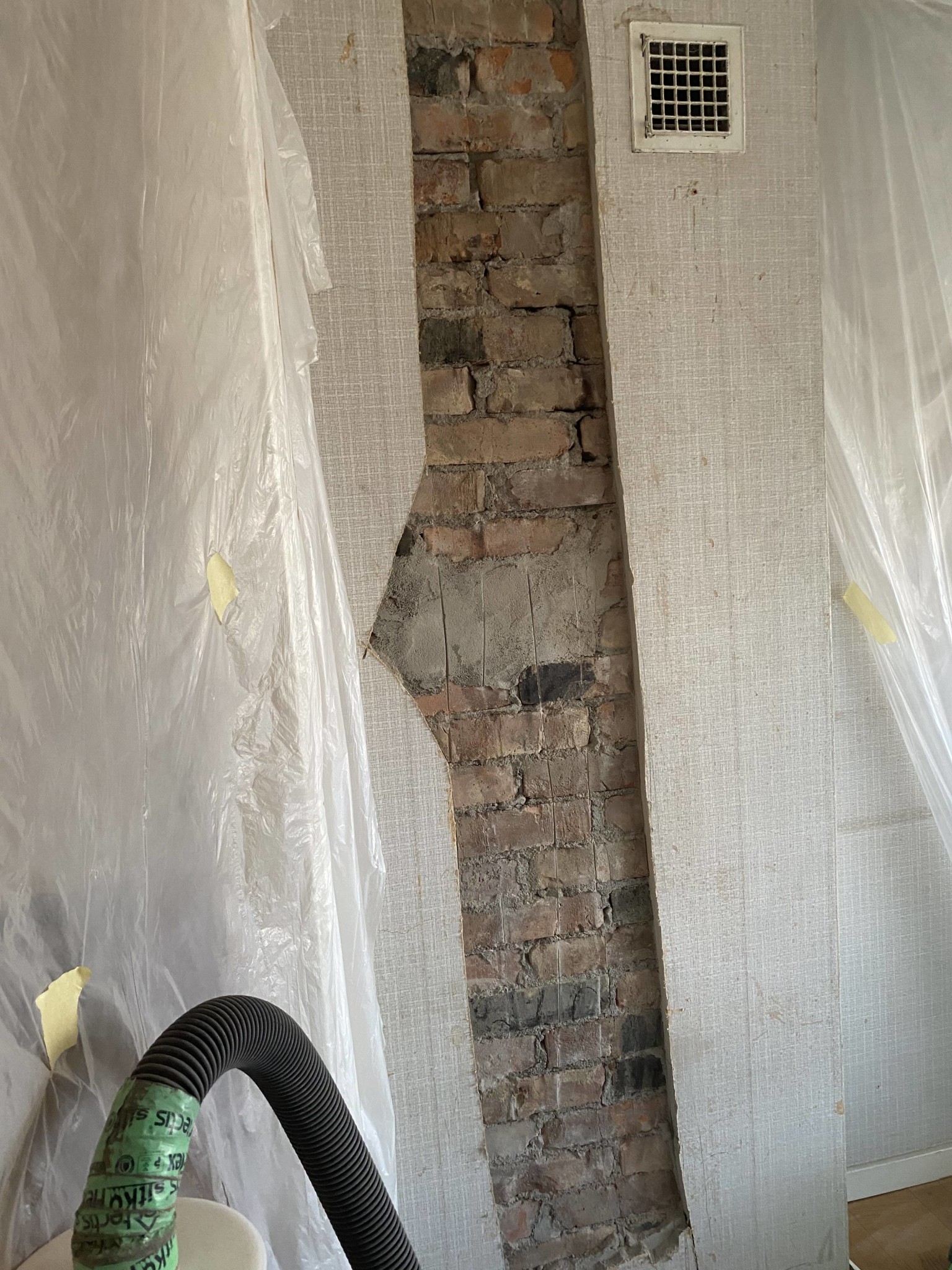
The old plaster at the crack must be removed, as well as in areas where there's a hollow space while I'm at it. New plaster is to be applied, and bad joints cleaned out and filled in.
I've finished from the attic (a total and absolute nightmare to chip and plaster up there) down to the bedroom. I've used Byggmax C-mortar for plaster on the advice of the chimney sweep. For the joint between the stones, I wanted B-mortar, but it was not available, so it had to be C so far.
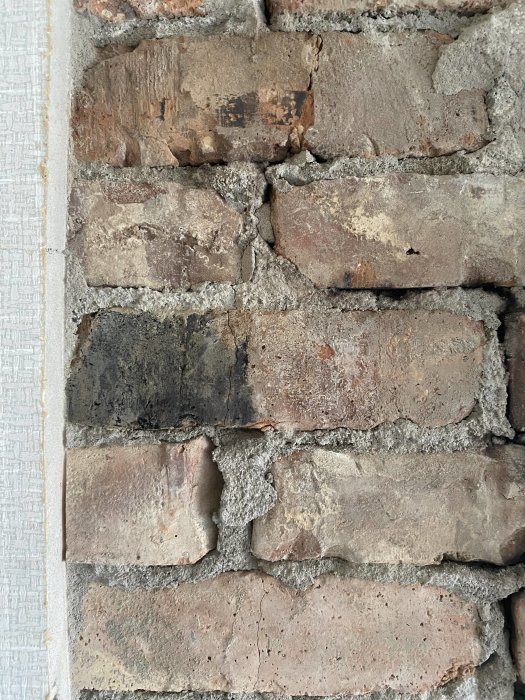
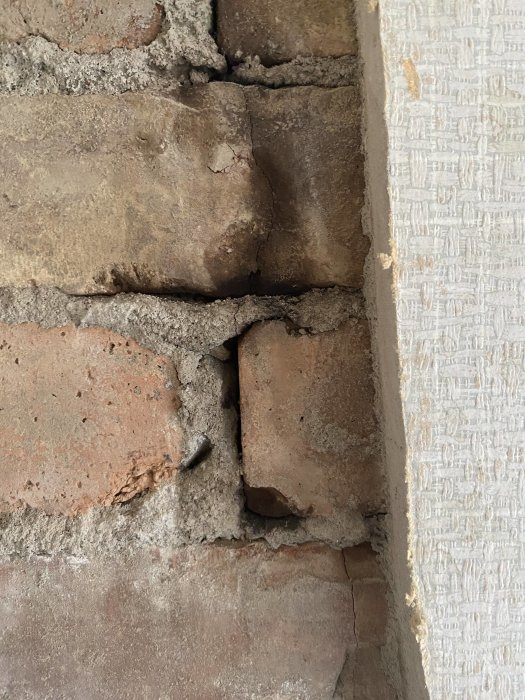
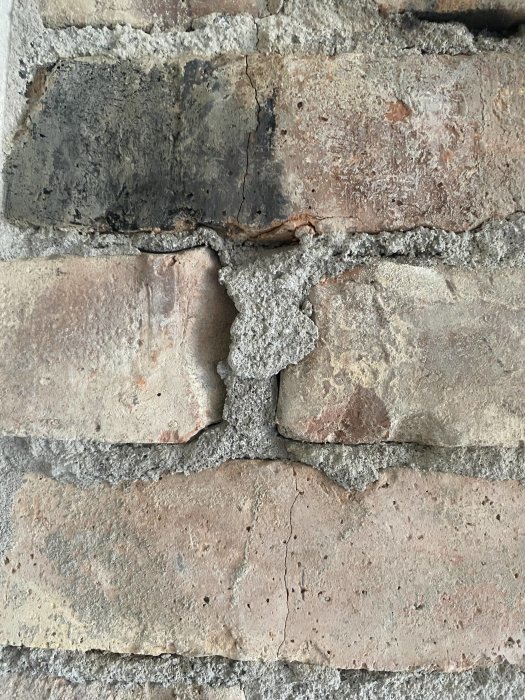
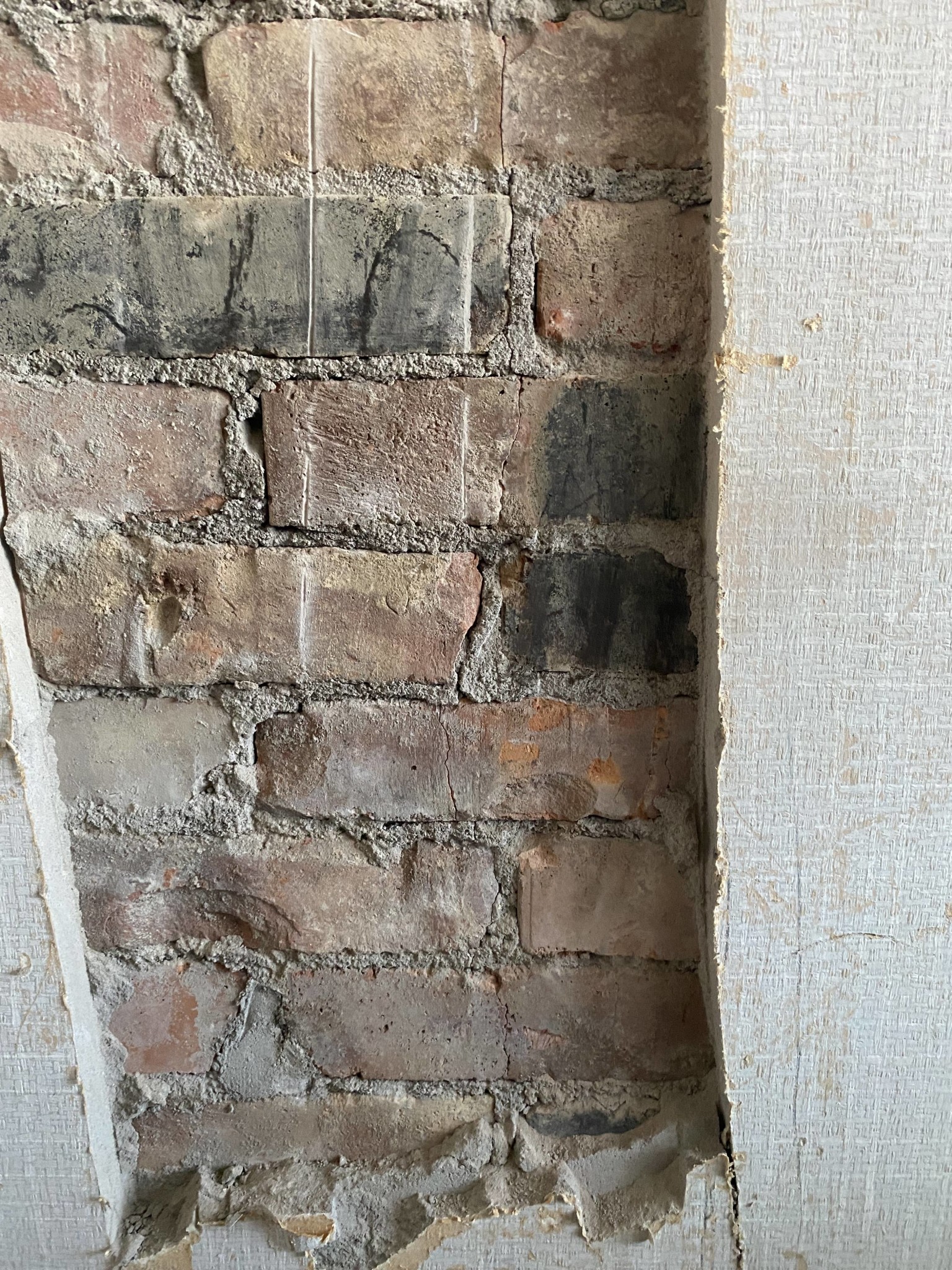
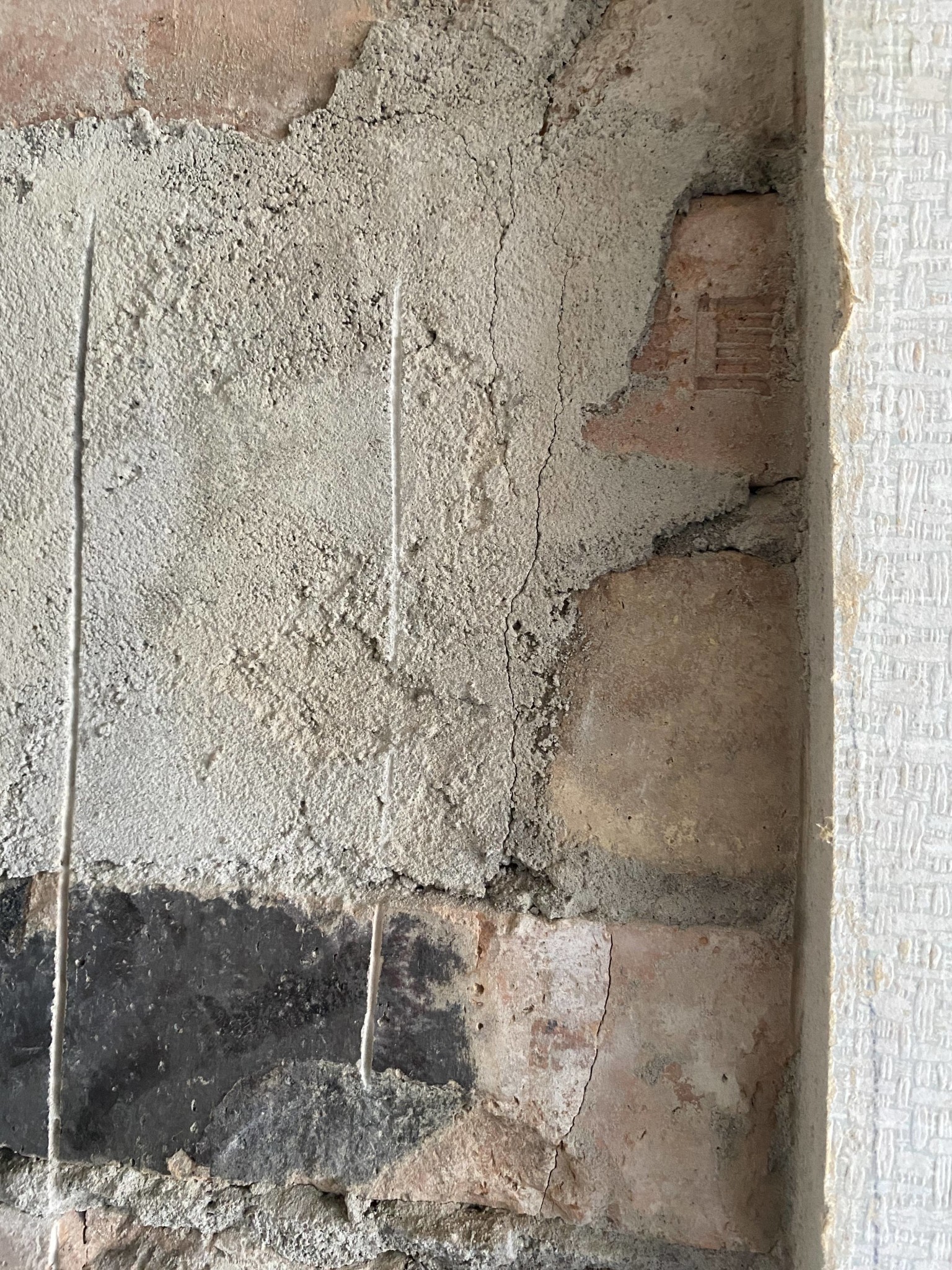
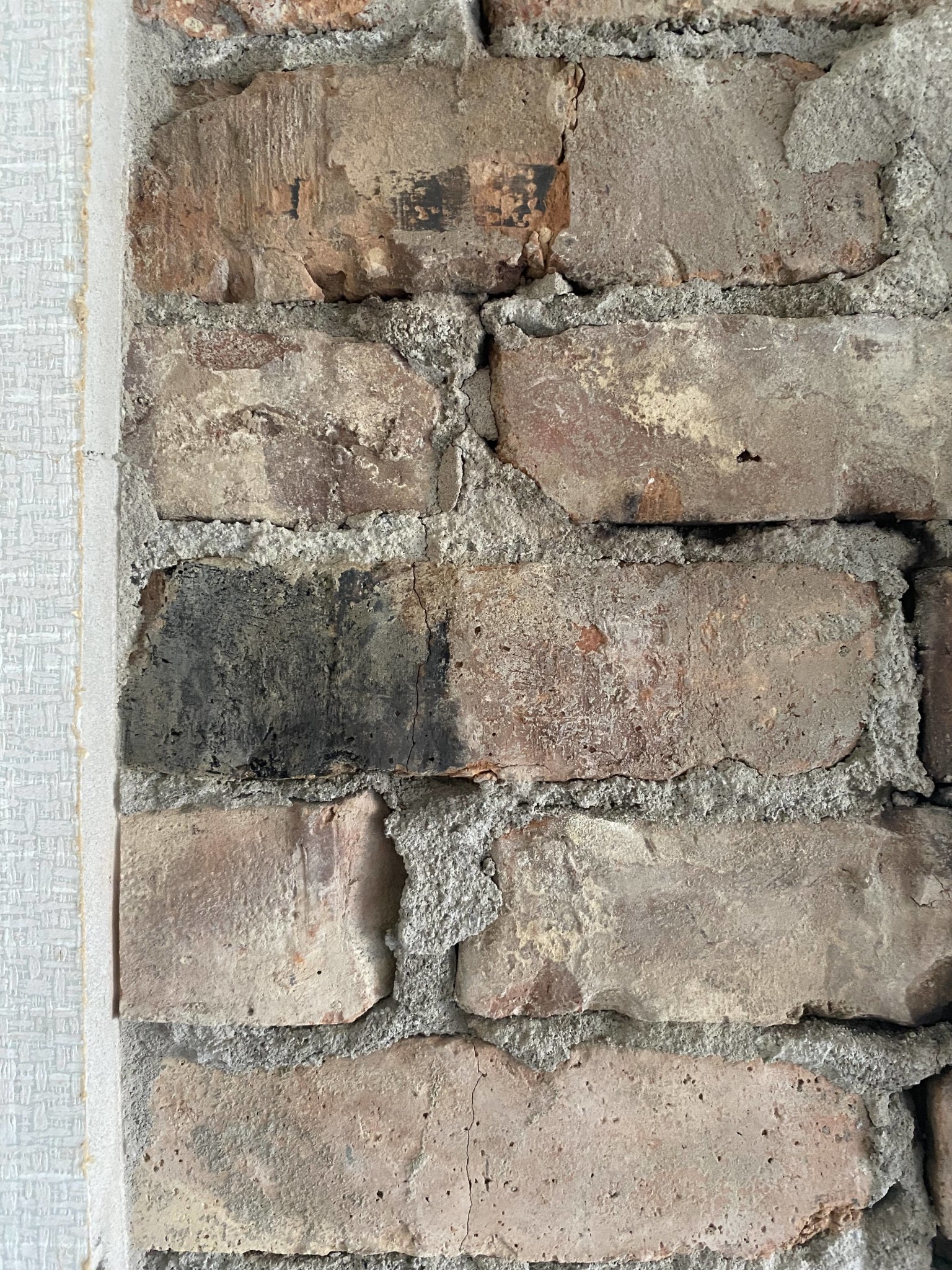
Now I've made holes through the floor structure from the bedroom down to the living room, and a hole from the living room (“the oak parquet can SURELY be put back again, sweetheart, it won't even show that it was cut!”) to the basement. Last night, I knocked down the plaster in the living room, and I think the chimney looks worse there than it did in the bedroom. The cracks in some of the stones are wider than they were up there, up there they were hair-thin and couldn't be felt with a fingernail.
How would you chimney masters out there repair such damage?
Coddle with B-mortar on the joints, repair the cracks on the stones with something, or just slap on 30mm of C-mortar in one application and look satisfied?
My current plan is:
• Remove the rest of the plaster down to the basement
• Clean out questionable joints with a suitable electric tool
• Fill joints with B-mortar, let set
• Plaster the whole thing again with C-mortar, max 10mm at a time, let set for at least 3 days and coddle with post-watering with a spray bottle
• Let the time between plastering and firing be as long as possible (just over 1 day is probably the maximum time if some form of quality of life is to be maintained).
• Repeat points 4 & 5, until the chimney is filled in and put back smooth.
Would you have done it any other way..? Grateful for tips and advice!
Would also appreciate theories about what could have happened to the chimney, why has it cracked from top to bottom? Incorrectly built, too hard mortar, chimney fire, or what..?
And:
No, there will be no mention of any lining pipe and vermiculite in the channel.
No, the chimney sweep hasn't been here to pressure test, he can't tell me anything I don't already know.
Yes, I still fire it up.
No, the electric heater is not available. It exists, but is not connected.
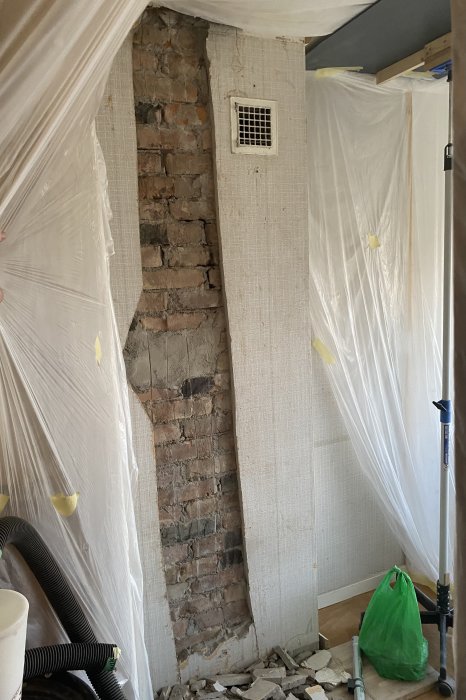
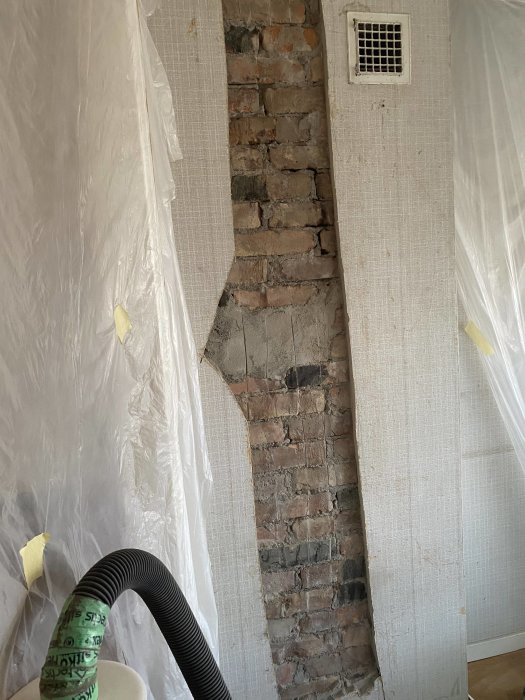
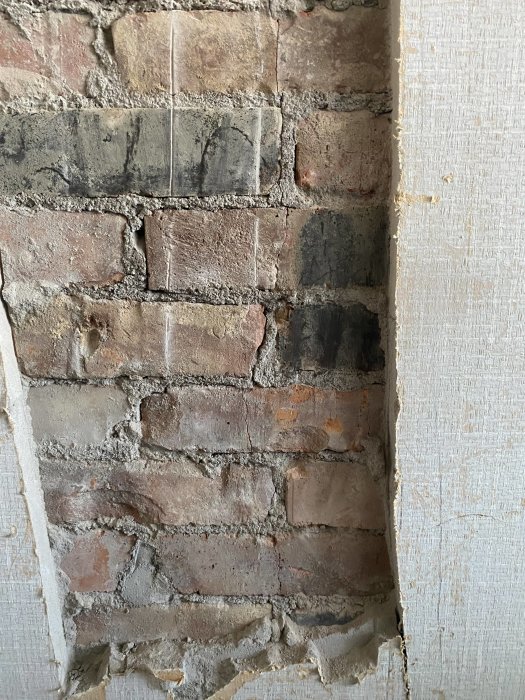
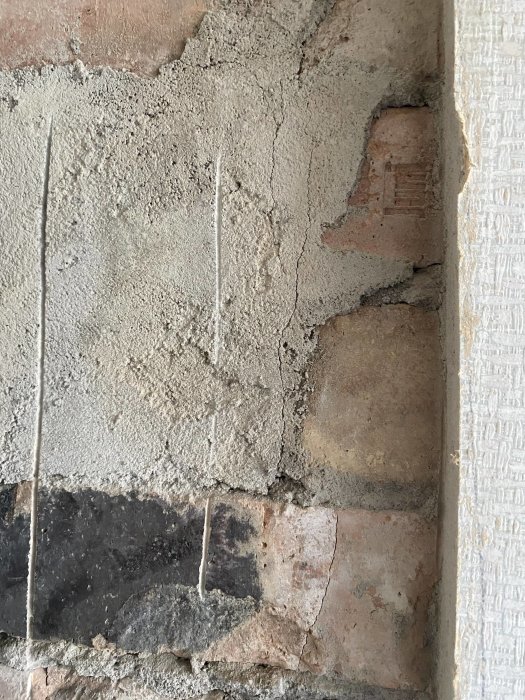
See pictures (note that the deep lines are not cracks but marks from the diamond blade on the plunge saw used to notch the plaster before it was gently chiseled down. Highly recommend this method, as the plaster comes off in large slabs!):
Do you have a chimney cap? Otherwise, it might have rained in and caused frost damage. I had a similar problem with my chimney from the 70s. But luckily, there were only cracks on the outer layer of bricks and not the innermost, so I just repointed it.
Do you have a chimney cap? Otherwise, it might have rained in and caused frost damage. I had a similar problem with my chimney from the '70s. But fortunately, it was only cracks in the outermost layer of bricks and not the innermost, so I just re-mortared.
What do you mean by cracks only in the outermost layer? Were they not through the entire stone, like..?
No cap, I don't think there ever was one either. But the crown is sheet metal on the sides and there's prime lead sheet on top that overlaps the sides.
It's not certain that the crown was always sheet metal though.. Do you think it could be frost damage here too? Can it cause cracking through the entire chimney, from top to bottom?
The crack is from something settling, or from going at it with a rotary hammer, similar to that. It's tension in a chimney that doesn’t like this. Would rather have pushed down an acid-proof pipe instead of slip casting; if something moves more, it will continue to leak.
What do you mean by cracks only on the outermost layer? Were they not running through the entire stone, like..?
No hood, I don't think it's ever been fitted either. But the crown is the sheet metal flashing on the sides, and there's top-notch lead sheet on top that overlaps the sides.
It's not certain that the crown has always been sheet metal though.. Do you think it could be frost damage here too? Can it cause cracking through the entire chimney, from top to toe?
Mine was built with two layers of stones and the crack was only in the outermost layer, not all the way through to the flue.
The question is whether it has "finished" settling, in which case it's just a matter of gliding and being happy. If it is a settlement that is still moving, then it's money and work straight down the drain.
The crack is from something settling, or from going at it with a jackhammer, or similar. There are tensions in a chimney breast that don't like this. I would probably push down an acid-resistant pipe rather than slipping casting, because if something moves more, it will continue to leak.
Dowser4711 said:
Definitely looks like a crack due to settlement.
The question is whether it has "finished" settling, in which case it's just a matter of slip casting and being happy. If it's a settlement that's still moving, then it's money and work straight down the drain.
We think it's settlement damage...
Yes, if that's the case and it hasn't finished settling, then it's money and especially a lot of work down the proverbial drain...
I don't rule out a chimney fire either, and since the floor bisque rests on corbels in the chimney breast, it has, if so, prevented the chimney from expanding. Then the mortar is probably stronger than the stones, and where it has sat properly, it's logical that the stones give way first.
Regardless of the reason, this is not an operation you want to do more than once in the house's and your own lifetime, I can assure you.
As the work is in the phase it is and as I want to avoid a pipe, acid-resistant or not, the only rational thing is to grind out the joints and lay new mortar. The cracks in the stones need to be carefully opened up a little bit, and filled again with B-mortar. Then you have to monitor if new cracks appear.
The chimney is 57 years old and stands on bedrock, so I choose to believe that the settlement is finished.
The chimney breast will be visible in the living room and basement, the paneling in the bedroom I have arranged so that it is easily removable for inspection.
Click here to reply
Vi vill skicka notiser för ämnen du bevakar och händelser som berör dig.

AndreasLarsson89 said:
Dowser4711 said: