Have a small question about this:
When insulating the roof with truss rafters, I have read that you first need an air gap against the roof decking, then come the actual insulation, and then the waterproofing layer. What I haven't found anywhere is how to handle where the roof meets the wall; which part of the wall construction do I bring up towards the roof? Should you see it as the roof coming down towards the wall, or the wall going up towards the roof? Which is more practical?
Can't find where to edit the title of the post which ended up being a bit strange in Swedish…
I have a small question about this:
[image]
When insulating the roof with scissors trusses, I have read that you first need an air gap against the sheathing, then comes the insulation itself, and then the waterproofing layer. What I haven't found anywhere is how to do it where the roof meets the wall; which part of the wall construction do I take up towards the roof? Should one see it as the roof going down towards the wall or the wall going up towards the roof? Which is more convenient?
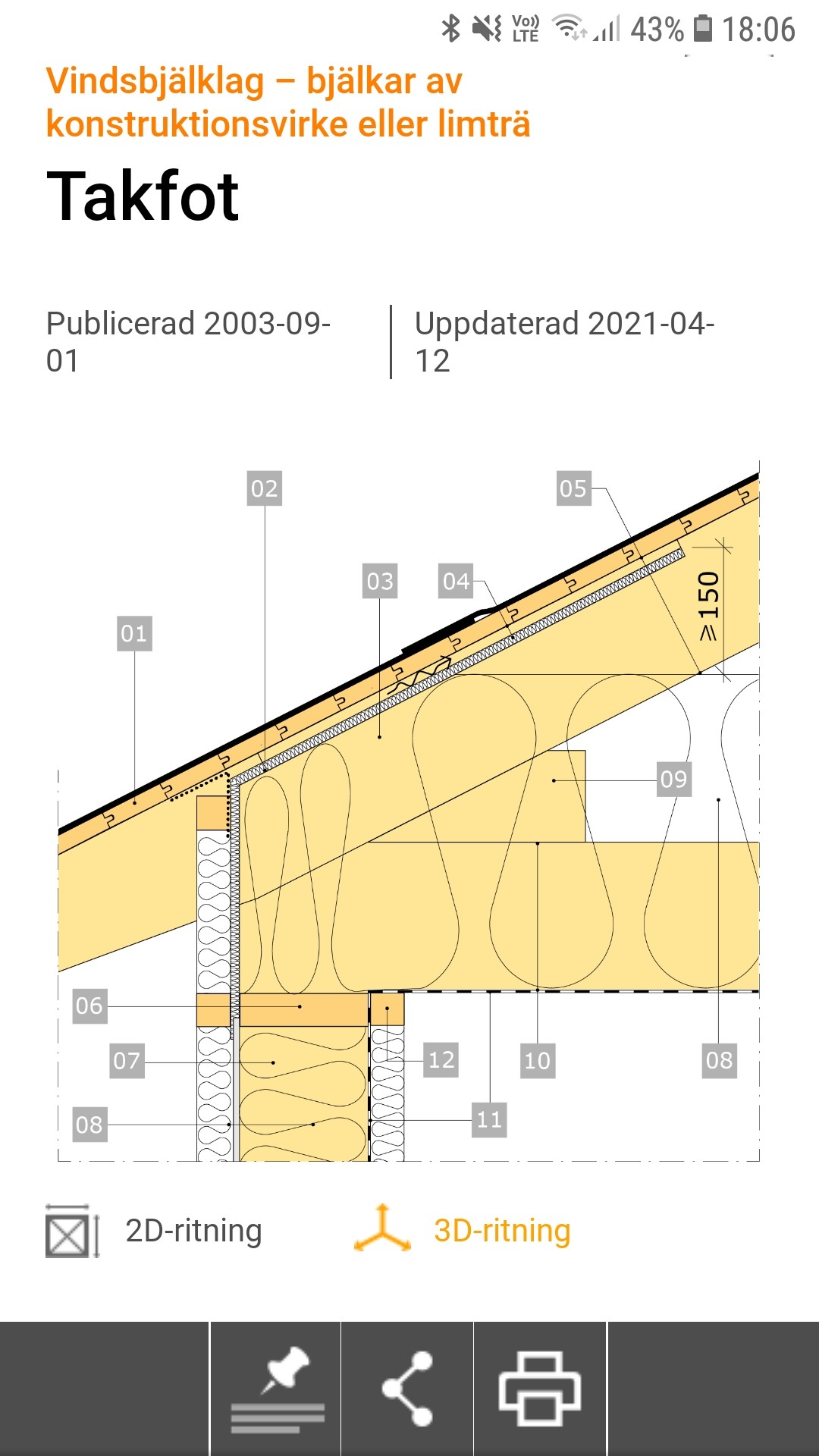
The insulation from the roof lies on the hammer beam and ends there. It should be wind-protected in some way.
If you have a wind barrier on the wall, it should be connected with the wind deflector in the roof.
Tape all joints.
The insulation from the roof rests on the wall plate and ends there. It should be wind-protected in some way.
If you have a wind barrier on the wall, it should be joined with the wind deflector in the roof.
Tape all the seams.
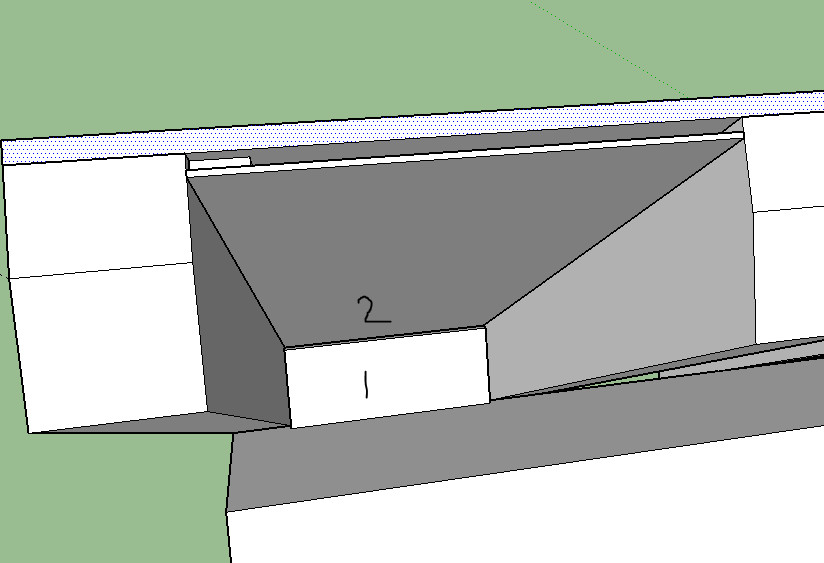
So, basically, I take the outer part of the wall up and connect it with the panel that creates the air gap?
In the picture, it rather looks like the board that creates the air gap goes down to the wind shield?
I find the website hard to navigate... may I ask where you found the picture?
The board that creates the air gap also functions as a wind shield. You can do either as long as there is an air gap all the way out to the roof eaves. That is, the air must be able to enter there. Träguiden contains all the useful info you seek.
You can find info on insulation brands like isover or paroc.