
2,043 views ·
15 replies
2k views
15 replies
How to manage moisture in concrete slab against air(!)?

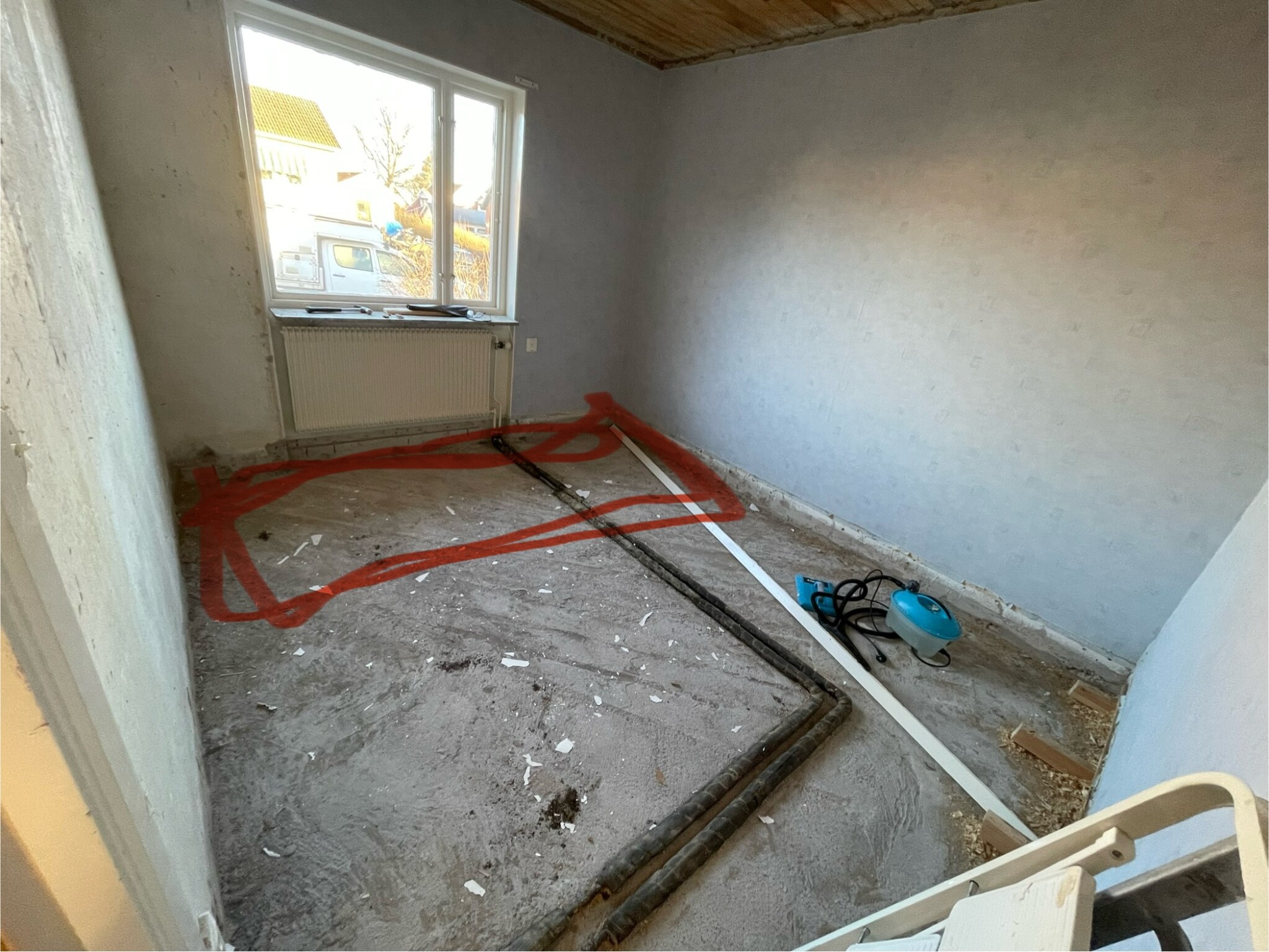
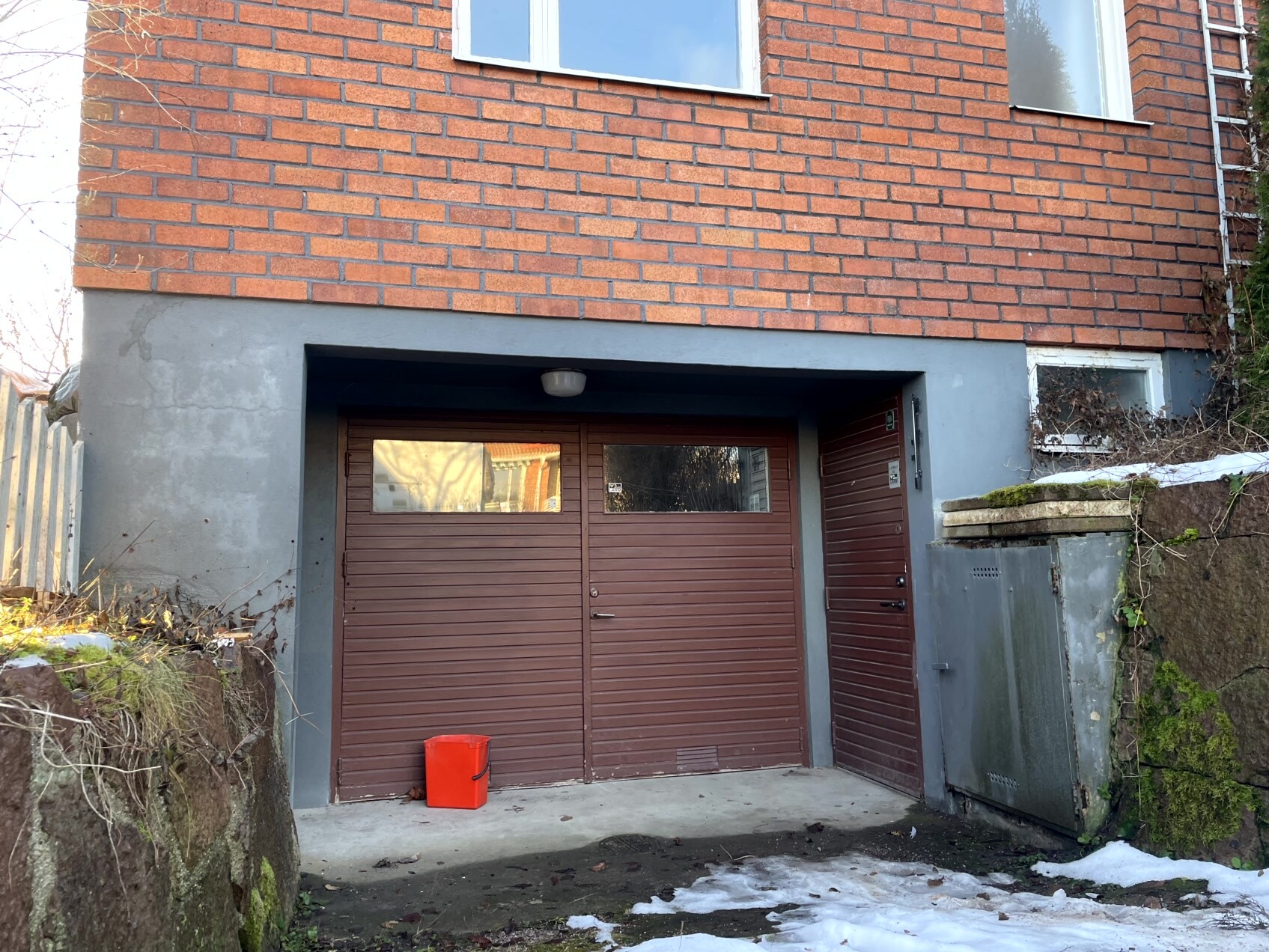
I have a room I'm going to rebuild after a minor water damage (from water inside). The first meter of the room, marked in red in the picture, is concrete against the outdoors. It's the overhang over the garage (second picture). The rest of the room is above the garage which is heated but maintains a lower temperature.
Originally (from -62), there was a thin construction plastic sheet on the concrete at the marked area, and then it was framed and insulated with fiberglass wool.
I'm considering how best to deal with the part that extends outdoors. Should I put a diffusion barrier there? An idea I'm toying with is a Platon mat and ventilated skirting boards, XPS and now that I've torn out the floor, I can replace the radiator with underfloor heating laid on the XPS.
Originally (from -62), there was a thin construction plastic sheet on the concrete at the marked area, and then it was framed and insulated with fiberglass wool.
I'm considering how best to deal with the part that extends outdoors. Should I put a diffusion barrier there? An idea I'm toying with is a Platon mat and ventilated skirting boards, XPS and now that I've torn out the floor, I can replace the radiator with underfloor heating laid on the XPS.
We have a similar overhang on our house where we converted a bedroom into a bathroom above. We had contractors do the bathroom, and they installed the drainage pipes and then poured EPS concrete with underfloor heating coils in before leveling the floor for slope towards drains, and finally, waterproofing and tiles.
Before they demolished, there was a thin plastic ) ) covering the entire floor, wooden joists, and rock wool throughout the floor, and the subfloor was tongue and groove boards, regular wooden skirting boards, and there was no moisture or mold in it.
In your case, I would lay diffusion-tight plastic against the floor and insulation as you described but insulate at least 60 cm inside the garage wall/door but not worry too much about ventilated skirting boards, etc.
The moisture in the concrete will vent out the other way, and I find it hard to believe that new moisture from outside would be a problem.
Before they demolished, there was a thin plastic
) ) covering the entire floor, wooden joists, and rock wool throughout the floor, and the subfloor was tongue and groove boards, regular wooden skirting boards, and there was no moisture or mold in it.In your case, I would lay diffusion-tight plastic against the floor and insulation as you described but insulate at least 60 cm inside the garage wall/door but not worry too much about ventilated skirting boards, etc.
The moisture in the concrete will vent out the other way, and I find it hard to believe that new moisture from outside would be a problem.
An idea might be to move the garage doors flush with the foundation.
It's quite a big job and if the door on the right is a door into the basement of the house, it's not a good idea. You would need an airlock into the house to prevent exhaust fumes and other things from coming in, as well as it not being its own fire compartment, etc... there are quite a lot of newer regulations about that since it was built.T Timmermannen77 said:
There's also a risk that the doors cannot open due to the slope of the driveway if you move them out.
To double-check: What you mean is to build it up exactly as it was originally constructed: Diffusion-tight plastic over the area that is over the overhang (+ maybe a little more), leave the rest of the floor "naked" without plastic, frame, insulate the entire room, put on tongue-and-groove/particle board and lay the surface layer.T Testarn said:
I'm a bit tempted to install underfloor heating there, now that I have the floor up. That would probably just mean replacing the particle board with groove panels, right?
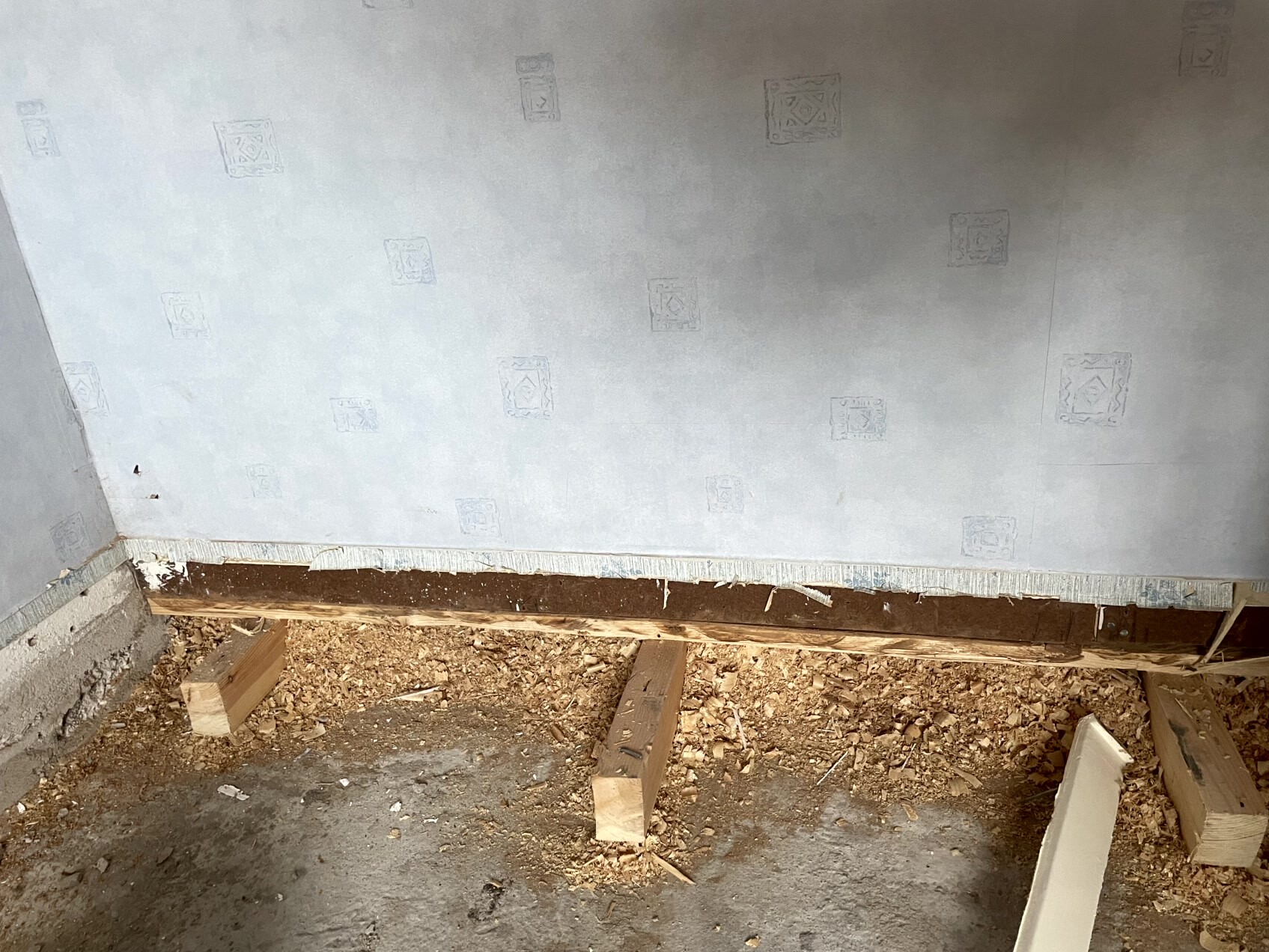
It might not have been clear in the original message, but the entire house has an intermediate concrete slab that is then framed with wood shavings (except for that meter of overhang which was insulated with fiberglass). If you look at the bottom right of the first picture, you can see the remnants of it, some joists, and a bit of loose wood shavings.
Perhaps worth mentioning that I tore up the floor because I had moisture migration from the bathroom which is adjacent and found water on top of the diffusion plastic. But it was a new issue and everything looked super fresh, with no signs of damage over the 60 years the house has existed.
That also comes with a bunch of drawbacks. The ease of accessing the back entrance, potential fire protection regulations, needing to build out some type of roof to protect the doors, rerouting stormwater drainage, etc.T Timmermannen77 said:
However, there is room to insulate the overhang from the outside if that would be a smart idea. If you look at the second image, you see the lamp above the garage door. There is ~20 cm of space where, if you want, insulation could be added.
I meant that you put plastic over the entire floor, bending it up against the walls. Then use joists on that and insulation between the joists. How far you insulate is a matter of preference, but at least 60 cm from where the garage begins. (so-called edge insulation which is used in intermediate floors)
We had fully insulated (we also have a concrete slab) with stone wool, partly for warmth and partly for impact sound. The previous owner (who was also the builder) had it quite cold in the basement, so there was a thought about keeping the warmth on the right side and not heating the concrete slab/basement from above.
In our kitchen and dining area, we removed the old floor and radiators (same construction with plastic, wooden joists and insulation, and sheathing before parquet/cork tile). Then we laid plastic with an upturn against the exterior walls, new wooden joists, fiberglass insulation under the entire floor, notched boards, and underfloor heating pipes under parquet. Regular skirting boards and OSB+gypsum on the walls in the kitchen/dining area.
The bathroom was done in 2019 and the kitchen/dining area in 2022, and I haven't seen any problems with it so far.
We had fully insulated (we also have a concrete slab) with stone wool, partly for warmth and partly for impact sound. The previous owner (who was also the builder) had it quite cold in the basement, so there was a thought about keeping the warmth on the right side and not heating the concrete slab/basement from above.
In our kitchen and dining area, we removed the old floor and radiators (same construction with plastic, wooden joists and insulation, and sheathing before parquet/cork tile). Then we laid plastic with an upturn against the exterior walls, new wooden joists, fiberglass insulation under the entire floor, notched boards, and underfloor heating pipes under parquet. Regular skirting boards and OSB+gypsum on the walls in the kitchen/dining area.
The bathroom was done in 2019 and the kitchen/dining area in 2022, and I haven't seen any problems with it so far.
Ah! Thanks!
Our houses seem very similar. Our basement does maintain a comfortable temperature, but the garage, which the room is above, is significantly colder. Far from freezing point, but it’s probably around 10 degrees above or something like that when it’s coldest outside.
To possibly complicate it a bit. The garage is under two rooms. The children's room is the one that's currently exposed (with the overhang) and is divided from the other bedroom by a wall that's really not a wall but just opposing built-in wardrobes.
I would like to avoid any damage to the other bedroom. But that means I would have to end the plastning, so to speak, in the middle of the floor (where the wardrobes begin). Do you see any concerns there?
Our houses seem very similar. Our basement does maintain a comfortable temperature, but the garage, which the room is above, is significantly colder. Far from freezing point, but it’s probably around 10 degrees above or something like that when it’s coldest outside.
To possibly complicate it a bit. The garage is under two rooms. The children's room is the one that's currently exposed (with the overhang) and is divided from the other bedroom by a wall that's really not a wall but just opposing built-in wardrobes.
I would like to avoid any damage to the other bedroom. But that means I would have to end the plastning, so to speak, in the middle of the floor (where the wardrobes begin). Do you see any concerns there?
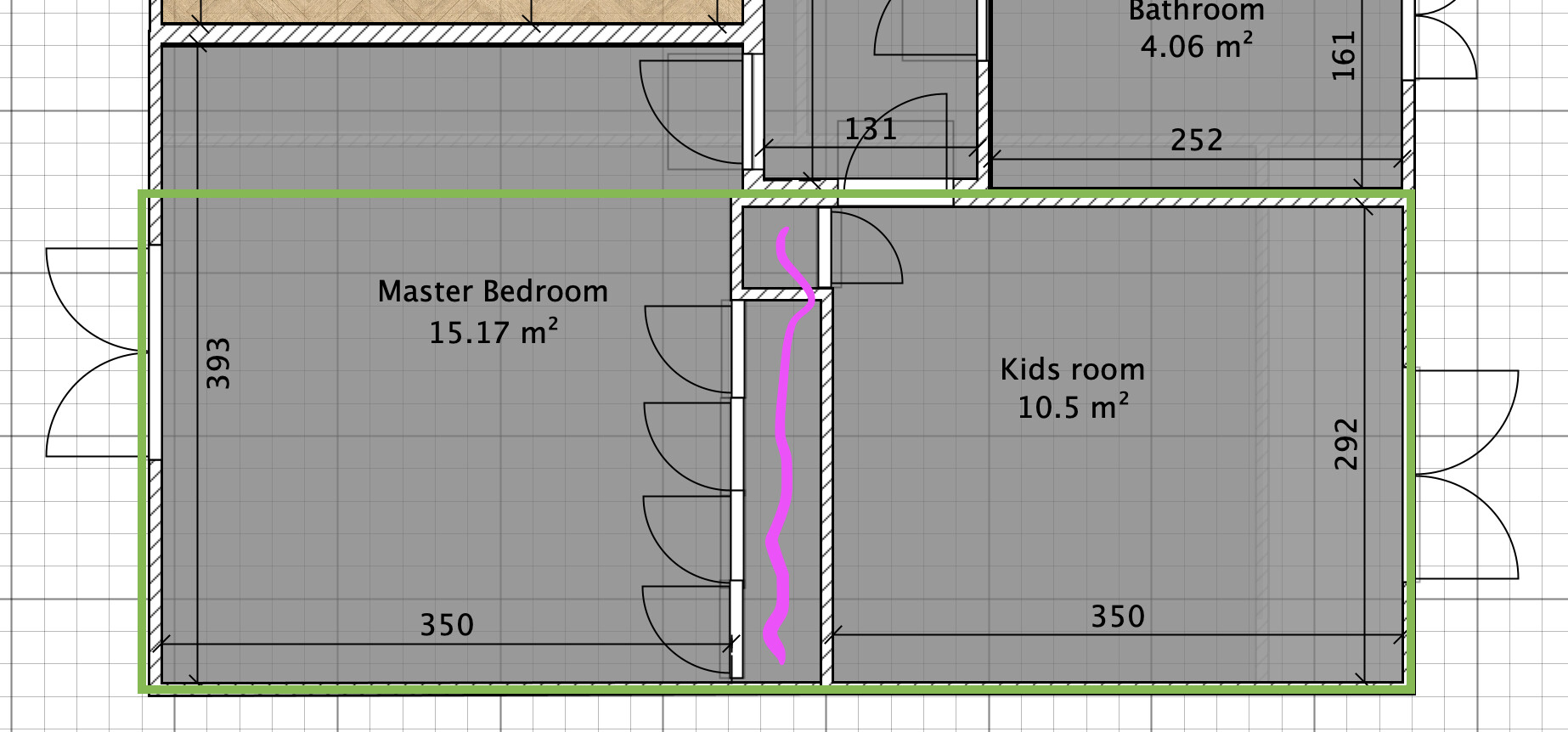
Yes, our house was built in '57 so it's probably very similar. Looking at your floor plan, it looks exactly like we had it before the renovation, with the difference that we have the window in the small bedroom on the gable of the house and not above the garage door. Our house is also a bit narrower, so the bathroom and small bedroom were "shorter."
Our garage runs under the entire house at one end but is now a workshop and storage since the driveway has been filled in and a new staircase has been built instead. (Correspondingly, your staircase is from the left)
See no problem with ending at the wall. Our bathroom connects to the bedroom with closets in the same way as your rooms. The difference is that we have a bathroom where you have a nursery.
In your case, you've gotten moisture from the bathroom that is close to the children's bedroom, so I find it hard to believe that it (the moisture) can make it to what is the "master bedroom."
Our garage runs under the entire house at one end but is now a workshop and storage since the driveway has been filled in and a new staircase has been built instead. (Correspondingly, your staircase is from the left)
See no problem with ending at the wall. Our bathroom connects to the bedroom with closets in the same way as your rooms. The difference is that we have a bathroom where you have a nursery.
In your case, you've gotten moisture from the bathroom that is close to the children's bedroom, so I find it hard to believe that it (the moisture) can make it to what is the "master bedroom."
Cool! Swedish Stone House, built in '62 here!
The moisture from the bathroom is a clear damage. The bathroom is original with a tiled-in bathtub, where water during showering has flowed between the bathtub and bathroom wall (where there used to be a silicone seal) and settled on the slightly concave raw concrete(!) under the bathtub, and then slowly but surely seeped out through the concrete, which became noticeable on the wall in the now opened room. But I am currently fixing that bathroom according to all modern standards.
Here is the entire floor plan (with the heating pipe layout because I happened to have that image available). I have quite a lot of paperwork on the house, including the original building description of ~70 pages. Let me know if there's anything that interests you!
The moisture from the bathroom is a clear damage. The bathroom is original with a tiled-in bathtub, where water during showering has flowed between the bathtub and bathroom wall (where there used to be a silicone seal) and settled on the slightly concave raw concrete(!) under the bathtub, and then slowly but surely seeped out through the concrete, which became noticeable on the wall in the now opened room. But I am currently fixing that bathroom according to all modern standards.
Here is the entire floor plan (with the heating pipe layout because I happened to have that image available). I have quite a lot of paperwork on the house, including the original building description of ~70 pages. Let me know if there's anything that interests you!
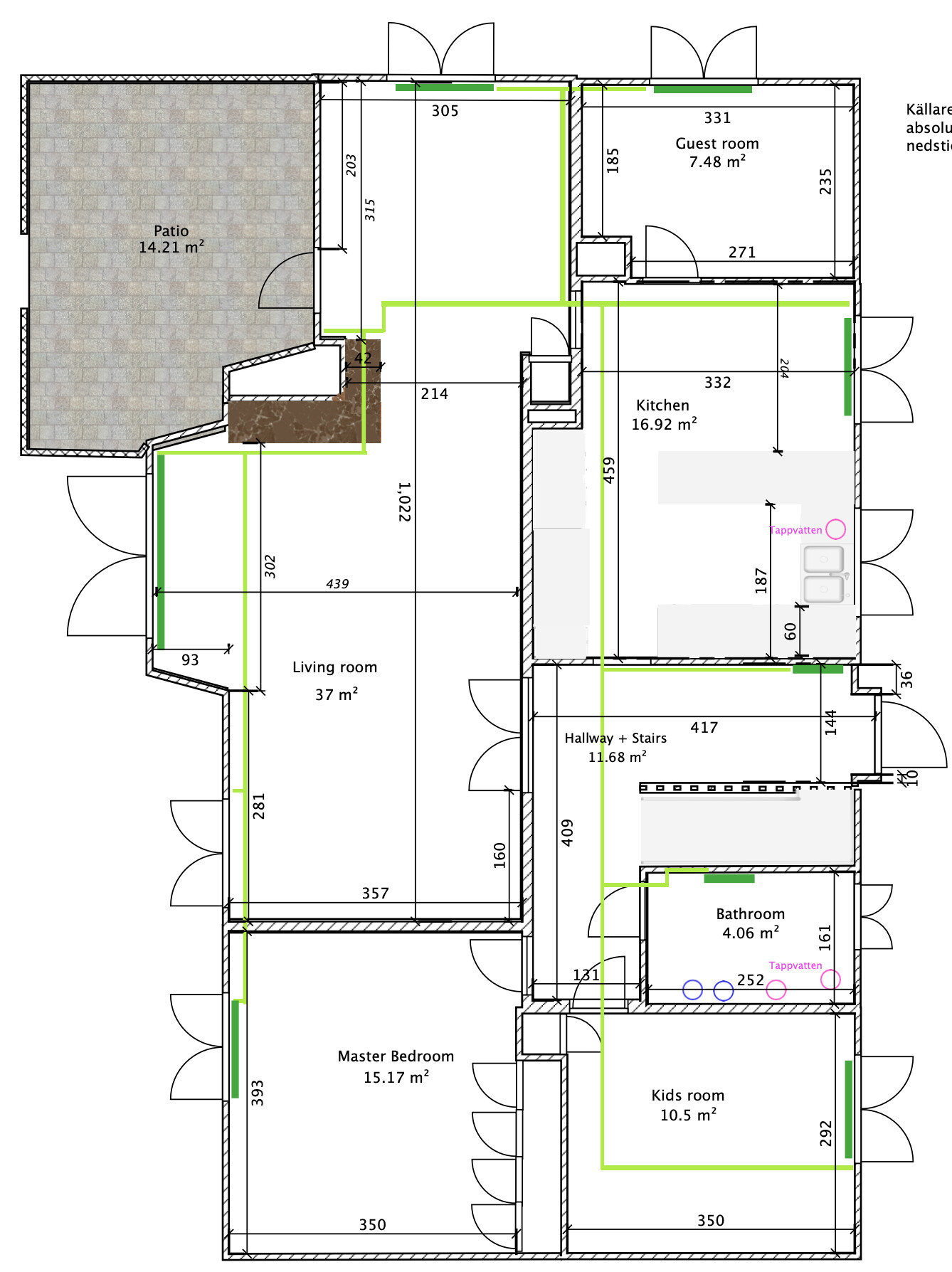
Really fun! We also have a Swedish stone house but as mentioned built in '57. Small differences in the floor plan regarding the placement of doors and windows, for example, we have the bay window in the living room further from the chimney and no additional window in the living room. Even the hallway was a bit different, our entrance was adjacent to the bathroom and the basement stairs go down by the kitchen.
Then we've redone a lot with a new floor, an extended entrance in front of the old hallway and bathroom. A new bathroom instead of what is a bedroom for you, a new staircase up to the upper floor, and the guest room, kitchen, and dining area connected to the living room are now one large continuous room.
Our heating pipes were similarly placed with small differences and it would have been good to know before we tore up the floors
Currently, we only have radiators left in the living room and the master bedroom (plus the basement); everything else has underfloor heating.
We have some documentation from the construction too; it was the son of the original builder that we bought from, but thanks for the offer!
What would have been good to have when we were at it the most and even had blockages in the drains would have been a drawing of the drainage system - but most of it is replaced now. There are a couple of pipes from the laundry room and the shower by the sauna in the basement left and also the drain in the garage/workshop. Otherwise, everything is new.
I don't know if you have a laundry room and drying room under the living room like we do, but what we did from the start was skip the dryer and have a dehumidifier in the drying room. It has been tremendously effective and works great.
Then we've redone a lot with a new floor, an extended entrance in front of the old hallway and bathroom. A new bathroom instead of what is a bedroom for you, a new staircase up to the upper floor, and the guest room, kitchen, and dining area connected to the living room are now one large continuous room.
Our heating pipes were similarly placed with small differences and it would have been good to know before we tore up the floors
Currently, we only have radiators left in the living room and the master bedroom (plus the basement); everything else has underfloor heating.
We have some documentation from the construction too; it was the son of the original builder that we bought from, but thanks for the offer!
What would have been good to have when we were at it the most and even had blockages in the drains would have been a drawing of the drainage system - but most of it is replaced now. There are a couple of pipes from the laundry room and the shower by the sauna in the basement left and also the drain in the garage/workshop. Otherwise, everything is new.
I don't know if you have a laundry room and drying room under the living room like we do, but what we did from the start was skip the dryer and have a dehumidifier in the drying room. It has been tremendously effective and works great.
Now the heating mats have done their job and the room is ready to be built up.
But I'm having some doubts about the plastic. It feels wrong to put plastic on the "cold" side of the insulation.
Shouldn't I rather skip the plastic in this case and let the underfloor heating dry out any moisture?
But I'm having some doubts about the plastic. It feels wrong to put plastic on the "cold" side of the insulation.
Shouldn't I rather skip the plastic in this case and let the underfloor heating dry out any moisture?
I understand what you’re saying about plastic on the cold side, but in this case, you should prevent moisture from the bathroom from going through the concrete into the new studs and insulation. That was the original problem of the moisture damage if I haven’t misunderstood? The risk of moisture coming from the floor above the garage entrance is probably low.
If you choose to lay XPS on the concrete and then grooved boards on top of that (there are also grooved boards of EPS/XPS), underfloor heating, and foam before the parquet as you described initially, you’ll get a moisture-protective layer without other plastic. When you lay foam under the parquet, they usually recommend a moisture-proof variant if you have wooden flooring, so it will become a tight layer there as well.
If you choose to lay XPS on the concrete and then grooved boards on top of that (there are also grooved boards of EPS/XPS), underfloor heating, and foam before the parquet as you described initially, you’ll get a moisture-protective layer without other plastic. When you lay foam under the parquet, they usually recommend a moisture-proof variant if you have wooden flooring, so it will become a tight layer there as well.
No no. Sorry if I was a bit unclear.T Testarn said:
The original problem with moisture migrating from the bathroom was simply due to inadequate waterproofing in the bathroom. Or more specifically: A 60s bathroom with a tiled-in bathtub where water had run between the bathtub and the tiles, settled on the slightly concave raw concrete under the bathtub, and was absorbed into the building. This is now (temporarily) solved and the bathroom will be gutted.
Yes, I would think that the moisture migration rather goes the other way. That is, the moist warm air from the room goes down into the floor joist, meets the colder overhang, and condenses there.T Testarn said:
I’ve been mulling this over for a while now. I'm considering just going with the basic idea that the room has been bone dry for 60 years and choosing a solution as close as possible to how the room was originally built (+ underfloor heating which of course changes things a bit). And mostly leave it unplasticized, add plastic to the overhang (as in the original, to keep any condensing moisture on the warm side where it can be managed) and choose a hygroscopic insulation, just like the original wood shavings (which are also used in the rest of the house), such as wood fiber, isolina, or cellulose.
Anyone think this seems like a bad idea?
Anyone think this seems like a bad idea?