
5,534 views ·
6 replies
6k views
6 replies
How to make a box/drum with steel studs?
Excuse a perhaps dumb question, but I've googled endlessly without results and my ingenuity is at a low...
I'm going to make a "box" or whatever you want to call it at the junction between the wall and ceiling, with the purpose of embedding some spotlights and hiding some vp pipe installations.
I want to frame something with metal studs and then screw drywall on - but how on earth do I frame it?
L-profiles? U-profiles?
Final dimensions thought to be approximately 300x70 (WxH) or thereabouts depending on the material...
Grateful for help
I'm going to make a "box" or whatever you want to call it at the junction between the wall and ceiling, with the purpose of embedding some spotlights and hiding some vp pipe installations.
I want to frame something with metal studs and then screw drywall on - but how on earth do I frame it?
L-profiles? U-profiles?
Final dimensions thought to be approximately 300x70 (WxH) or thereabouts depending on the material...
Grateful for help
Something like this?R rorobobinon said:Excuse perhaps a dumb question, but I've googled myself without results and my inventiveness is at rock bottom...
I'm going to make a "box" or whatever you want to call it in the junction between the wall and ceiling, the purpose is to recess some spotlights and hide some conduit routing.
I want to frame something with metal studs and then screw plasterboard on - but how on earth do I frame it?
L-profiles? U-profiles?
Thinking of a final dimension of about 300x70 (WxH) or thereabouts depending on the material...
Grateful for help
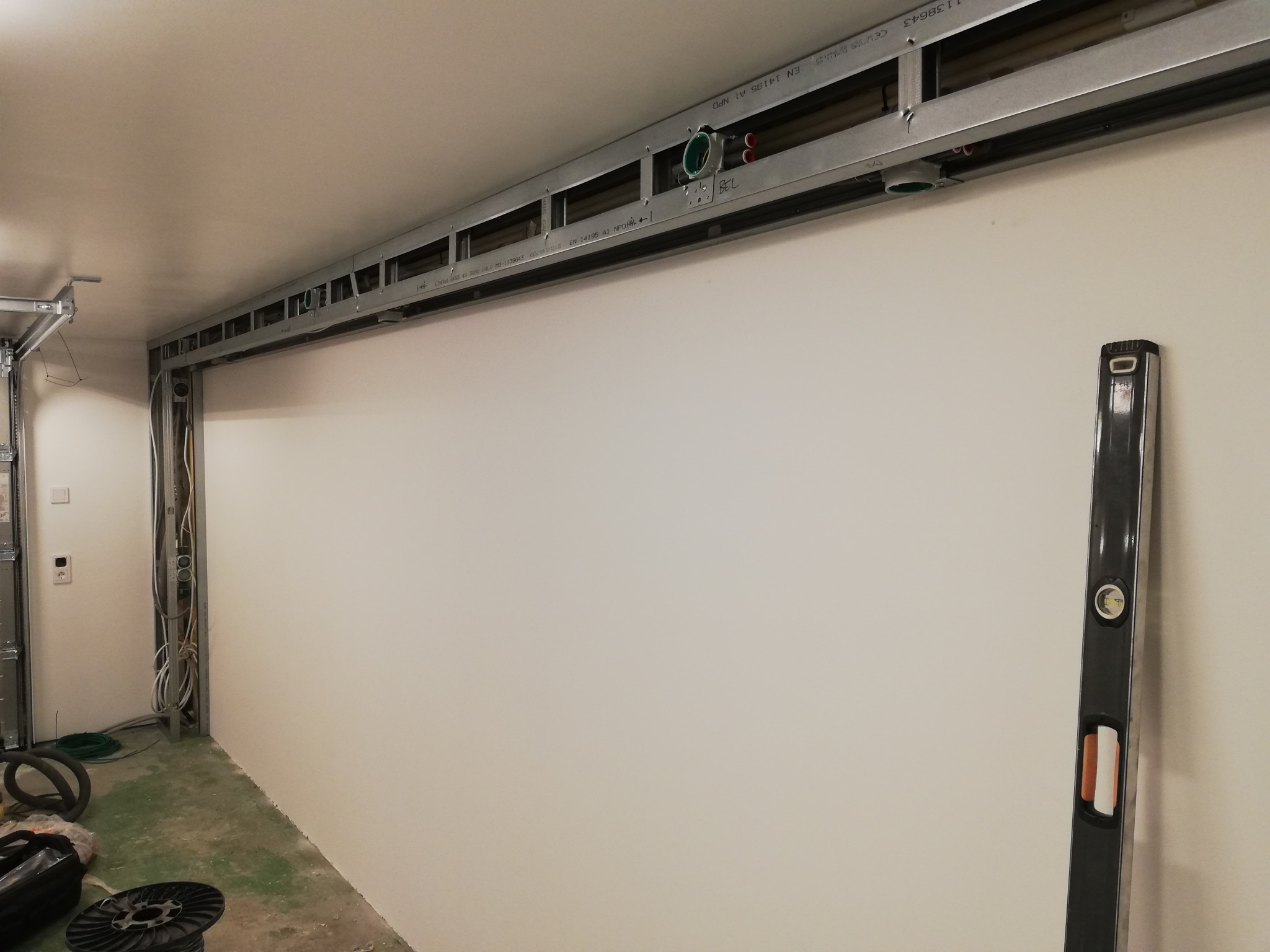
The easiest way to do this is with angle profile H50/50. Mount one on the wall 57mm from the ceiling with appropriate screws for your wall. Do the same on the ceiling with a measurement of 287mm from the wall. Then cut a strip of plasterboard that is 57mm wide and as long as you want the drum you are building. Screw it to the ceiling, use a spirit level so you get it straight and neat, then attach an H50/50 evenly on the bottom edge of that piece. Finish by cutting a strip of plasterboard 300mm wide if you don’t have a factory edge down on your already mounted plasterboard on the ceiling. First, screw it to the wall and use a square when you screw it to the outer corner to ensure that the piece on the ceiling hangs vertically. Finish by mounting an outer corner guard.
I think I get it, good setup.Matti_75 said:
The easiest way is to use angle iron H50/50. Mount one on the wall 57mm from the ceiling with appropriate screws for your wall. Do the same on the ceiling with a measurement of 287mm from the wall. Then cut a plaster strip that is 57mm wide, as long as you want the drum you're building. Screw it to the ceiling, use a level so you get it straight and neat, then attach an H50/50 flush on the bottom of that piece. Finish by cutting a plaster strip that is 300mm wide if you don't have a factory edge down on your already mounted plaster in the ceiling. Screw it to the wall first and use a try square when you attach it to the outer corner to ensure that the piece in the ceiling hangs vertically. Finish by installing an outer corner protector
Feels tricky to get it straight, but maybe that's just in my head?

Do you have a picture to complement your description? I'm not quite getting it...The easiest way to do it is with angle profile H50/50. Mount one on the wall 57mm from the ceiling with suitable screws for your wall. Do the same on the ceiling with the measurement 287mm from the wall. Then cut a strip of gypsum that is 57mm wide and as long as you want the duct you are building. Screw it to the ceiling, use a level to make it straight and nice, then attach an H50/50 along the bottom edge of that piece. Finish by cutting a strip of gypsum that is 300mm wide if you don't have a factory edge down on your already installed gypsum in the ceiling. First, screw it to the wall and use a square when you screw it to the outer corner to make sure the piece in the ceiling hangs vertically. Finish by mounting an outer corner guard
Best regards,
Richard
Click here to reply