Imagine a panel board on the exterior wall and needing to remove one.
I always manage to damage the surrounding boards when I pry around with the large crowbar and end up replacing more boards than I otherwise would have needed.
I know there are nail pullers but they are a bit troublesome and time-consuming.
I usually "ease" the boards a bit with the crowbar. Gently, preferably with a spacer as tommib writes. Then place a piece of board on the plank and give it a good whack. Hopefully (not always) the plank goes back, but the nail remains with a 2-3 mm grip for the crowbar. Find a good nail puller. There are many variants, some good, others not. They actually work quite well anyway. The investment pays off quickly, compared to replacing more planks than you intended (and the work).
Start from the bottom? But as I said, it depends on whether you're going to keep it or not.
Pried loose 3 boards from the facade today, from the bottom and none broke even though they were half-rotted at the end grain
It depends a bit on which panel you have and what you are referring to. Many good suggestions already written. If it is tongue-and-groove paneling, nailed correctly, invisibly, it is usually good to split the bad panel piece lengthwise, then break off the part that is not nailed and cut the nails on the nailed part with a Feiner or similar. The difficulty can be getting back a tongue-and-groove board in the middle of the facade. Then I usually cut or whittle away a bit of the notch and the tongue against the house wall part, loosen the boards that are on either side of the hole, and "scissor" in the new piece.
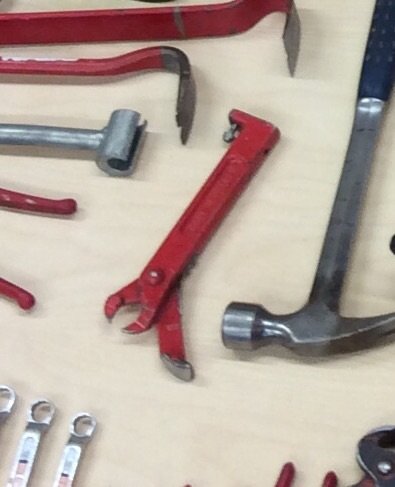
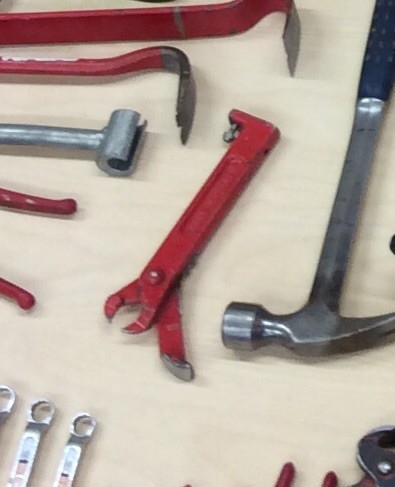
MathiasS linked to a nail puller. It is available in a light and handy version. Mine is twenty years old. I believe it was manufactured by Hultafors and was called Atle.
Always good when it seems impossible to get something loose.
Regards, Findus
MathiasS linked to a nail puller. It comes in a lightweight and handy version. Mine is twenty years old. I believe it was manufactured by Hultafors and went by the name Atle.
[image]
It's always good when it seems impossible to get something loose.
Best regards, Findus
Side note: what is the silver-colored tool on the left? I've seen them here and there but never found out what it is