Grateful for tips and instructions on actions and reasons for why it ended up like that.
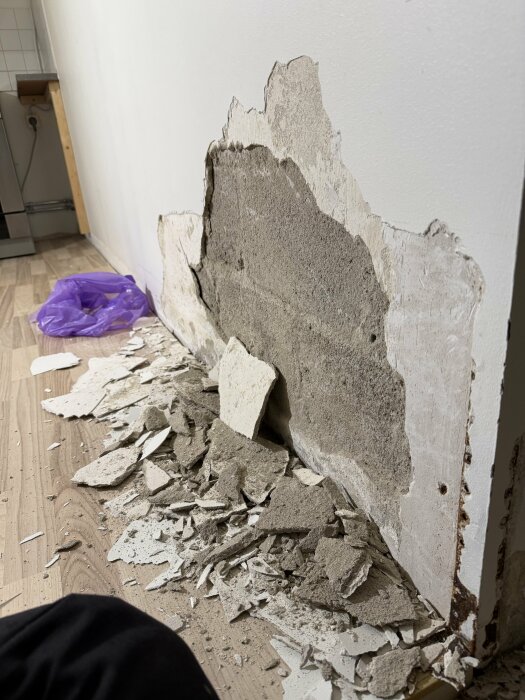
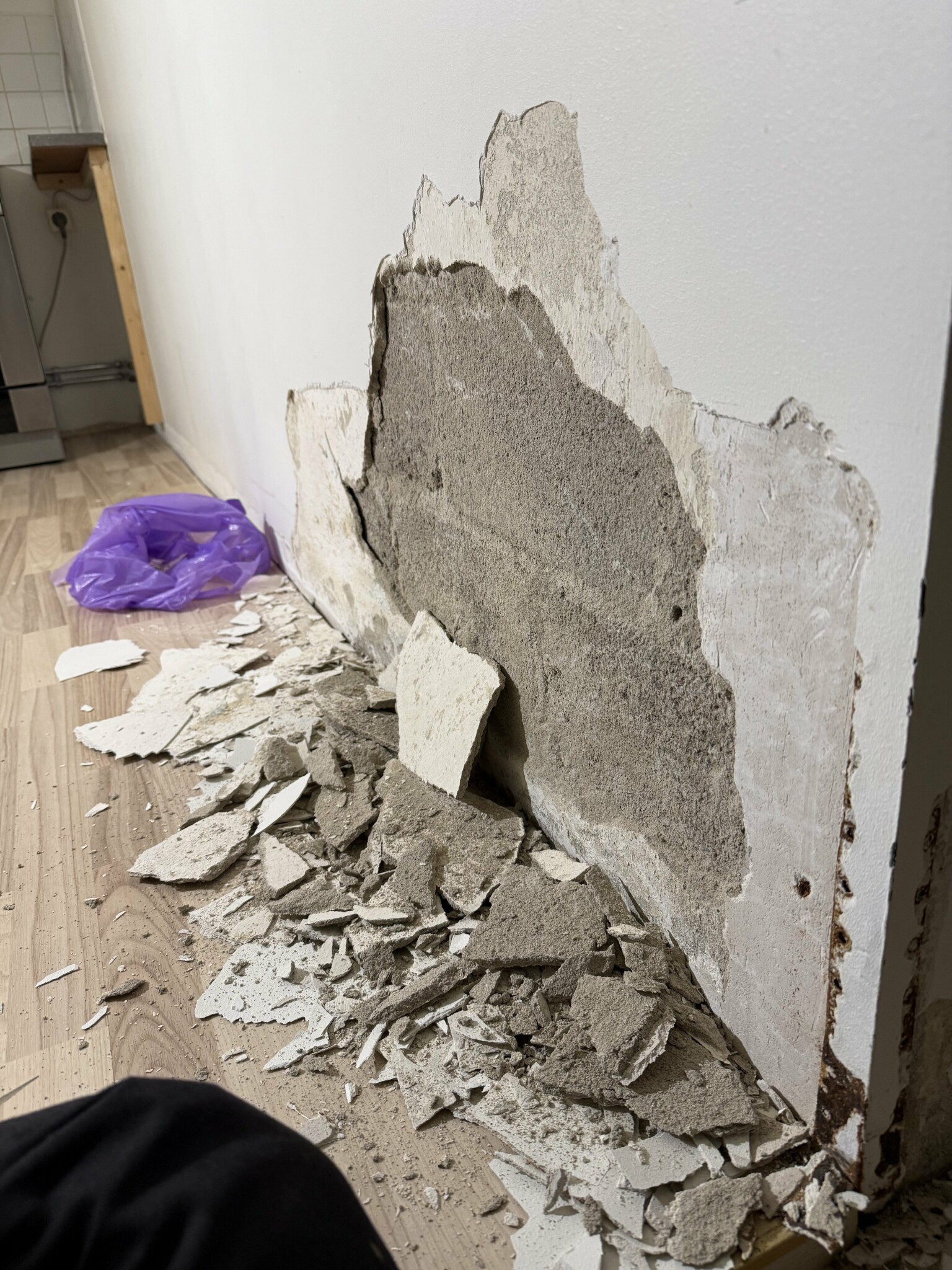
On a brick interior wall in the basement, bubbles began to appear in the paint. I started scraping and tapping on the wall, and both paint and filler fell off in large chunks. Underneath, it was plastered and had a hollow sound, the plaster was also completely loose and fell off.
Removed everything that was loose and yes, now it needs to be tidied up a bit.
The wall is an interior basement wall, heated rooms on both sides. Kitchen where the photo is taken, bathroom on the other side. (But no shower or anything against that wall)
It looks like it's brick, maybe concrete blocks? Possibly the wall is from when the house was built in the 40s.
The surface layers are newer, about 10 years. Before my time, so I don't know what has been used. The filler is pure white and in many places more than 10mm thick, so too thick for medium filler, could it be gypsum filler?
Paint unknown, possibly too dense.
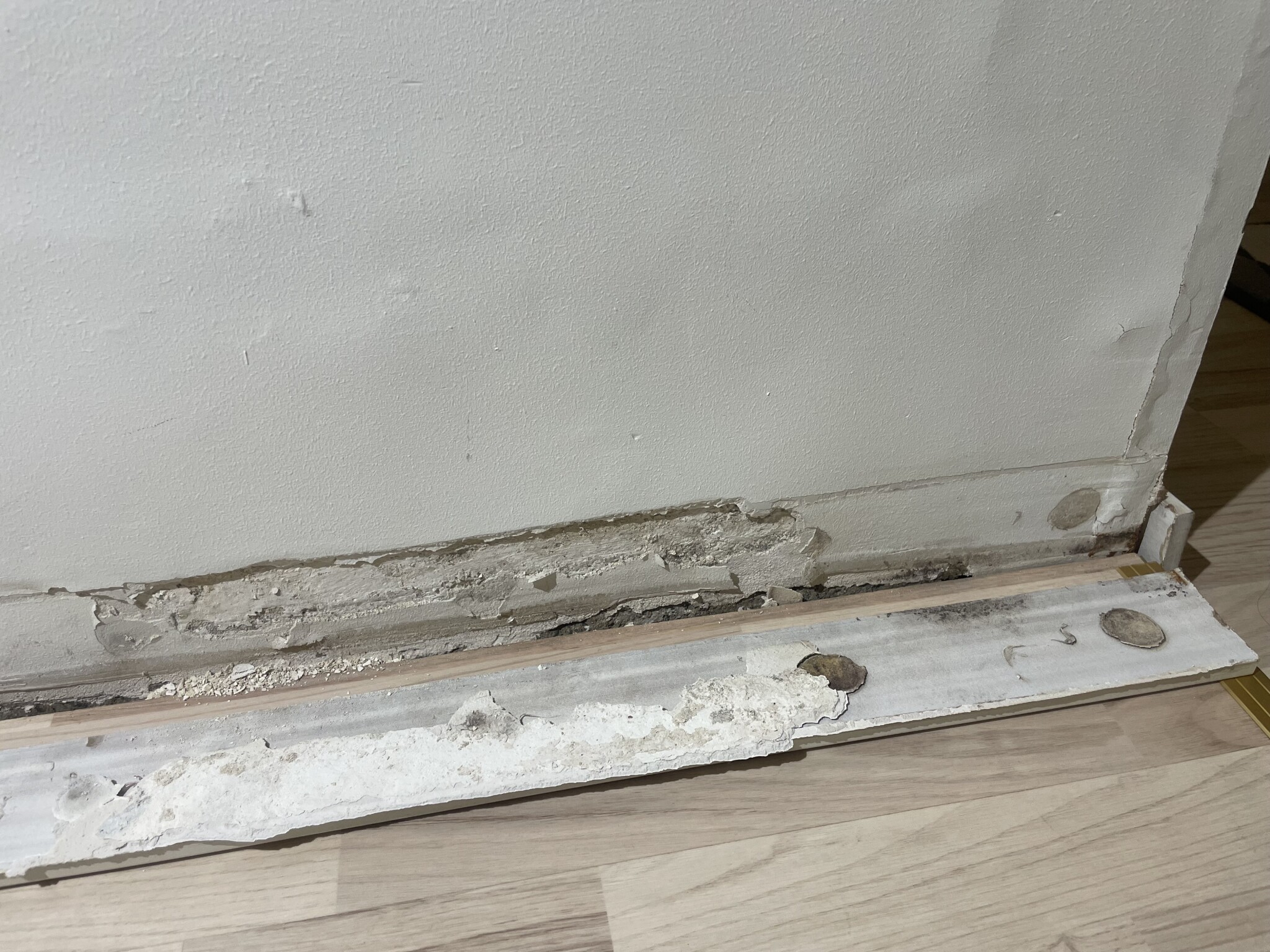
The base plate is unfortunately uninsulated. Basement dry otherwise but not unlikely that moisture is rising there. That is my hypothesis so far.
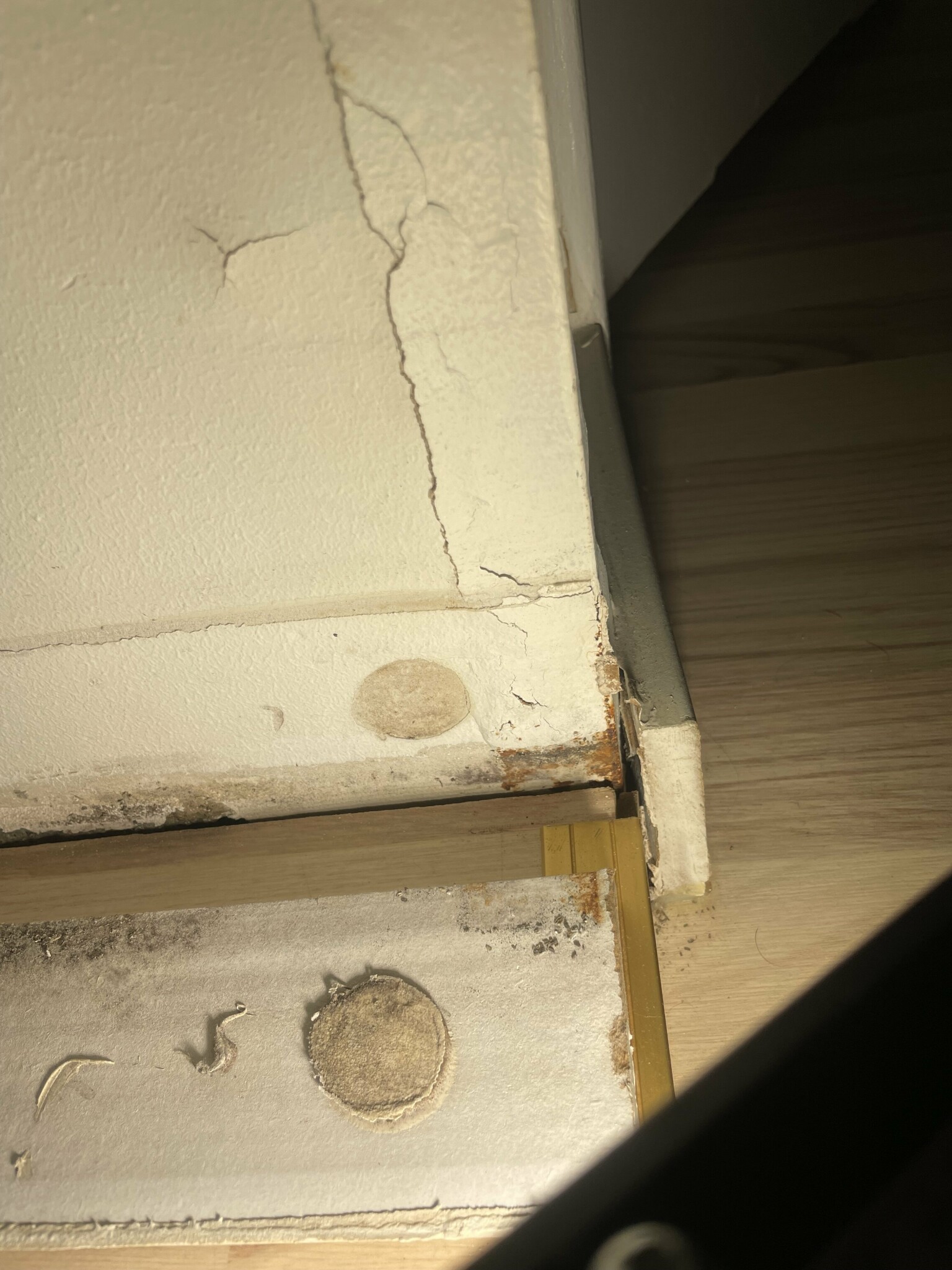
There were skirting boards that were generously sealed (and therefore not particularly ventilated) with a few black spots on them that I suspect are mold.
I believe your hypothesis is correct, the bottom plate absorbs moisture from the ground that goes up into the wall. I have the same issue in my house from -48 in the basement. In my case, the room with a wooden floor had developed mold under the floor, so it was removed and replaced with tiles. My theory is to only use products that are diffusion-open, everything from primer, plaster, and paint. I removed all the loose plaster, milled off paint on the rest up to about 1m, plastered, and then painted with silicate paint.
I believe your hypothesis is correct; the bottom plate absorbs moisture from the ground that travels up the wall.
I have the same issue in my house from -48 in the basement. In my case, the room with the wood floor was affected by mold under the floor, so it was removed and replaced with tiles.
My theory is to only use products that are diffusion-open, everything from primer, plaster, and paint.
I removed all the plaster that was loose, milled off paint on the rest up to about 1m, plastered, and then painted with silicate paint.
Thank you for the good response.
Which tool did you use to mill off the paint? I also think it’s good to remove more of the paint, but where it sticks, it was difficult to scrape off.
Did you use any special plaster?
How long did you wait to paint on the new plaster?