I have a not particularly large garage where the walls are built of 28cm blåbetong, which in themselves have an okay to good U-value. However, the ceiling is completely uninsulated with only sheathing and roofing felt. The concrete slab is uninsulated.
I now want to insulate my garage to retain heat better than today. The idea is not to maintain 20 degrees year-round, but preferably around 5-7 without major problems during the winter months using something like an oil-filled radiator with frost protection.
My idea is to install Hunton wood fiber insulation between the ceiling joists (or rafters if you prefer), and a vapor barrier (because I have a couple of rolls left from a house renovation) and then sheathing or OSB, which will then become my new nice ceiling.
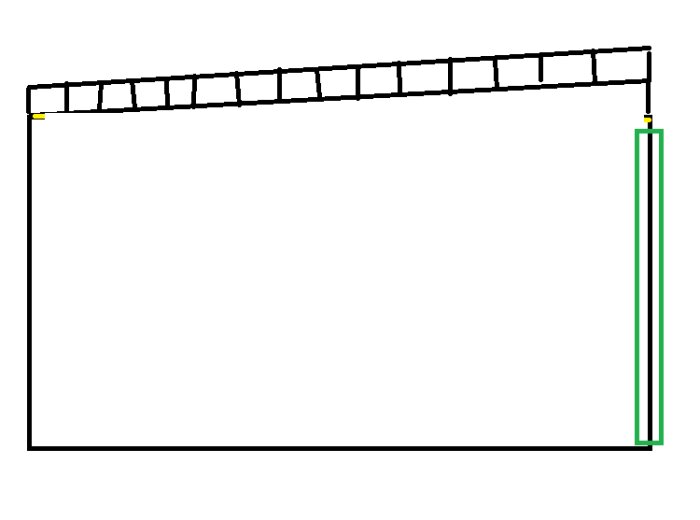
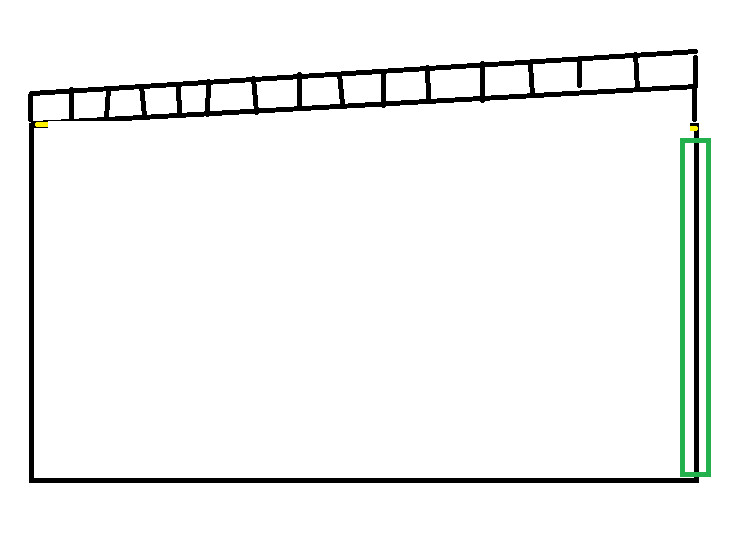
The catch is that the roof pitch is low, I don't remember exactly but around 5-6°, and the ceiling joists run perpendicular to the slope, which means the compartments run across the garage and not along it.
How do I handle the air gap and ventilation then?
Is it even needed? There will never be anything warm or humid in there except for things like wet bikes, some wet outdoor furniture in the autumn, etc.
Personally, I would never build a roof without an air gap.
What is on the sides of the garage?
Is it possible to create ventilation holes on both long sides?
Cardboard roofs are generally quite insensitive to moisture because it gets so darn hot underneath, which drives away the moisture, so you can try without if you like.
Another solution that is not so DIY-friendly but can be a good solution is to lay hard insulation on top of the roofing felt and then another layer of welded roofing felt.
Papptak are quite insensitive to moisture generally because it gets so darn hot underneath which drives away the moisture so you can try without if you want.
That assumes the roof is in the sun for a large part of the day, without being shaded by trees or other things. Furthermore, this is not sufficient, as this phenomenon mainly occurs in the summer, whereas during the winter months, due to the absence of sun and if it is out for a short while, it is low so that a low-pitched roof doesn't benefit much from it.
That an insulation layer gets slightly damp for a short period might be okay, but the key criterion is a short period, and then it must be able to dry out before mold begins to grow. A short period is days or possibly a week or so, not half a year.
Roofs without ventilation can, if one is lucky, work on south-facing steep roofs.



Rickard. said: