
4,710 views ·
9 replies
5k views
9 replies
How to finish interior cladding on gable towards roof, considering vapor barrier?

Hello!
I'm working on a small garage and I'm now wondering how I should finish the interior cladding (OSB boards) on the gables towards the roof considering the vapor barrier.
The roof will also be insulated and have a vapor barrier.
I need to splice the vapor barrier from the gable with the rest of the vapor barrier under the roof.
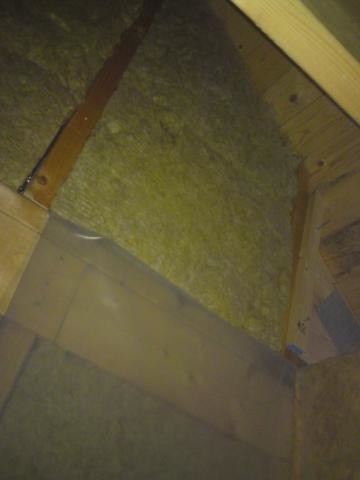
I'm attaching a photo that I hope gives a little picture of how it looks.
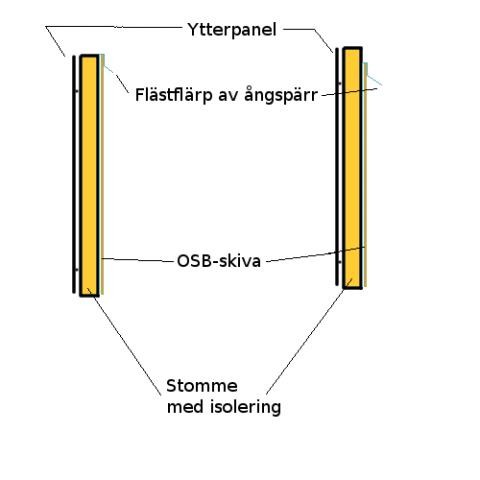
I'm also attaching a drawn picture where I try to describe two options, vapor barrier in light blue, and interior cladding in brown. The image is a cross-section of the gable wall.
Option 1, on the left)
I install the vapor barrier all the way up to the roof, as well as the interior cladding but let the vapor barrier fold over the interior cladding so I get a small "flap" to splice with the rest of the vapor barrier under the roof.
Option 2, on the right)
I install the vapor barrier almost all the way up to the roof, as well as the interior cladding. The vapor barrier folds over the interior cladding so I get a small "flap" to splice with the rest, but the difference is that it doesn't go all the way up.
So the question is whether any of the options is customary or if there are more options.
A big thank you in advance!
All comments are welcome.
(I see I spelled it wrong on the picture, it should say attachment flap)
Regards, Fredrik
I'm working on a small garage and I'm now wondering how I should finish the interior cladding (OSB boards) on the gables towards the roof considering the vapor barrier.
The roof will also be insulated and have a vapor barrier.
I need to splice the vapor barrier from the gable with the rest of the vapor barrier under the roof.
I'm attaching a photo that I hope gives a little picture of how it looks.
I'm also attaching a drawn picture where I try to describe two options, vapor barrier in light blue, and interior cladding in brown. The image is a cross-section of the gable wall.
Option 1, on the left)
I install the vapor barrier all the way up to the roof, as well as the interior cladding but let the vapor barrier fold over the interior cladding so I get a small "flap" to splice with the rest of the vapor barrier under the roof.
Option 2, on the right)
I install the vapor barrier almost all the way up to the roof, as well as the interior cladding. The vapor barrier folds over the interior cladding so I get a small "flap" to splice with the rest, but the difference is that it doesn't go all the way up.
So the question is whether any of the options is customary or if there are more options.
A big thank you in advance!
All comments are welcome.
(I see I spelled it wrong on the picture, it should say attachment flap)
Regards, Fredrik

Hmm... how thick is your insulation?? Are you planning to keep it heated all the time?
If I understand your picture correctly.
you can see a truss. Meaning you also have insulation above where the ceiling will be.
How do the wall and truss align? Can you nail a 45 and clamp both plastic from the wall and ceiling?
If I understand your picture correctly.
you can see a truss. Meaning you also have insulation above where the ceiling will be.
How do the wall and truss align? Can you nail a 45 and clamp both plastic from the wall and ceiling?
Hello!
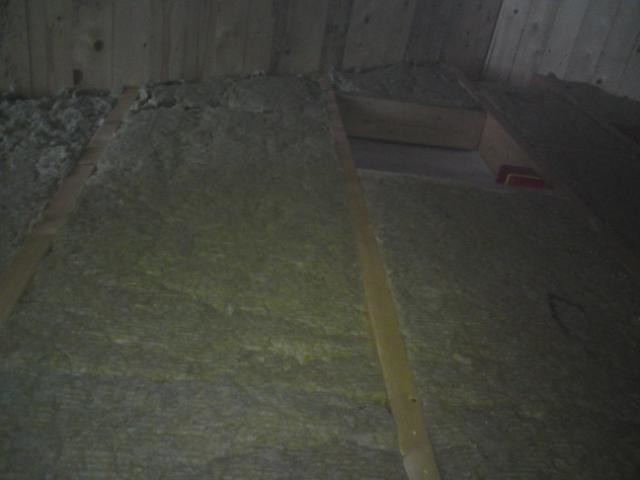
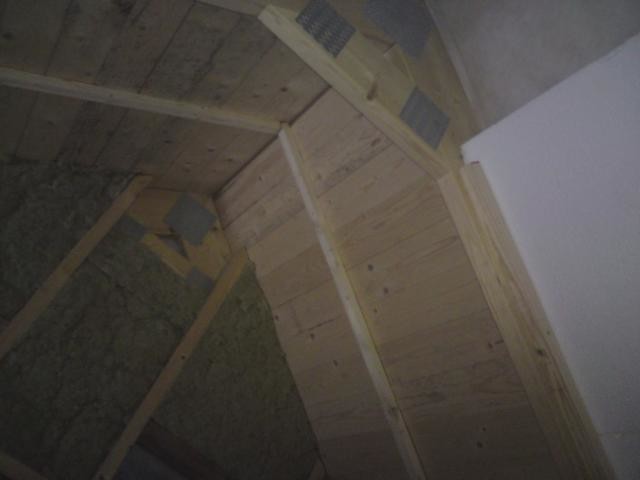
Here are 2 new pictures.
I guess you mean that you can go with the vapor barrier all the way up to the ceiling, the same way with the OSB wall covering.
You fold the vapor barrier over the OSB wall covering and clamp it under a 45mm*45mm stud that you screw at a suitable height under the roof boarding?
I can try to draw a picture of what I mean if you think I'm unclear?
Best regards,
Fredrik
Here are 2 new pictures.
I guess you mean that you can go with the vapor barrier all the way up to the ceiling, the same way with the OSB wall covering.
You fold the vapor barrier over the OSB wall covering and clamp it under a 45mm*45mm stud that you screw at a suitable height under the roof boarding?
I can try to draw a picture of what I mean if you think I'm unclear?
Best regards,
Fredrik
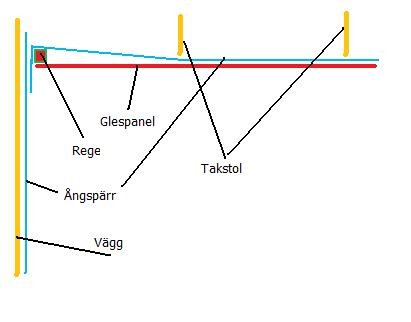
Well.. I was thinking something like this..
I thought you would attach the ceiling to the rafters and then you have to nail the ceiling to something out by the wall, and it looked like that part was missing.
Then I thought you could clamp ceiling plastic/wall plastic under the same rule.
If you plan to plastic above the rafters, the rafters will go through the plastic, so there will be some fiddling with the seal.
Yes, I asked if it will always be heated.. the reason for the question is that if not, I wouldn’t use plastic.. If it will stand unheated at times, I would choose something else that is not a completely tight vapor barrier..
I thought you would attach the ceiling to the rafters and then you have to nail the ceiling to something out by the wall, and it looked like that part was missing.
Then I thought you could clamp ceiling plastic/wall plastic under the same rule.
If you plan to plastic above the rafters, the rafters will go through the plastic, so there will be some fiddling with the seal.
Yes, I asked if it will always be heated.. the reason for the question is that if not, I wouldn’t use plastic.. If it will stand unheated at times, I would choose something else that is not a completely tight vapor barrier..
Hello,
Thank you for the very interesting response!
Just as you wrote:
"If you are going to apply plastic above the hanbjälkar, the beams will go through the plastic, so there will be some fiddling with the sealing."
...that's how I thought, but almost everyone has advised against it. One idea was to try to put extra plastic or tape around the beams to splice the plastic together and then cover the through-going beams with a thin strip on the outside to protect the joint.
Just as you write, I have thought about letting it stand unheated intermittently, maybe a maximum of 8 degrees or something like that.
Do you have any other suggestions for a vapor barrier besides plastic? Maybe there is something better?
Best regards,
Fredrik
Thank you for the very interesting response!
Just as you wrote:
"If you are going to apply plastic above the hanbjälkar, the beams will go through the plastic, so there will be some fiddling with the sealing."
...that's how I thought, but almost everyone has advised against it. One idea was to try to put extra plastic or tape around the beams to splice the plastic together and then cover the through-going beams with a thin strip on the outside to protect the joint.
Just as you write, I have thought about letting it stand unheated intermittently, maybe a maximum of 8 degrees or something like that.
Do you have any other suggestions for a vapor barrier besides plastic? Maybe there is something better?
Best regards,
Fredrik
Hello!
By the time it is heated, shouldn't one ensure that there is a vapor barrier?
I mean to have both belt and suspenders.
Krillew wrote something very interesting:
"If it will be unheated from time to time, then I
would choose something else that is not completely tight vapor barrier"
Is there a clever alternative to plastic? Something that is "not completely tight vapor barrier" which might be most suitable in my case?
Many thanks in advance!
Fredrik
By the time it is heated, shouldn't one ensure that there is a vapor barrier?
I mean to have both belt and suspenders.
Krillew wrote something very interesting:
"If it will be unheated from time to time, then I
would choose something else that is not completely tight vapor barrier"
Is there a clever alternative to plastic? Something that is "not completely tight vapor barrier" which might be most suitable in my case?
Many thanks in advance!
Fredrik
As Cem77 writes, you don't need a vapor barrier if it's not heated all the time, and it seems like you have about 120mm of insulation. When I built my workshop, I chose 145 studs and filled that space with insulation; no horizontal 45 or anything else, then I placed a moisture-resistant "wind barrier" on the inside under the OSB. The description of the barrier stated not to have it double except in one section, which indicates that it's quite dense, but not completely. I don't remember who the manufacturer is; it's a gray fiber barrier painted silver on one side.
I reasoned that it would be heated at times, but not constantly, so I opted out of the plastic and chose something that seemed to be slightly moisture-resistant instead. This allows it to ventilate in both directions, though not as it would without.
It turned out that it has been heated to full temperature for 3 years now. I have inspected a few times, and everything looks completely fine... 145mm is not that thick, so you do end up warming through. It's different if you increase the insulation in the living house, which goes up to 31cm in the wall, and then I wouldn't want to be without the moisture barrier.
I reasoned that it would be heated at times, but not constantly, so I opted out of the plastic and chose something that seemed to be slightly moisture-resistant instead. This allows it to ventilate in both directions, though not as it would without.
It turned out that it has been heated to full temperature for 3 years now. I have inspected a few times, and everything looks completely fine... 145mm is not that thick, so you do end up warming through. It's different if you increase the insulation in the living house, which goes up to 31cm in the wall, and then I wouldn't want to be without the moisture barrier.
Hello!
It would be interesting to know why a vapor barrier is not needed if the building isn't continuously heated. Once you do heat it, say for a week, wouldn't the vapor barrier be necessary?
Can it, in some cases, be that a vapor barrier is actually harmful?
Best regards,
Fredrik
It would be interesting to know why a vapor barrier is not needed if the building isn't continuously heated. Once you do heat it, say for a week, wouldn't the vapor barrier be necessary?
Can it, in some cases, be that a vapor barrier is actually harmful?
Best regards,
Fredrik
Well, you don't want to risk getting condensation on the vapor barrier.. then you'll have problems. If it's heated inside, the risk is minimal unless you place the vapor barrier on the outermost part. And you can get the opposite phenomenon if it's not heated.
Click here to reply