-We have approximately 34cm cc between the original floor joists.
-A new wall will be placed in the middle of them, so I added an extra floor joist between the two old ones.
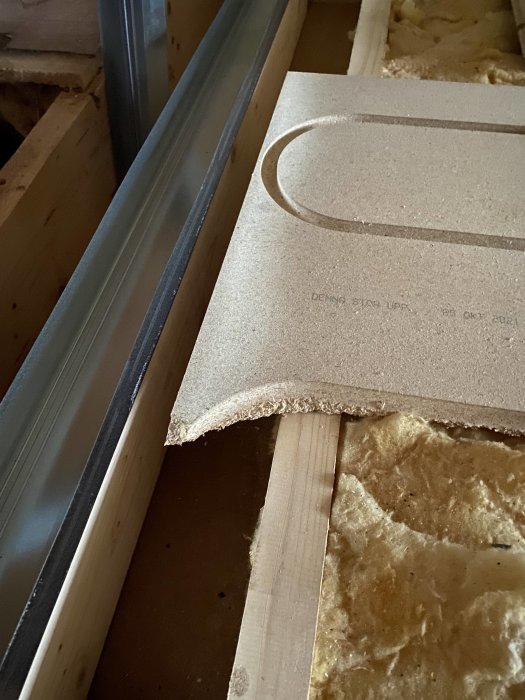
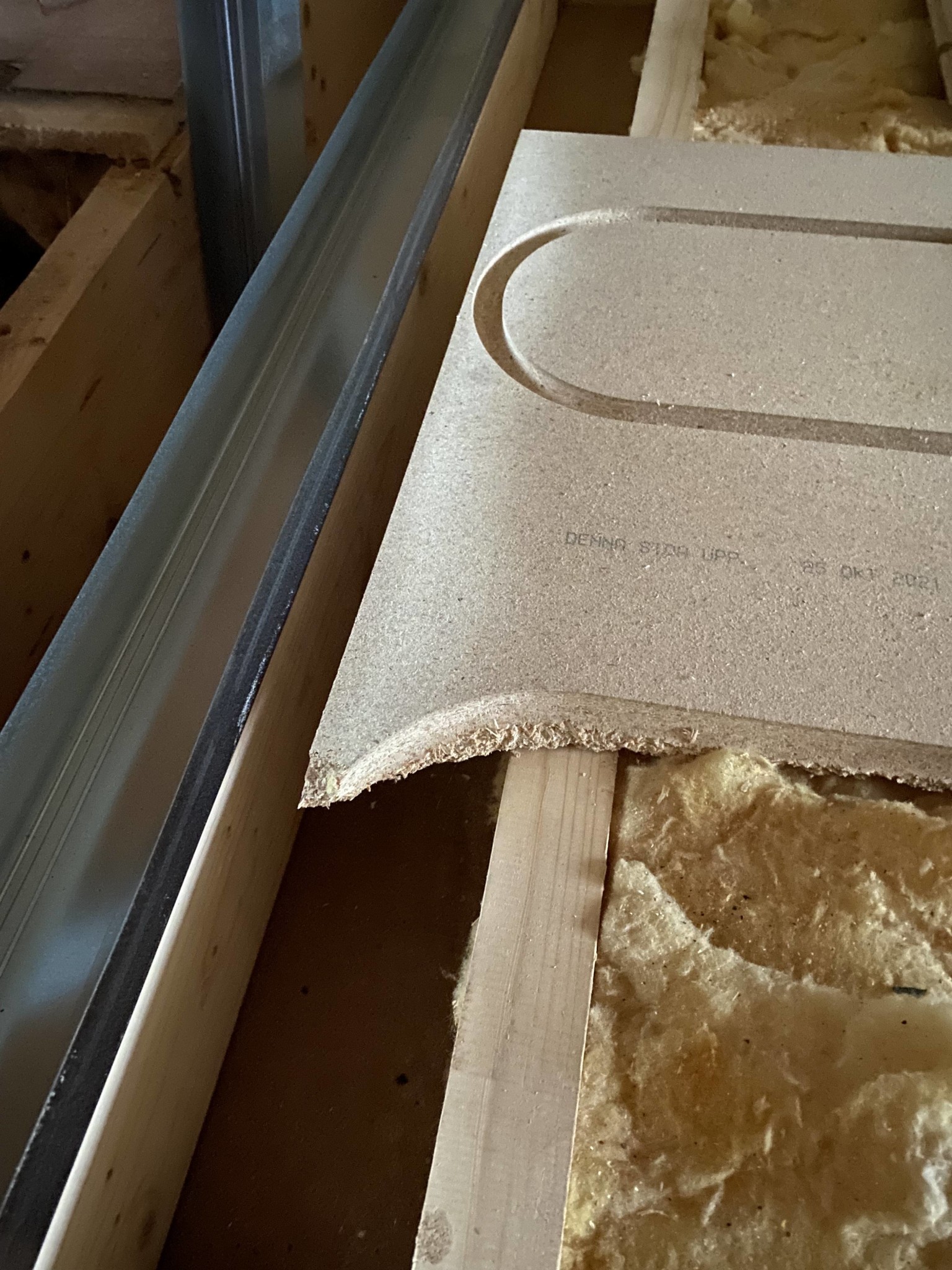
Question: Wondering now how I should attach the subfloor. On the studs (70mm) Plywood+drywall needs to go, so an extra 45mm stud attached to the side isn't enough. There isn't room to add another floor joist. Should I install noggings? Tall cabinets in the new kitchen will be placed next to the new wall, so some weight will be placed there.
-We have approximately 34cm cc between original floor joists.
-A new wall will be placed in the middle of them so I added an extra floor beam between two old ones.
Question: I'm wondering how to attach the floor particleboard. On the studs (70mm) plywood+gypsum should be attached, so an extra 45mm stud fastened to the side is still not enough. There isn't enough space to add another floor beam. Should I add noggings? Tall cabinets in the new kitchen will be placed next to the new wall, so some weight will be there.
Thanks!
[image] [image]
Or you could place a 45mm on the floor joist and let the particleboard go under the gypsum and plywood.
If it's a typical IKEA kitchen, the legs are typically 10 cm in, so no weight will be closest to the wall but likely right near the floor joist.
You attach a horizontal ledger to the finished wall that you then let the back edge of the tall cabinets rest on instead of using legs. This way, the cabinets are automatically aligned and the weight is supported by the wall and the front legs.
You should of course also stabilize the floor with noggings, but it won't be as critical.
A few battens under a lying 45x70 I would probably go for. The load should be minimal but it is still nice to have a continuous opportunity to screw the short side of the floor chipboard and avoid thinking about the placement of a bunch of battens in relation to the turns.
A few koteplings under a lying 45x70 I would probably go for. The load should be minimal but still nice to have a continuous option to screw the short side of the floor chipboard and not have to think about the placement of a lot of koteplings in relation to the turns
That sounds sensible; it also makes it easier to ensure everything is level. So the 45x70 is not attached to a joist, but on shortlings and lies just under the edge of the turning boards, right?
That sounds sensible; then it's also easier to ensure everything is horizontal. So, 45x70 is not attached to a joist, but on noggings and lies just below the edge of the turntables, right?
I would nog between the last old floor joist and the new one with the floor track on, and then also screw the horizontal 45x70 down into the noggings and also into the floor joist with the steel track on.
Feels unnecessarily troublesome to start messing with kortlingar. Can't you just do as mattoys wrote and put the rule under and go with the floor chipboard against the steel track and then place the plywood and gypsum on the chipboard?
I also want to point out that chipboards for flooring that end in the middle between CC and connect with the next one can support several hundred kg. The floorboards I have had a guaranteed stress tolerance of 400kg if the joint was in the middle between cc 600, and I don't think the conditions are worse here. My point is that you likely have little to risk even with a "lighter" measure, if you even do anything about it. It's not on the map that the weight will cause damage.
Am I the only one who reacts to the fact that the underfloor heating loop will be under tall cabinets? Not recommended to lay under fixed furniture according to the UFH systems we looked at when we installed it in the bedroom and bathroom.
Am I the only one reacting to the fact that the underfloor heating loop will be under tall cabinets? Not recommended installation under fixed furniture according to the underfloor heating systems we looked at when we installed underfloor heating in the bedroom and bathroom.
I have heard so many different things. The ones I bought from (golvvärmebutiken) said to lay under tall cabinets and kitchen islands
I have heard so many different things. The people I bought from (golvvärmebutiken) said to install it under tall cabinets and kitchen islands
Interesting, I bought from them too. However, I got everything laid out directly by LK but they don't sell directly to consumers, so I had to go through a store. I also checked with them as they seem to have good knowledge and support, and they said the same thing (note that they "didn't just agree" because the manufacturer said it, but said the same thing).




MVJK said:
I will explain this clearly: