
Hello,
I have a cover panel that I need to seal at the bottom so that moisture doesn't penetrate the chipboard. This is how it looks:
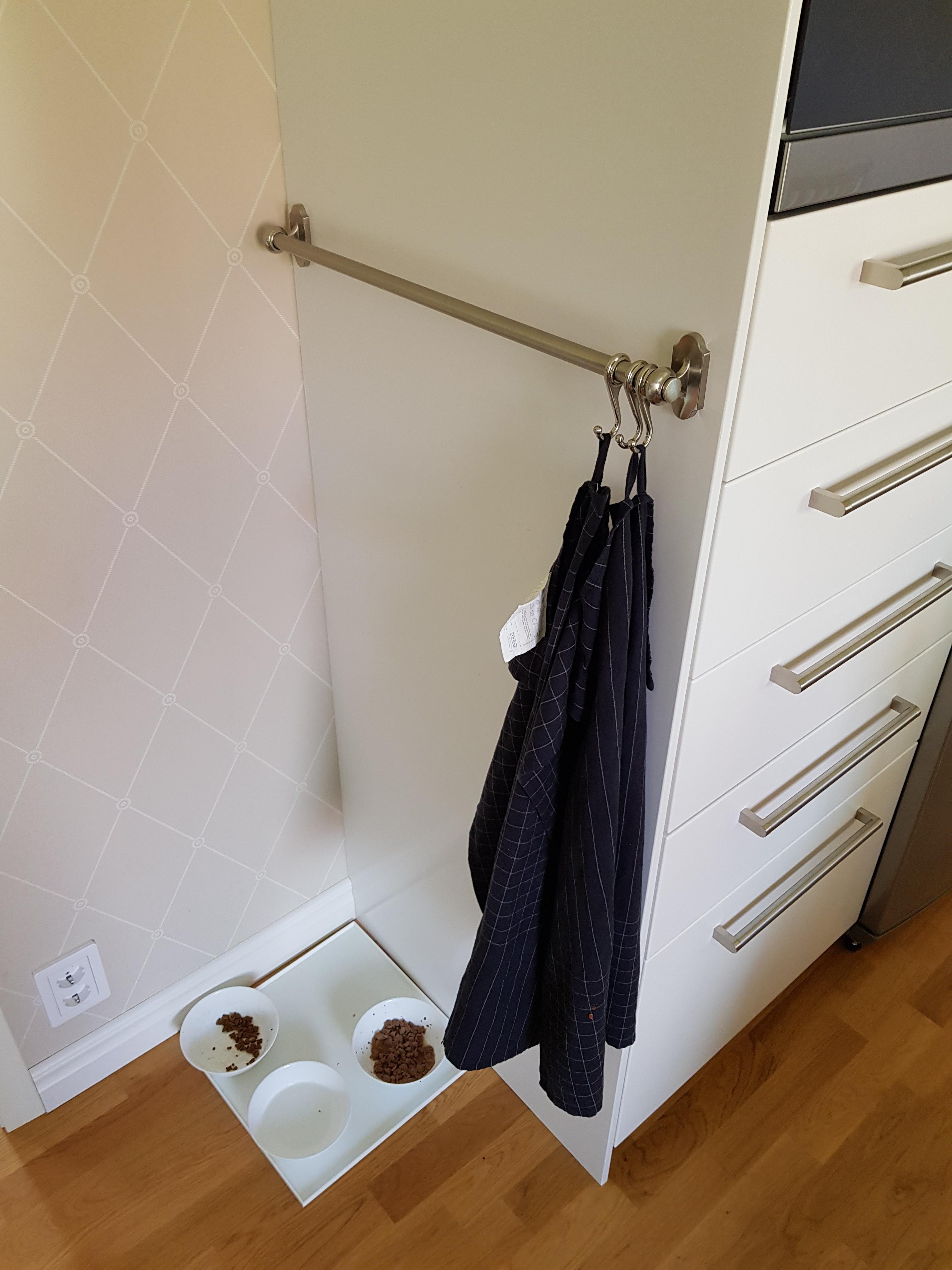
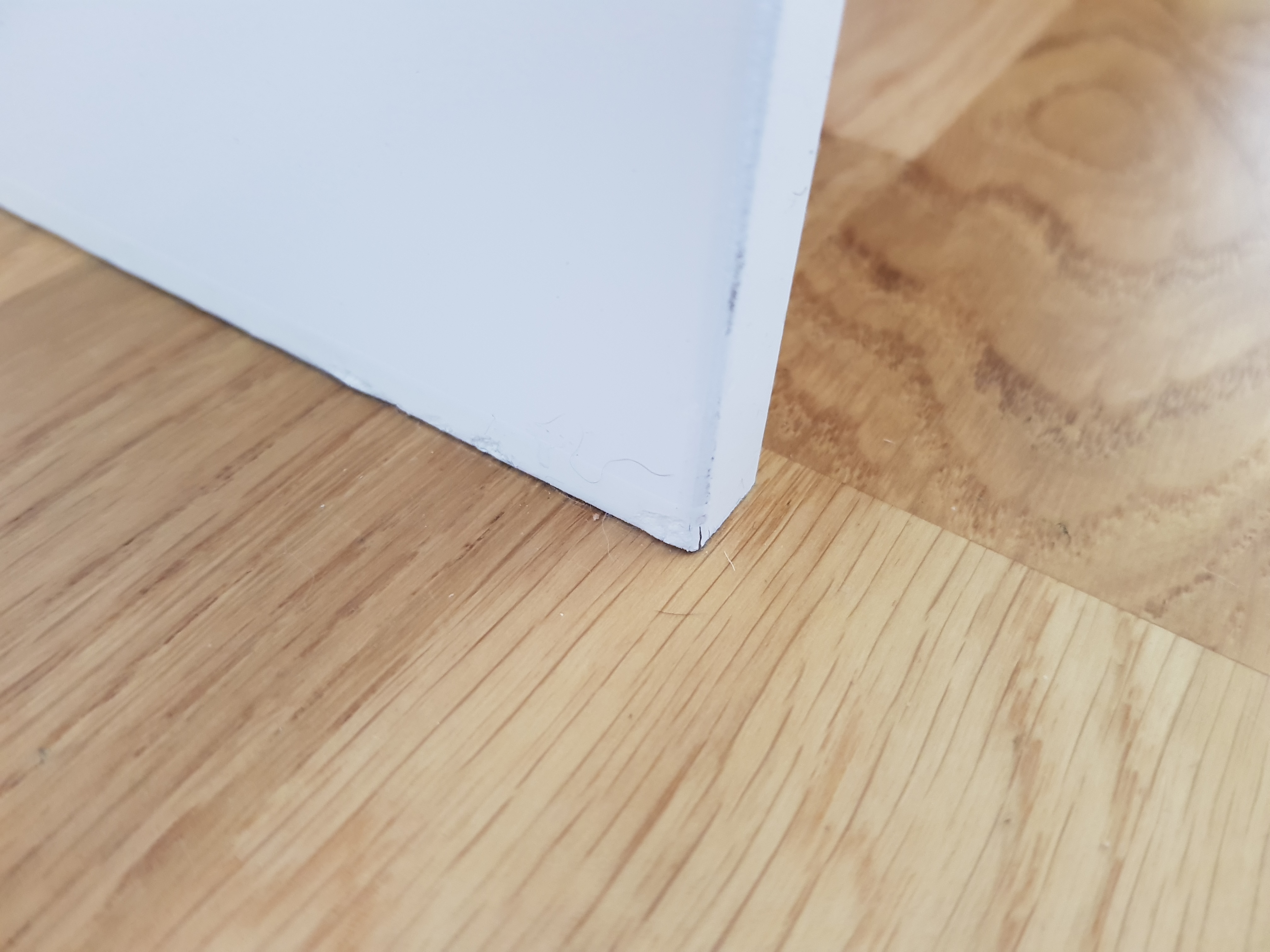
I have been suggested to place a white quarter round here with silicone (or in my case Tec7). What do you think about this and how do you make the finish look neat? Is it just a 45-degree miter cut that's required?
I have a cover panel that I need to seal at the bottom so that moisture doesn't penetrate the chipboard. This is how it looks:
I have been suggested to place a white quarter round here with silicone (or in my case Tec7). What do you think about this and how do you make the finish look neat? Is it just a 45-degree miter cut that's required?
No, it shouldn't crack if you get a good joint. Tape both the cabinet and the floor, apply silicone, remove the tape, spray soapy water, smooth out, neat and strong.S snowjim said:
However, I'm wondering if pure silicone might be better, as I guess Tec7 might collect dirt since it's paintable. I haven't worked with that specific one, so someone else will have to answer that.
Tec7 is surprisingly elastic and tough. Had to pry open a Tec7 cartridge today because they tend to dry up.TomasJor said:
Well, it shouldn't crack if you get a good joint. Tape both cabinet and floor, apply silicone, remove tape, spray with soapy water, smooth it out, nice and strong.
However, I'm wondering if plain silicone might be better instead, I guess Tec7 attracts dirt since it is paintable. Haven't worked with it myself, so someone else should answer that.
I started by putting 2 pieces of tape along the area, applied Tec7, used my finger to smooth it out, everything looked good. Slowly removed the tape along the floor, and immediately a really ugly edge formed. Recognized it very well from when I tried to get silicone right during the kitchen build. Tried to correct it afterward by dragging my finger again, but of course, then you get a lot on the floor, which was quite stubborn to remove.
Removed as much as I could and tried again, but this time I pulled the tape a little faster. Unfortunately, the same result. Had to fine-tune quite a bit before it started to look okay. However, if you look closely, it's grainy on the surface, probably dried a bit during the fine-tuning.
When I considered myself done, I noticed the floor actually flexes quite a bit, it will be interesting to see if this holds. In the worst case, I will have to apply a quarter round molding.
The reason I didn't use silicone was partly bad experience but also that I didn't have any at home.
Perhaps transparent would have been better.
Here are some pictures of the final result.
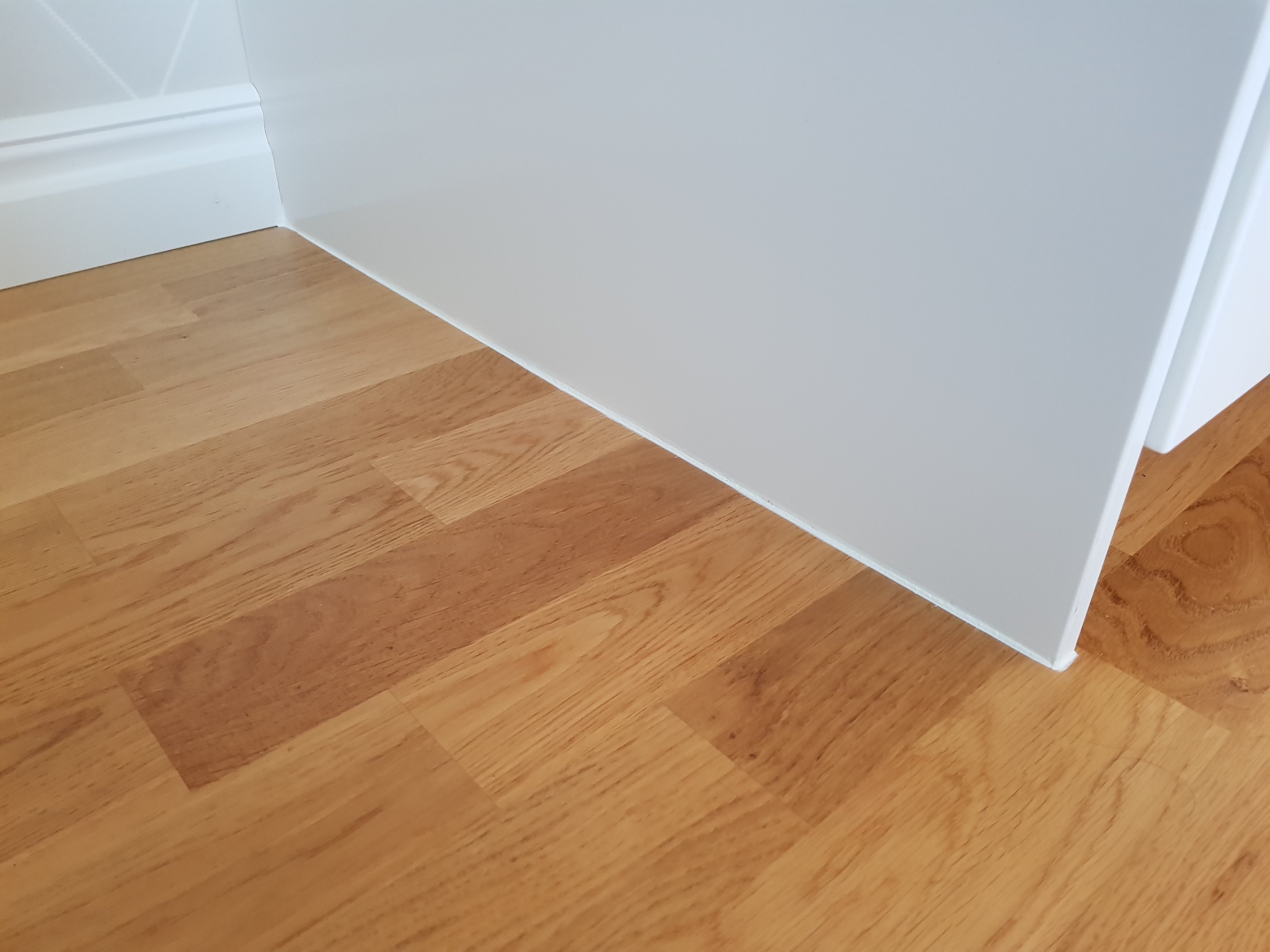
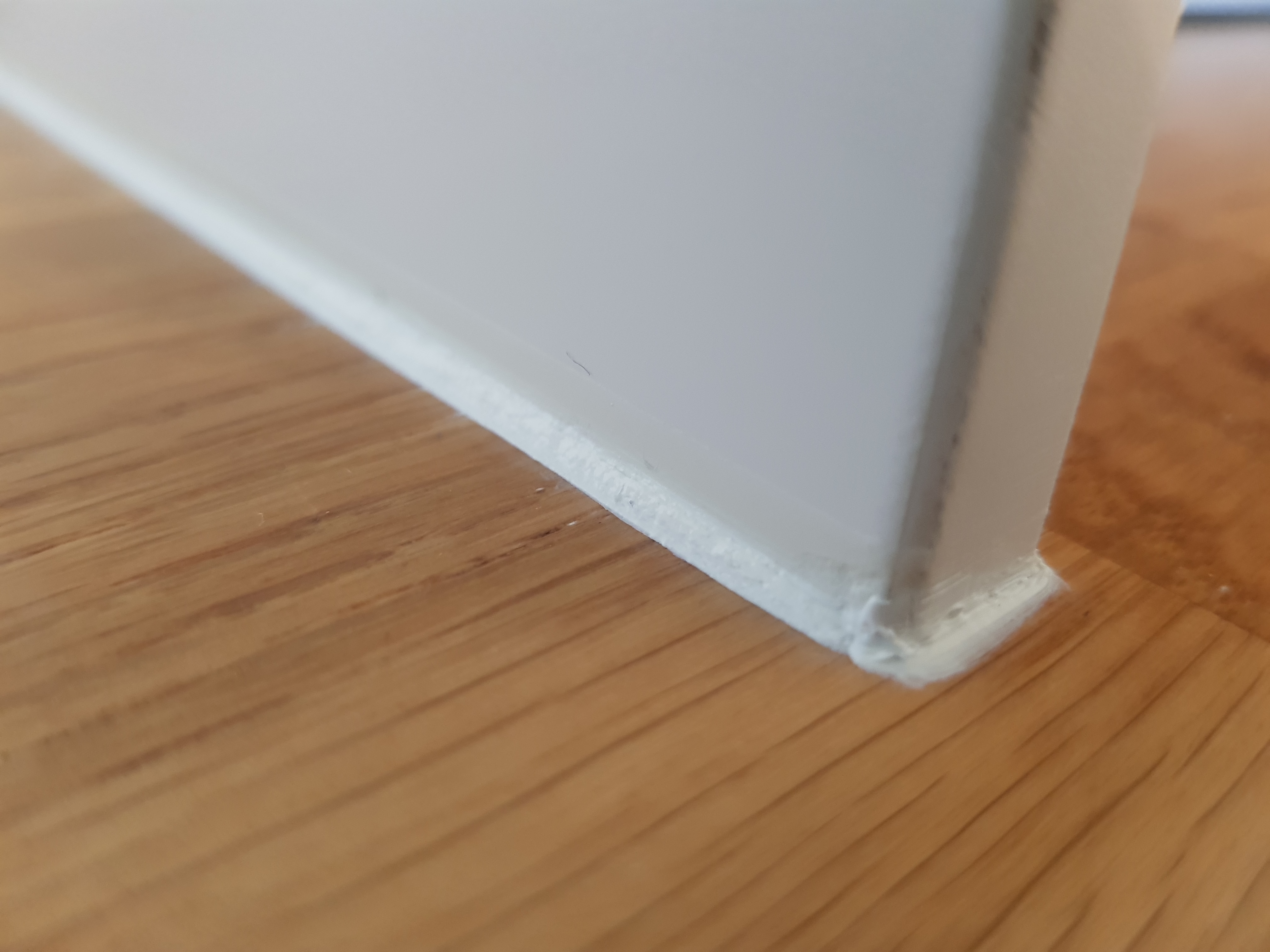
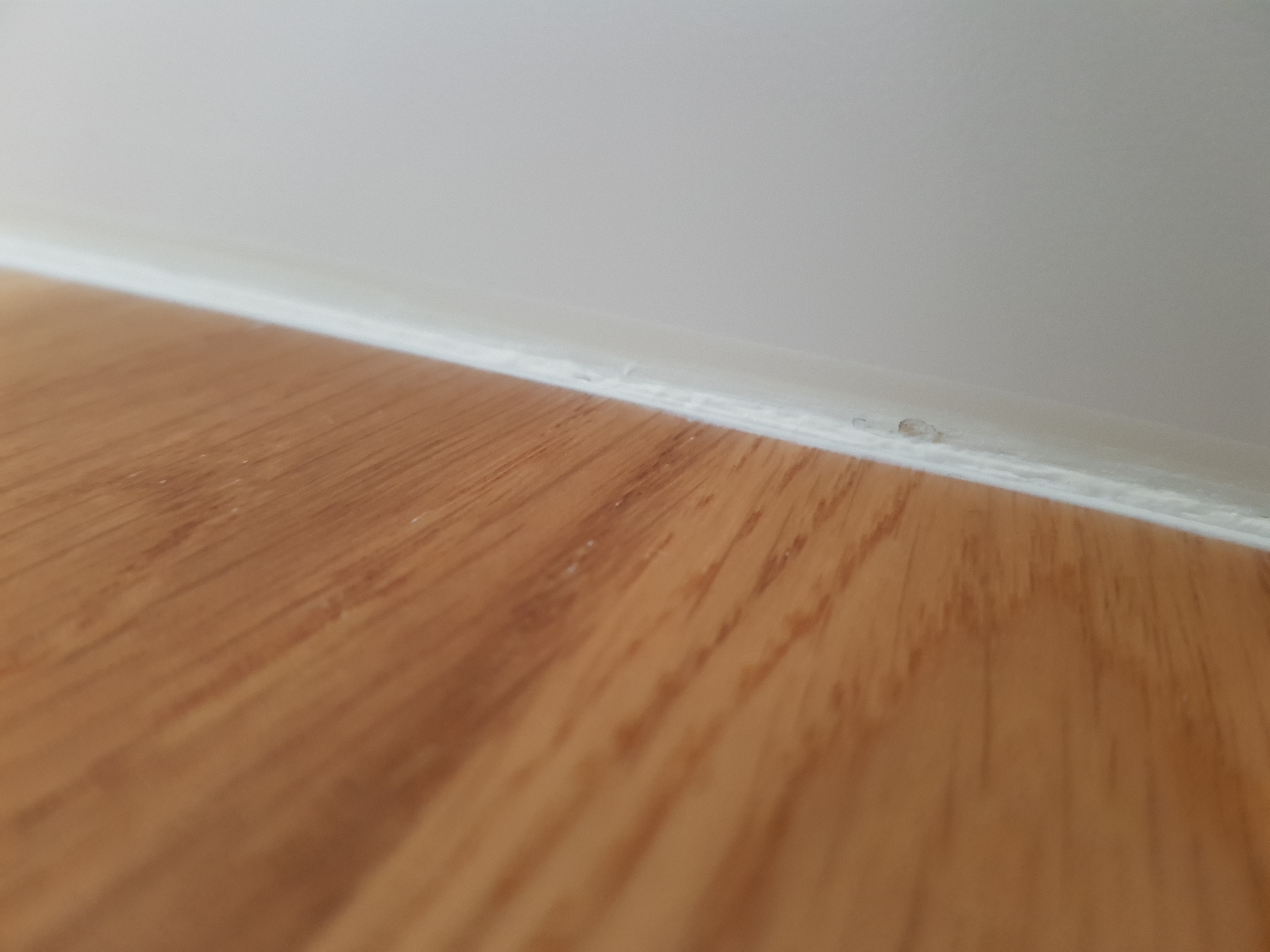
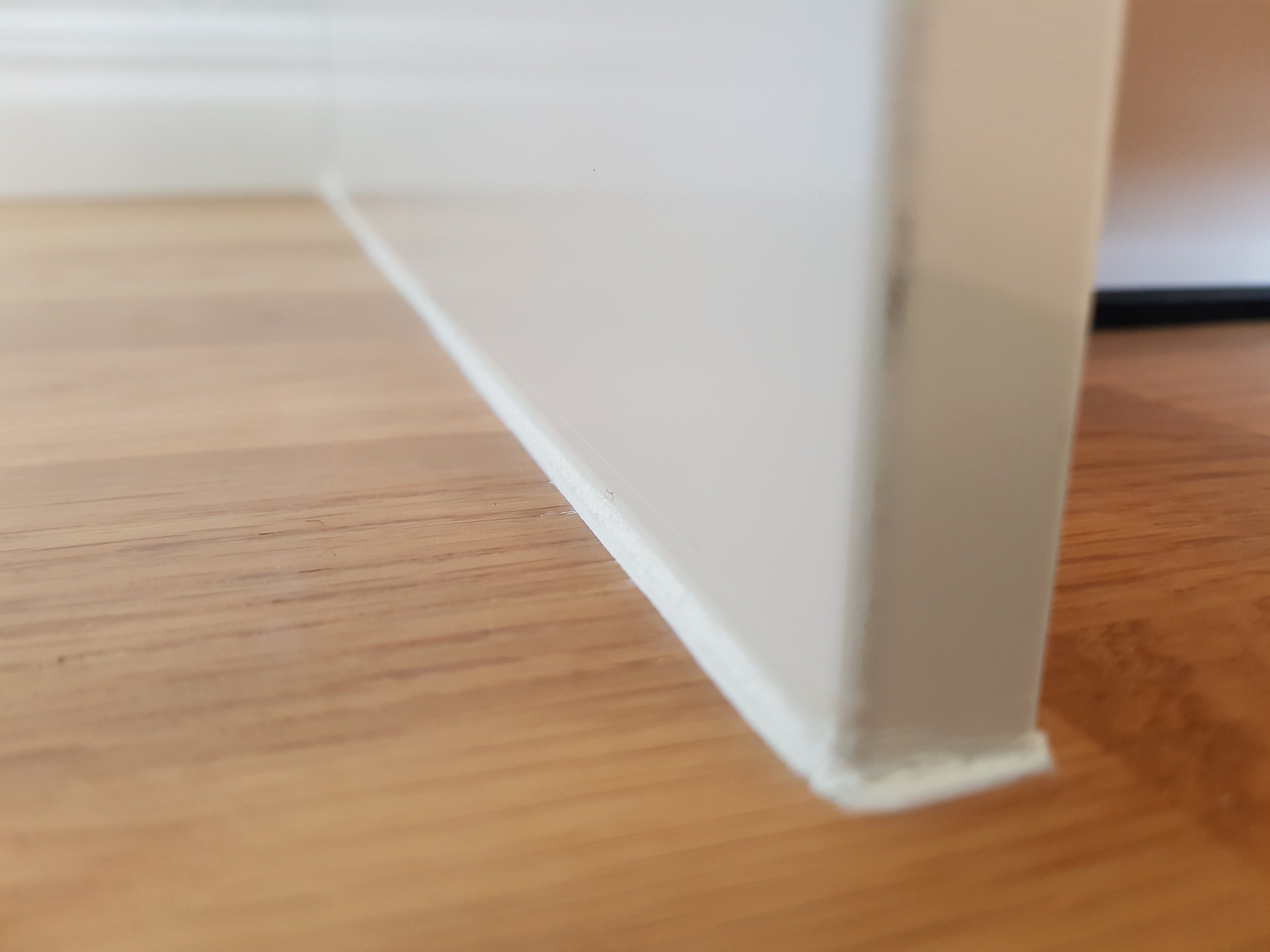
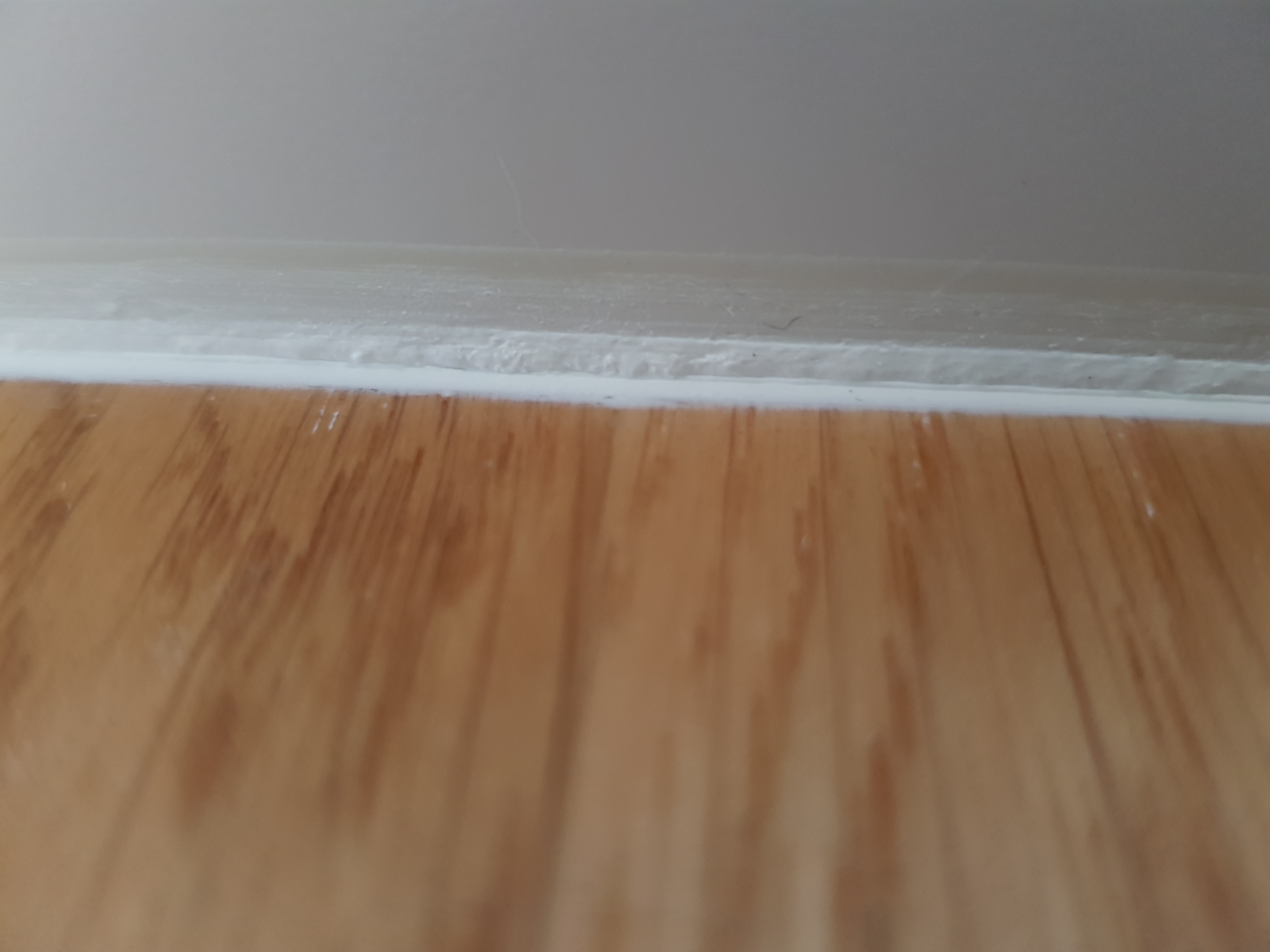
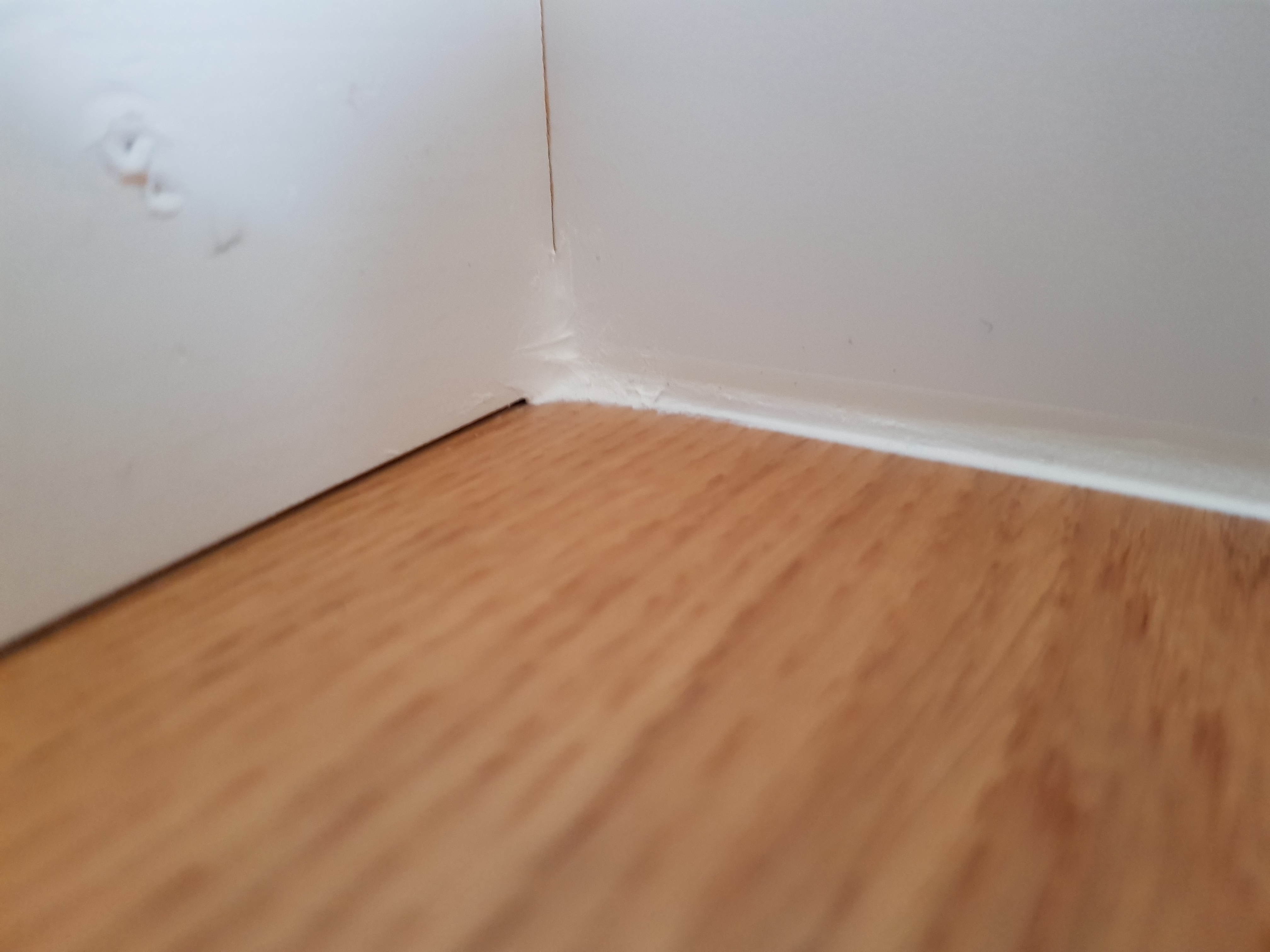
Is it something to be expected that it looks ugly when the tape is removed? However, when you spray on sopa and then spread it out, the sopa ensures that the material doesn't stick to surrounding areas, in this case the floor, when you spread it out one last time with your finger. Is this the right way to go?
Is it something to be expected that it looks ugly when the tape is removed? However, when you spray on sopa and then spread it out, the sopa ensures that the material doesn't stick to surrounding areas, in this case the floor, when you spread it out one last time with your finger. Is this the right way to go?
Aha, but when you remove the tape, the edge lifts up which becomes very ugly. But you mean that by having pulled it out with soap on your finger first, it makes it easier to pull it off again when the tape is gone without it getting on the floor and everything else?Janus82 said:
When taping, ensure to leave an unmasked strip that is exactly as wide as you want the soft joint to be. This means that exactly where the tape begins, the soft joint should end and be more or less 0 mm thick. This ensures that when you smooth the soft joint with your finger (dipped in soapy water), it will align well with the tape and not leave an ugly edge when removing the tape. The major advantage of the tape is that it's easy to apply too much sealant, which results in much of the sealant smudging onto the tape when you run your finger over it. Sometimes you may need to run your finger over it two or even three times to achieve a good look. All this smudging is protected by the tape.
If you still get an ugly edge when removing the tape, it's not a problem to run your finger once more to smooth the edge. Since you have already removed all the excess and achieved an almost perfect joint, there will be no extra smudging to mess up the floor or wall.
If you still get an ugly edge when removing the tape, it's not a problem to run your finger once more to smooth the edge. Since you have already removed all the excess and achieved an almost perfect joint, there will be no extra smudging to mess up the floor or wall.

You can probably pull out one last time after the tape is removed, but with a gentle touch then.
There are those who usually manage to get a pretty good result without any tape as well, but I don't belong to that category myself.

Click here to reply