
1,241 views ·
7 replies
1k views
7 replies
How to construct an intermediate floor with adequate sound reduction?
We are working on a major extension where the next step is to build up the intermediate floor. I'm stuck on what is a reasonable effort to ensure that the impact noise from the upper floor isn't disturbing and that conversations can be held without being heard on the second floor.
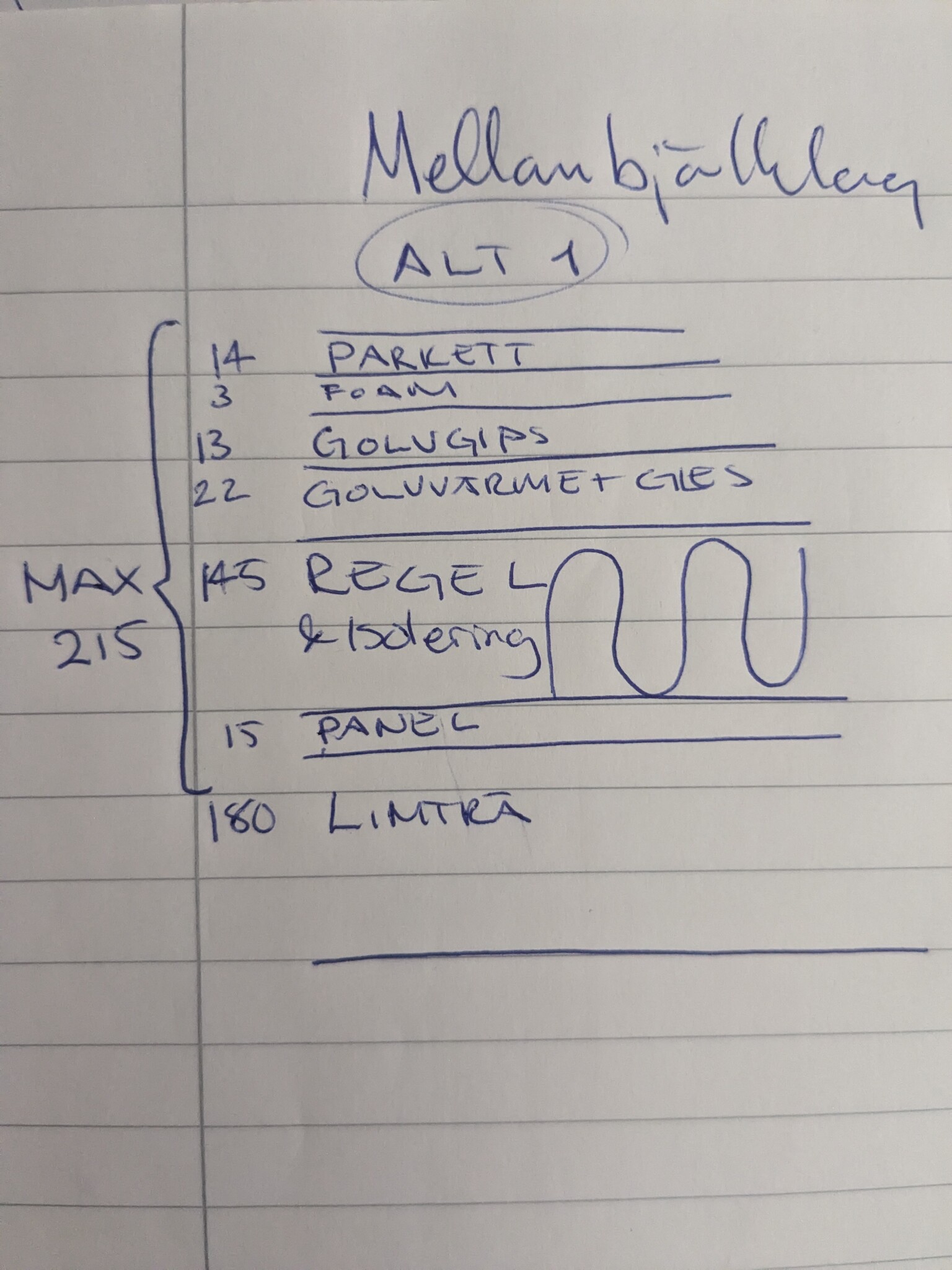
What is built is laminated wooden beams 180x90 which will be visible, and on top of that, paneling is laid which will be the visible ceiling between the beams.
My thought was to place joists 145x45 on the paneling where I can insulate with stone wool in full height between them. There are also ventilation ducts (flat, 100 high) and electricity will be routed between the joists. On top of the joists, I would lay battens 22x95 for underfloor heating (plates on and between are laid 20mm pipes), then floor gypsum to increase mass, and after that some form of floor foam for impact noise reduction before laying parquet. I have a maximum of 215mm to build above the laminated beams before they come closer than 600 from the glass's lower edge in the windows and finished floor height.
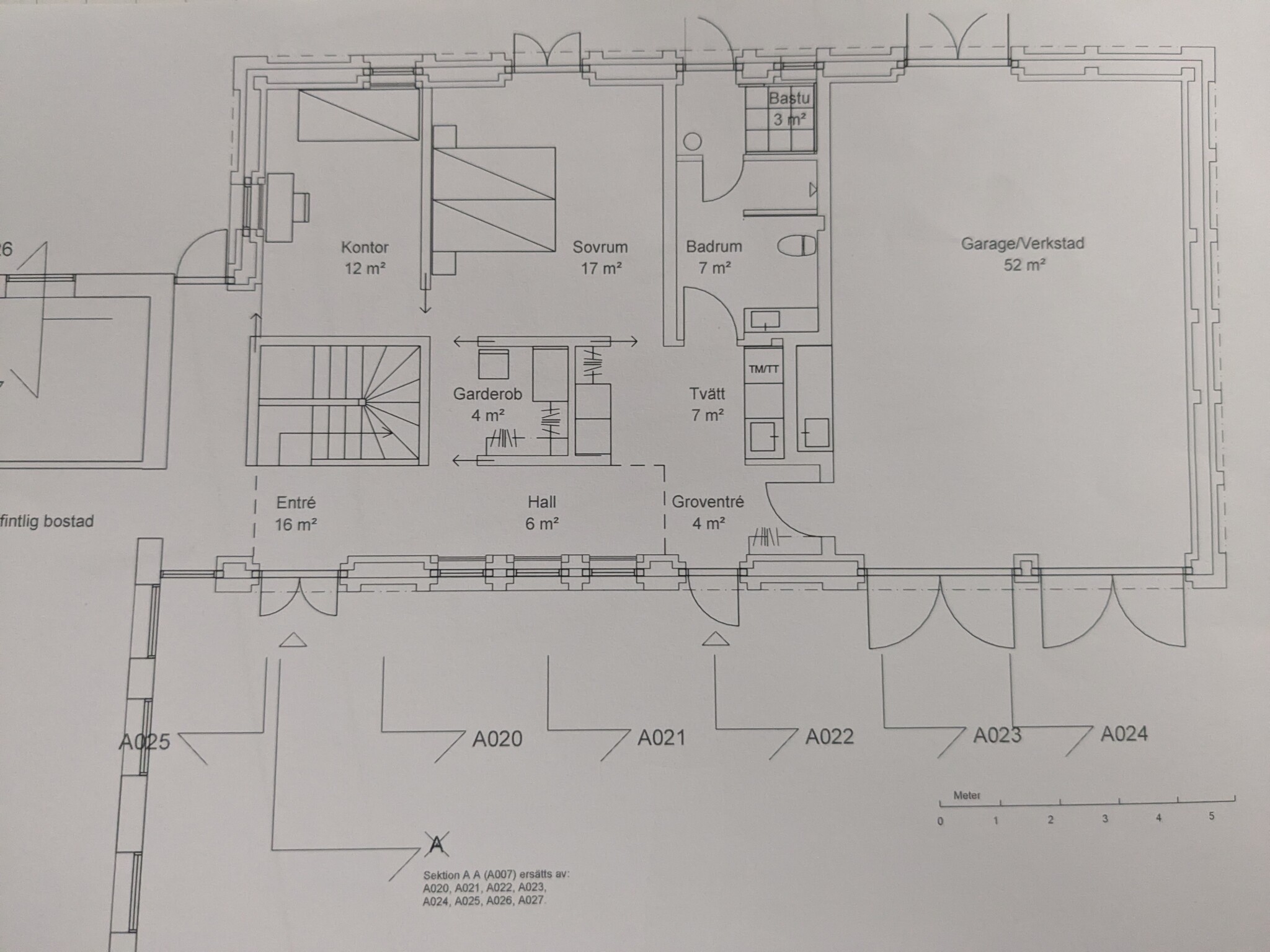
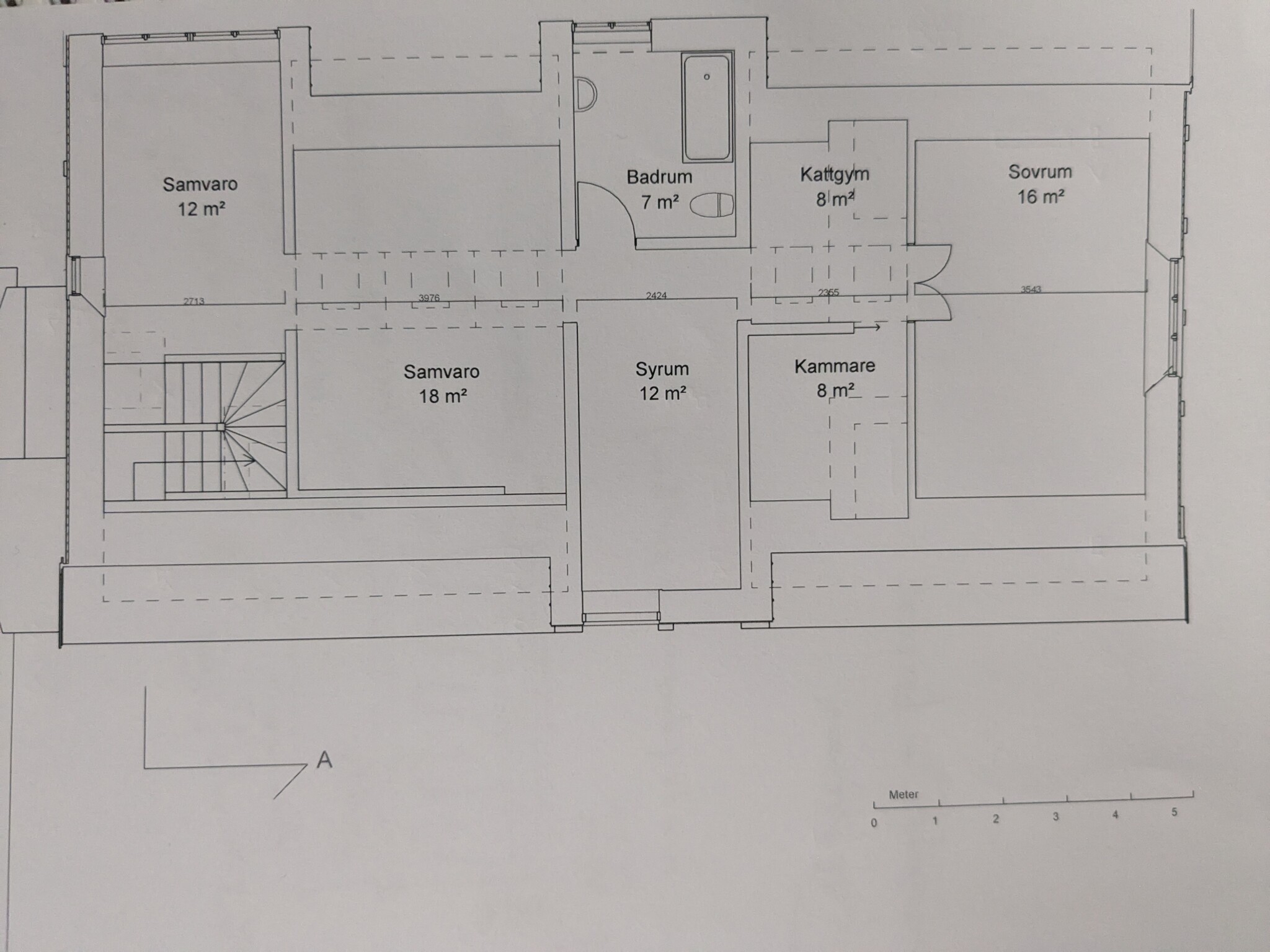
In my research, there seems to be a lot more to do, like placing Sylomer pads on the joists and then floating the subfloor instead of underfloor heating battens. Maybe it doesn't matter since there's quite an open layout on the upper floor and open down through the staircase. What do you think? The goal is that it shouldn't echo when walking, not be able to hear exactly what someone says, and not be a creaky structure. What do you who know more about this think, what is required of the intermediate floor to achieve this? Any other tips and adjustments you'd like to share?
What is built is laminated wooden beams 180x90 which will be visible, and on top of that, paneling is laid which will be the visible ceiling between the beams.
My thought was to place joists 145x45 on the paneling where I can insulate with stone wool in full height between them. There are also ventilation ducts (flat, 100 high) and electricity will be routed between the joists. On top of the joists, I would lay battens 22x95 for underfloor heating (plates on and between are laid 20mm pipes), then floor gypsum to increase mass, and after that some form of floor foam for impact noise reduction before laying parquet. I have a maximum of 215mm to build above the laminated beams before they come closer than 600 from the glass's lower edge in the windows and finished floor height.
In my research, there seems to be a lot more to do, like placing Sylomer pads on the joists and then floating the subfloor instead of underfloor heating battens. Maybe it doesn't matter since there's quite an open layout on the upper floor and open down through the staircase. What do you think? The goal is that it shouldn't echo when walking, not be able to hear exactly what someone says, and not be a creaky structure. What do you who know more about this think, what is required of the intermediate floor to achieve this? Any other tips and adjustments you'd like to share?
It looks good in your construction, even if 45x145 is very weak for a floor joist, but I understand that you don't have space for higher joists.
The only thing I see that can be improved is a soundproofing mat that is used more and more nowadays. It replaces your foam under the parquet.
I would go for 5mm or thicker for some sound dampening.
https://www.imex.se/golvakustik/timbertech-tt-5mm
The only thing I see that can be improved is a soundproofing mat that is used more and more nowadays. It replaces your foam under the parquet.
I would go for 5mm or thicker for some sound dampening.
https://www.imex.se/golvakustik/timbertech-tt-5mm
The 145 rule is the one on the 180 beam which constitutes the floor structure. 145 is for installation space and insulation since those that are 180 should be visible, and therefore we can't fill those spaces with insulation.
Thanks for the tip about the soundproofing mat! Any particular reason why you recommend this variant?
Thanks for the tip about the soundproofing mat! Any particular reason why you recommend this variant?
Rejäl said:Your construction looks good, although 45x145 is very slender for a floor structure, but I understand you don't have room for taller beams.
The only thing I see that could improve is a soundproofing mat, which is being used more and more these days to replace your foam under the parquet flooring.
5mm or thicker is what I would go for, to dampen sound a bit.
[link]
Just that we have used it, but there are surely other brands as well. But foam and lumpapp are not the same...VillaCamilla said:
The 145 rule is the one on the 180 beam that makes up the framework. 145 is for installation space and insulation since the 180 ones should be visible, and thus we cannot fill those sections with insulation.
Thanks for the tip about the impact sound mat! Any particular reason why you recommend this variant?

What is the span that you have, as mentioned, 45x145 is very thin. Can you not place the studs on the side of your glulam beams to accommodate thicker studs? It's possible to notch them partially if desired.
Did you check the cost per square meter when you bought it? I couldn't find a price when googling.Rejäl said:
Do I understand correctly that grålumppapp, foam, and impact sound mats are all aimed at reducing impact noise and you only use one of these? And that in the listed order, it goes from the cheapest to the most expensive solution?
No, lumpapp hardly provides any impact noise reduction effect and foam might give a slight percentage compared to the one I linked to you.Did you check the cost per sqm when you bought it? Couldn't find a price when googling.
Do I understand correctly that grålumppapp, foam, and stegljudsmatta are all intended to reduce impact noise and that you only use one of these? And that in the listed order it goes from the cheapest to the most expensive solution?
Instead, foam and the lumpapp are used because it's a floating floor and should allow the parquet to move without wood-to-wood sound.
Also, keep in mind that you need to have age-resistant plastic sheeting when you have water-borne underfloor heating.
Click here to reply