
3,176 views ·
8 replies
3k views
8 replies
How to connect the building plastic to a fully bricked gable?
We are planning to build a structure with leca blocks, and on the long walls, we will sandwich the construction plastic between the wall and the wall plate. But on the gables, it's a bit problematic. We have a cold roof space. The rafters are not exactly glued against the gable wall, and construction foam seems like a Plan B solution. I was considering placing a sill insulation against the wall, then the plastic, and clamping it against the wall with a beam screwed to the wall.
Isn't there a better solution?
Isn't there a better solution?
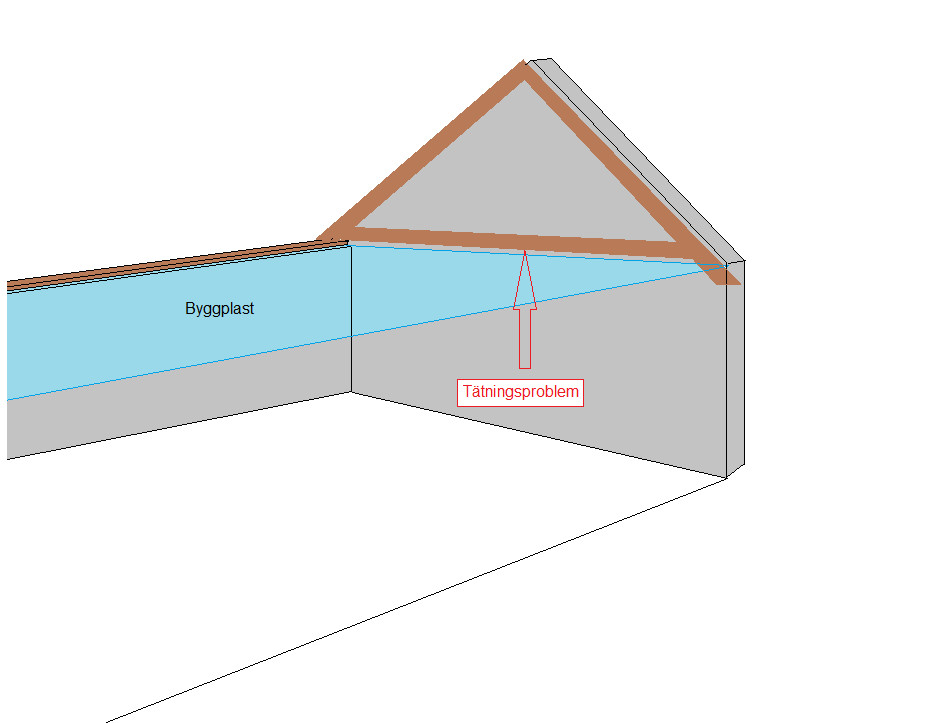

Are you going to have any interior walls or just brick and plastic?
Hi Daniel!S DanielF said:
I’m in the process of building a house with Ytong and facing the same problem. The only difference for me is that the rafters are open up to the ridge and lack a collar beam downwards. How did you go about solving this? I'm also considering doing as with the wall plate, where the plastic is clamped between the wall and the wall plate. Did you come up with anything sensible?
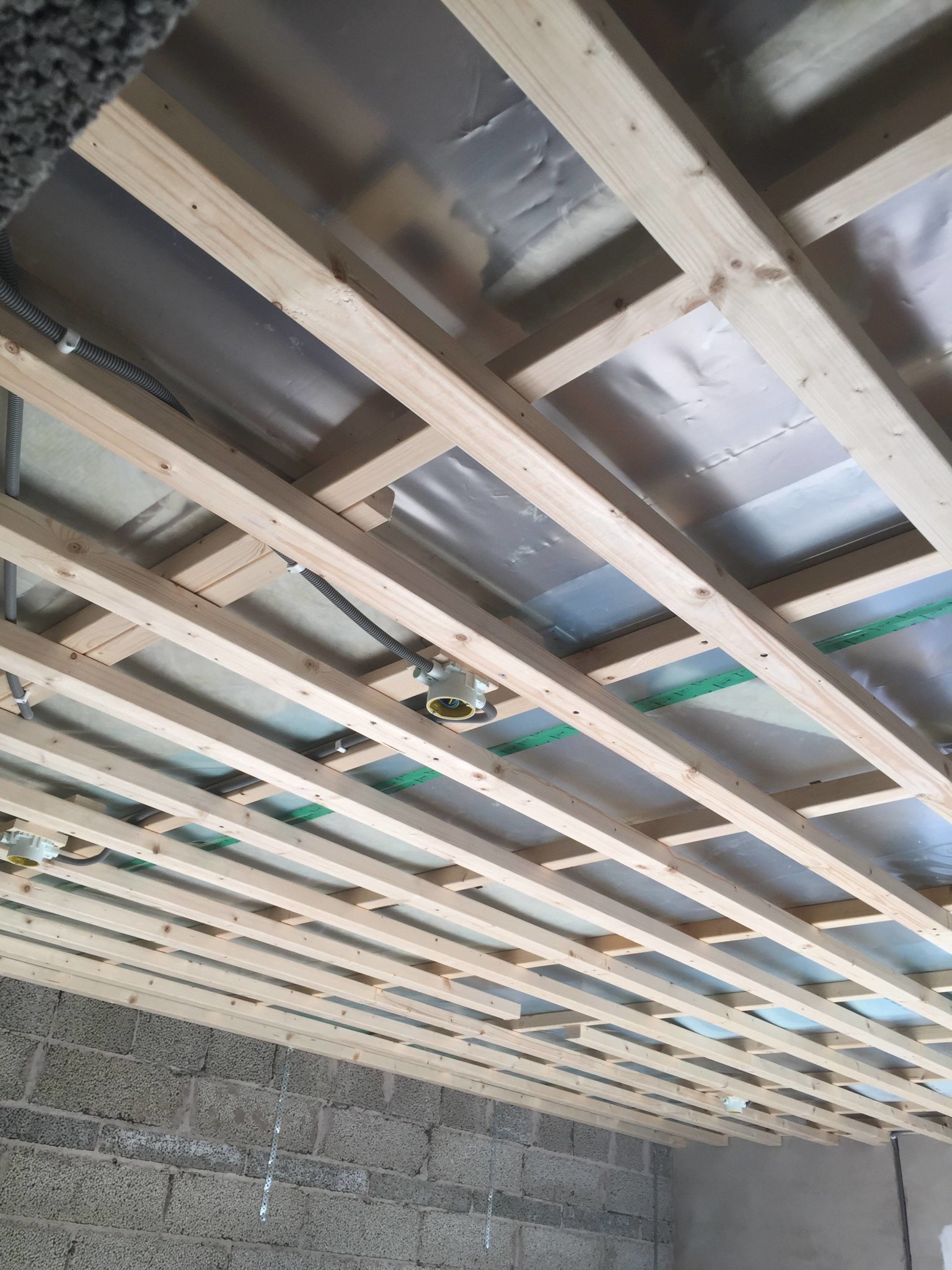
If you look at the pictures, I started applying construction foam from above, and if you look closely, I first have a 45x45 stud up against the rafter that clamps the plastic before I battened up with 45x70 studs for the ceiling.T Ted Hörman said:Hi Daniel!
I am building a house with Ytong and facing the same problem. The only difference for me is that the roof trusses are open up to the ridge and lack a collar tie downwards. How did you solve this? I am also considering doing it like at the wall plate, where the plastic is clamped between the wall and the wall plate. Did you come up with something sensible?
The 45x45 stud that was at the gable wall I screwed into the wall first with the plastic around the stud and then I had pressed out a lot of sealant on the wall before screwing it in place. Hard to explain.
Then the plaster ceiling is painted, edges are sealed, and plastered with two layers of gypsum. All ceiling boxes are sealed to be tight at the penetrations. Should moisture come up and travel to this problem area, it goes on the outside of the stud towards the wall and not through the insulation.
I also have ventilation in the building, so I see no problems with the solution.
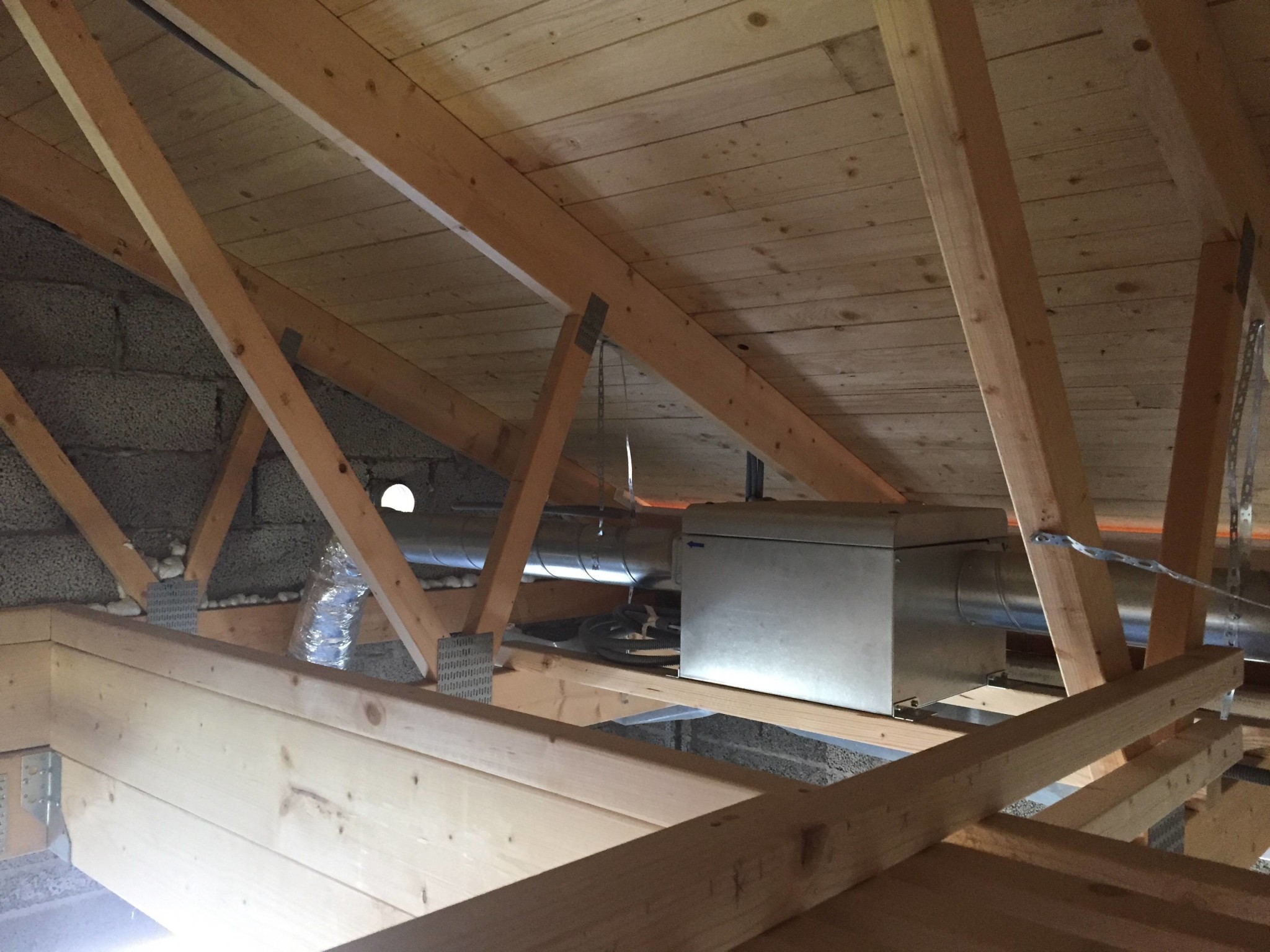
It looks like a good solution! I will attach the glrs (28x70) directly to the rafters, so I don't have the space to make the same solution you did with the 45x45 rule. But I was considering clamping the building plastic between the rafter and the wall, similar to what I did under the hammer beam, and then sealing with foam from above as you did.
Do you think it won't have the same effect, with the foam holding the rafter and wall together, preventing independent movement? However, the foam might allow more movement than screws or bolts.
Have you noticed any cracking or anything like that?
Do you think it won't have the same effect, with the foam holding the rafter and wall together, preventing independent movement? However, the foam might allow more movement than screws or bolts.
Have you noticed any cracking or anything like that?
Click here to reply