
32,179 views ·
22 replies
32k views
22 replies
How to build a "thick post" for the patio railing?
I am attaching an image so you can understand better what I mean.

I assume that a 200x200mm type square post hasn't been found and used in the fence. How do you build like that? If you take outer panel type 21x195 and nail it together into a square, it's probably not very durable? Do you still do that and fill it with something???
Now you have the chance to teach me something new! d^_^b
I assume that a 200x200mm type square post hasn't been found and used in the fence. How do you build like that? If you take outer panel type 21x195 and nail it together into a square, it's probably not very durable? Do you still do that and fill it with something???
Now you have the chance to teach me something new! d^_^b
200mm is the same as eight inches.
Post, 8 inches goes to buy.
Cut and sold a number. They are not cheap though.
Then it was about construction.
Fencing requires no physical durability, oil a bunch of boards and nail them together....
After 15 - 20 years they droop, replace.
Post, 8 inches goes to buy.
Cut and sold a number. They are not cheap though.
Then it was about construction.
Fencing requires no physical durability, oil a bunch of boards and nail them together....
After 15 - 20 years they droop, replace.


I might be mistaken, but as you write above, "so a 95x95 post to start with," I can't make sense of it? Not without trimming down a bit and nailing on extra layers of boards, at least?
One would ideally start with a 145x145 (or if you find a 150x150) post and clad it with 21(e.g. preferably 25)x170(e.g. preferably 175 if found)? Then you should get a post that is 200x200 without having to trim down boards and fuss if I'm not mistaken.
But if it's not a load-bearing structure, a massive post seems unnecessarily heavy and stable? I might consider making it hollow with, say, 4 pieces of 45x145 to still get a solid post that's 190x190. If you use planed timber, it will realistically be a bit smaller since you might want to plane down a few mm to properly remove the joints.
A post made from 4 pieces of 21x170 should actually also be quite stable if properly put together, and if you use chamfered timber, you might get slightly nicer joints than with planed (less planing needed to achieve a neat joint).
One would ideally start with a 145x145 (or if you find a 150x150) post and clad it with 21(e.g. preferably 25)x170(e.g. preferably 175 if found)? Then you should get a post that is 200x200 without having to trim down boards and fuss if I'm not mistaken.
But if it's not a load-bearing structure, a massive post seems unnecessarily heavy and stable? I might consider making it hollow with, say, 4 pieces of 45x145 to still get a solid post that's 190x190. If you use planed timber, it will realistically be a bit smaller since you might want to plane down a few mm to properly remove the joints.
A post made from 4 pieces of 21x170 should actually also be quite stable if properly put together, and if you use chamfered timber, you might get slightly nicer joints than with planed (less planing needed to achieve a neat joint).
Sure, I understand that a ready 200x200 can be ordered, but since a pressure-treated 95x95 costs 47:-/meter at Byggmax, I think it will likely be too expensive to order about 15 meters of 200x200...
If I start with a 95x95 post and clad it with 21x195, should I place the post in a corner of the 21x195 construction? Otherwise, it becomes about 174x174 inside...
Now the posts don't need to be exactly 200x200, that was just an example and approximate. And it’s not load-bearing in any way. It's a shame that structural timber is now always (?) planed round on the edges; I don't own a jointer, but otherwise, of course 45x145 would have been a solution (they cost 24:-/meter at Byggmax = 115:-/post at 120cm, an "empty" 21x195 costs 20:-/meter = 96:-/post at 120cm which is roughly the same price even though it takes about 13 posts.).
If I start with a 95x95 post and clad it with 21x195, should I place the post in a corner of the 21x195 construction? Otherwise, it becomes about 174x174 inside...
Now the posts don't need to be exactly 200x200, that was just an example and approximate. And it’s not load-bearing in any way. It's a shame that structural timber is now always (?) planed round on the edges; I don't own a jointer, but otherwise, of course 45x145 would have been a solution (they cost 24:-/meter at Byggmax = 115:-/post at 120cm, an "empty" 21x195 costs 20:-/meter = 96:-/post at 120cm which is roughly the same price even though it takes about 13 posts.).

Diversearbetare
· Göteborg
· 11 340 posts
It might also be an idea to look at glulam beams that are glued together. 4 pieces of 90x90 become 180x180. These are fairly cheap, nice looking, and durable if you paint them.
Apologies if I was unclear, but the post 95X95 can remain there as a load-bearing structure. On it, you screw some beams at the top, bottom, and middle (horizontally). The beams should be long enough to form the measurement you're aiming for (200mm) minus the thickness of the cladding. Outdoor plywood 12 mmX2 = 24mm - 200mm = 176mm. On the other two sides, you screw into the ends of the beams and glue against the other edge of the plywood. This is one way. But in the image you're showing, would these "posts" be some decorative carpentry on site? I doubt it, they are probably available for purchase in ready-made pieces. Check with the house manufacturer.
ps, beams to use 45X70mm
ps, beams to use 45X70mm
Knetha, this is a job, not something done in 2 red seconds. I do such jobs, and one has to have the sawing setup assembled, = nothing strange in other words, but it takes time. That is why you don't see such posts for railings, it becomes too expensive to have someone manufacture such. But it is certainly feasible to make them yourself. The posts that exist on the house you show are spray-painted, and to get close to those, you should use plyfa, which provides a finished substrate for spray-painting. If you use plyfa (available at well-stocked hardware stores) I think you can manage the entire project with a 6mm thickness. No offense meant with "snickarglädje" (woodworking pleasure), I meant that it was advanced if built on site, and costly.
Last edited:
Raising the thread a bit 
I'm going to set up railing posts at 120mm. I had them cut at the sawmill from solid wood last fall. A bit cracked, but the worst part was that they were cut into a rhombus shape, and it's not easy to fit the top rails nicely without gaps (they don't sit on top but "go into" the post). I can't be bothered to go back and complain to this small supplier, it's not worth it. Now I'm going to do it myself!
So now I'm looking at assembling something. I only have access to a Festool TS55, with a maximum cutting depth of 45mm including the guide rail. I can't change the dimensions of the posts since I've cut the top rails, etc., to 120mm.
My thought was to use two 145x45 studs that I've trimmed a bit on the sides to 120mm width, and then 30mm wood on the sides (45+30+45 = 120), so it will be hollow but that doesn't matter from the outside.
Just need to make sure the 145s are dead straight and don't warp. Are there any better suggestions?
/A
I'm going to set up railing posts at 120mm. I had them cut at the sawmill from solid wood last fall. A bit cracked, but the worst part was that they were cut into a rhombus shape, and it's not easy to fit the top rails nicely without gaps (they don't sit on top but "go into" the post). I can't be bothered to go back and complain to this small supplier, it's not worth it. Now I'm going to do it myself!
So now I'm looking at assembling something. I only have access to a Festool TS55, with a maximum cutting depth of 45mm including the guide rail. I can't change the dimensions of the posts since I've cut the top rails, etc., to 120mm.
My thought was to use two 145x45 studs that I've trimmed a bit on the sides to 120mm width, and then 30mm wood on the sides (45+30+45 = 120), so it will be hollow but that doesn't matter from the outside.
Just need to make sure the 145s are dead straight and don't warp. Are there any better suggestions?
/A
Diversearbetare
· Göteborg
· 11 340 posts
There is glulam 140x135 that you could use after some dimension adjustments.
Last edited:
Interesting, hardly likely to get hurt anyway.
The question is how to manage with only a 55 mm plunge saw, though. Hand-re-sawing with a crosscut saw feels a bit tedious, even if we're only talking about three 1-meter lengths, indeed.
The question is how to manage with only a 55 mm plunge saw, though. Hand-re-sawing with a crosscut saw feels a bit tedious, even if we're only talking about three 1-meter lengths, indeed.
Last edited:
Diversearbetare
· Göteborg
· 11 340 posts
Bigger saw, go to a carpentry shop, or rent a machine. I vote for option 2. Make sure the protective plastic stays on so they know the timber is free from dirt and debris.Alko said:
Keep in mind that glulam is made of spruce wood, so you need to be meticulous with priming and finish painting. Especially on the top and bottom parts of the cut joint. Oil is not ideal because it's both spruce and compact, classified timber. It doesn't penetrate more than a fraction of a millimeter. Better to be thorough with surface treatment.


Thanks for the tips! I hadn't considered the difference between spruce and pine in terms of the pre-treatment. I'm using a solvent-based system (Alcro Classic) so I'll be oiling anyway, but they shouldn't need to stand in oil overnight as sometimes done with panel and fence slats etc...
Interesting approach to join 45x70 in that way, but I'll end up planing or ripping (before screwing) anyway because of the chamfer in the timber (or you could just ignore it...). And then you're down to 110x110. The post placement is determined with little margin, so preferably 120x120.
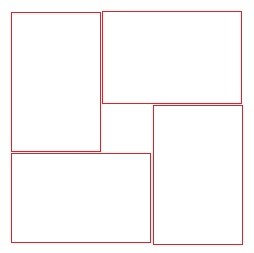
Interesting approach to join 45x70 in that way, but I'll end up planing or ripping (before screwing
) anyway because of the chamfer in the timber (or you could just ignore it...). And then you're down to 110x110. The post placement is determined with little margin, so preferably 120x120.