
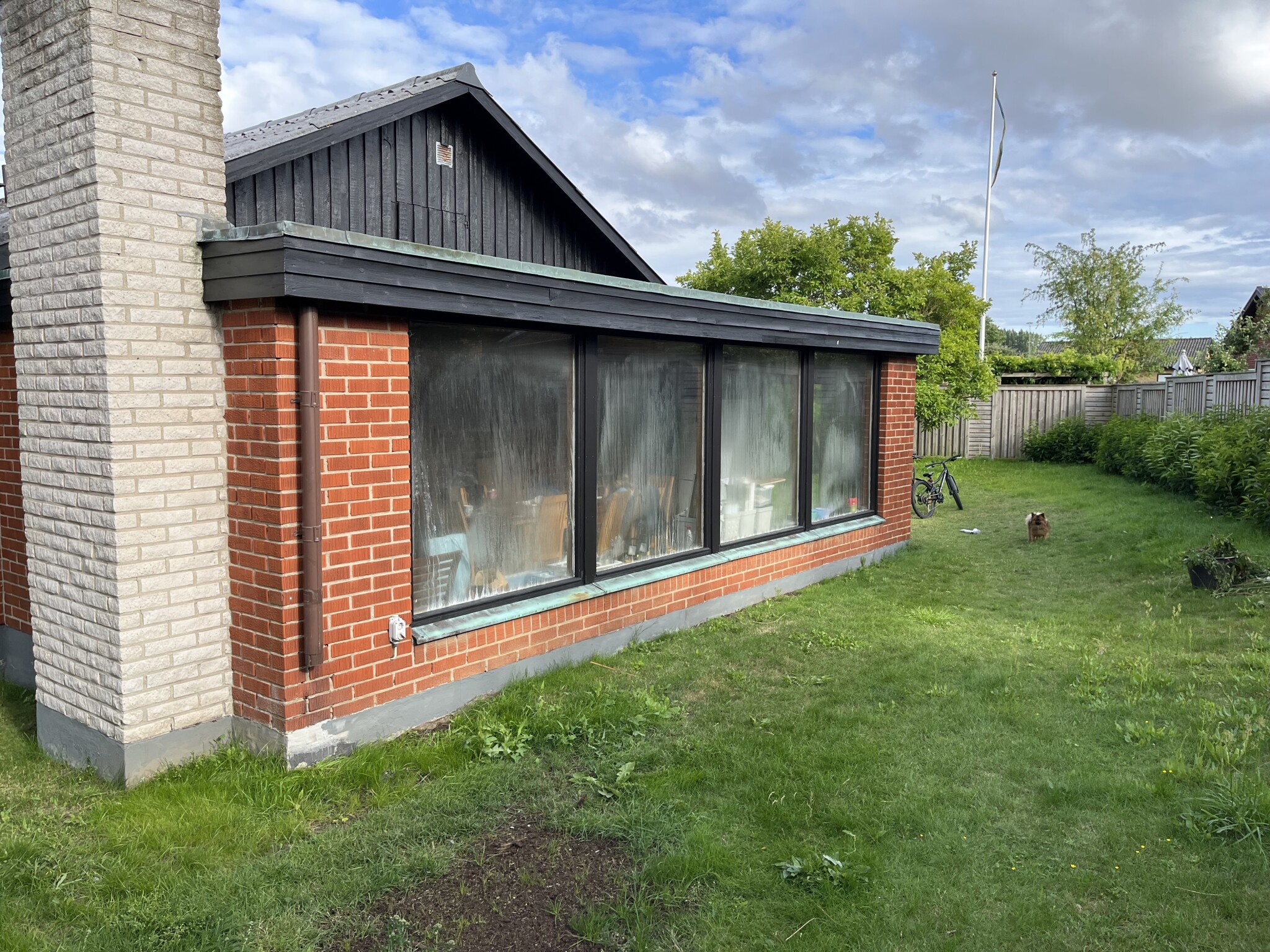
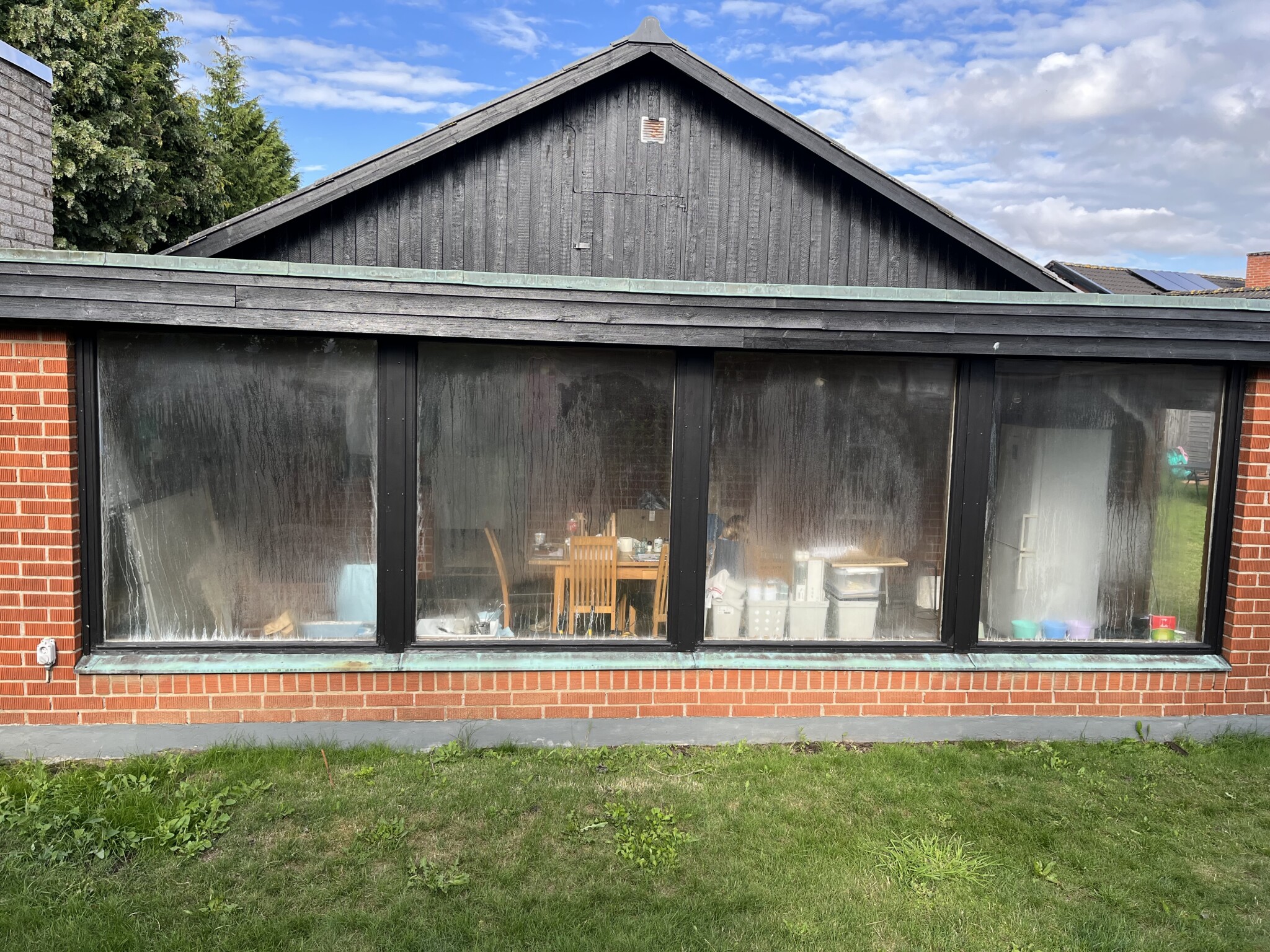
We are in the process of building up this room and improving insulation to be able to use it year-round. (As a dining room)
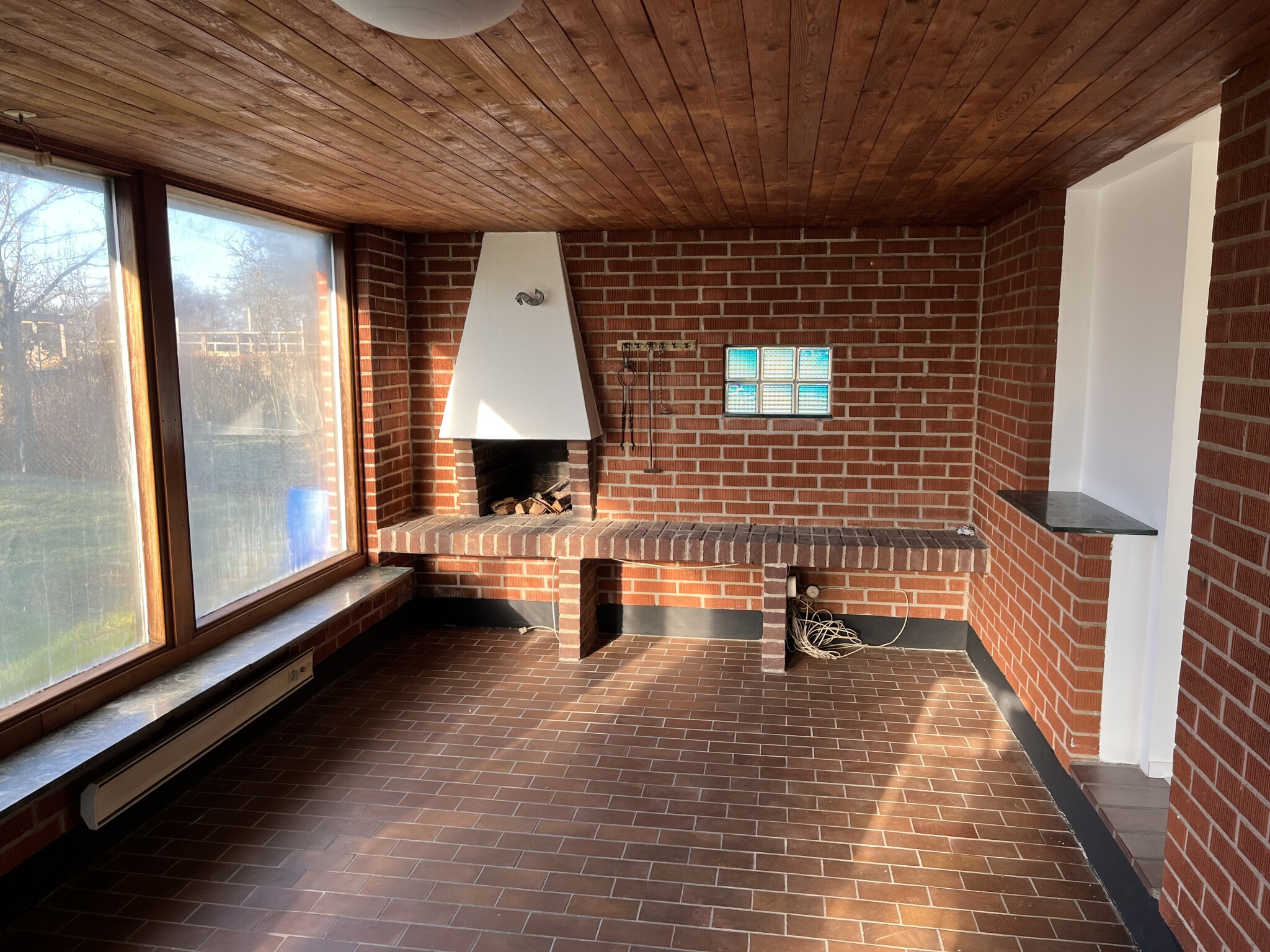
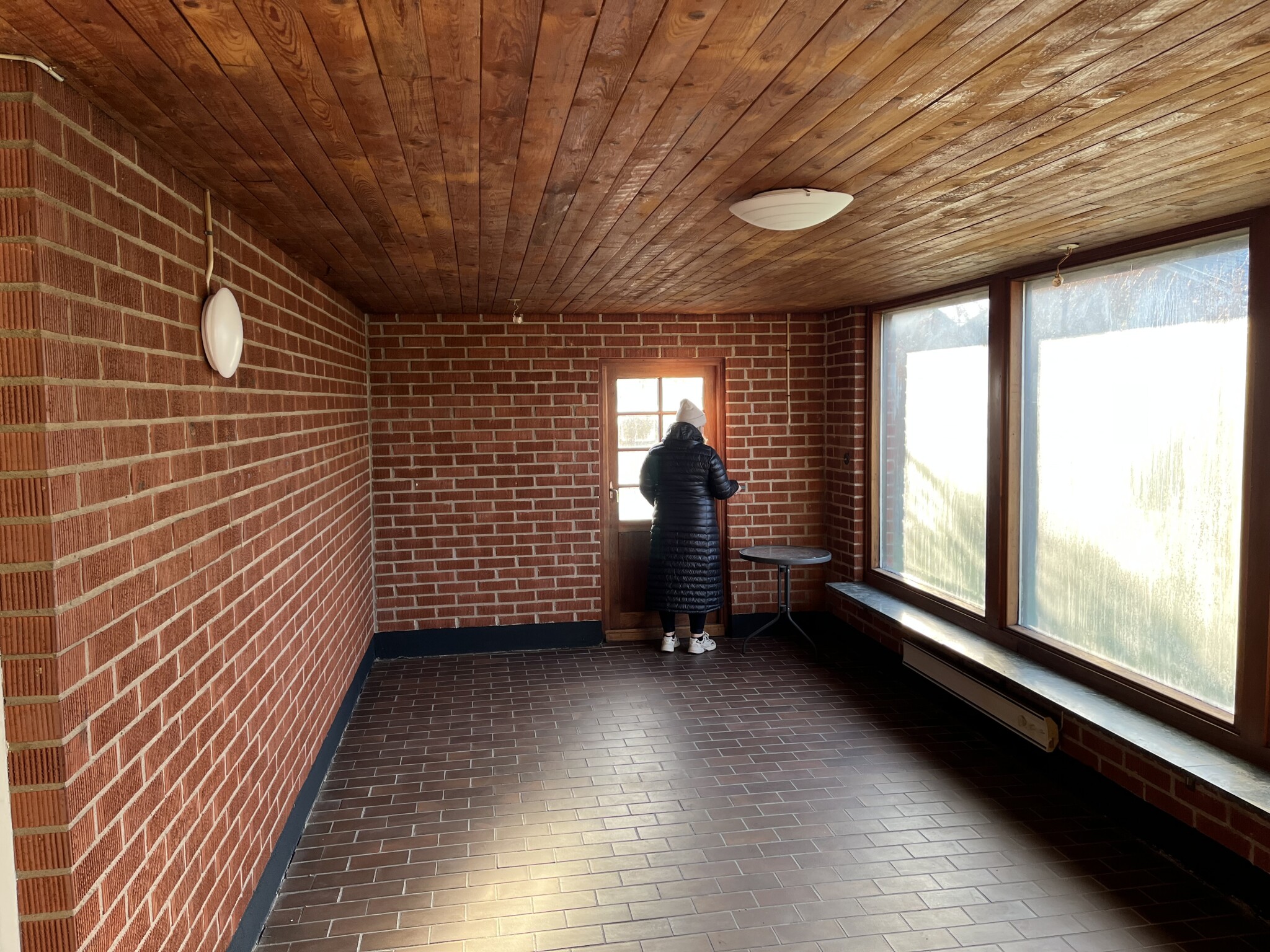
We have torn down all the paneling in the ceiling, including the insulation. The tongue and groove is visible from the inside.
We have installed new glass units in the windows, new paper on the roof, and it’s about time to build it up again. And now comes some thinking on how to do this in the best way?
Ceiling:
The insulation has been placed directly against the tongue and groove. Underneath this was the paneling. There's been significant drafts through the paneling and insulation and also a lot of wasp nests as the roof extends over the glass units, and on the underside of the overhang, there are only two panel boards with distance (ventilation?). This has allowed free airflow into the room.
I want to put double drywall on the ceiling (this is how it is in the rest of the house on ceilings and walls). Above this, a vapor barrier (so it can still breathe), and then insulation against the tongue and groove. I also want to place the vapor barrier over the glass units and the panel boards on the underside to prevent drafts but still allow it to breathe.
Floor:
Tiles laid directly on an uninsulated slab.
I'm thinking of placing Platon membrane at the bottom, then Styrofoam type 100, and then a parquet floor on top. It would build up about 8 cm, which is just right. But what alternatives are there for construction while still getting some insulation?
Heating:
Either electric radiators (initial thought). The alternative is to run pipes through the entire crawl space (about 12m) and connect water radiators to the existing one-pipe system. The existing radiator circuit in the house is not accessible as it lies in the beams along the exterior walls. Will the transmission losses be large if you feed so far through a crawl space? Thinking of using LK PEX RiR with insulation, for example. Is that enough?
Note the house is currently heated with gas and it's a one-pipe system. Investing in an air-to-water heat pump is not an option right now due to budget constraints AND with the high supply temperature, the gain is not as significant. Underfloor heating is also not an option due to the minimal insulation possible.
Bring all the tips you have to help us solve this in the best way.
We have torn down all the paneling in the ceiling, including the insulation. The tongue and groove is visible from the inside.
We have installed new glass units in the windows, new paper on the roof, and it’s about time to build it up again. And now comes some thinking on how to do this in the best way?
Ceiling:
The insulation has been placed directly against the tongue and groove. Underneath this was the paneling. There's been significant drafts through the paneling and insulation and also a lot of wasp nests as the roof extends over the glass units, and on the underside of the overhang, there are only two panel boards with distance (ventilation?). This has allowed free airflow into the room.
I want to put double drywall on the ceiling (this is how it is in the rest of the house on ceilings and walls). Above this, a vapor barrier (so it can still breathe), and then insulation against the tongue and groove. I also want to place the vapor barrier over the glass units and the panel boards on the underside to prevent drafts but still allow it to breathe.
Floor:
Tiles laid directly on an uninsulated slab.
I'm thinking of placing Platon membrane at the bottom, then Styrofoam type 100, and then a parquet floor on top. It would build up about 8 cm, which is just right. But what alternatives are there for construction while still getting some insulation?
Heating:
Either electric radiators (initial thought). The alternative is to run pipes through the entire crawl space (about 12m) and connect water radiators to the existing one-pipe system. The existing radiator circuit in the house is not accessible as it lies in the beams along the exterior walls. Will the transmission losses be large if you feed so far through a crawl space? Thinking of using LK PEX RiR with insulation, for example. Is that enough?
Note the house is currently heated with gas and it's a one-pipe system. Investing in an air-to-water heat pump is not an option right now due to budget constraints AND with the high supply temperature, the gain is not as significant. Underfloor heating is also not an option due to the minimal insulation possible.
Bring all the tips you have to help us solve this in the best way.
Keep the lovely room as it is. Isn't it possible to connect new radiators in a two-pipe system!Dr Benz said:
We are in the process of building up this room and insulating it better to be able to use it year-round. (As a dining room)
We have torn down all the paneling in the ceiling including insulation. You can see the paneling from the inside.
We have installed new window cassettes, new felt on the roof and it's time to start building it up again. And then some thoughts come up on how to do this in the best way?
Ceiling:
The insulation was laid directly against the paneling. Underneath this was paneling. There has been a lot of draft through the paneling and insulation and also many wasp nests since the roof extends over the glass cassettes and on the underside of the overhang there are only two panel boards with spacing (ventilation?). This has allowed it to be freely ventilated into the room.
I want to install double gypsum in the ceiling (this is how it is in the rest of the house on ceilings and walls). Above this, a vapor barrier (so that it can still breathe) and then insulation up against the paneling.
I also want to place the vapor barrier over the glass cassettes and the panel boards on the underside to prevent drafts but still allow it to breathe?
Floor:
Tile laid directly on an uninsulated slab.
Thinking of a Platon mat at the bottom and then polystyrene type 100 and then a parquet floor on top. Builds maybe 8 cm which is just right.
But what are the alternatives for construction and still get some insulation.
Heating:
Either electric radiators (initial thought).
The alternative is to run pipes throughout the entire crawl space (about 12m) and connect water-based radiators to the existing single pipe system. The existing radiator loop in the house is inaccessible as it lies in the floor structure along the outer walls. Will the transmission losses be large if feeding so far through a foundation? Considering using LK PEX RiR with insulation. Is that enough?
Note the house is currently heated with gas and it is a single pipe system. There is no question of investing in an ASHP at present as the funds are not available AND with the high supply temperature the gain is not as high. Underfloor heating is also not feasible due to the minimal insulation that is possible.
Give us all the tips you have to help us solve this in the best way.
The panel in the ceiling has already been torn down, which was lucky because that's how we discovered the roof was leaking. I have already written that.R reez said:
Then we will insulate the floor a little and lay parquet or something similar to make it a bit warmer underfoot.
The questions concern how to rebuild it in the best way.
Yes, it can of course work. The question is how much loss you get from the pipes run in the crawl space. Maybe it is negligible. I can also see the point of connecting to the existing heating system.
Well, ruin and ruin. It has already ruined itself through leaks in various ways.T TypRätt said:
The question is how to renovate it in the best way.
Absolutely, it is a fantastic room. It was because of this and its potential that we fell for the otherwise quite mediocre house.
This is where the larger dining table has to go. There's no room anywhere else.
No one else?
Opinions on fruit brakes and insulation directly against the ceiling?
Opinions on insulating the floor about 5cm and then laying parquet on top?
Opinions on running radiator pipes in a crawl space about 12m one way.
Opinions on fruit brakes and insulation directly against the ceiling?
Opinions on insulating the floor about 5cm and then laying parquet on top?
Opinions on running radiator pipes in a crawl space about 12m one way.
Click here to reply