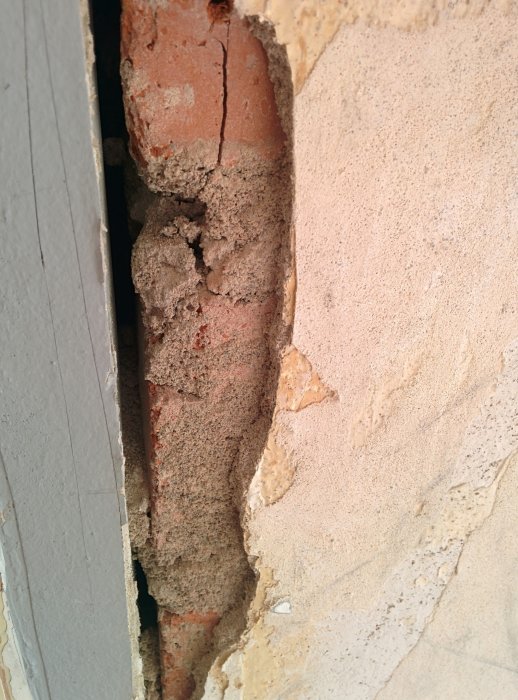
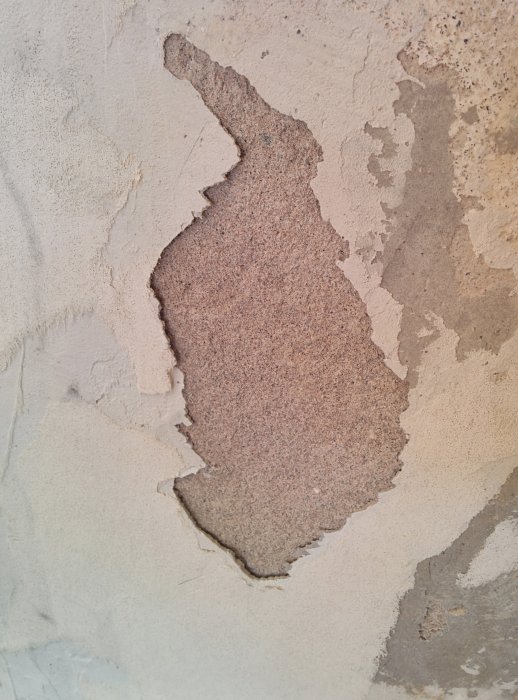
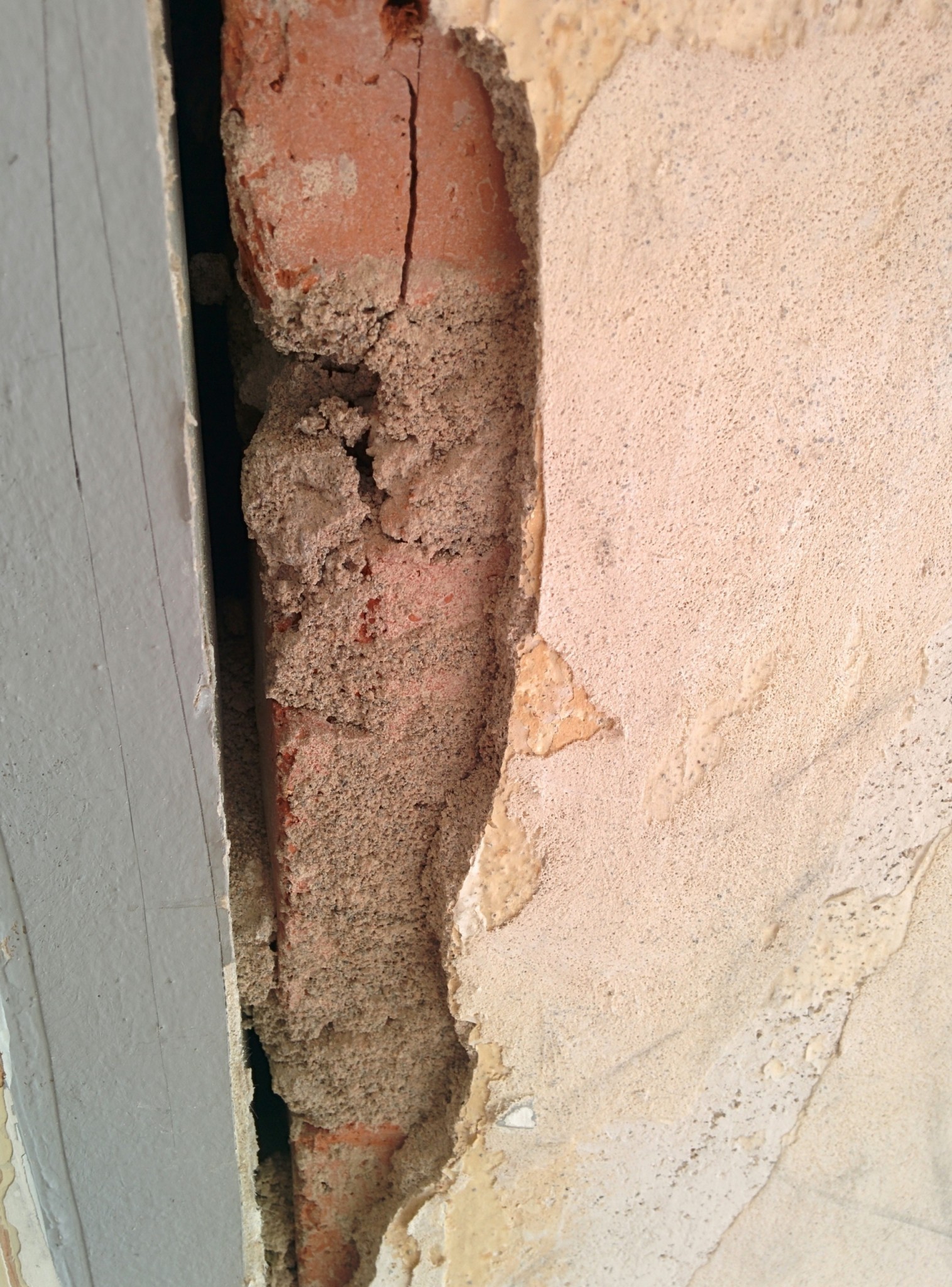
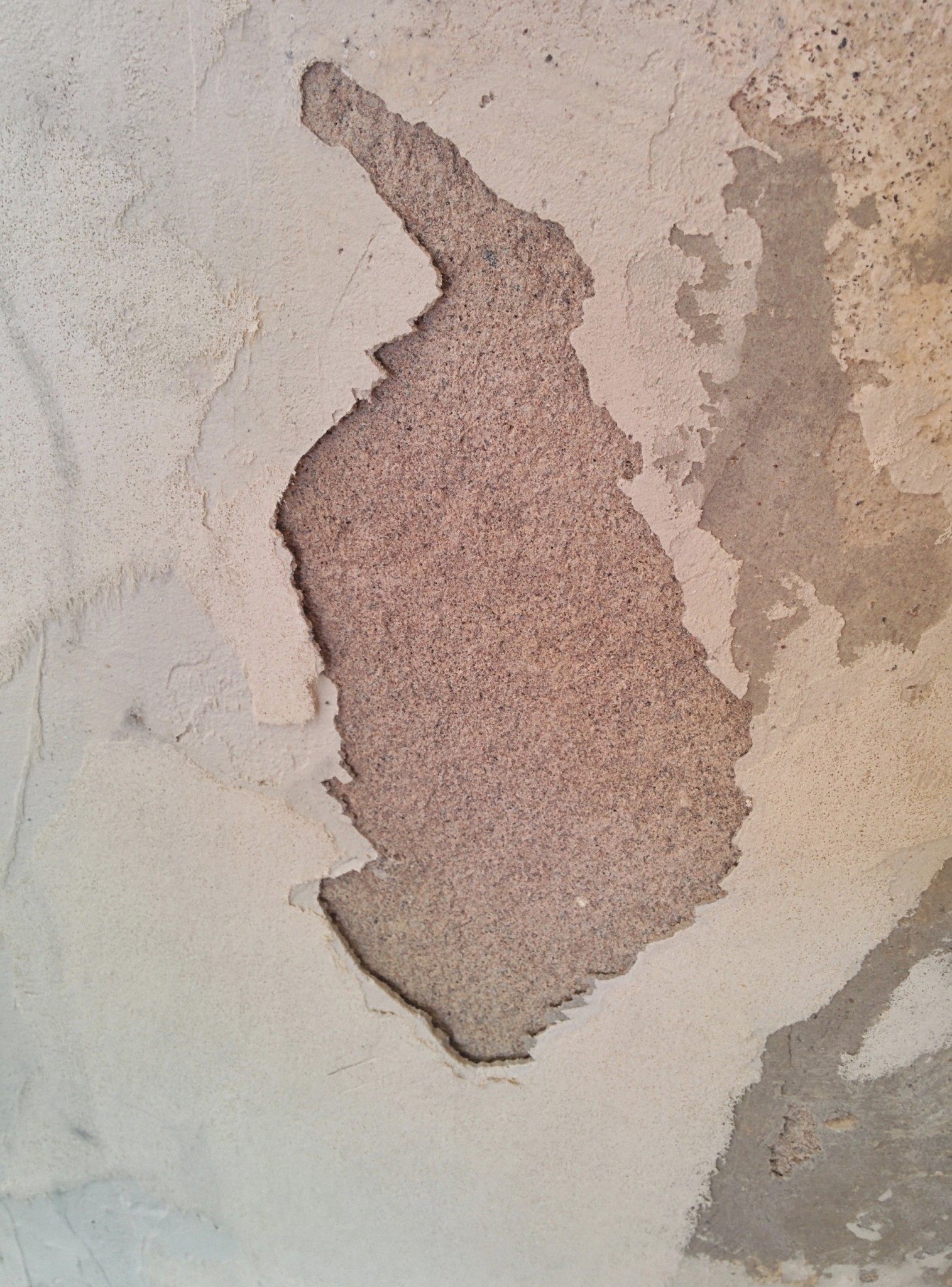
It's the living room that needs fixing. Apartment from the 50s. The concrete on the walls is very porous, and sand falls when you touch it gently. Regulating is not a good option due to the cost.
I'm a bit unsure, is what resembles sand really concrete?
Those of you with experience, how can I fix the walls in the simplest way?
No, it's not concrete. It's plaster. Such plaster is available in different qualities, the rather light color suggests lime plaster, but I'm really not an expert on plaster.
I don't have an answer for what to do about it. We had similar bad plaster on the chimney stack, it was so loose that I knocked it all off in about 10 minutes (approx. 8 sqm). Then it took considerably longer to replaster.
If you want plaster on those walls, you need to glue and plug the board into the brick, quite time-consuming. You can also plug in a batten (28x70) that you can then screw the plasterboards into, although it does build out a bit more.
If you want plaster on those walls, you have to glue and anchor the board into the brick, which is quite time-consuming.
1. Ok. But do I have to remove the top layer? so that only the brick is visible? and then plaster?
2. Can't I just leave everything as it is and then glue and anchor the boards?
WearHelmet said:
You can also anchor furring strips (28x70) which you can then screw the plasterboards into, but this builds outwards a bit more.
Furring strips are then not a good option. The room will become smaller plus I will still have to anchor the strips.
It works to drill through the plaster and into the brick. Glue with, for example, Maxi-Bond or PL400. Keep in mind that the wall should not be too uneven, as it can cause issues when mounting the boards. But you'll see, it's hard to determine from a picture. A lattice compensates for the unevenness but it might work without it.
Tried drilling a bit and it was really easy to drill 10cm through the plaster and the brick. I will probably mount the boards on the walls in their current state using plugs and screws. The walls are quite even. Thank you so much for the help.
No problem. I assume you're drilling with a hammer drill. If you're having issues with the plug not gripping the wall material, try drilling without the hammer function. Don't forget glue either; the plug presses against the boards, and the glue should hold the boards in place. There is glue in tubes with really good properties. Good luck!
Wouldn't it work to glue up the plasterboards with gypsum mortar? Knock down all the plaster so the gypsum mortar has something hard to adhere to, then the plasterboard will stick like a rock... it worked at my place, though with ytong as the base.
It's easier to put up drywall than to plaster (in my opinion). Wallpaper sticks better on drywall than on plaster. It's a shame to put wallpaper on plaster, it's nicer to paint. . But that's what I think.
Okay. I imagine that it would be easier to repair the plaster and apply a skim coat than to drill and plug the walls. But that's probably because I never do anything myself and just point and tell my partner
Hehe. I don't think it's worth fixing. But of course, it depends on how the rest looks. My walls were also plastered and when I started knocking, too much fell down to start repairing. And then I plasterboarded instead.
Hehe. Don't think it's worth repairing. But of course, it depends on how the rest looks. My walls were also plastered, and when I started knocking, too much fell off to start repairing. So, I plasterboarded instead.
The problem is knowing when to stop knocking. The more you disturb it, the more hollow spots you create in the plaster. We've repaired big holes at home. But then I'm living with a partner who plasters houses 40h/week.
But if you like plasterboard, go for it.
The only reason I could see would be to facilitate the installation of pipes for electricity, but we choose to chisel open the walls instead.
Vi vill skicka notiser för ämnen du bevakar och händelser som berör dig.



 . But that's what I think.