
2,386 views ·
2 replies
2k views
2 replies
How should I frame for the ceiling?
Hello!
I'm going to help my mom with lighting in the hallway since it's really poor. The plan is to lower the ceiling and install 1-2 spotlights, and possibly a ceiling moulding with an LED strip.
I do have some questions about framing. For the electrical work, I plan to hire an electrician, but I want to try handling the rest myself and need a bit of guidance from you knowledgeable folks!
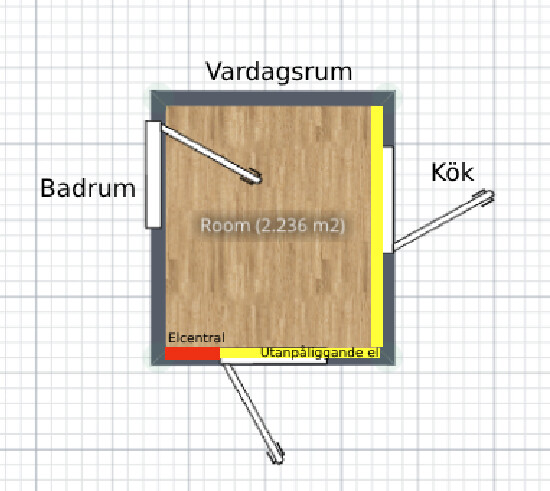
It's a rather small hallway, with the ceiling being 160cm long and 140cm wide. What makes me a bit more uncertain is that in the hallway, there's an electricity panel on the wall to the left of the entrance door. From there, a cable box runs up to the ceiling, then along the ceiling on the short side and out on the long side at the ceiling bordering the kitchen. It's surface-mounted wiring in the cable box to power, among other things, the fridge, oven, and it also continues to the living room for a few wall outlets, etc.
Now I want to plan a bit since it's not impossible that we might renovate the kitchen later on. If I'm going to frame, I'd need to do it along the wall for stability, but then I'd have to remove the wiring. When I frame up, I can always make holes in the frame for VP pipes or flexible conduits to feed more cables in the future without having to tear down, but I'm a bit unsure how I should frame. I'm thinking spontaneously that I don't need to work with a grid since it's such a small hallway, so I was considering framing parallel.
The electricity panel is marked in red. Yellow indicates the cable box running at the very top by the ceiling.
Alternative 1:
Either on the short side, using 140 cm long frames.
Frame 1: By the wall (entrance)
Frame 2: 60 cm from the wall
Frame 3: 120 cm from the wall
Frame 4: 160 cm from the wall (next to the living room)
Alternative 2:
The long side with 160 cm long frames.
Frame 1: By the wall (toward the bathroom)
Frame 2: 60 cm from the wall
Frame 3: 120 cm from the wall
Frame 4: 140 cm from the wall (only 20cm from frame 3)
How would you do it, and as mentioned, I want to make it easy to draw power in the future, so I thought we'd at least keep the cable box running from the electricity panel up to the wall. Then perhaps work with flexible conduits?
By the way, I'm thinking of buying LED spotlights that need a build height of 56mm. I could potentially go with 45x45mm frames, which with plasterboard gives a height of 58mm, or would you recommend 45x70 anyway to have a bit more room to work in? I also wonder where I can easily leave space for power supply to the LED strip for the ceiling moulding.
// H
I'm going to help my mom with lighting in the hallway since it's really poor. The plan is to lower the ceiling and install 1-2 spotlights, and possibly a ceiling moulding with an LED strip.
I do have some questions about framing. For the electrical work, I plan to hire an electrician, but I want to try handling the rest myself and need a bit of guidance from you knowledgeable folks!
It's a rather small hallway, with the ceiling being 160cm long and 140cm wide. What makes me a bit more uncertain is that in the hallway, there's an electricity panel on the wall to the left of the entrance door. From there, a cable box runs up to the ceiling, then along the ceiling on the short side and out on the long side at the ceiling bordering the kitchen. It's surface-mounted wiring in the cable box to power, among other things, the fridge, oven, and it also continues to the living room for a few wall outlets, etc.
Now I want to plan a bit since it's not impossible that we might renovate the kitchen later on. If I'm going to frame, I'd need to do it along the wall for stability, but then I'd have to remove the wiring. When I frame up, I can always make holes in the frame for VP pipes or flexible conduits to feed more cables in the future without having to tear down, but I'm a bit unsure how I should frame. I'm thinking spontaneously that I don't need to work with a grid since it's such a small hallway, so I was considering framing parallel.
The electricity panel is marked in red. Yellow indicates the cable box running at the very top by the ceiling.
Alternative 1:
Either on the short side, using 140 cm long frames.
Frame 1: By the wall (entrance)
Frame 2: 60 cm from the wall
Frame 3: 120 cm from the wall
Frame 4: 160 cm from the wall (next to the living room)
Alternative 2:
The long side with 160 cm long frames.
Frame 1: By the wall (toward the bathroom)
Frame 2: 60 cm from the wall
Frame 3: 120 cm from the wall
Frame 4: 140 cm from the wall (only 20cm from frame 3)
How would you do it, and as mentioned, I want to make it easy to draw power in the future, so I thought we'd at least keep the cable box running from the electricity panel up to the wall. Then perhaps work with flexible conduits?
By the way, I'm thinking of buying LED spotlights that need a build height of 56mm. I could potentially go with 45x45mm frames, which with plasterboard gives a height of 58mm, or would you recommend 45x70 anyway to have a bit more room to work in? I also wonder where I can easily leave space for power supply to the LED strip for the ceiling moulding.
// H
To start with, you want to keep 300mm in cc measurements for the studs and not 600 as in your example. Shift the first stud 50mm from the direction you want to start plasterboarding from, so you can cut off the plaster seam of the plasterboard that lands against the wall. That way you'll have less to spackle later.H Harree said:Hello!
I'm going to help my mom with lighting in the hallway as it's very poor. The plan is to lower the ceiling and install 1-2 spotlights, and possibly a ceiling mold with an LED strip.
However, I have some thoughts about framing. For the electrical work, I plan to hire an electrician, but I intend to try doing the rest myself and need some advice from those of you who are knowledgeable!
It's a rather small hallway, the ceiling is 160cm long and 140cm wide. What makes me a bit uncertain is that the electrical panel is on the wall to the left of the entrance door. From there, a cable duct goes up to the ceiling, along the short side of the ceiling, and out on the long side by the ceiling adjacent to the kitchen. It's surface-mounted electricity in the cable duct to power, among other things, the refrigerator and oven, but it also goes on to the living room for a single wall outlet, etc.
I want to think this through since it's not impossible that we will renovate the kitchen later. If I'm going to frame, I need to do it along the wall for stability, but then I must remove the electricity. If I frame up, it's always possible to drill a hole in the stud to put in a conduit or flexible conduit so you can feed more cables in the future without having to tear it up, but I'm a bit unsure how I should frame. I initially think that I don't need to work with a grid when it's such a small hallway, so I was wondering if I should frame parallel.
The electrical panel is marked in red. The yellow is the cable duct that runs at the top by the ceiling.
Option 1:
Either on the short side, so I use 140 cm long studs.
Stud 1: By the wall (entrance)
Stud 2: 60 cm from the wall
Stud 3: 120 cm from the wall
Stud 4: 160 cm from the wall (next to the living room)
Option 2:
The long side with 160 cm long studs.
Stud 1: By the wall (towards the bathroom)
Stud 2: 60 cm from the wall
Stud 3: 120 cm from the wall
Stud 4: 140 cm from the wall (only 20cm from stud 3)
How would you do it, and as mentioned, I want to make it convenient for future electrical work, so I thought we should at least keep the cable duct that goes from the electrical panel to the wall. Then maybe work with flexible conduit?
I plan, by the way, to buy LED spotlights that require a build height of 56mm. I could potentially use 45x45mm studs which would give a height of 58mm with gypsum, or would you recommend 45x70 anyway to have a bit more space to work in? I'm also wondering where I would most easily leave space for power supply to the LED strip for the ceiling mold.
// H
From which direction you should frame doesn't really matter. Personally, I would go with 160 long studs, assuming you can screw without problems into the short wall where the electrical panel is. I would also build with metal instead of wood. The advantage of metal is that there's space above the studs where the electrician can run their wires, and it's also easier to get the ceiling level. It costs a bit more, but not many kronor for your small project.
So 45mm metal tracks as a frame in the wall and then hat profiles (also called secondary studs) that you lay in the tracks. These only build 25 mm in height, so there is space above in case you need to go with cables crisscross. You can advantageously keep the frame down a bit from the ceiling, which gives even more space for transformers and other electrical stuff that needs to go there.
Thank you so much for taking the time to respond! I've never tried metal studs before, but I'll check it out. Instinctively, wood feels easier, but if you don't dare, you won't learn eitherA Albans doktor said:To begin with, you want to keep 300mm in cc measurements on the studs and not 600 as in your example. Offset the first stud 50mm from the side you want to start drywalling from, so you can cut off the putty edge on the drywall that ends up against the wall. That way, you'll have less to putty later.
It doesn't really matter from which direction you should set up the studs. Personally, I would go with 160 long studs, assuming you can screw without problems into the short wall where the electrical panel is located. I would also build with metal instead of wood. The advantage of metal is that there is space above the studs where the electrician can run their wires, but also that it's easier to get the ceiling completely level. It costs a little more, but it's not many dollars on your small project.
So 45mm metal studs/track as a frame in the wall, and then hat profiles (also called secondary studs) that you lay in the tracks. These only build 25mm in height so there's room above in case you need to run cables crosswise. You can advantageously keep the frame down a centimeter from the ceiling so there's even more space for transformers and other nuisances that need to be there.
 It seems beneficial, as you said, that there's space above, which I think will make the electrician happy rather than having to cut into the studs, etc.
Click here to reply