I have now installed ventilated floors and walls in a room in the basement.
I used JAPE Ventgolv.
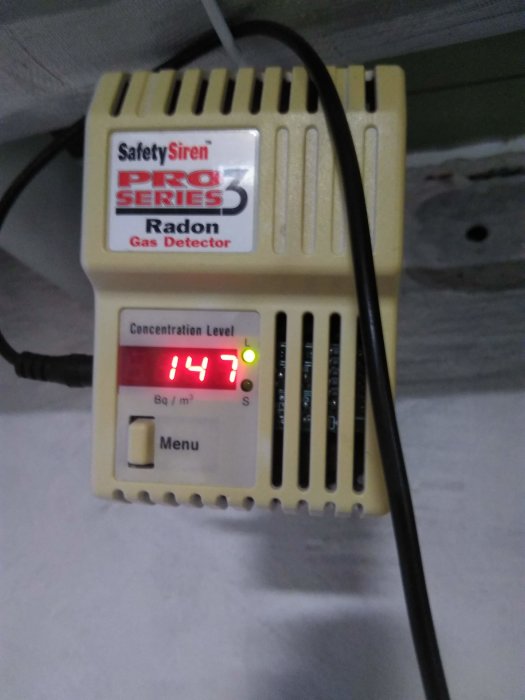
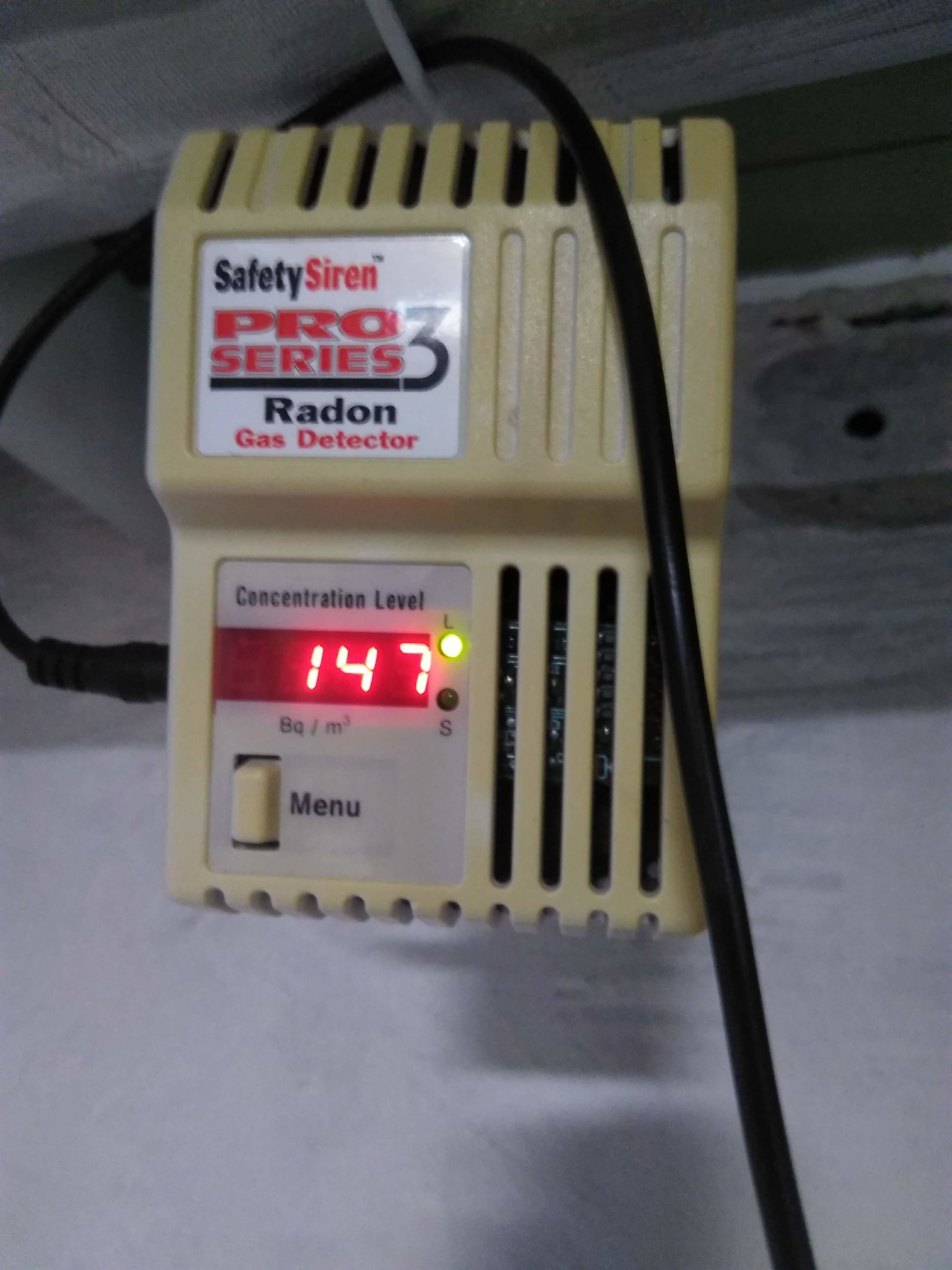
Before the ventilated floor and walls, I had a radon level of 147.
These values are clearly acceptable as they are, but since I planned to work in the room, I wanted the level to ideally be under 100
(Acceptable level is under 200).
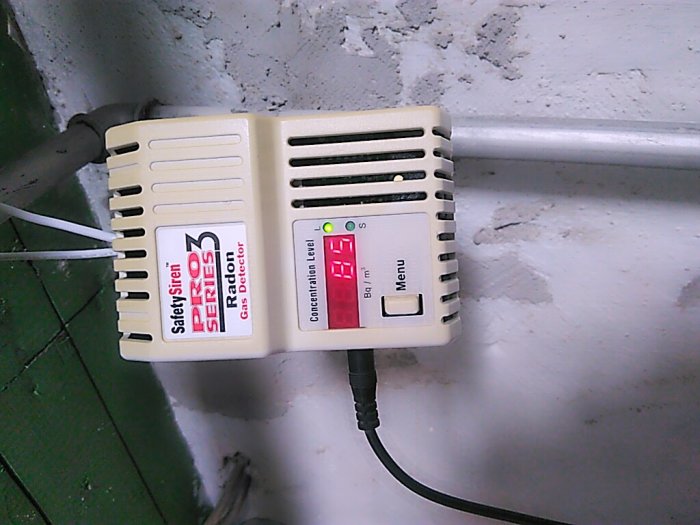
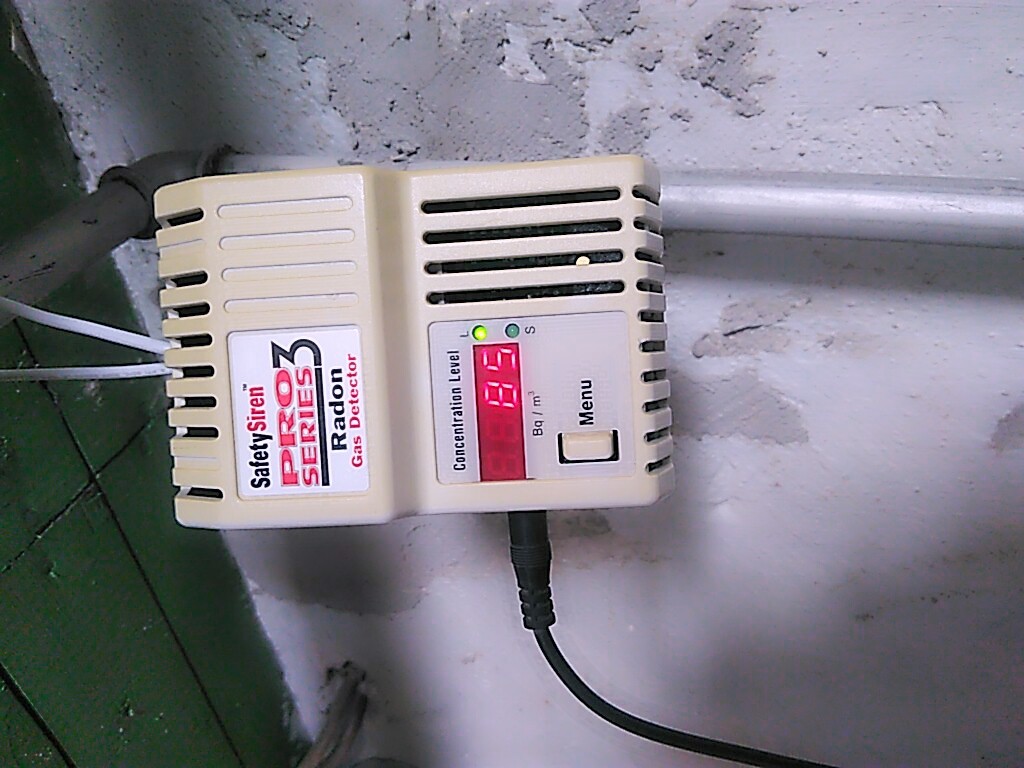
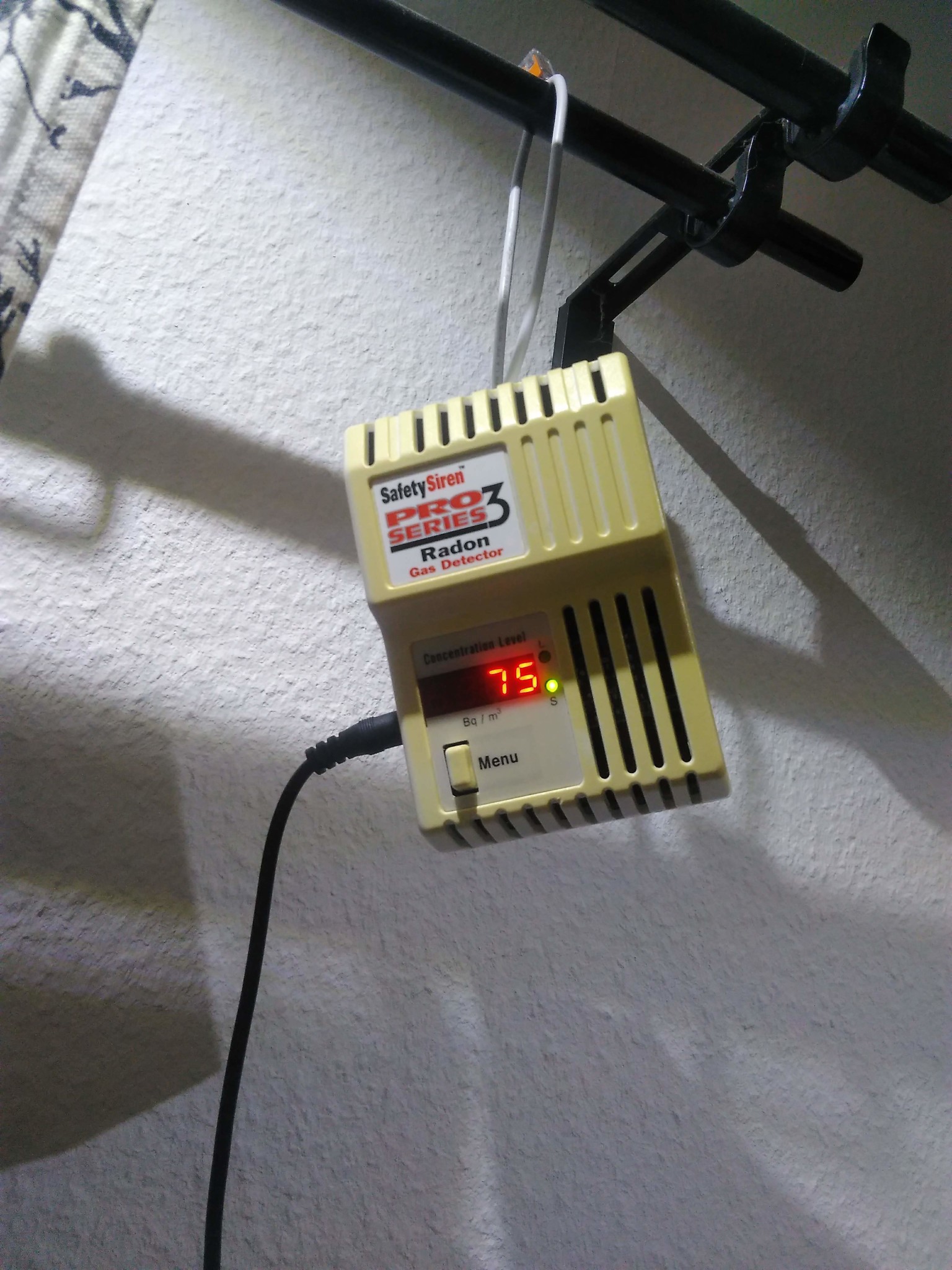
After the ventilated floor and walls, the radon level is 85.
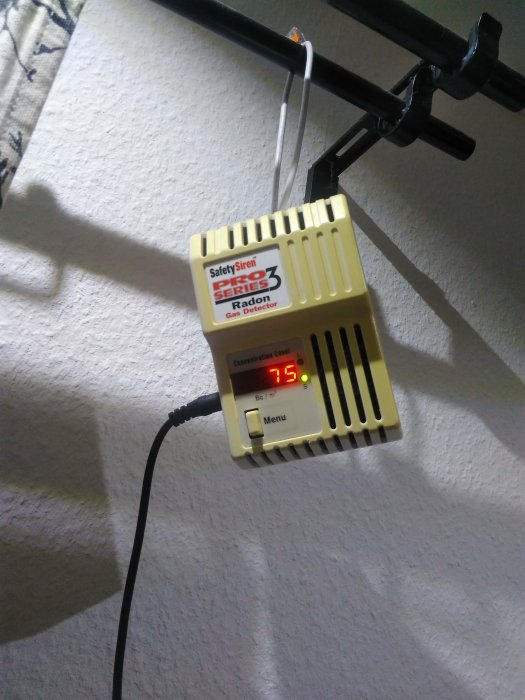
Comparing this value with what I have on the ground floor of the house, which is 75, I must say that the ventilated floor and walls turned out very well.
Another plus with the construction now is that nothing on the floor becomes moldy.
The measurements were taken individually over 1-3 weeks between autumn/spring to get the best possible values.
We had 680 as an average in our house from 1977 when we bought it, natural ventilation and slab on the ground. I installed mechanical exhaust and supply air in each room as well as Nivell floor (mechanically ventilated, same as Jape type) and the average dropped to 120, so a little better ventilation and capturing the radon gas where it enters (floor and walls below ground) makes an incredible difference!
I built a ventilated wall for a bathroom, placed a rubber strip against the wall and metal studs (they have holes for electrical conduits so the air can circulate). I put wet room gypsum and a ventilated baseboard with a filter at the floor and a fan on the outside of the wall. The air is drawn in along the floor as the fan exhausts out. The fan I chose: https://www.luftbutiken.se/vaggflakt/293-ostberg-yttervaggsflakt-rs-100-a-32l-s.html
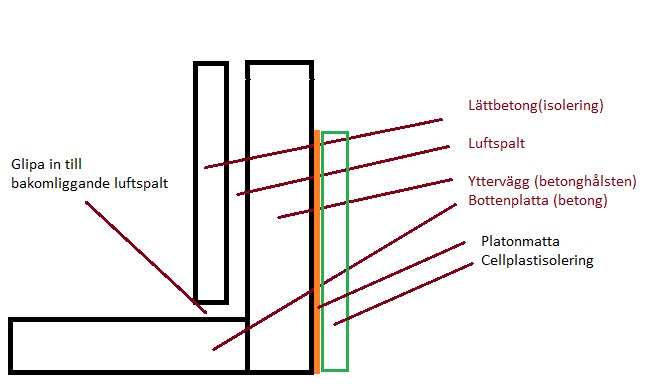
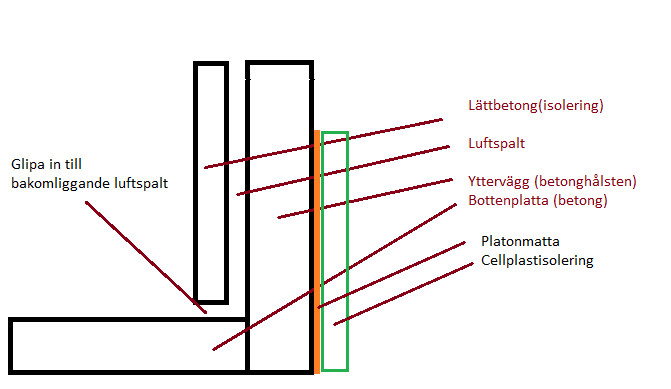
I became interested in the solution @anders07 made here, as I am trying to compare with an old manually ventilated wall in my 60s house with the following construction - however, no exhaust vent, except for a couple of generously sized air gaps under the basement windows that run along much of the wall.
Is it recommended to keep this kind of ventilation in old walls? I need to close off the ventilation inlet at the floor for other reasons.
I became interested in the solution @anders07 made here, as I am trying to compare it with an old manually ventilated wall in my 60s house, which has the following construction - though no exhaust vent, except for a couple of generously sized air gaps under the basement windows that run along most parts of the wall.
Is it recommended to keep this kind of ventilation in old walls? For other reasons, I need to close the vent inlet down by the floor.
[image]
If it is open at both the upper and lower edges, any moisture can be ventilated away, but if the purpose is to reduce radon levels, only a mechanical exhaust, or alternatively supply air and natural draft, will help to ventilate through the room.



KJD said:
I became interested in the solution @anders07 made here, as I am trying to compare it with an old manually ventilated wall in my 60s house, which has the following construction - though no exhaust vent, except for a couple of generously sized air gaps under the basement windows that run along most parts of the wall.