
4,412 views ·
11 replies
4k views
11 replies
How much does a plank house weigh?
I want to straighten the interior ceiling that slopes toward the outside because the concrete foundation settled at least 60 years ago. The foundation is now stabilized and no longer sinking.
For interior renovation, I want straight ceiling lines and plan to lift using a beam on posts and a lift block. I just don't know what load capacity for the lift block I need? Because I have no idea what the attic and roof weigh.
It is a tent roof and there is approximately a 1 m wall under the roof.
https://www.biltema.se/bil---mc/ver...ing/domkrafter/hydraulisk-domkraft-2000017058
For interior renovation, I want straight ceiling lines and plan to lift using a beam on posts and a lift block. I just don't know what load capacity for the lift block I need? Because I have no idea what the attic and roof weigh.
It is a tent roof and there is approximately a 1 m wall under the roof.
https://www.biltema.se/bil---mc/ver...ing/domkrafter/hydraulisk-domkraft-2000017058
A bit difficult to know what you mean, you write pulley block and link to a jack.
Several things affect this, partly the weight, partly how rigid the house is, and how much of the house needs to be lifted.
You usually manage with a 5-ton jack.
The type you link to is difficult because it becomes wobbly and has a short stroke length.
One of this type makes the job easier, available for rent if you don't want to buy, I also believe that Jula sells it.
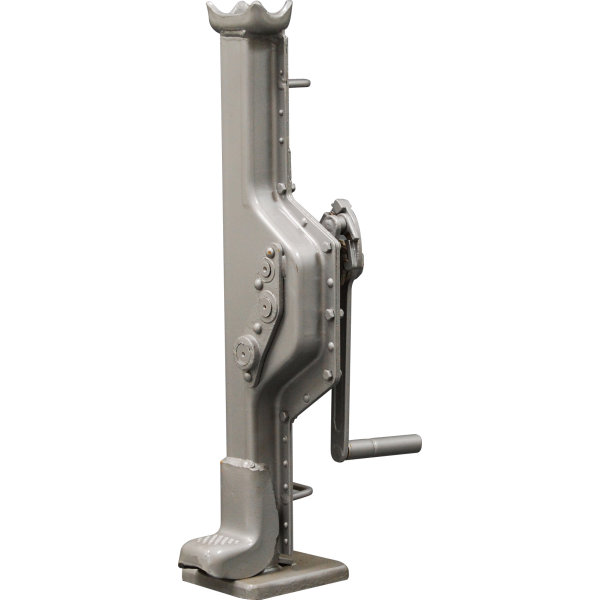
Several things affect this, partly the weight, partly how rigid the house is, and how much of the house needs to be lifted.
You usually manage with a 5-ton jack.
The type you link to is difficult because it becomes wobbly and has a short stroke length.
One of this type makes the job easier, available for rent if you don't want to buy, I also believe that Jula sells it.

In order to assess this, drawings, plans, and sections are needed. A wall in a plank frame should be viewed as a sheet that is lifted with an even force along the entire way. It is not a simple operation. One should have good knowledge of the house's construction. I assume that by tälttak you mean a hip roof?
It was actually a saddle roof. What is valmat? I don't have good knowledge of the construction, but I can see and measure that the roof on the lower floor and the floor on the upper floor are sloping. I have two possibilities: to eliminate the slope by installing a "false ceiling" in the rooms and framing it so that the new covers the old. Or to try to lift the part that is sagging. I will try to draw. Unfortunately, there are no drawings of the house. It is over 100 years old and neither drawings nor building permits were required when and where it was built.J justusandersson said:In order to assess this, drawings, plans and sections are needed. A wall in a plank frame should be regarded as a panel that you lift with an even force along the whole way. It's not a simple operation. You should have good knowledge of the house's construction. I assume by tälttak you mean a hip roof?
What is the item in the picture called? Well, it's certainly not a hoist, I'm just bad with nomenclature. I meant a jack.larsbj said:
Little difficult to know what you mean, you write hoist and link to a jack.
There are several factors that affect it, partly the weight, partly how rigid the house is, and how much of the house is to be lifted.
You usually manage with a 5-ton jack.
The type you linked to is difficult because it becomes unstable and it has a short stroke length.
One of this type makes the job easier, available for rent if you don't want to buy, I also believe Jula sells them.
[bild]
Thanks for the answer. I will return with a sketch.
A hipped roof also slopes towards the gables. It is definitely much better to correct the skewness aesthetically with an additional subroof than to attempt to lift the frame.
Now we might have somewhat insufficient info. But if the outer roof also slopes and it's due to, for example, a rotten sill, or settling in the foundation, then it's still correct to address the actual problem.J justusandersson said:
The cause of the settlements must, of course, always be addressed regardless of the cause. It may require foundation strengthening, sill replacements, or similar measures. The rafters may also need to be raised by building onto the wall plates. However, I believe plank walls should be left as they are. I have observed the handling of some plank houses with severe settlements up close, so I am quite convinced of the suitability of this strategy. It's a completely different matter with a log house. But as I said, it becomes much speculation without better documentation. Interior and exterior photos can say a lot as well.
Thanks for that! The house has been crooked for a long time, at least since the early 60s. It will surely stand for another half century as it is. The decision has been made: no lifting, but internal aesthetic measures.J justusandersson said:
Unfortunately, I have no documentation, but: the foundation is reinforced so it stands stable.J justusandersson said:The cause of the settlements must, of course, always be addressed regardless of the reason. It may require foundation reinforcement, sill replacements, or similar. The rafters may also need to be lifted by building on the wall plates. However, I believe that the plank walls should be left as they are. I have seen the handling of some plank houses with serious settlements up close, so I am quite convinced of the appropriateness of that strategy. It's a completely different matter with a log house. But as I said, there will be much speculation without better documentation. Interior and exterior photos can also say a lot.
Adjusting the rafters may definitely be necessary, but I'm not really sure because I haven't checked how it looks with any possible tilt.
I understand that pictures will be needed.
Settlements exist, but they are no longer worsening, and the foundation has been reinforced. The house is located on a slope with a concrete foundation and a half basement, also with concrete walls. The foundation is poured in many sections. Under the part of the house where there is no basement: steep sloping rock covered with a thick layer of sand.
I certainly don't have a sill with the sectioned concrete foundation I have. The problem is higher up, as my rooms on the entrance level have level floors.
Click here to reply