I need help from someone with good knowledge of second-hand bricks. What I'm wondering is if there is a risk that they might break due to freezing over time.
I want to build a freestanding brick wall in the garden, i.e., unheated. Dimensions about 2 m high and 8 m wide. Half of the wall will serve as the long side of a greenhouse and then continue as the backdrop to the patio next to the greenhouse. I'm thinking of a foundation with leca blocks and roof tiles as capping at the top. We live in windy Skåne, so the wall will be exposed to a lot of driving rain during the winter months.
If you read the manufacturers’ product sheets for new bricks, facade bricks are well-controlled concerning frost resistance. But since manufacturing wasn't as controlled historically, second-hand bricks will have greater variations in frost resistance, right? New bricks are also divided into facade bricks and wall bricks, the latter of which should not be used for facades.
Yet, in advertisements for second-hand bricks, details about the bricks are seldom provided, probably because the seller doesn't know. I also haven't found any way to assess the bricks just by looking at them.
At the same time, there are plenty of garden projects on the internet where second-hand bricks have been used—so maybe it's not a real problem?
Anyone with knowledge or good advice on the matter?
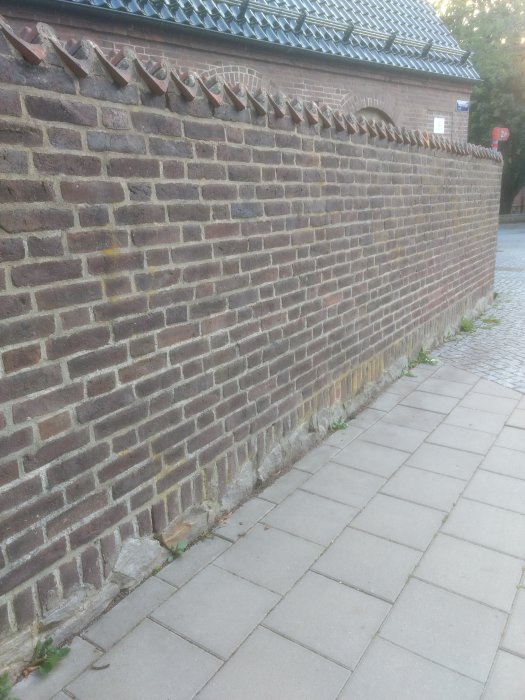
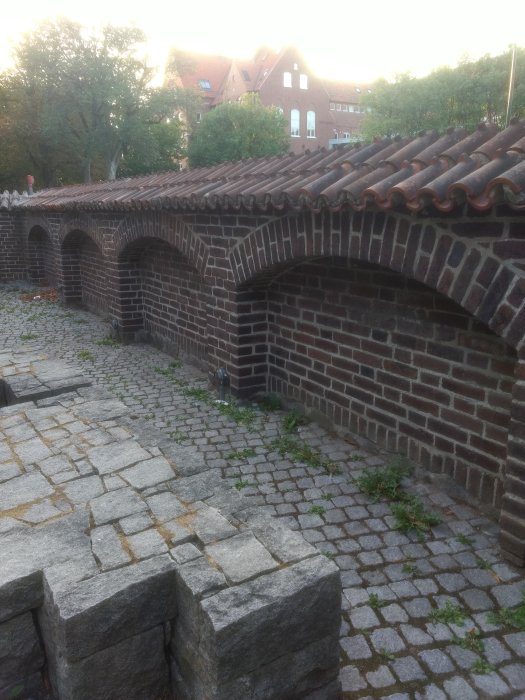
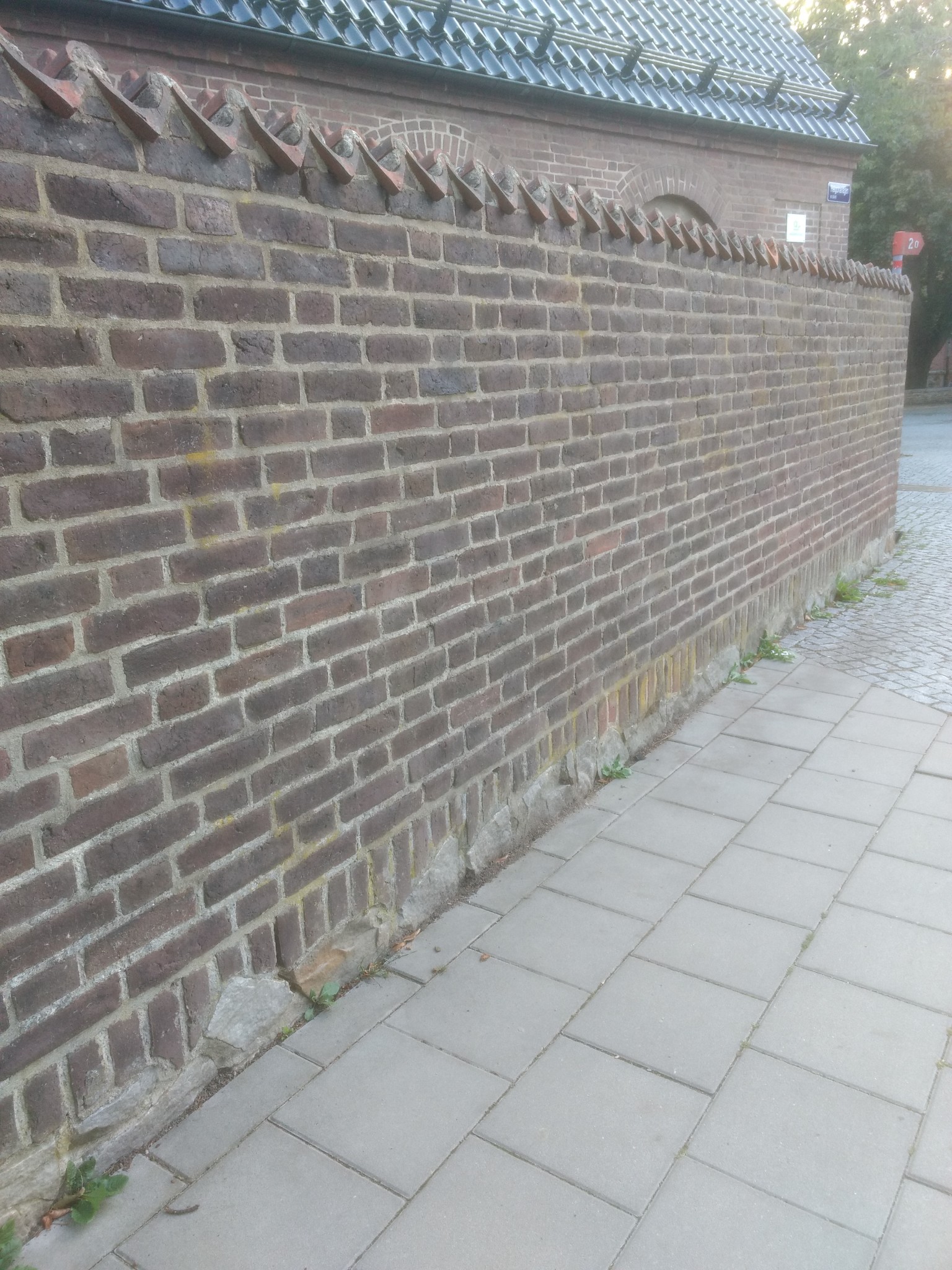
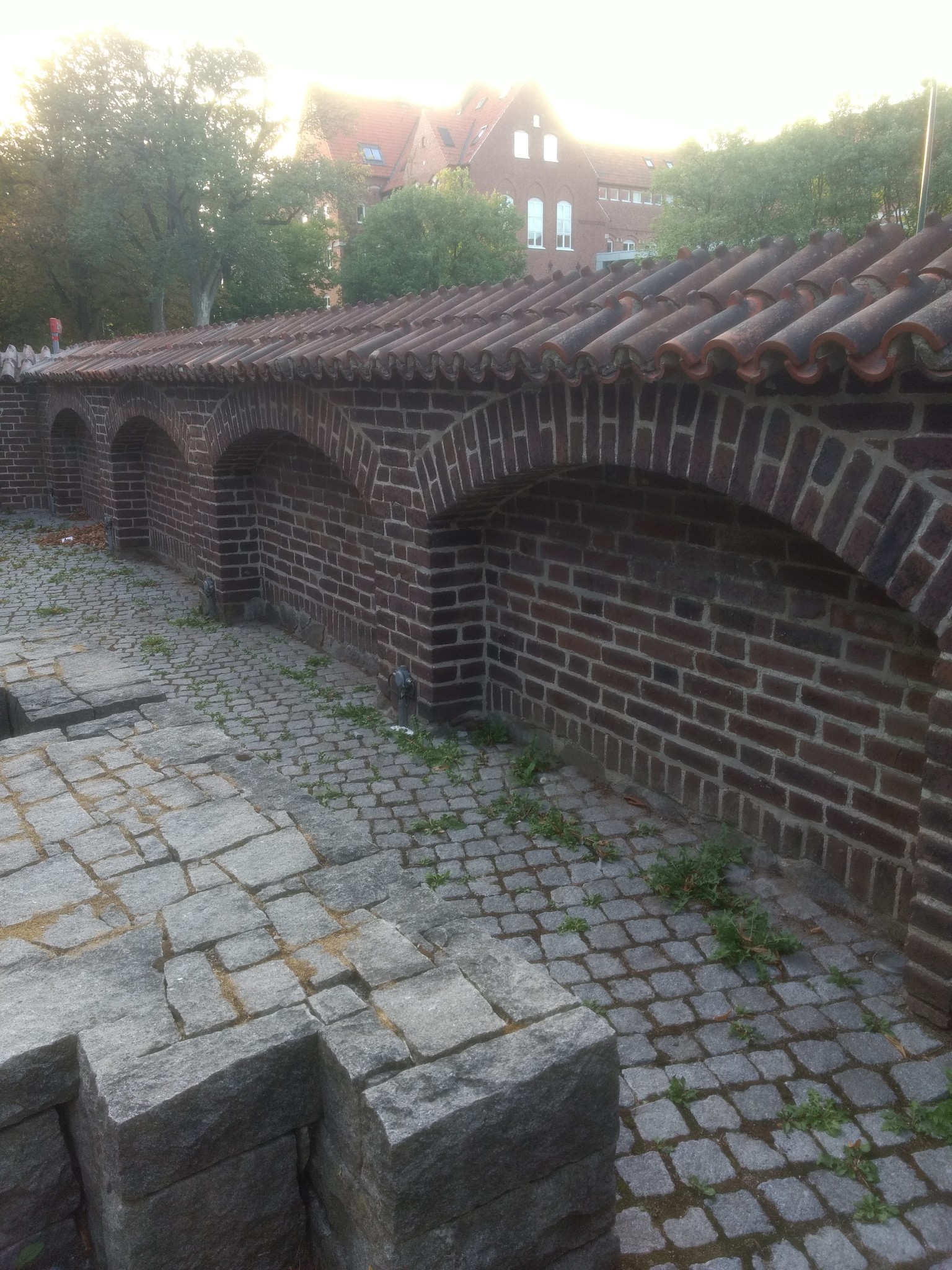
Well, I have actually seen this video before and have been thinking about this "watertable" - how do you translate that, "base"? If I have plastered lecablocks, which according to the manufacturers should be frost-resistant, as a base a bit up and then tiles on top, the wall should be protected, just like the Roskilde wall at the beginning of the video.
Then there's Skåne's driving rain, vertical rain, which the man in the video doesn't mention... On the other hand, the Roskilde wall hasn't frozen and Roskilde should have a similar climate to Skåne... This indicates that it's not a real problem and I don't have the ambition for the wall to stand for 800 years.
Roof tiles perform well, so why not regular bricks?
The issue is usually with the foundation, which is partly on/in the ground and partly struggles to dry out the last few layers. But if you have a foundation of Leca, it should manage quite well, right?
The mere fact that the brick is used hardly says anything about its quality. Even in the past, bricks were manufactured in different qualities. However, considering the condition of many older buildings, it can be noted that excellent bricks were already being produced in the Middle Ages.
But if you use reclaimed façade bricks that have been exposed to weather conditions for x number of decades and they still look fresh, then it is surely a confirmation that they are frost-resistant?
Roof tiles hold up well, so why not regular bricks?
The problem is usually the foundation, which partly stands on/in the ground, partly having difficulty drying. But if you have a Leca foundation, it should manage quite well?
I’m not sure why roof tiles hold up, but evidently, there are different qualities of brick products depending on, for example, the temperature at which they are fired, compare with paving bricks.
But you mean that if the wall is protected from rain from above and below, the brick should withstand driving rain, regardless of its own material properties?
The fact that the brick is used hardly says anything about its quality. Different qualities of bricks were also manufactured in the past. But considering the condition of many older buildings, one can conclude that excellent bricks were produced as early as the Middle Ages.
But if you use reclaimed facade bricks that have been exposed to the weather for x number of decades and they look fresh, isn't that a confirmation that they are frost-resistant?
I agree with you on the matter, but my difficulty is in assessing the quality based on the very little information that usually comes with the brick. How can you tell that a cleaned brick lying in a pile in the seller's garden is a "facade brick that has been exposed to the weather for x number of decades and it looks fresh"? If I just know that, then the matter is settled!
Why clay roof tiles hold up, I don't know, but obviously, there are different qualities in clay products depending, for example, on the temperature they have been fired at, compare paving bricks.
But you mean that if the wall is protected from rain from above and below, the brick should withstand driving rain, regardless of its own material properties?
Well, not entirely regardless, but as long as it is fired into brick, it should not be a problem. Brick doesn't have an issue with water - however, if you take a brick and submerge it in water for an hour and then place it outside in -20C immediately, it will obviously be damaged because brick absorbs a lot of moisture that will then cause the brick to crack.
If you keep the brick clean from growth, ensure the joints are intact, and don't place the bottom row directly on soil or other non-draining material, it will last. Look at all the brick chimneys we have in the country - they stand for over a hundred years if you take care of them occasionally.
As you mentioned, placing ridge tiles over also helps to protect.
How can you tell that a cleaned brick lying in a pile in the seller's garden is a "facade brick that has been exposed to weather for x number of decades and it looks fresh"? If I only get to know this, then the matter is clear!
The most obvious thing to do is, of course, to ask the seller where the brick comes from
A layman can easily assess the condition.
Visited Brohaga byggmaterial this weekend (sells second-hand building materials) and they completely advised against building with second-hand brick unless I was sure it was frost-resistant. However, they didn't have any second-hand bricks to sell themselves, but they did have a small batch of new bricks...
Spoke with a structural engineer this week who mentioned that even new frost-resistant bricks might not withstand freezing after driving rain on a cold wall...
I also want a specific combination of yellow shades to match the house (yellow spikdraget brick from 1952). Looks like it will take a long time to find
Click here to reply
Vi vill skicka notiser för ämnen du bevakar och händelser som berör dig.