
3,826 views ·
15 replies
4k views
15 replies
How do I remove this if it's asbestos?
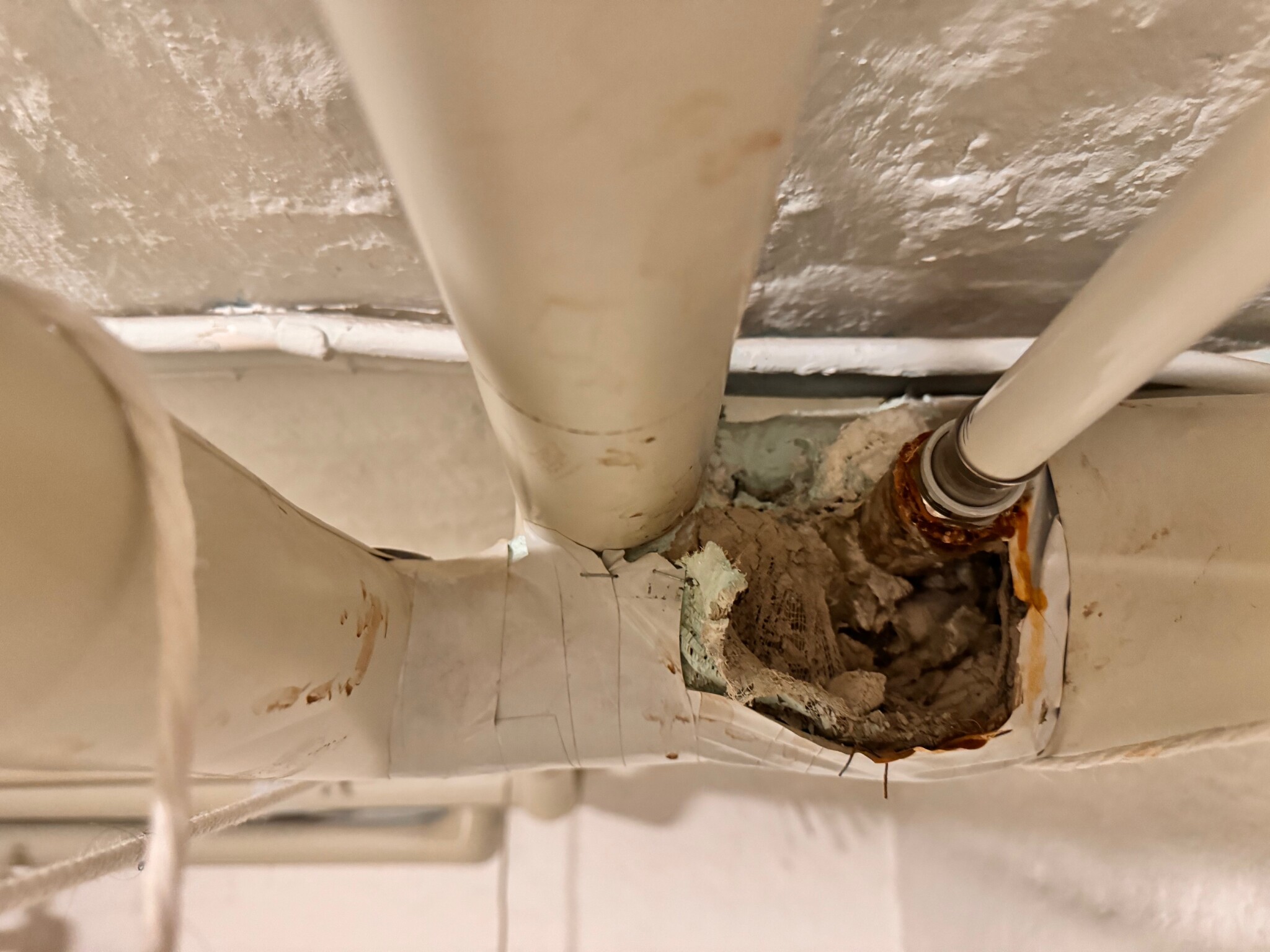
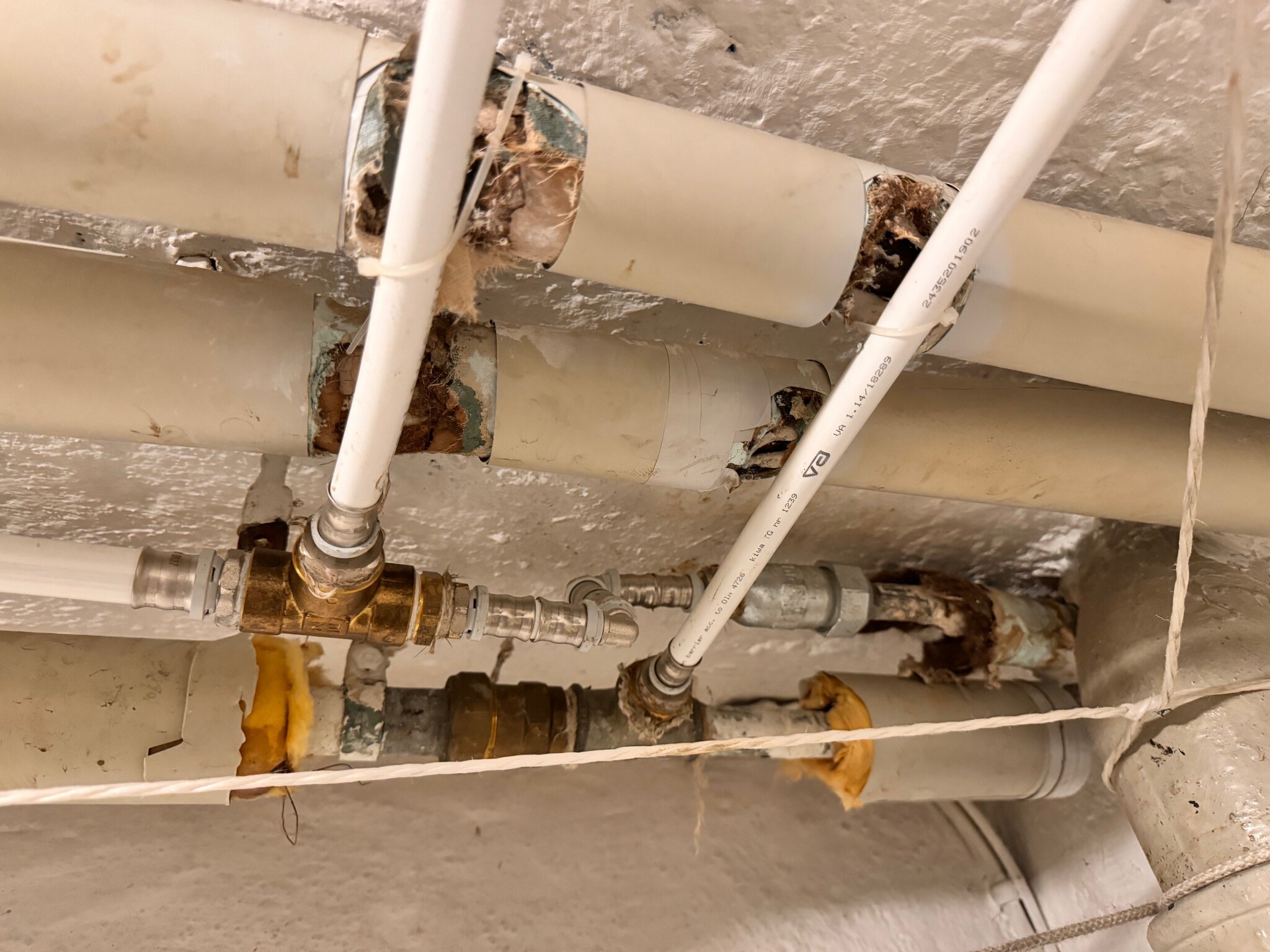
Hello! We have just bought a house built in 1935. There's some stuff to deal with, which I understand isn't unusual with older houses, but something you have to learn to handle and address over time. The basement is somewhat of a problem area... Are these pipes something I should immediately fix/seal/replace? Is there asbestos in them?
Welcome to the forum!
If the pipe insulation is that old, it may very well contain asbestos, but the only real way to know for sure is to take a sample and send it for analysis. As I understand it, asbestos insulation was primarily used on bends, but I could be wrong.
A nice thing about asbestos is that it is not dangerous as long as it is left undisturbed; it's when you poke around in it so that it dusts and the asbestos crystals become airborne that it can be unhealthy.
If the pipe insulation is that old, it may very well contain asbestos, but the only real way to know for sure is to take a sample and send it for analysis. As I understand it, asbestos insulation was primarily used on bends, but I could be wrong.
A nice thing about asbestos is that it is not dangerous as long as it is left undisturbed; it's when you poke around in it so that it dusts and the asbestos crystals become airborne that it can be unhealthy.
Great, thanks! As you can see in the photos, it feels like just walking by there stirs up asbestos in the room, but maybe I'm overly paranoid. Still, any tips on how to get rid of the stuff? I would prefer not to have asbestos exposed to the room, so...Jumos said:
Welcome to the forum!
If the pipe insulation is that old, it may very well contain asbestos, but the only real way to be sure is to take a sample and send it for analysis. As I understand it, asbestos insulation was primarily used on bends, but I could be wrong.
A nice thing about asbestos is that it's not dangerous as long as it's left undisturbed. It's when you start poking around in it, causing dust and asbestos crystals to become airborne, that it can be unhealthy.

Düsseldorff
Building conservationist
· Bromma
· 3 152 posts
Düsseldorff
Building conservationist
- Bromma
- 3,152 posts
Asbestos was primarily used in the bends. But even if there is asbestos where the insulation is damaged, it doesn't matter as long as you don't disturb it. Just leave it alone until the day you need to replace the pipes.
As Jumos writes, it is in the bends they applied asbestos. The asbestos mass they used was white and was like a plaster mixture they smeared on that hardened when it dried, so if the insulation is unpainted, it is clearly visible. You can easily feel the bends and compare them with the middle of a straight section. I can almost guarantee that the straight section is soft; if the bends are equally soft, it's not asbestos. If they are hard, the risk of asbestos is high.Welcome to the forum!
If the pipe insulation is that old, it could very well contain asbestos, but the only real way to know for sure is to take a sample and send it for analysis. As I understand it, asbestos insulation was mainly used on bends, but I could be mistaken.
A nice thing about asbestos is that it's not dangerous as long as you leave it undisturbed; it's when you poke around in it and it dusts up, spreading the asbestos crystals into the air, that it can be unhealthy.


I've never really looked into how to best remove asbestos insulation myself (despite being quite convinced that we have a number of bends in the basement containing asbestos). The general advice I can give is to first take a sample to ensure whether it is asbestos or not. If it shows that it is asbestos and you want to remove it, there are companies that specialize in asbestos removal with trained professionals. Sure, it costs more than doing it yourself, but then hopefully you won't have to worry about the potential risks involved with the job.J Jörgen Petersson1 said:
Düsseldorff
Building conservationist
· Bromma
· 3 152 posts
Düsseldorff
Building conservationist
- Bromma
- 3,152 posts
It's not difficult to remove asbestos if one wants to. Respiratory protection and an industrial vacuum cleaner will take you far. But you do yourself a huge disservice if you start fiddling with asbestos unnecessarily. Just leave the stuff alone until it's necessary to mess with it.
It's probably best to avoid the heavy-duty vacuum cleaner, a spray bottle to wet the area, a broom/dustpan, and plastic bags are less likely to spread unwanted fibers.
So there is nowhere in the pictures where you suspect there is asbestos exposed?
Düsseldorff
Building conservationist
· Bromma
· 3 152 posts
Düsseldorff
Building conservationist
- Bromma
- 3,152 posts
You might be right about that. Either way, there's no need to be overly afraid when it comes to brief exposure during a single occasion. Especially if you use adequate respiratory protection.F fribygg said:
Düsseldorff
Building conservationist
· Bromma
· 3 152 posts
Düsseldorff
Building conservationist
- Bromma
- 3,152 posts
What do you mean by exposed? A fiber cement board on a roof, is that exposed asbestos? It is not a volatile material that releases into the air by itself. It is fibers that require mechanical influence to detach.J Jörgen Petersson1 said:
What do you mean by exposed? An asbestos cement sheet on a roof, is that exposed asbestos? It is not a volatile material that is released into the air by itself. It is fibers that require mechanical force to loosen.
No, but that it is like in the picture, that it is visible to the naked eye in one of the pictures I posted.
I was going to remove an asbestos sheet in the ceiling of a basement room and at the same time wanted to tidy up the pipe insulation. I had a professional asbestos remover handle everything. It was an affordable cost, and I sleep more peacefully. Maybe unnecessary when it comes to a one-time job, but the feeling is important too. It was my choice.
I also have pipes in the basement ceiling with suspected asbestos in the bends. These pipes are nearing EOL anyway, so my idea is to encase and tape up the stuff pretty carefully, saw off somewhere on the straight sections with a reciprocating saw. Make sure everything is enclosed, so you don't have to worry too much about having the right respirator, proper vacuum filter, or if you've wet-cleaned enough. It's sensible to be cautious with asbestos; you don't know how much you've been historically exposed to, what your own body can tolerate, and those diseases and complications are not ones you want to have. If you are a smoker, the best start to your asbestos project is to quit immediately.