I am in the process of completely renovating my garage. Previously, there was a waterproof paint on the walls that I have now sanded off with a concrete grinder. The wall is, of course, not completely smooth after all the grinding.
This is my plan, but I have no idea if this is how it is usually done or if there is a smarter way.
To begin with, I will fill in all the screw holes with some plaster.
After that, I will dampen the wall. Then I will spread a thin layer of adhesive mortar and use a 4*4 notch trowel to ensure an even thickness. After that, I will texture the wall to the desired finish so the surface becomes smooth and even.
Is a 4*4 notch trowel sufficient, considering the layer will end up around 2mm thick in the end (a thick layer of plaster is already on the wall)?
Then I wonder about the next thing. The existing plaster has cracked in certain places; should I saw open the cracks and fill them with new plaster, or should I just proceed with the new layer?
Worth mentioning is that I have recently drained the house and moisture-proofed the exterior.
I would have done it completely differently.
Put spaced paneling on the entire surface and on top of that a plywood with surface treatment.
Have a gap of five cm all around so the air circulates.
Perfect for attaching tools and equipment everywhere.
Sparse paneling, screws, plywood, filler versus 3mm plaster. The plaster is enormously cheaper and 100 times faster to implement. The plaster wins every time. Additionally, I never have to worry about moisture problems.
Filler F5, looks interesting, but it's just if anything, more troublesome, because you have to sand the entire wall after you apply the filler. In the garage, it doesn't need to be a perfectly smooth surface on the walls, a very fine plaster surface will work excellently and I also like the texture. However, thanks for the tip, maybe I can use it for something else!
Sparse panel, screws, plywood, filler vs 3mm plaster. The plaster is significantly cheaper and takes 100 times less time to apply. The plaster wins every time. Additionally, I never have to worry about moisture problems.
Filler F5 looks interesting but it is, if anything, more troublesome since you have to sand the entire wall after you’ve filled it. In the garage, the walls don’t need a perfectly smooth surface; a very nicely plastered surface will work excellently and I also like the texture. However, thanks for the tip, maybe I can use it for something else!
you don’t have to at all. can be smoother than plaster. without any sanding
Mean sparse panel 28x70, c/c 400, 450, or 600 depending on the plywood you choose (size and thickness)
Maybe a gap of 10 cm around the entire room at half the height to facilitate air circulation
Then I wonder about the next thing. The existing plaster has cracked in some places; should I cut the cracks and fill them with new plaster, or should I just apply the new layer?
You must at least check if the plaster that’s there is holding well; anything loose must be removed.
edit:
I would mostly suspect that those cracks are due to movements in the wall. If all movements have stopped, then it’s a good chance that your repair will hold well too.
But if it continues to move, the new plaster will crack eventually, no matter how you do it.
And I think a 2mm layer seems too thin...?
Shouldn't you at least use a 6mm or 8mm notched trowel?


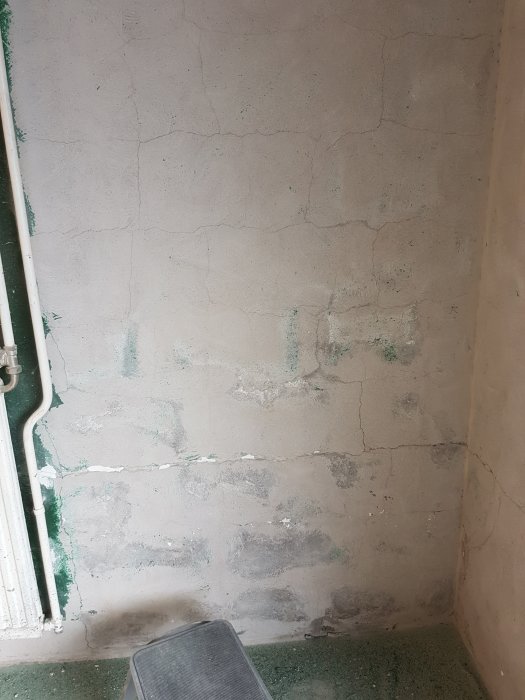
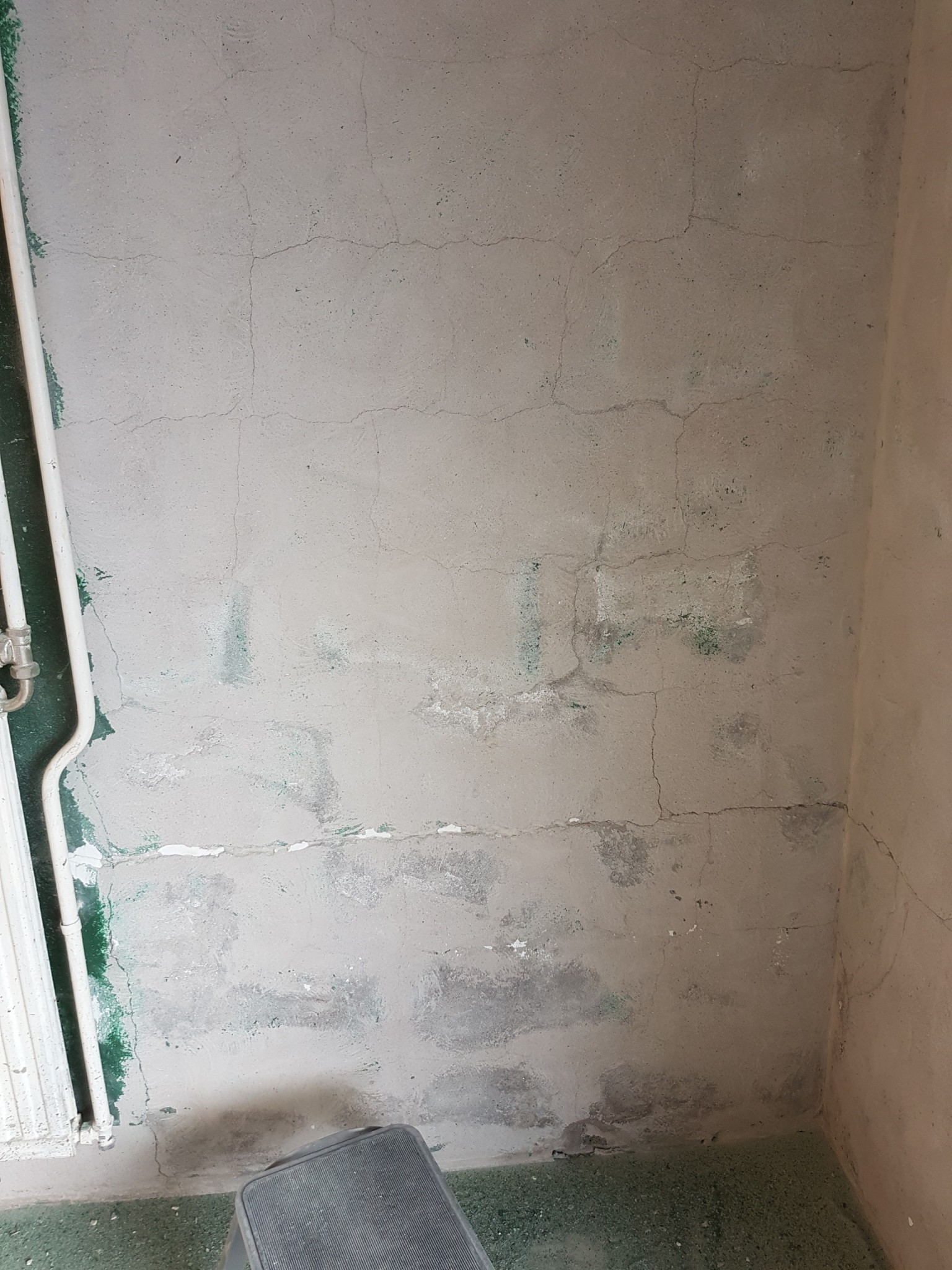


 After all, the garage was built 40 years ago.
