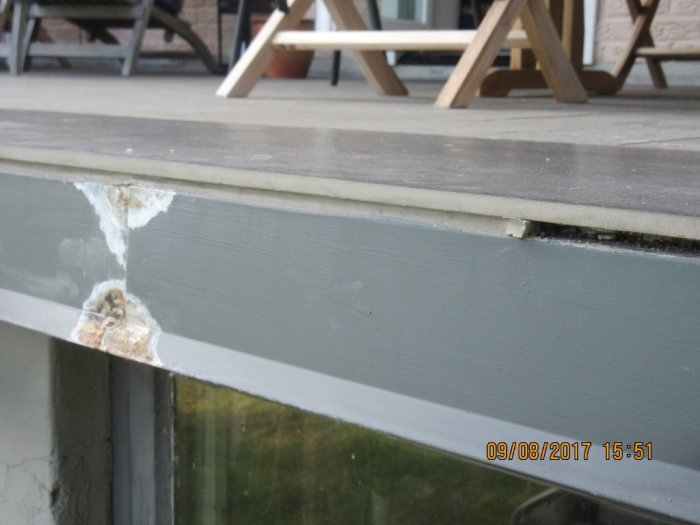
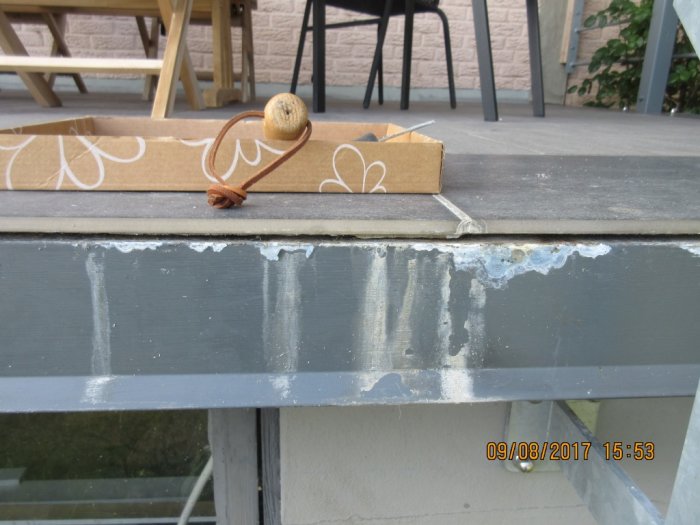
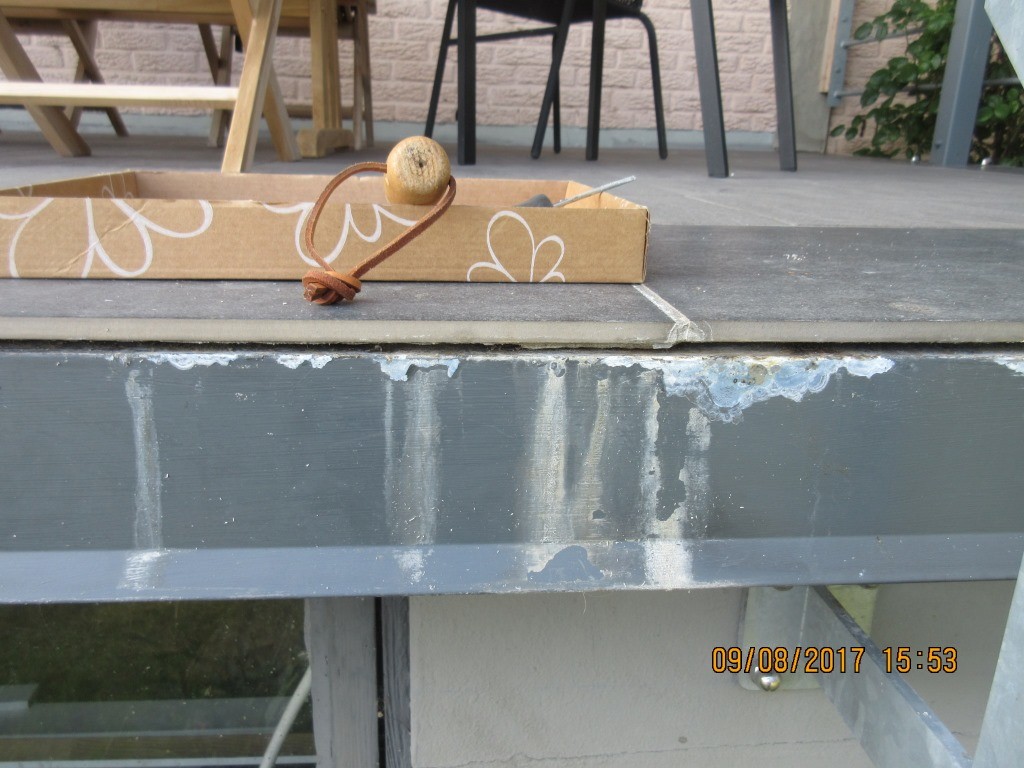
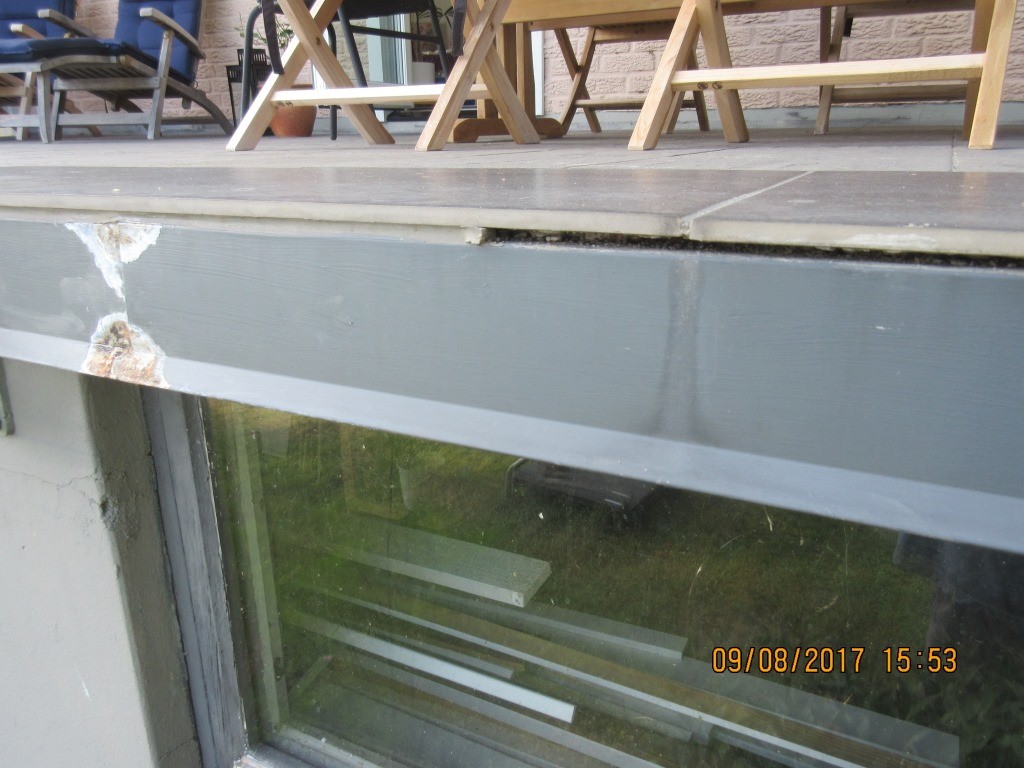
The terrace consists of a concrete slab with tiles on top. At the outer edge, there's a drip plate that goes under the last row of tiles.
The adhesive mortar doesn't extend all the way out but stops 3-4 cm from the edge. Then they applied a bead of sealing compound at the very edge. Now, after five years, the rust is flourishing. I started removing everything loose and behind the sealing compound, there was a damp sticky mess. The sealing compound seems to have formed gaps both against the tiles and the plate. Water has flowed in without a chance to dry out --> rust. Now, I'd like to press something into the gap that provides more support to the tiles (it sounds hollow). And seal everything more effectively.
What material should I use for that? Is there something cement-based that can support the tiles and adhere to the rusty iron surface in the gap? It needs to be something elastic as well.
What should I use?
Does the concrete slab have a waterproof layer (maybe if it doesn't seep through) but the joints between the slabs are not sealed, that's where water and moisture get in, maybe it runs under the slabs and out at the edge, you mention rust, what kind of sheet metal material is it?
You have no tiles left? At my parents' place, who have a large concrete patio with a basement below, tiles were placed on the edge that went down about 1cm from the edge of the tile as a drip nose. Turned out really well.
The white that is visible is leaching of cement or lime material, coming from underneath the tiles. It looks like a problem; if water is flowing behind the sheet metal, you should crawl with a mirror and see. If not, then likely the sheet metal is under the waterproofing layer (that's good). Perhaps the water is going around the edge; water flows around due to surface tension and can enter the joint that is being leached out and might freeze and break. What happens if you seal it and water remains under the tiles, it doesn't dry out, and then it freezes?
It is possible to use mjukfog or fogbruk, mjukfog will seal the water that goes down into the joints, not a big issue during the summer (it might create a little pool underneath but it will dry out), but when it starts to freeze, the tiles might pop up. Fog is slightly better as it allows some water to pass through, so it withstands freezing, but there is no guarantee.
It is possible to use mjukfog or fogbruk, mjukfog will seal off the water that goes down into the joints, not a big deal during the summer (maybe a little pool underneath but it dries out), but when it starts to freeze, the tiles might pop up. Fog is a bit better as it allows some water to pass through, so it can handle freezing, but there's no guarantee.