Or for that matter, to verify that the drill is indeed going in the right direction. I've encountered this where someone not so familiar with certain machines complains that it's not possible to drill, only to see that the drill is going in the wrong direction. I agree that the pressure needed for large holes is difficult to achieve, and it's easy to ruin the drill on the first hole by overheating the drill.
Just to clarify. I ran with full swing on the rotary hammer with suitable hammer drill bits TE-CX, SDS+. Hilti TE2-M is quite modest here with 1.8 J but it was sufficient. Trying to do similar with a regular impact drill is obviously completely pointless.
Check out the previously presented YT-video on how you can do it with regular drills/screwdrivers, with the right drill bit and technique.
Above all, hammer drills rarely have gears, meaning the reduction of the speed has to be done by the motor, via the trigger... Hard to maintain a consistent low speed...
Better to use a regular screwdriver with two gears....
The question is also how good it is to drill holes in load-bearing beams?
I am going to extend the deck, which means I have to anchor load-bearing beams on both structures.
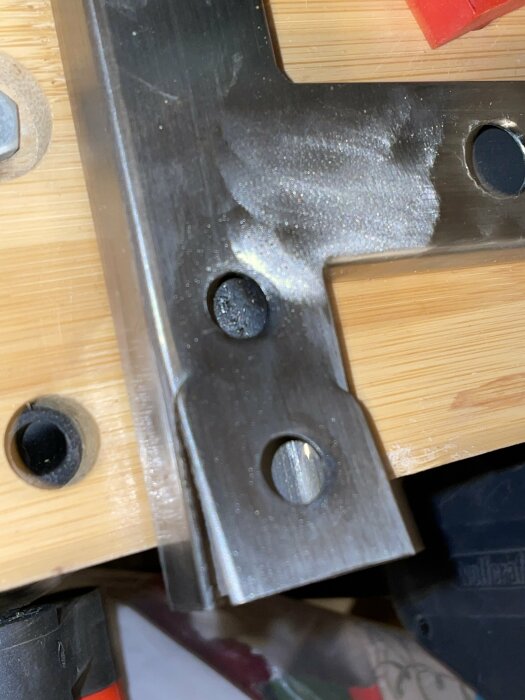
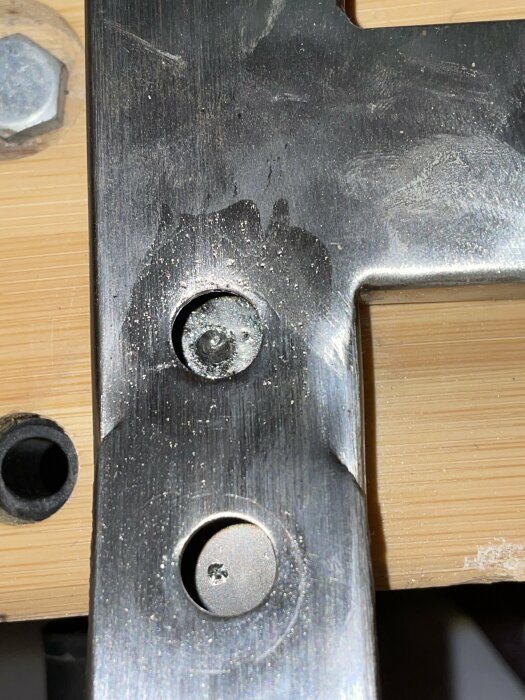
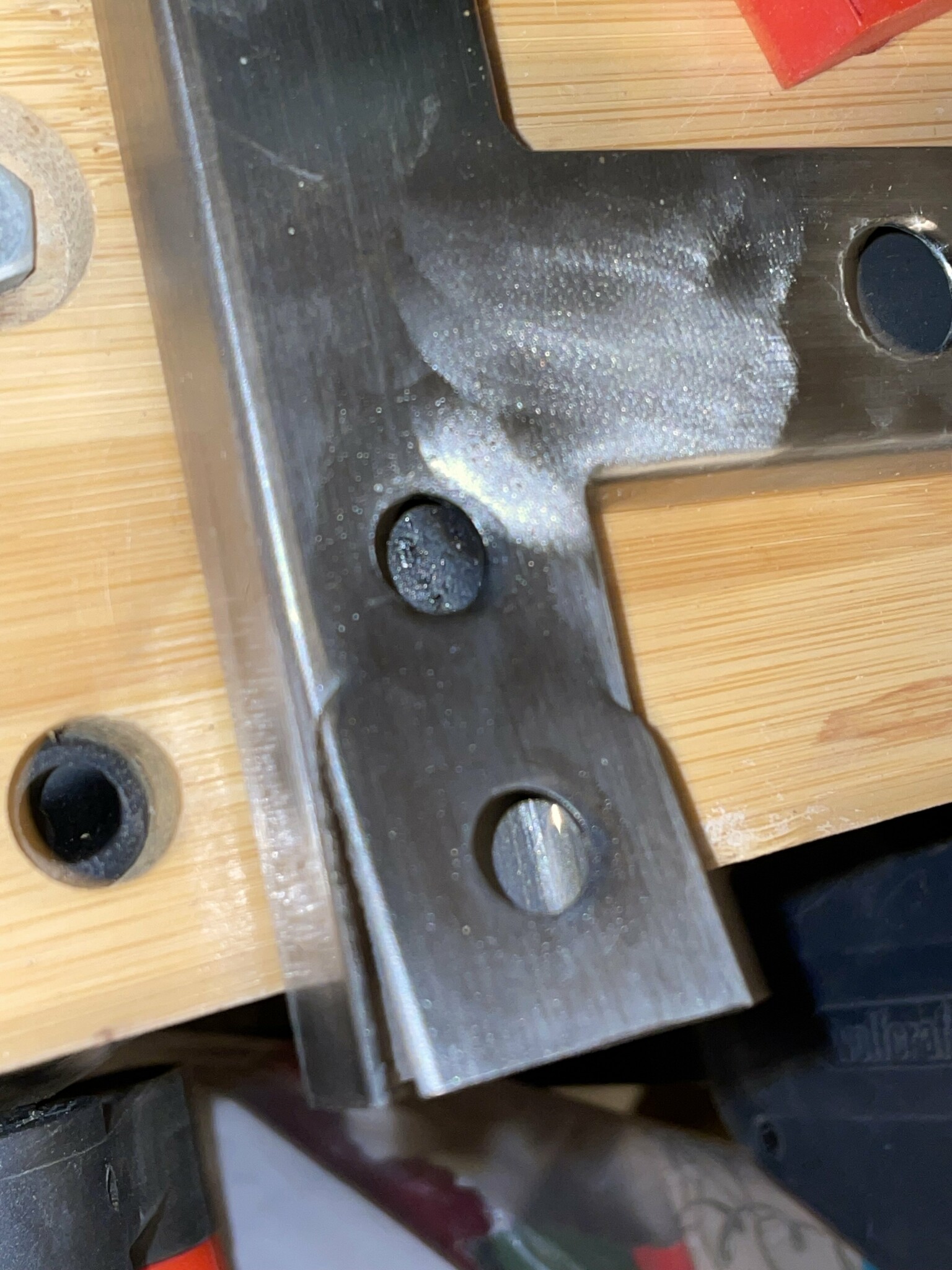
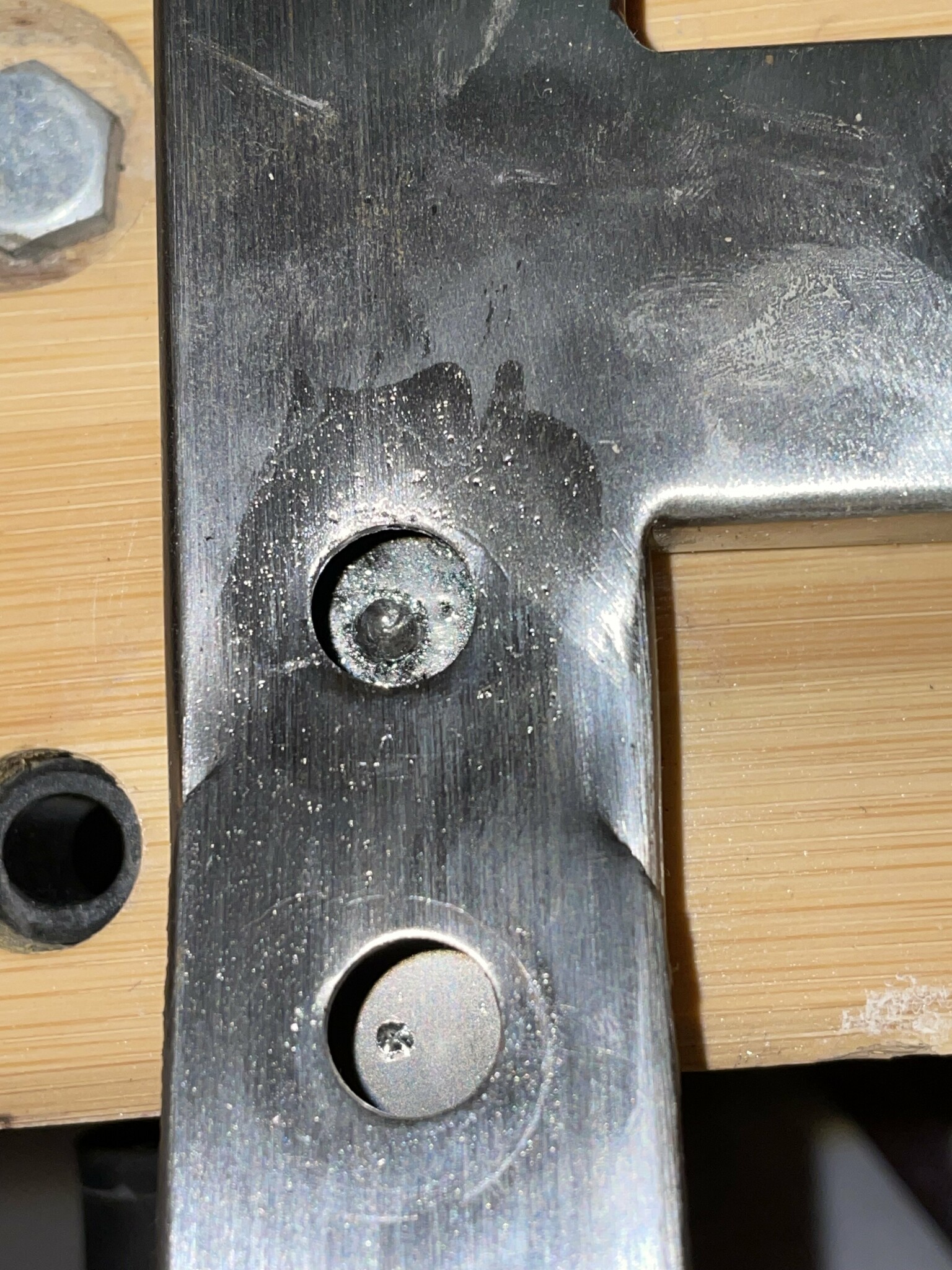
Trying to drill a hole in thin metal (about 1mm) without success. It's the underframe of a cantilever chair. The drill isn't biting into the metal. It just creates a small indentation, see pictures.
I've tried various HSS and HSS-Co drills and at different speeds. Using cutting fluid. Assumed it was stainless steel. It's not magnetic.
Trying to drill a hole in thin metal (about 1mm) without success. It's the underside of a cantilever chair. The drill doesn't bite into the metal. There's only a small indentation, see pictures.
[image][image]
Have tried various HSS and HSS-Co drills and at different speeds. Using cutting fluid. Assumed it was stainless steel. It is not magnetic.
I was terrible at drilling in metal but got tips in a thread I made. What changed everything for me was high pressure and low speed! I'm not that big, so I sometimes have to sort of lean over the drill, but it helps. I don't have a lot of experience, but for example, I drilled when I built the roof for the robotic lawn mower...
Trying to drill a hole in thin metal (about 1mm) without success. It's the base of a cantilever chair. The drill bit doesn't bite into the metal. It just creates a small countersink, see pictures.
[image][image]
Have tried various HSS and HSS-Co drill bits and at different speeds. Using cutting fluid. Assumed it was stainless steel. It is not magnetic.
Any tips?
Daniel
Very low speeds on the drill… proper pressure and a small drill bit to start with.
Putting my full body weight (90+ kg). Tried both with a screwdriver (max 1500 RPM) and a hammer drill in drill mode.
Could it be another metal than stainless steel? Does it matter?
Well, you've probably worn out your drill bits. I probably go no more than 100 RPM when drilling in metal. Maybe even less? With 1500/min you'll damage the bit immediately....🤔
Here you have a great overview of rotational speeds for different drill sizes and materials.
My advice is to choose the pre-drill based on the highest rotation speed of your drill. Then you only need to control the pressure and not try to maintain the speed (i.e., go full throttle).
Trying to drill a hole in thin metal (about 1mm) without success. It's the base of a cantilever chair. The drill does not bite into the metal. It just creates a small depression, see pictures.
[image][image]
I have tried various HSS and HSS-Co drills and at different speeds. Using cutting fluid. Assumed it was stainless steel. It is not magnetic.
Any tips?
Daniel
I first hit with an awl so the drill doesn't slip around, then I recommend a step drill.


Dan_Johansson said: